What is Pichwai Art?
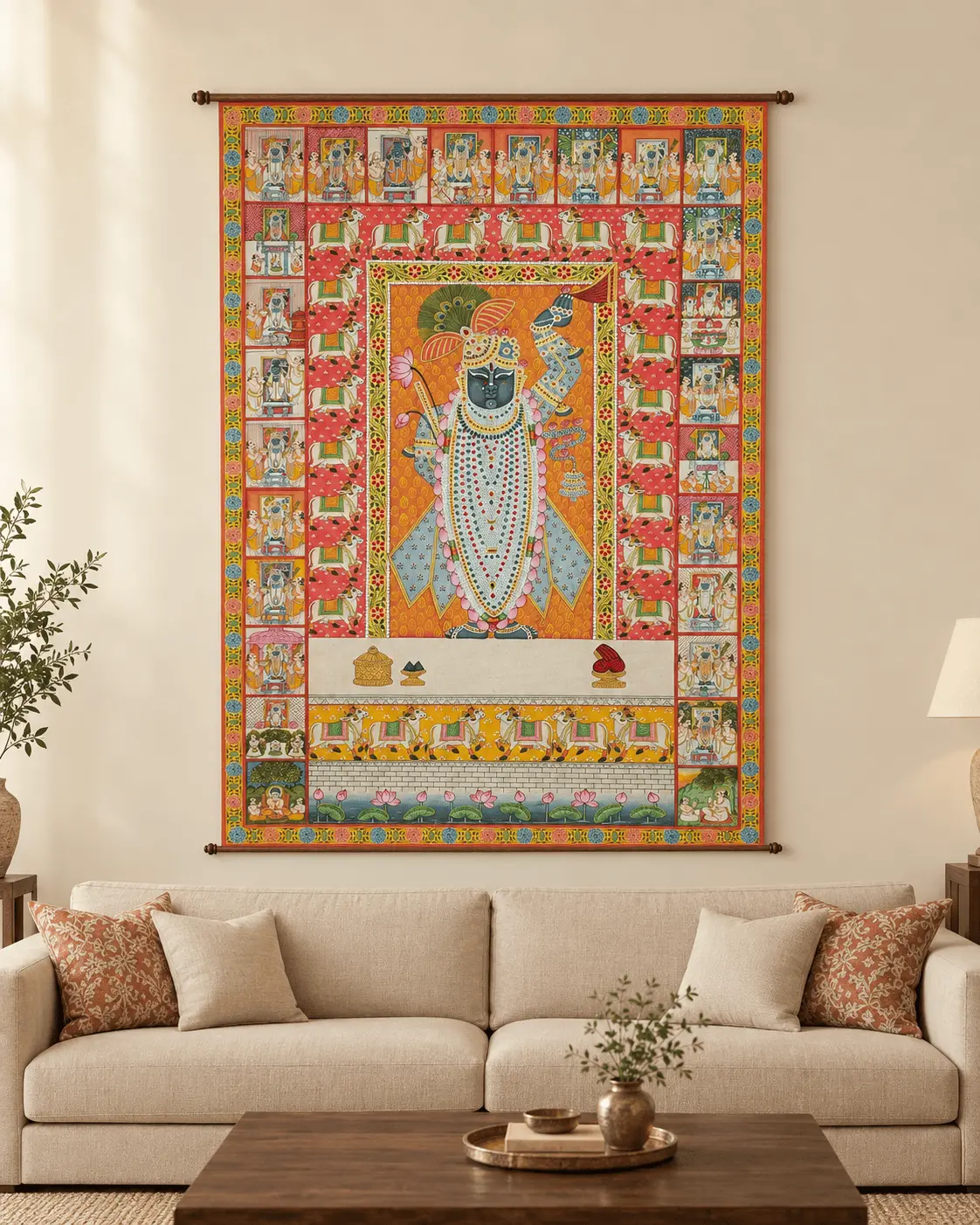
Pichwai art is a traditional form of devotional painting from Nathdwara, Rajasthan. The word comes from pichh (back) and wai (hanging), because these large cloth paintings were created to hang behind the idol of Shrinathji, a form of Lord Krishna. Today, Pichwai paintings are loved not only as sacred art but also as statement pieces for modern Indian homes, offices and temples.
History of Pichwai Painting
The Pichwai tradition grew around the Shrinathji temple in Nathdwara and the Pushtimarg sect founded by Vallabhacharya. Over roughly four centuries, local artists developed a distinct style that blends devotion, storytelling and fine detailing. Different Pichwais are made for different festivals and seasons, so the temple backdrop changes through the year. Because of this link with Nathdwara, Pichwai is often discussed alongside Nathdwara paintings and Shrinathji paintings.
Common Pichwai Themes and Symbols
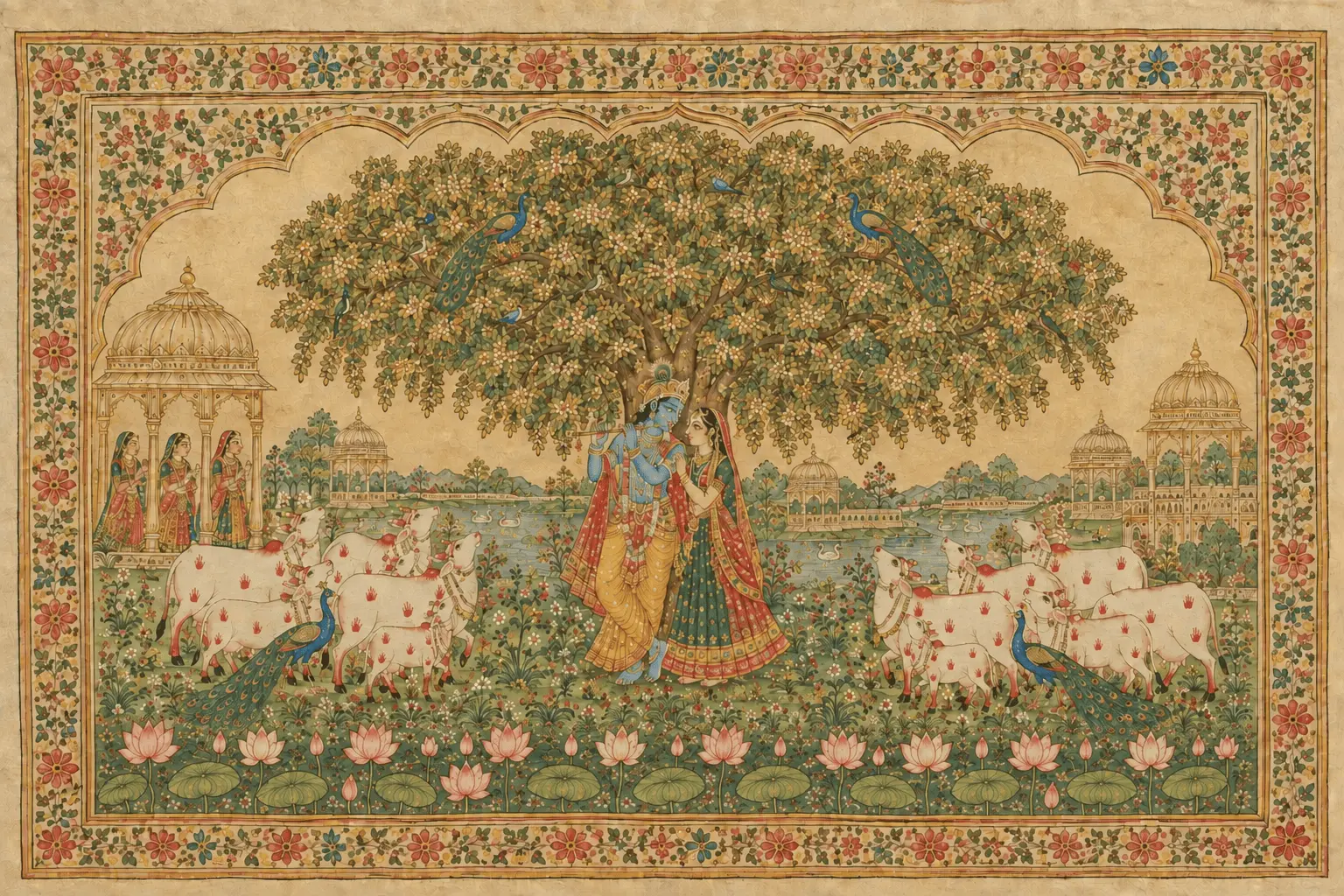
Every element in a Pichwai painting carries meaning. Here are the motifs you will see most often:
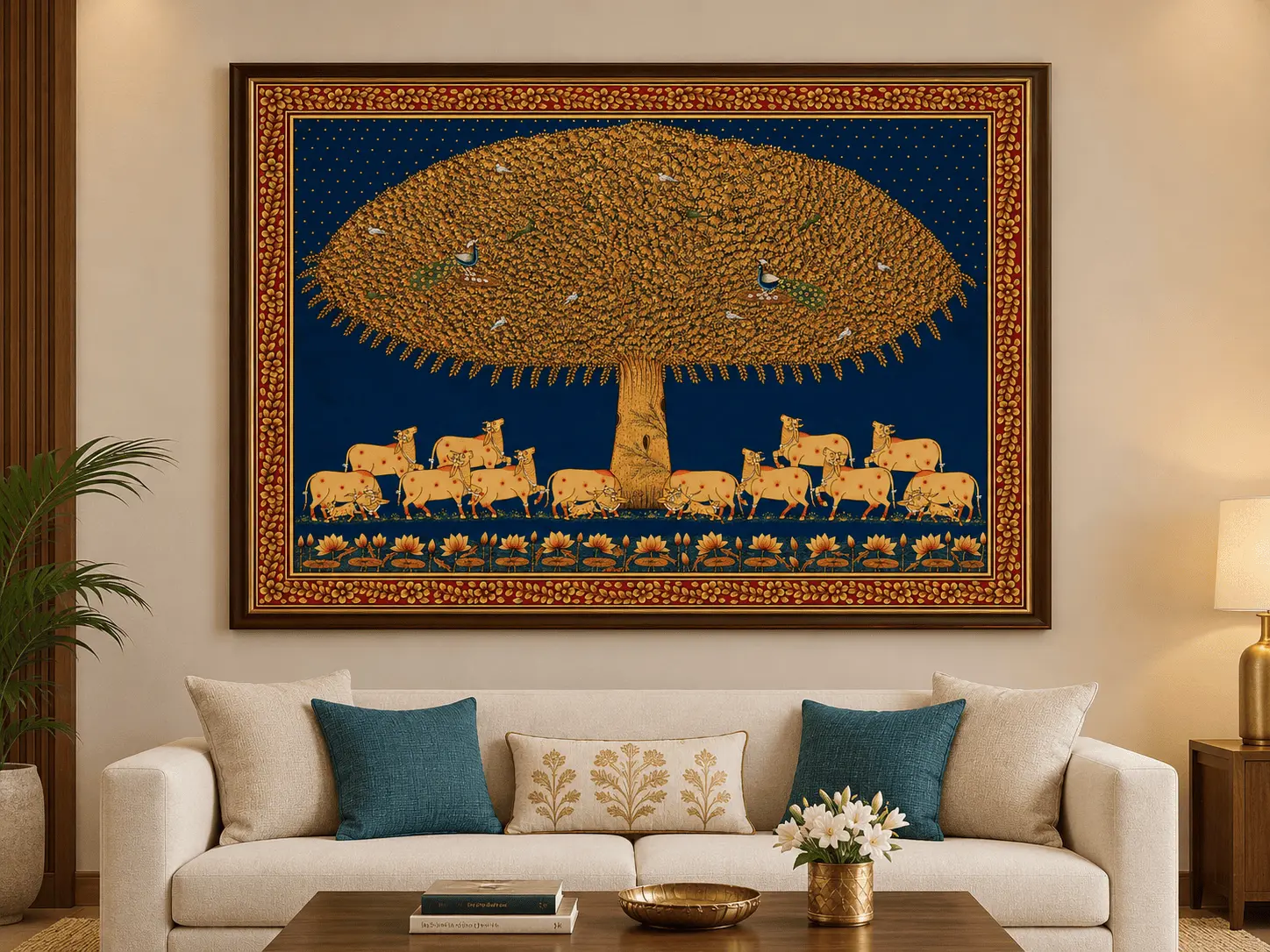
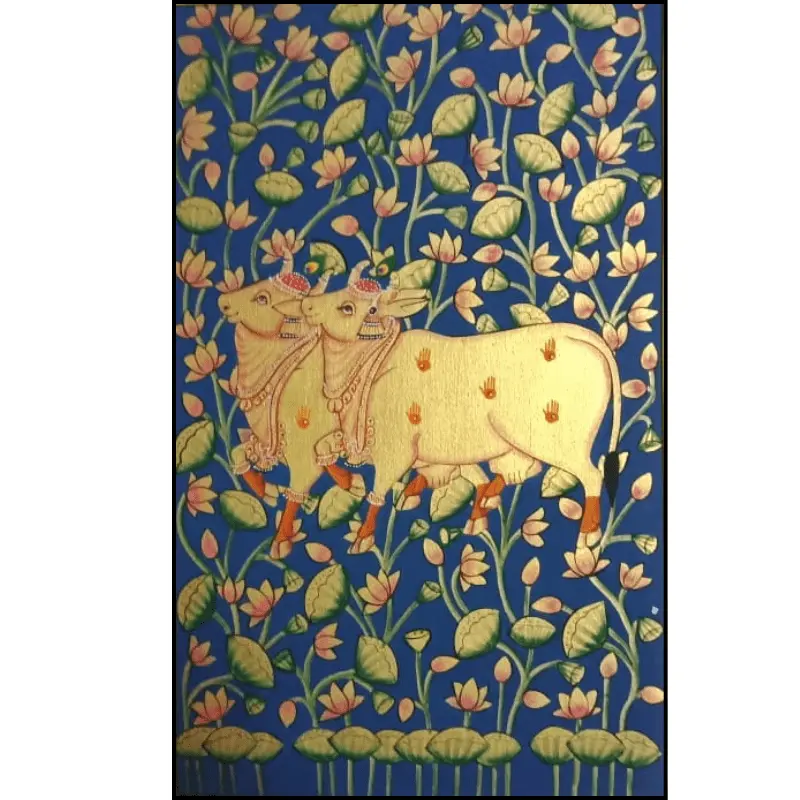
- Lotus flowers: purity, divine beauty and spiritual awakening.
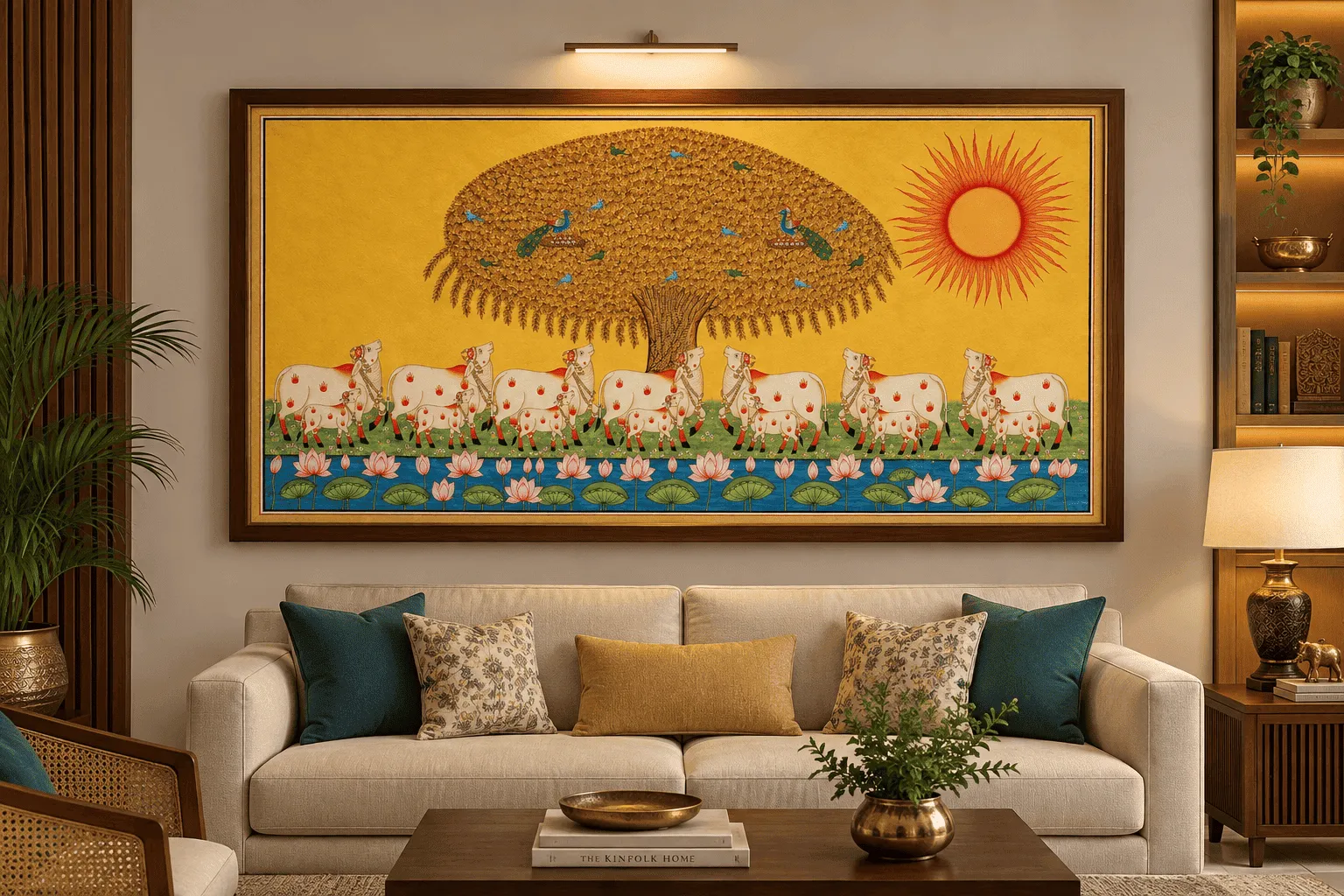
- Cows and calves: Krishna's life as a cowherd, and abundance and care.
- Krishna and Shrinathji: the central devotional figure, often shown as a child or lifting Govardhan hill.
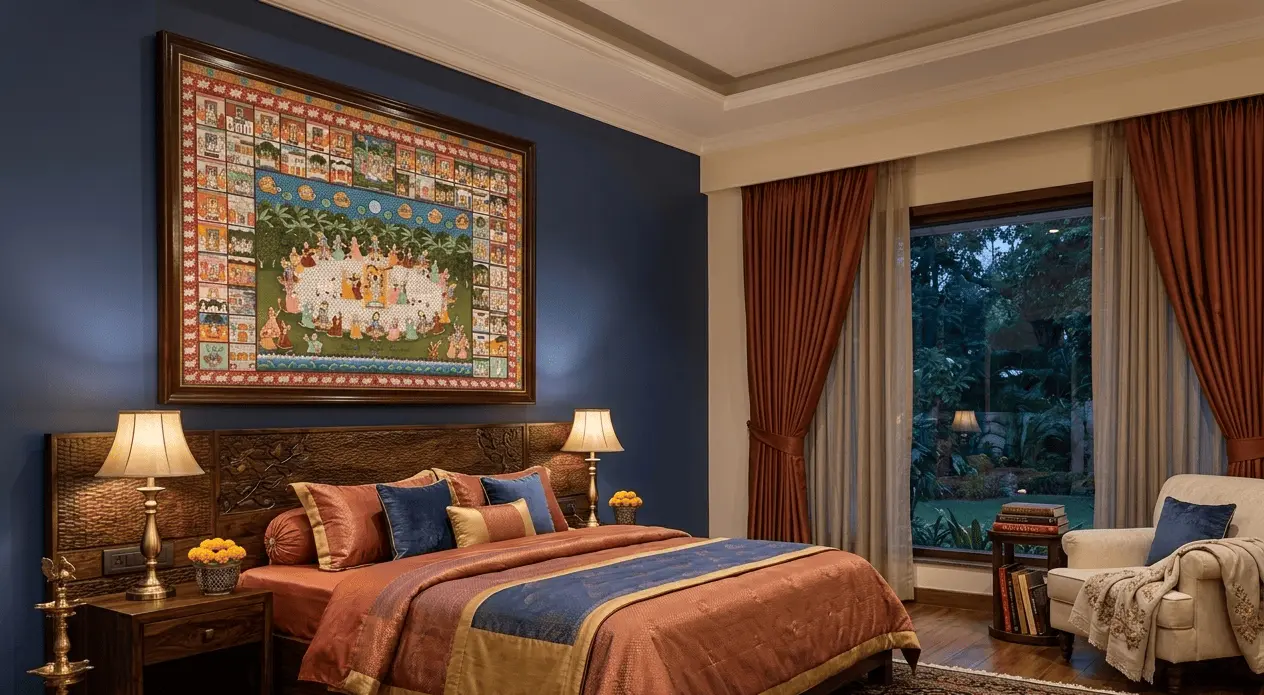
- Festival scenes: Sharad Purnima, Annakut, Gopashtami, Raas Lila and Janmashtami.
- Peacocks, trees and floral borders: the lush landscape of Vrindavan.
How Handmade Pichwai Paintings Are Made
A traditional Pichwai is made slowly, by hand. The artist prepares a cotton cloth or canvas base, sketches the composition, and then fills it with layers of colour. Classic pieces use mineral and natural pigments, and many include fine gold or silver detailing for a glowing finish. A single large Pichwai can take weeks or even months, which is why a handmade piece looks and feels very different from a printed reproduction.
How to Choose an Authentic Pichwai Painting
- Check the detailing: petals, cow faces and borders should look crisp and consistent, with visible brush work.
- Ask about materials: look for cloth or canvas, quality pigments and real gold or silver work where claimed.
- Choose the right theme: lotus Pichwai for peace and elegance, cow Pichwai for warmth and prosperity, festival scenes for pooja rooms.
- Pick the right size: Pichwai looks best on a wall with breathing space, such as above a sofa, bed or console.
- Buy from a trusted maker: an artist or studio that can explain the process and offer a certificate or proof of handmade work.
Ready to bring one home? Browse our collection of handmade Pichwai paintings, or order a custom Pichwai painting made to your size, colours and theme.
Pichwai Painting FAQs
What is a Pichwai painting?
A Pichwai painting is a traditional devotional artwork from Nathdwara, originally made as a decorative backdrop for the idol of Shrinathji and now popular as home and temple decor.
Why are lotus and cows so common in Pichwai art?
The lotus stands for purity and divinity, while cows represent Krishna's life among the cowherds of Braj. Together they create the calm, devotional mood Pichwai is known for.
Is Pichwai the same as Rajasthani miniature painting?
No. Both come from Rajasthan, but Pichwai is usually large-format, cloth-based and centred on Shrinathji, while Rajasthani miniature paintings are smaller and often show courts, nature and varied stories.
Where can I use a Pichwai painting at home?
Popular spots are the living room, pooja room, bedroom headboard wall and office reception. Lotus and cow themes work especially well in modern interiors.
Can I order a custom Pichwai painting?
Yes. A custom Pichwai can be made in your preferred size, colour palette and theme. Visit our custom Pichwai painting service to get started.