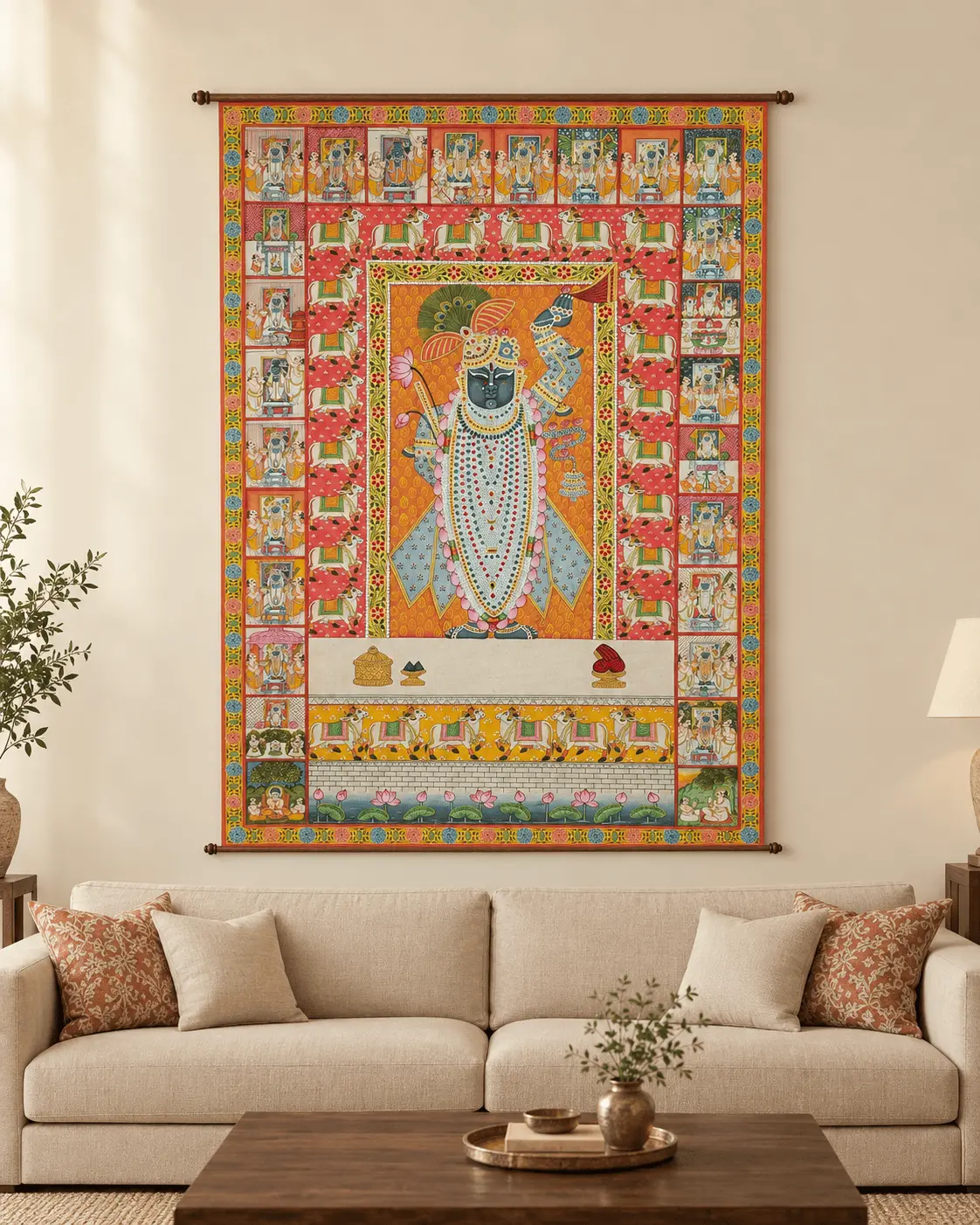
The Eight Darshans of Shrinathji at a Glance
A darshan is a short viewing, when the doors open and devotees see the deity. In Pushtimarg tradition, Shrinathji is cared for like a young child, so each darshan matches a moment in a child's day: waking, dressing, playing, eating, resting and sleeping. If you want the faith behind this, our Pushtimarg Explained article covers it. Here we stay with the day itself.
| No. | Darshan | Time of day | What the temple's text describes |
|---|---|---|---|
| 1 | Mangala | Dawn | The child has just woken |
| 2 | Shringar | About an hour after Mangala | Dressing and adorning |
| 3 | Gwal | Mid-morning | The cows go out to pasture |
| 4 | Rajbhog | Midday | The main meal, the grandest darshan |
| 5 | Utthapan | Afternoon | Waking from the afternoon rest |
| 6 | Bhog | About an hour after Utthapan | A light meal |
| 7 | Sandhya Aarti | Dusk | The cows return home |
| 8 | Shayan | Night | Retiring for the night |
You may also see the names spelled Mangla, Gval, Uthapan or Sandhya Arti. They mean the same darshans.
Eight, Seven or Nine? How We Checked
Instead of trusting one page, we compared several kinds of source.
- The temple's own blog: It describes each darshan in a series and numbers them. Gwal is called the "third" darshan and Bhog the "sixth", and Bhog is placed an hour after Utthapan. The order fits eight.
- Reference and cultural sources: Wikipedia lists the same eight names in the same order. Open magazine speaks of "eight darshans" a day. The Museum of Art & Photography, on Google Arts & Culture, says worship at Nathdwara includes eight daily darshans.
- Nine: We did not find a reliable source that counts nine.
So why do other numbers appear? Our reading is that three things cause it. Timetables print extra aarti times next to the darshans. Festival days add special viewings. And havelis elsewhere keep their own schedules. Wikipedia notes the sequence is a general layout and that practice varies between havelis, and one haveli visitor guide lists only seven darshans for its own haveli.
One more detail matters. The temple's blog says the last darshan, Shayan, is usually not held for six months of the year. We explain that below.
The Day, Darshan by Darshan
The descriptions below follow the temple's own blog unless we say otherwise. In every case, the temple's calendar decides what is shown on a given day.
1. Mangala: The Waking
Mangala is the first darshan of the day. The blog frames it as a parent's care for a child, and the main doors stay closed until the first rituals are done so the sleepy child is not startled by a rush of people. He is dressed lightly, in a thin dhoti in summer and a quilted coat in winter. His flute is not placed in his hand yet. The blog says devotees feel that if he played so early, everyone would be enchanted and all work would stop. An aarti is offered to keep away the evils of the night. In winter this darshan is held before sunrise, and in summer it is later.
2. Shringar: The Dressing
About an hour after Mangala comes Shringar. He is dressed from head to foot, and a garland is placed around his neck. A Mukhiya, the chief attendant, holds up a mirror so he can check how he looks. The blog calls this his play hour. Dry fruits and sweets are offered, described as food from his gopis, and only after this meal is the flute placed in his hand.
3. Gwal: The Cows Go Out
Gwal is the third darshan, held at the hour when the child takes his cows to pasture. The Mukhiya of the Nathdwara cow shelter comes to report that the cows are well. Flowers and the flute are not shown, since he is understood to be out playing with his cowherd friends. The offering is makhan mishri, a light milk sweet, because he has already eaten richer food. Some descriptions add that devotees recite his names, offering a tulsi leaf with each one.
4. Rajbhog: The Grandest Darshan
The temple's blog calls Rajbhog "the most elaborate darshana of all". It is the main meal of the day. A priest on the terrace calls out "Mala Begi Laiyo", which means bring the garland quickly, drums sound, and the doors are flung open. Shrinathji is seen in royal splendour, holding a lotus and wearing a heavy garland. Close by are betel leaves, a water pitcher, his flute, a cane for a ball game and a mirror. Wikipedia adds that he plays chopat, an old board game, during the aarti. After Rajbhog he rests for about three hours, a period the blog calls Anavasara.
5. Utthapan: The Afternoon Waking
Utthapan marks his waking from the afternoon rest. It sits between the long midday rest and the Bhog darshan, which the temple's blog places about an hour later. After the quiet hours, the haveli comes back to life.
6. Bhog: The Light Meal
Bhog is the sixth darshan, and a light meal is served. A Chhadidara, an attendant in formal dress with a staff and gold ornaments, stands guard. His role, as the blog puts it, is to tell Swaminiji, a name for Radha, that Shrinathji has arrived so she may see him. The deity is fanned, and a morchhala, a fan of peacock feathers, is waved to remove the effect of the evil eye.
7. Sandhya Aarti: Evening and Return
This darshan takes place at dusk, when Krishna brings the cows home from the fields. The blog says the main mood is matrubhava, a mother's love, with a worry that he may have come to harm while wandering in the woods. His clothes are lighter after the day's play, and the flute is offered so he can enchant his friends and devotees. At the end of the day, consecrated food is offered to the Sudarshana Chakra on the haveli roof, and the seven flags on the roof are wrapped around their sticks until the next morning.
8. Shayan: Time for Sleep
Shayan is the last darshan of the day. It begins after a priest calls out to the cook to come early the next morning, and drums announce it. Betel leaves and food are offered, and the bed chamber is prepared. A carpet runs from the image to the bed chamber, and the blog says he walks along it in a subtle form. The darshan also honours the belief that Shri Radha will join him for the night, so her clothes and jewels are kept ready.
The Shayan Exception: A Day That Ends Early
This is the detail most guides miss. The temple's blog says Shayan is usually not held for six months, from Chaitra Shukla 1 to Ashvin Shukla 9, because Shrinathji is said to visit Vraj in that season. Wikipedia describes the same idea: in the warm half of the year, after the Sandhya Aarti, the deity is said to travel in spirit to Govardhan.
The six months are given in the traditional lunar calendar, so the dates in the English calendar change from year to year. If you plan a visit around the evening, check the temple's own schedule instead of assuming Shayan will be open.
The Music Behind the Day
Each darshan has its own kirtan, devotional singing in Braj Bhasha. The temple's blog names a chief singer for most of the darshans, and every name belongs to the Ashtachhap, the group of eight poets that Pushtimarg reveres.
| Darshan | Poet named in the temple's blog | Note |
|---|---|---|
| Mangala | Paramanandadas | Darshan is dedicated to his memory; morning ragas Lalita, Bhairava or Vibhasa |
| Shringar | Nandadas | Ragas Ramakali, Gunakali and Bilaval |
| Rajbhog | Kumbhandas | Chief kirtankar of the darshan |
| Bhog | Chaturbhujdas | Main singer for the period |
| Sandhya Aarti | Chhitaswami | Chief musician |
| Shayan | Krishnadas | Songs sung to Shrinathji and Swaminiji |
Common Mix-Ups
- A rest is not a darshan. The three-hour pause after Rajbhog is a break when the doors are closed, not a ninth darshan.
- Aarti times are not darshan counts. A timetable can list several aarti times in one darshan.
- The same darshan has different spellings. Mangla, Gval and Uthapan are spelling variants, not extra darshans.
- Another haveli is not Nathdwara. Havelis elsewhere keep their own schedules, so a count from one place may not match here.
- Festival days are special. Extra viewings can be added on festival days, but that does not change the standard eight.
How the Eight Darshans Connect to Pichwai Art
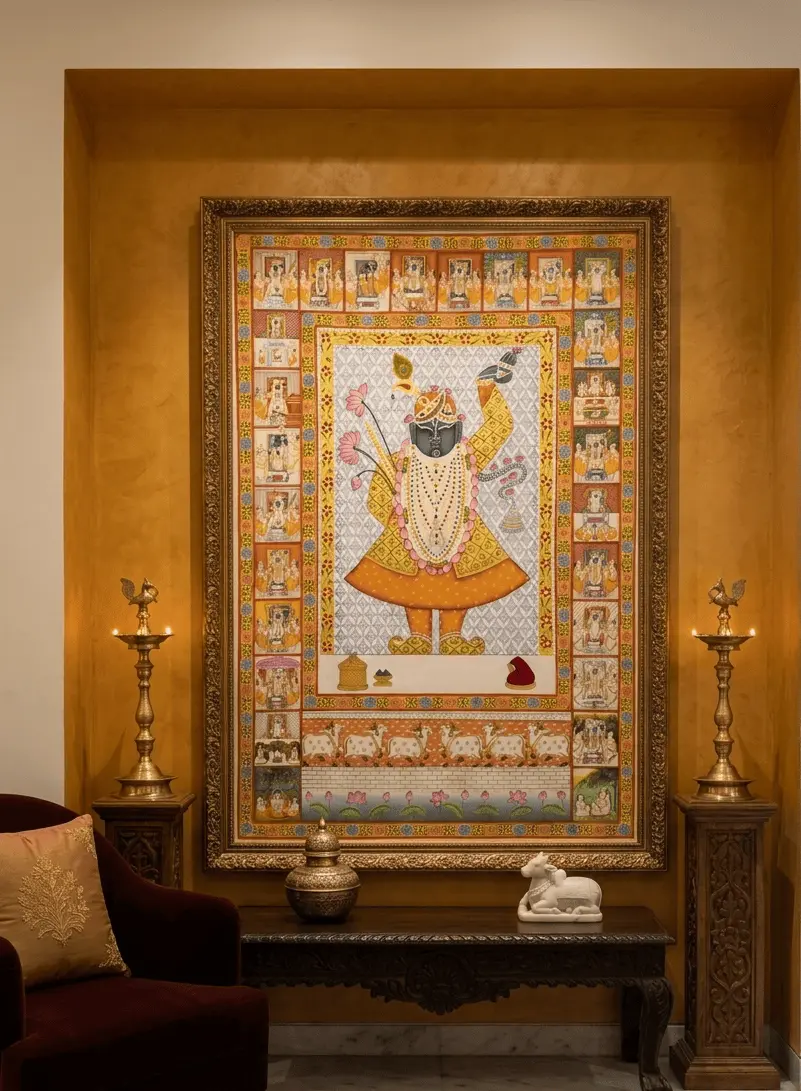
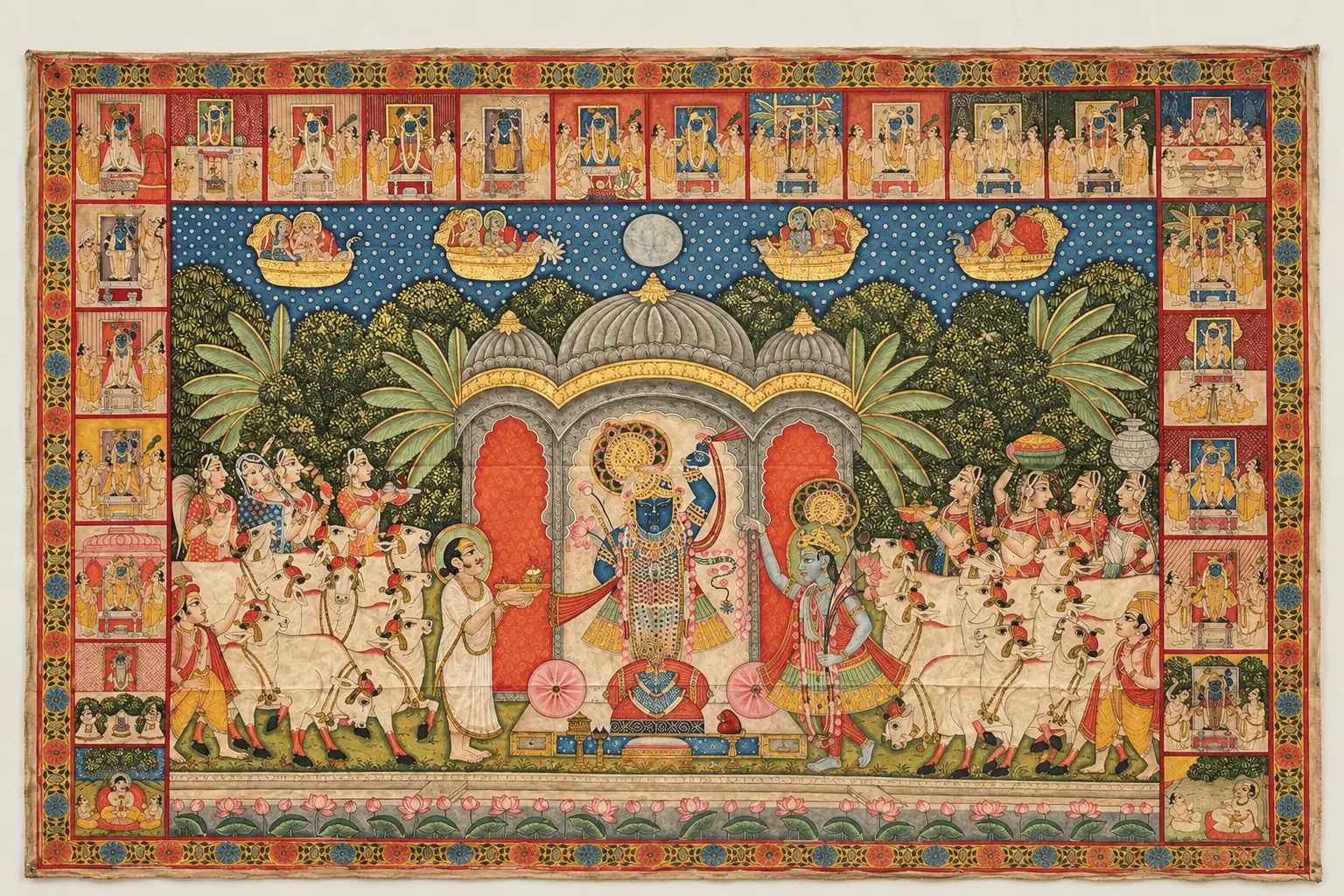
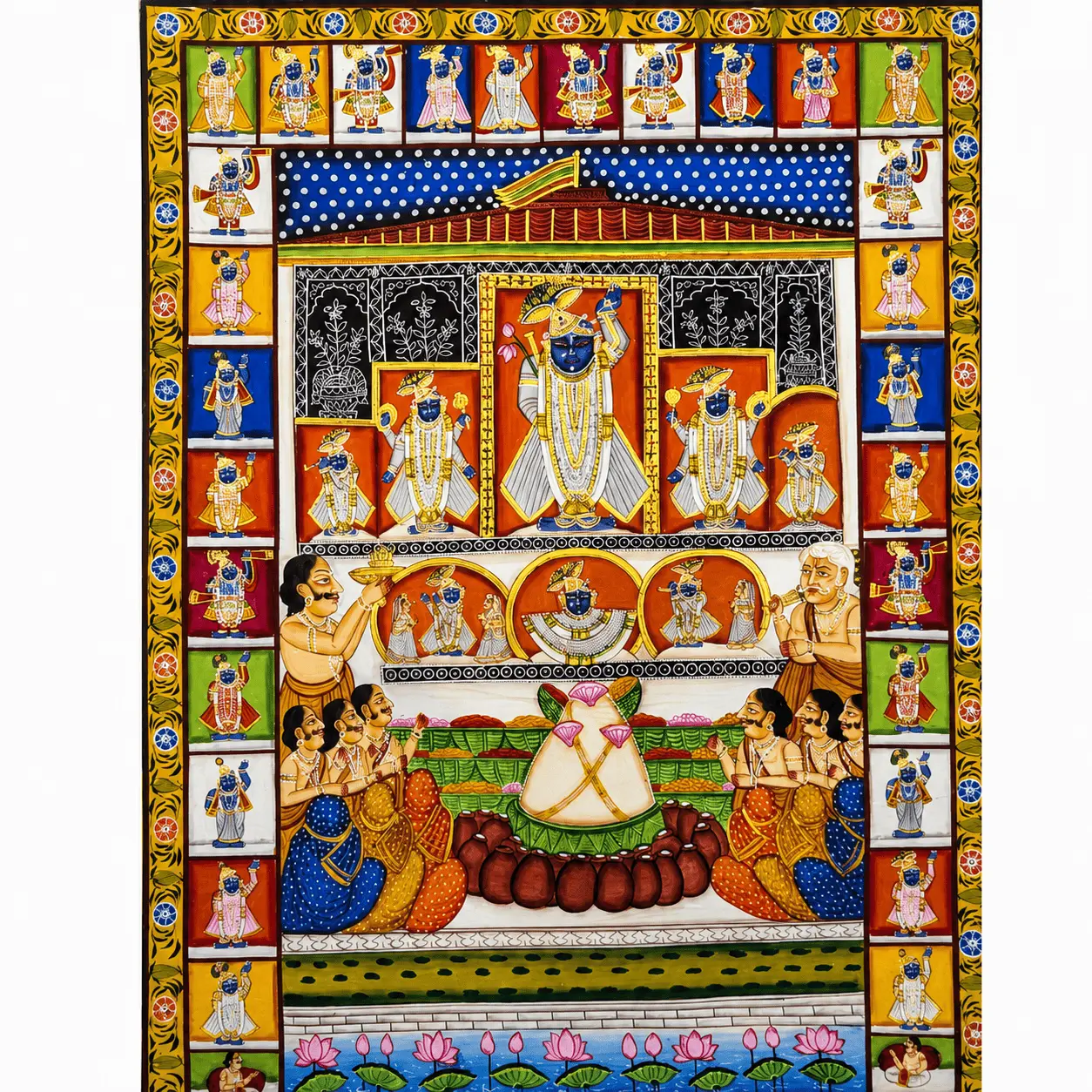
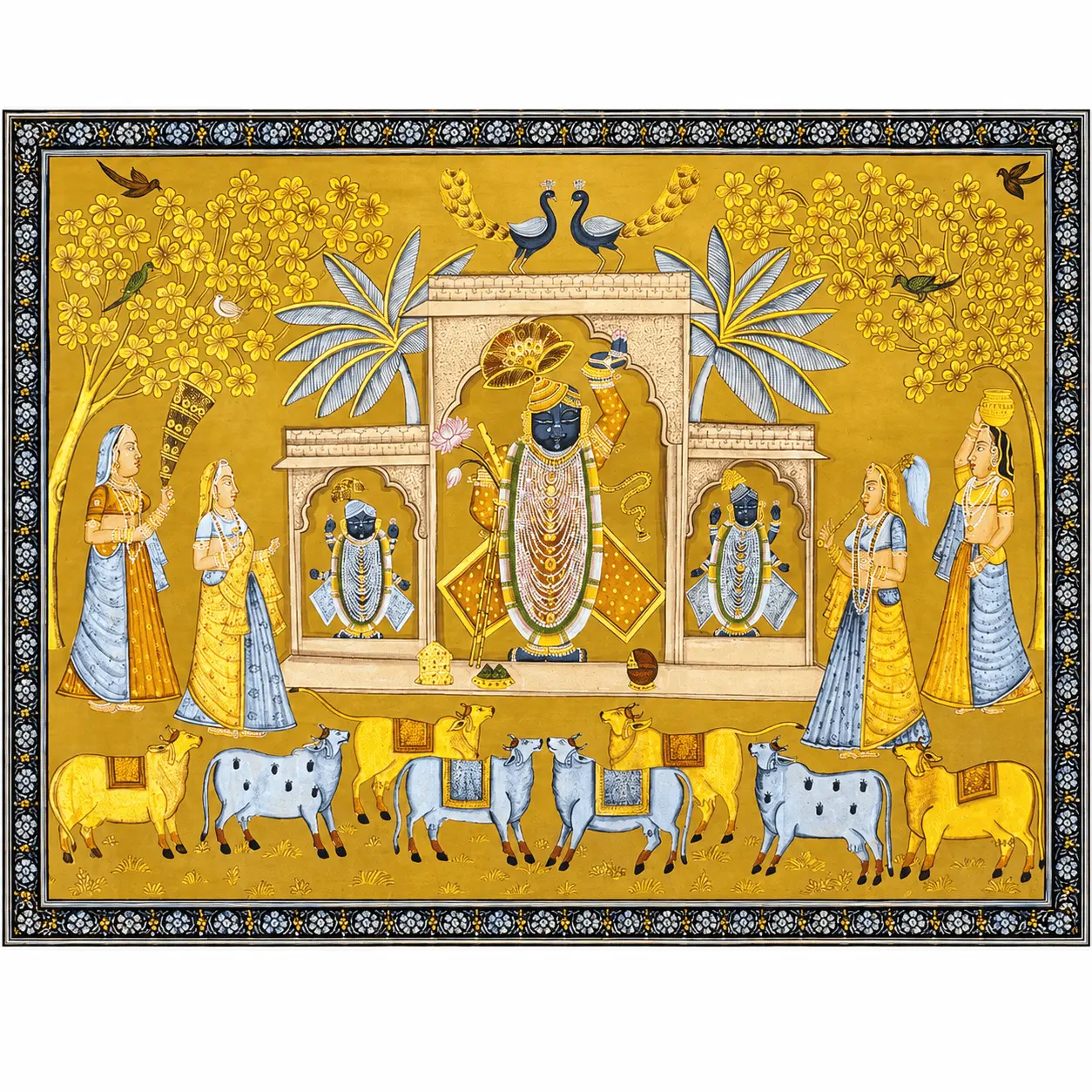
The Museum of Art & Photography says that pichwais "are changed daily, seasonally, and for various rituals and festive occasions" at the temple. It also notes that each darshan has its own mood and that the pichwai helps create it. That is why a Pichwai is more than a pretty backdrop. It is part of how the day is told. For the symbols you will see in the paintings, our Shrinathji Pichwai guide is a good next read.
Planning to See the Darshans
- Timings change with the season and with festivals, so confirm the day's schedule on the temple's official website.
- Our Nathdwara visitor guide covers travel, etiquette and how to plan a day around the darshan windows.
- If you can stay for more than one darshan, choose two that feel different, such as Mangala and Sandhya Aarti, to see how the mood shifts.
A Note from Rupasya
Our studio makes handmade Pichwai-style artworks, and we do not speak for the temple or the tradition. Please use the temple's own schedule and teachers for anything about practice. If this guide makes you want a Pichwai of your own, you are welcome to browse our handmade Pichwai collection.
Frequently Asked Questions
How many darshans does Shrinathji give in a day?
Shrinathji gives eight darshans a day at Nathdwara: Mangala, Shringar, Gwal, Rajbhog, Utthapan, Bhog, Sandhya Aarti and Shayan. The temple's own blog numbers them in this order. We found no reliable source that counts nine, though timetables with extra aarti times and festival specials can make the count look different.
Which is the first and last darshan of the day?
Mangala is the first darshan, held at dawn when the child has just woken. Shayan is the last, when he retires for the night. The temple's blog says Shayan is usually not held for six months of the year, so on those days the evening darshan can be the last one you see.
Which is the most elaborate darshan of Shrinathji?
Rajbhog is the most elaborate. The temple's blog calls it the most elaborate darshan of all. It is the main meal of the day, and Shrinathji is seen in royal splendour with a lotus and a heavy garland. After Rajbhog he rests for about three hours behind closed doors.
Why is the Shayan darshan not held all year?
The temple's blog says Shayan is usually not held for six months, from Chaitra Shukla 1 to Ashvin Shukla 9, because Shrinathji is said to visit Vraj in that season. Wikipedia describes the same belief. These dates follow the lunar calendar, so check the temple's schedule before you plan a visit
Are the eight darshans the same as the aarti timings?
No. A darshan is a viewing when the doors open, while aarti is a lamp offering that happens during some darshans. A timetable may list several aarti times, which can make it look as if there are more darshans. Confirm the day's schedule on the temple's official website.