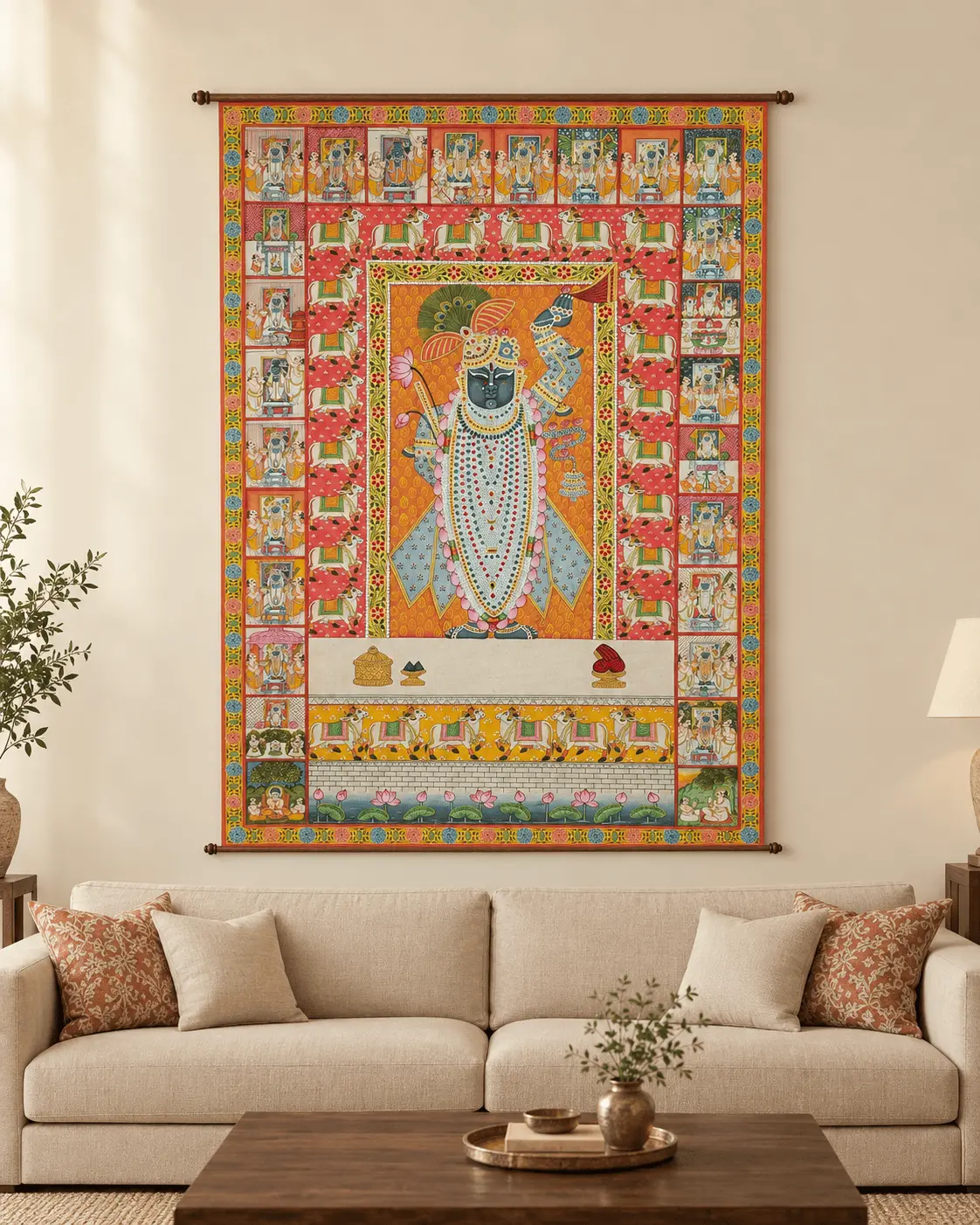
Gopashtami is the day Lord Krishna became a Gopala, a full cowherd. In 2026, Gopashtami falls on 17 November. Pichwai artists have painted this festival for centuries. In this guide you will learn what a Gopashtami Pichwai painting shows, what its symbols mean and how to choose a real handmade one for your home.
Table of Contents
- What is Gopashtami?
- Gopashtami 2026 date
- Gopashtami and Govardhan Puja: what is the difference?
- What is a Gopashtami Pichwai painting?
- Symbols and their meaning
- How to choose the right painting
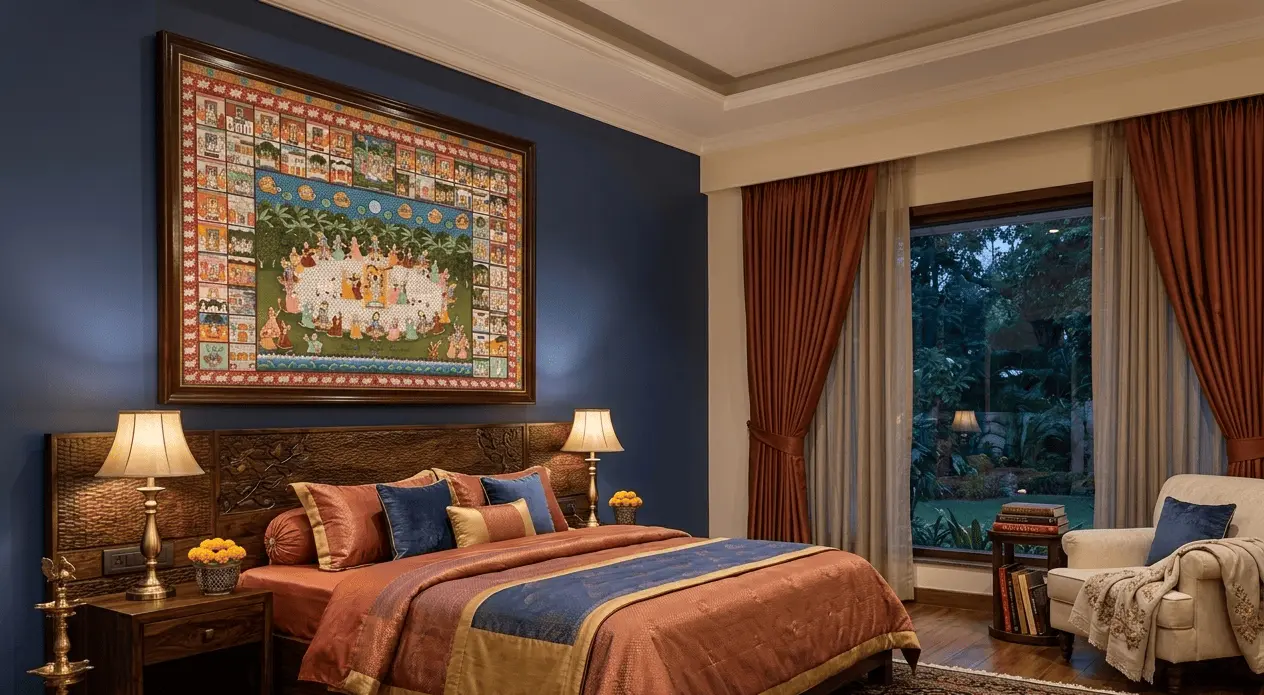
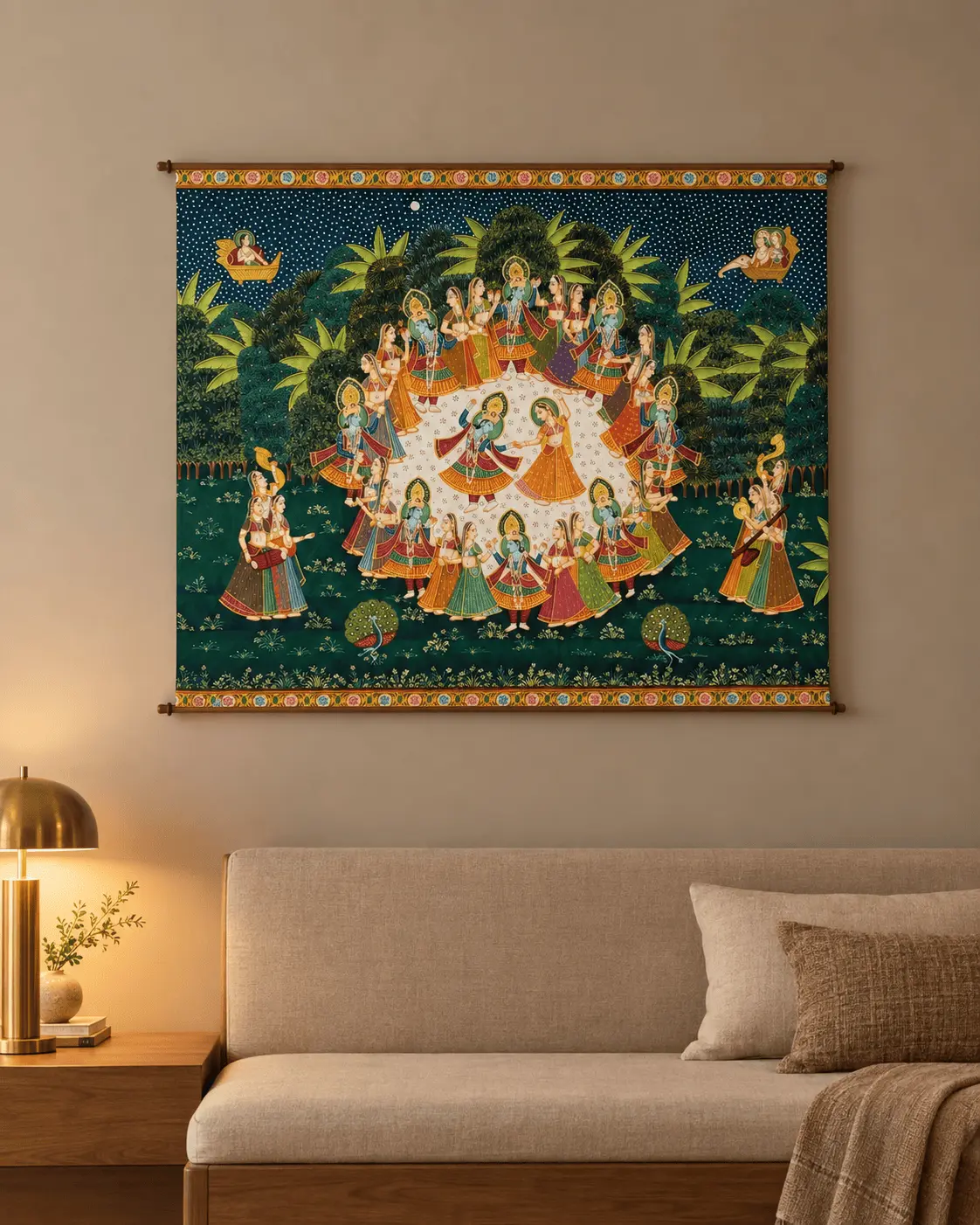
- Where to hang it at home
- How to care for your Pichwai
What is Gopashtami?
Gopashtami is celebrated on the eighth day (Ashtami) of the bright half of the month of Kartik. According to tradition, this is the day Nanda Maharaj first sent Krishna and Balarama to graze the cows. From that day Krishna became known as Gopala and Govinda, the protector of cows.
Until then, the story goes, the young Krishna had looked after only the calves. Taking the full herd to the forest was a sign that he had grown up, and the whole village of Vrindavan celebrated it.
Today, people decorate and worship cows and calves on this day, which is also called Gau Puja. Cows are bathed, adorned with garlands and offered fodder and sweets. Many families also visit Krishna temples and offer prayers to Gopala.
Gopashtami 2026 date
| Festival | Date | Tithi |
|---|---|---|
| Gopashtami 2026 | 17 November 2026 | Kartik Shukla Ashtami |
Exact timing can change a little by city, so please check your local panchang for the correct puja time.
Gopashtami and Govardhan Puja: what is the difference?
Both festivals fall in the month of Kartik and both are connected to Krishna, so people often mix them up. They celebrate two different moments from his life.
| Festival | What it celebrates | Main theme in art |
|---|---|---|
| Govardhan Puja | Krishna lifting Govardhan hill, celebrated the day after Diwali | The hill, Krishna with raised hand, Annakut food offerings |
| Gopashtami | Krishna becoming Gopala, the herder of cows, on Kartik Shukla Ashtami | Decorated cows and calves, flute, lotus, trees and peacocks |
If you want art that celebrates cows and the pastoral life of Vrindavan, a Gopashtami Pichwai is the right theme.
What is a Gopashtami Pichwai painting?
Pichwai is a 400-year-old art form from Nathdwara, Rajasthan. Pichwais were made as large cloth backdrops behind the idol of Shrinathji. The temple changes the Pichwai for each season and festival, and Gopashtami is one of them.
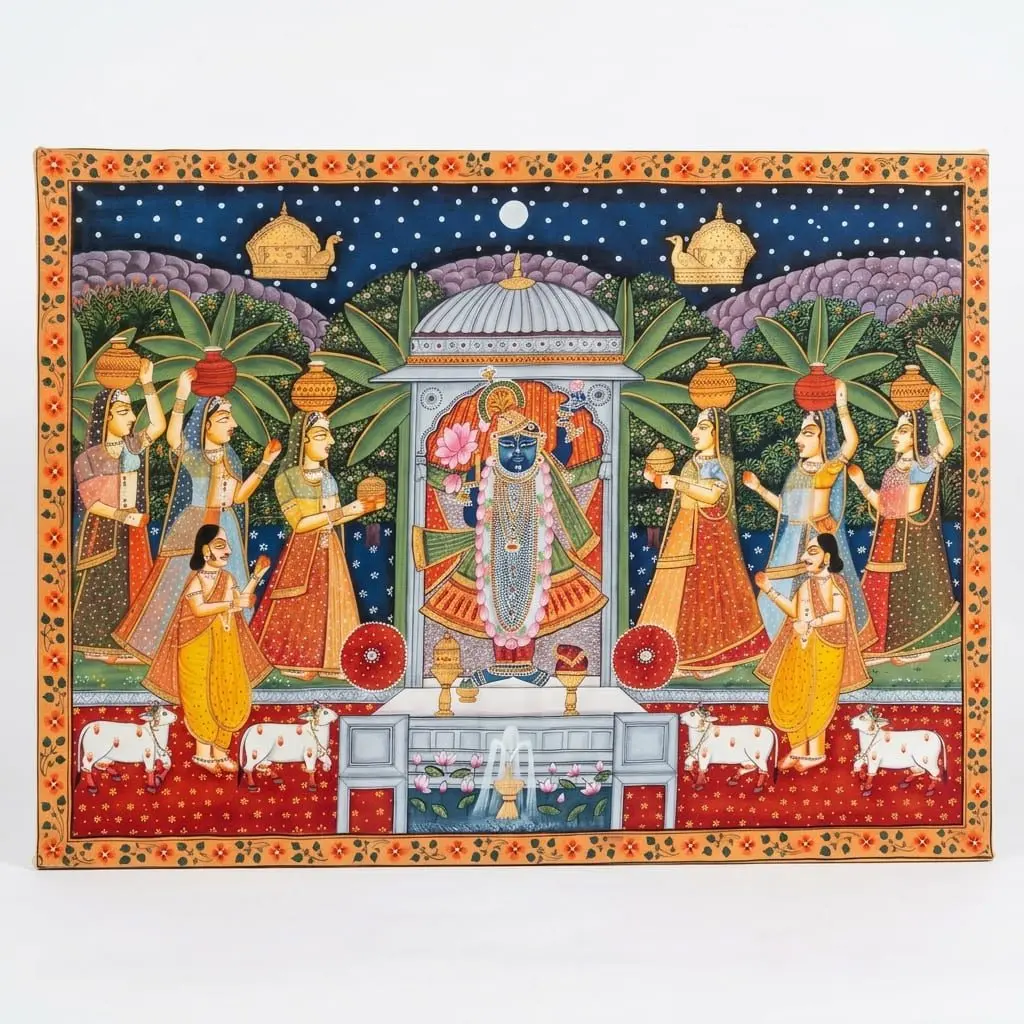
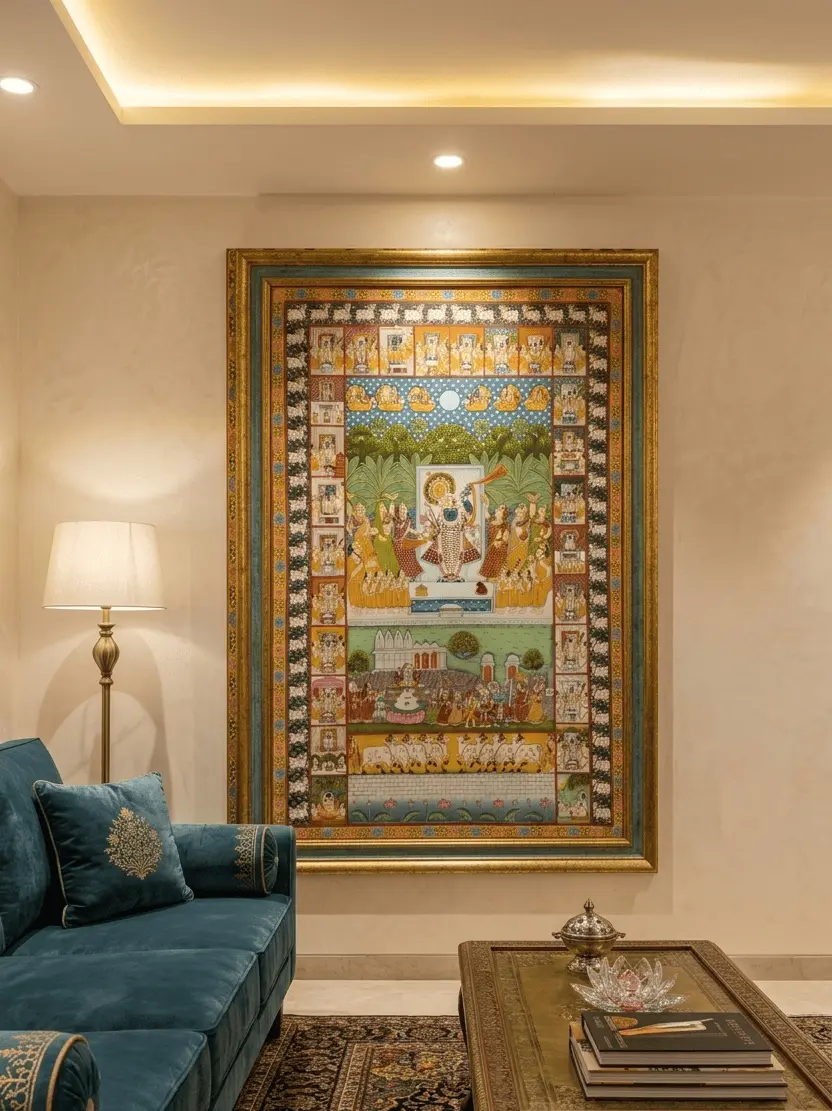
A Gopashtami Pichwai usually shows Shrinathji or Krishna with the flute, surrounded by many decorated cows and calves, with lotus flowers, trees and peacocks. The cows are drawn in a graceful, rhythmic way, often facing the deity, and every animal is richly decorated with ornaments and garlands.
At Rupasya, every Pichwai is 100% handmade in Nathdwara and Udaipur using natural stone pigments and gold foil. There is no digital printing. See our full Gopashtami Pichwai paintings collection.
Symbols and their meaning
| Symbol | Meaning |
|---|---|
| Decorated cows | Gratitude, abundance and the bond between Krishna and cows |
| Calves | Innocence and new beginnings |
| Lotus | Purity and divine beauty |
| Peacock | Joy, love and Krishna's own symbol |
| Wish-fulfilling tree | Prosperity and blessings for the home |
| Gold foil | Divine light and value that lasts |
Many artists also paint cows under the wish-fulfilling tree. If you like this idea, explore our Tree of Life Pichwai paintings.
Why these symbols suit a home
A Gopashtami Pichwai is a very positive artwork. Cows stand for abundance, lotus for purity and the tree for blessings, so the painting brings a calm and auspicious feeling to a space. This is why many families choose it for the puja room and the main living area.
How to choose the right painting
A good Pichwai is an investment in your home, so it helps to know what to check before you buy. Use this table as a quick checklist.
| Check | What to look for |
|---|---|
| Handmade or print | Fine brush lines, small variations, real gold foil shine |
| Base material | Cloth for traditional look, canvas for easy hanging, wall panel for large walls |
| Size | 24x36 inch for medium walls, 48x36 inch or bigger for large living rooms |
| Proof | Certificate of Authenticity with the artwork name |
| Packing | Safe rolled or crated packing for pigments and gold foil |
Handmade or print: how to tell
Look at the painting closely. In a handmade Pichwai, the lines are fine and slightly varied, the colours have depth and the gold foil catches light unevenly as you move. A print looks flat and uniform, and under close view you may see tiny dots. If the seller cannot tell you who painted it and with what materials, be careful.
Choosing the base: cloth, canvas or wall panel
Cloth gives the most traditional look, close to the original temple backdrops. Canvas is easier to frame and hang. A wall panel works well when you want a large statement piece. Pick the base that matches how and where you plan to display it.
Choosing the size
A simple rule is to choose a painting that covers about two-thirds of the width of the furniture below it. A medium wall or a puja room suits 24x36 inch, while a large living room wall looks better with 48x36 inch or bigger. Measure your wall before you decide.
You can browse every theme in our handmade Pichwai paintings category. If you want a special size or design, we also make custom Pichwai paintings.
Where to hang it at home
- Living room: above the sofa as the main wall art.
- Puja room: on the wall behind the mandir.
- Entrance or dining wall: for a warm, welcoming look.
- Gift: a good gift for housewarming, weddings and Gopashtami.
Whichever wall you choose, hang the painting at eye level, with its centre at about 57 to 60 inches from the floor. Soft, indirect light shows the gold foil and the fine details best.
How to care for your Pichwai
With a little care, a handmade Pichwai will stay beautiful for many years.
- Avoid direct sunlight: strong sun can fade natural pigments over time.
- Keep it dry: do not hang it on a damp wall or near a leaking area.
- Dust gently: use a soft, dry cloth and do not rub the gold foil.
- Avoid water and cleaners: never use water, sprays or chemicals on the surface.
- Handle with care: hold the painting by its edges when you move it.
Bring Gopashtami home with a handmade Pichwai
A Gopashtami Pichwai carries the warmth of Vrindavan, the gratitude we owe to cows and the joy of Krishna's childhood. Chosen well, it can become the centre of your puja room or living room for years to come. Explore our Gopashtami Pichwai paintings and find a handmade piece that suits your home.
Frequently Asked Questions
What is done on Gopashtami?
On Gopashtami, devotees bathe, decorate and worship cows and calves, offer them fodder and sweets, and often walk around them in respect. Many also worship Krishna as Gopala, visit temples and support cow shelters. Customs differ by region and family, so follow your own tradition.
How is a Gopashtami Pichwai different from other Pichwai paintings?
A Gopashtami Pichwai centres on cows and calves with Krishna or Shrinathji, usually with lotus, trees and peacocks. Other Pichwais focus on different seasons or festivals, such as Sharad Purnima or Annakut. The cow-and-herd theme is the easiest way to recognise it.
How can I tell if a Pichwai painting is handmade?
Look closely at the brushwork. Handmade Pichwais show fine, slightly varied lines, layered colour and gold foil that catches light unevenly. Prints look flat, with a uniform texture and tiny dots up close. Ask the seller for a Certificate of Authenticity naming the artwork and the materials used.
Is a Gopashtami Pichwai a good gift?
Yes. It suits housewarmings, weddings and festive gifting, especially for families who love Krishna art. Choose a size that fits a typical wall, include the Certificate of Authenticity, and pick a theme with auspicious symbols like cows, lotus and peacock. It helps to know the receiver's taste first.