If you've ever seen a Pichwai painting filled with blooming pink and white flowers framing Shrinathji, you've already met the most celebrated motif in this 400-year-old art form: the lotus. A lotus Pichwai painting is not just decorative. It carries centuries of spiritual meaning, temple tradition and master artisan technique from Nathdwara.
In this guide, we'll walk you through the history, symbolism and different styles of lotus Pichwai paintings, and help you choose the right piece for your home or puja space.
What Is a Lotus Pichwai Painting?
A lotus Pichwai painting is a handmade cloth or canvas artwork from the Nathdwara school of art, where the lotus flower is either the central subject or a recurring background motif surrounding Lord Krishna (worshipped as Shrinathji). These paintings are traditionally used as Pichwais, which are backdrop hangings placed behind the deity's idol in temples and changed according to season and festival.
Lotus-themed Pichwais were historically hung during the summer months, symbolising coolness, purity and the blossoming of devotion, much like the lotus itself, which rises untouched from muddy water.
Also Known As: Kamal Talai Pichwai
Within the tradition, this style is often called Kamal Talai (literally "lotus lake" or "lotus pond"). The term is used for Pichwai compositions built around an expansive pond of blooming lotuses. Some Kamal Talai works focus purely on the botanical detail of lotus buds and leaves, while others show Krishna and the gopis dancing amid the lotus pond during Raas Leela. Whether you come across it as "lotus Pichwai" or "Kamal Talai art", you are looking at the same treasured tradition.
The Symbolism Behind the Lotus in Pichwai Art
- Purity and detachment: The lotus grows in muddy water yet remains untouched, symbolising spiritual purity above worldly attachment.
- Divine throne: Krishna is frequently shown seated or standing on a lotus, which raises his divine status.
- Seasonal marker: Lotus Pichwais were traditionally displayed during the summer utsav (festival) calendar at the Shrinathji temple.
- Prosperity and abundance: A pond full of blooming lotuses signifies fertility, growth and auspiciousness, which is a popular reason buyers choose lotus Pichwai art for entryways and living rooms.
Why the lotus suits a modern home
Beyond its religious meaning, the lotus is a calm and graceful motif. A pond of blooming flowers softens a room, works with many colour schemes and does not feel heavy, which is why lotus Pichwais sit comfortably in both traditional and contemporary interiors.
Popular Styles of Lotus Pichwai Paintings
Every artisan family brings its own palette and detailing to lotus Pichwai art. At Rupasya, our Nathdwara and Udaipur artisans hand-paint each piece using natural stone pigments and gold foil, on cloth, canvas or wall panels. Some of the most-loved styles include:
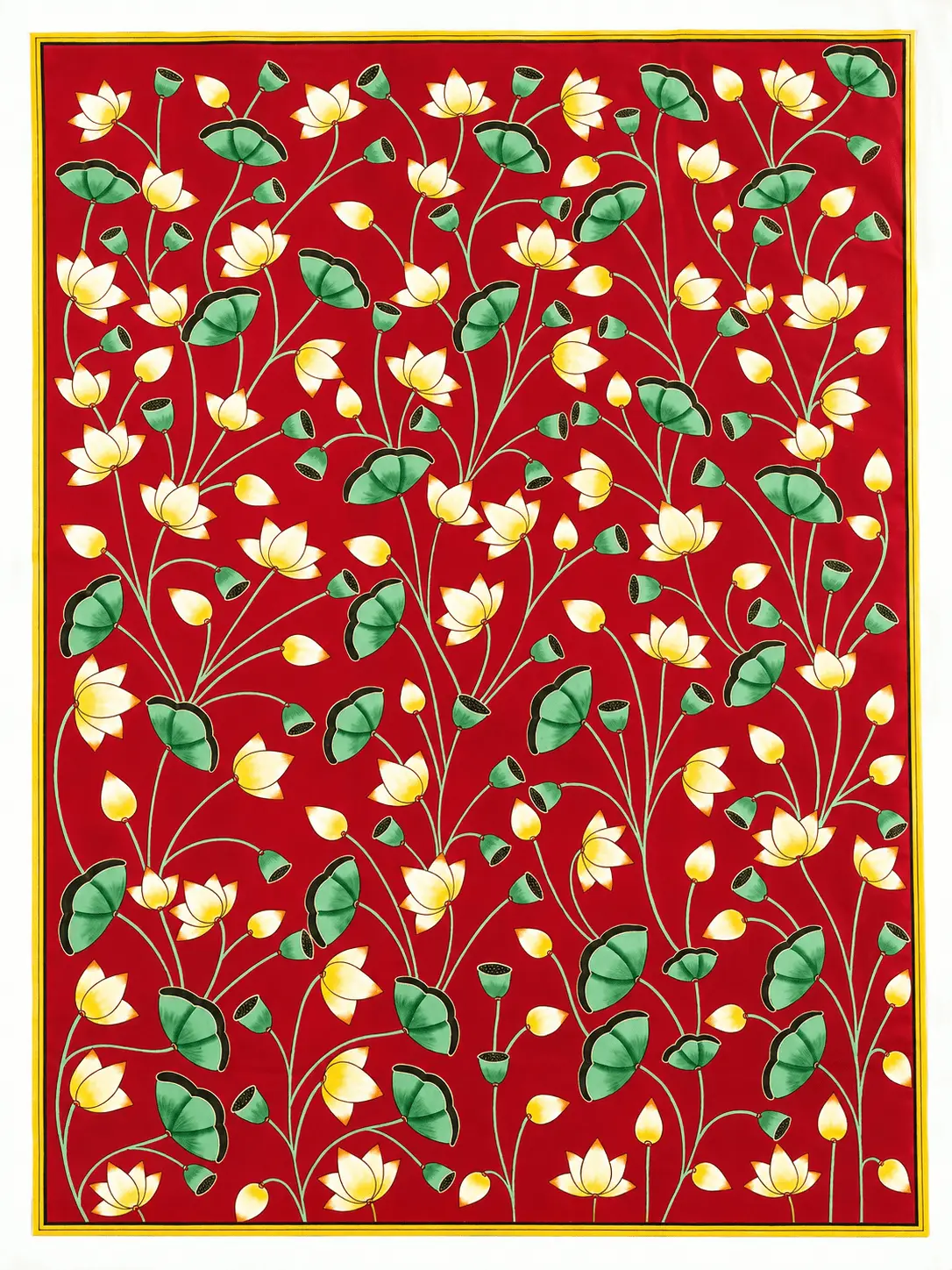
- Red background lotus Pichwai: Bold and traditional, ideal for puja rooms and temple-style interiors.
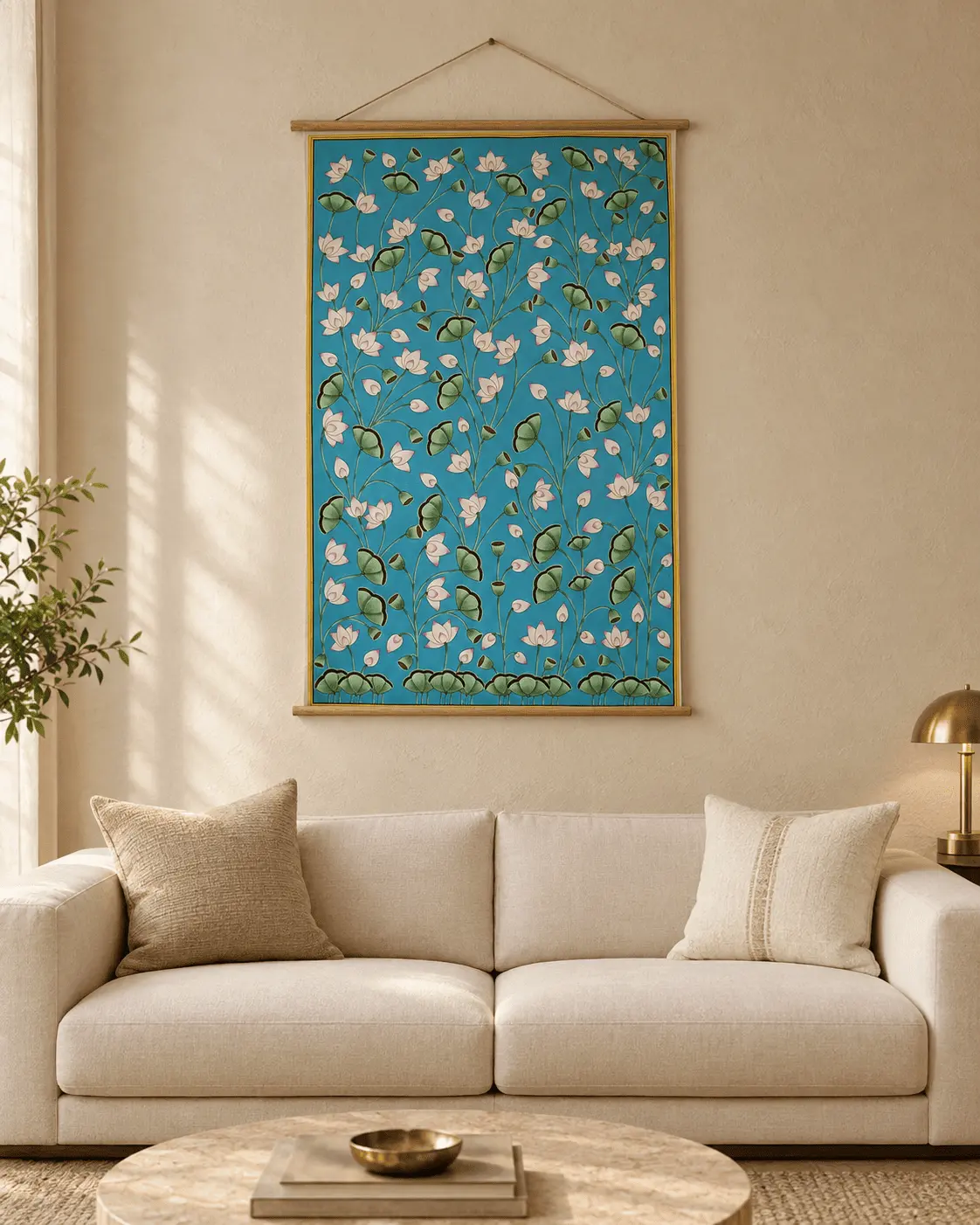
- Blue background lotus Pichwai: Evokes the serenity of a lotus pond at dusk and is popular for living room walls.
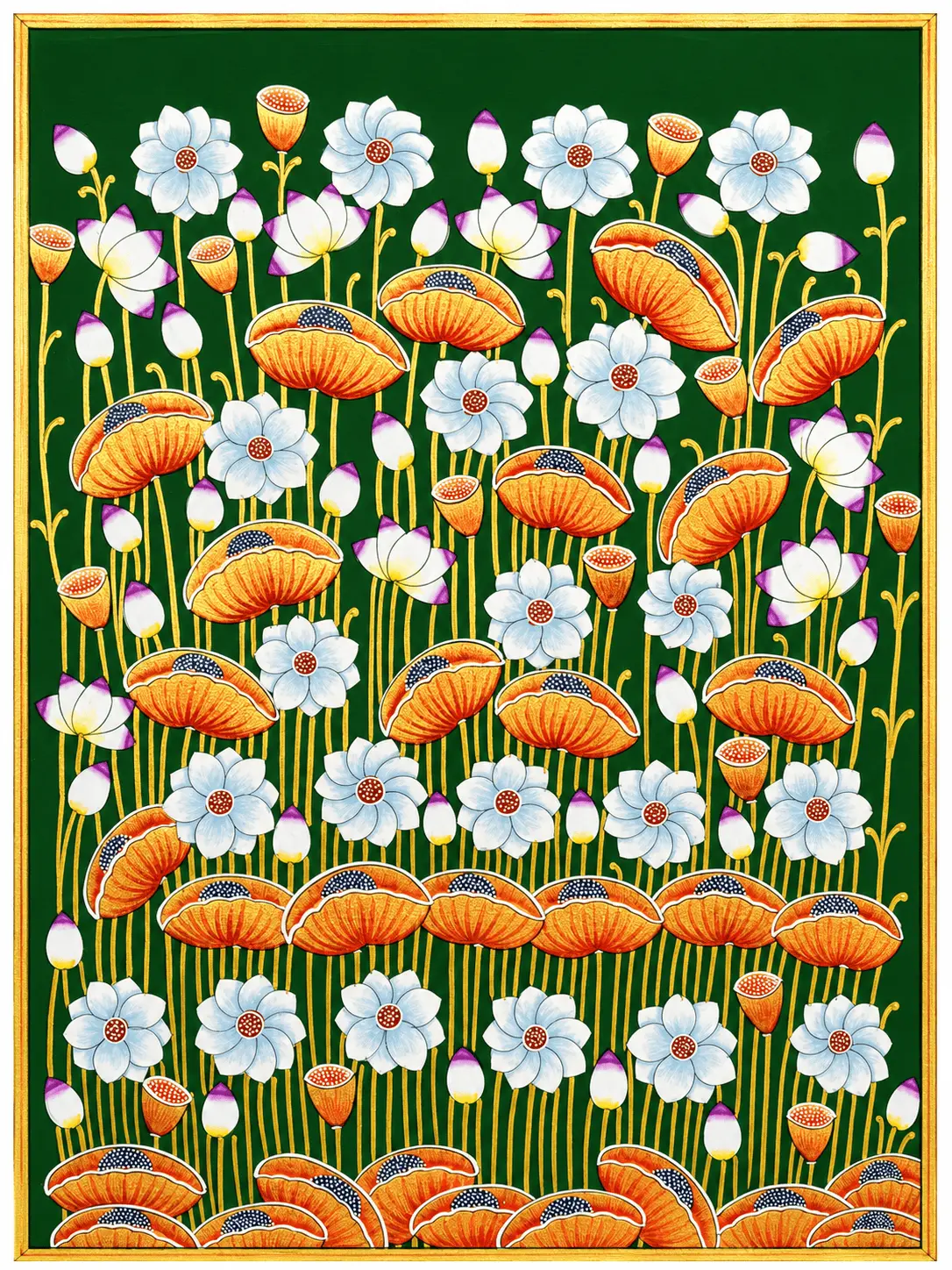
- Green and gold lotus Pichwai: A richer, more opulent palette often chosen for gifting.
- Shrinathji with lotus motif: Combines the deity's form with a border or backdrop of blooming lotuses.
- Golden lotus Pichwai: Features gold-foil detailing on the lotus petals for a shimmering, festive finish.
How to Choose the Right Lotus Pichwai Painting
1. Material: cloth, canvas or wall panel
Cloth is closest to the traditional temple Pichwai and drapes beautifully when framed. Canvas offers a sturdier, ready-to-hang option. Wall panels suit large statement walls or commercial spaces.
| Base | Best for |
|---|---|
| Cloth | A traditional, temple-like look and framed display |
| Canvas | Easy hanging and everyday home use |
| Wall panel | Large walls, hotels, villas and offices |
2. Size
Smaller sizes (12x12 in to 18x24 in) work well for puja shelves and gifting, while larger formats (36x48 in and above) make a striking centrepiece for living rooms and entryways. Measure your wall first, and leave some empty space around the painting so that the detailing can be seen.
3. Colour and Vastu placement
Red and gold tones are traditionally favoured for puja rooms, while blue and green tones suit living rooms and meditation corners. Many buyers also place lotus Pichwai art in the east or north-east direction of the home, which is considered auspicious in Vastu for prosperity and calm. Vastu is a belief tradition, so treat this as a guide and choose the wall that also looks best in your room.
4. Authenticity
Genuine hand-painted Pichwai art shows subtle brushstroke variation and natural pigment texture, unlike flat, uniform machine prints. Always check whether the seller uses natural stone colours and real gold foil, as Rupasya's artisans do. Ask for close-up photos of the actual painting and a Certificate of Authenticity.
Where to Hang a Lotus Pichwai Painting
- Puja room: a red or gold lotus Pichwai on the wall near the mandir for a traditional feel.
- Living room: a blue or green lotus Pichwai above the sofa as the main wall art.
- Entryway: a golden lotus Pichwai for a bright and welcoming first view.
- Gifting: a green and gold or smaller lotus piece for housewarmings and weddings.
Hang the painting at or slightly above eye level, away from direct sunlight and damp walls. Soft, indirect light shows the gold foil best.
How to Care for Your Lotus Pichwai
- Avoid direct sunlight: strong sun can fade natural pigments over time.
- Keep it dry: do not hang it on a damp wall or near a leaking area.
- Dust gently: use a soft, dry cloth and do not rub the gold foil.
- Avoid water and cleaners: never use water, sprays or chemicals on the surface.
Shop Our Lotus Pichwai Painting Collection
Explore our full range of handmade lotus Pichwai paintings, available in multiple colours, sizes and materials, with free Pan-India delivery and worldwide shipping. Browse the Lotus Pichwai Painting Collection.
A few customer favourites:
- Handmade Lotus Pichwai Painting – Blue Background, Landscape (4x3 ft)
- Handmade Lotus Pichwai Painting – Red Background (3x4 ft)
- Handmade Lotus Pichwai Painting – Green & Gold (3x4 ft)
- Shrinathji Golden Lotus Pichwai Painting
- Red Lotus Pichwai Painting – Kamal Talai Floral Wall Art
Looking for something custom? We also offer Custom Pichwai Painting Commissions in your preferred size, colour palette and material.
Explore more from our journal: Pichwai Painting on Cloth vs Canvas vs Wall Panel | Shrinathji Pichwai Painting: History & Meaning
Frequently Asked Questions
What does the lotus mean in Pichwai painting?
In Pichwai art, the lotus stands for purity, spiritual growth and divine presence. It grows from muddy water yet stays untouched, so it also shows detachment from worldly life. Artists paint it as Krishna's throne or as a pond-like backdrop, and lotus Pichwais were traditionally used as the summer Pichwai for Shrinathji.
Is Kamal Talai the same as lotus Pichwai painting?
Yes. Kamal Talai means "lotus lake" or "lotus pond" in the Pichwai tradition. It describes compositions built around a pond of blooming lotuses, sometimes with Krishna and the gopis. It is the traditional name for what most buyers today call a lotus Pichwai painting, so both terms point to the same art.
What materials are used in a handmade lotus Pichwai painting?
A handmade lotus Pichwai uses natural stone pigments and gold foil on cotton cloth, canvas or wall panels. Artists apply colour in layers with fine brushes and add gold foil by hand on the highlights. This follows methods used by Nathdwara's artisan families for generations. Prints, by contrast, look flat and uniform.
Where can I buy an authentic lotus Pichwai painting online?
You can buy handmade lotus Pichwai paintings from Rupasya's Lotus Pichwai collection, made by artisans from Nathdwara and Udaipur. Whichever seller you choose, ask for a Certificate of Authenticity, close-up photos of the actual painting and details of the materials. Rupasya offers free Pan-India delivery and worldwide shipping.
What size lotus Pichwai painting is best for a puja room?
Smaller formats from 12x12 inch to 18x24 inch suit puja shelves and altars, while sizes of 36x48 inch and above work as a statement piece on living room walls. Always measure the wall or shelf first and leave some empty space around the painting so the fine detailing can be seen.