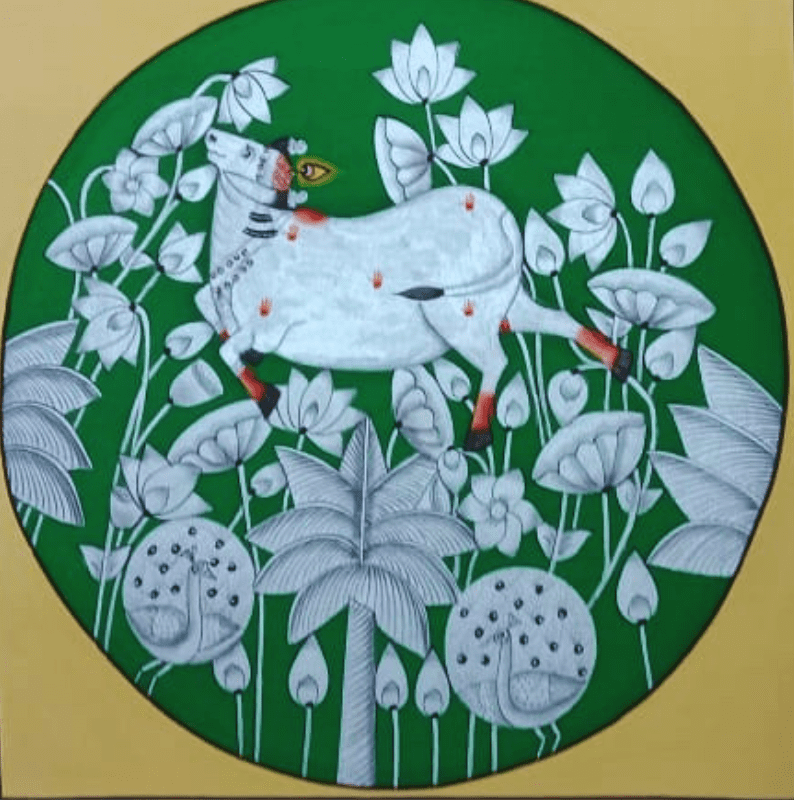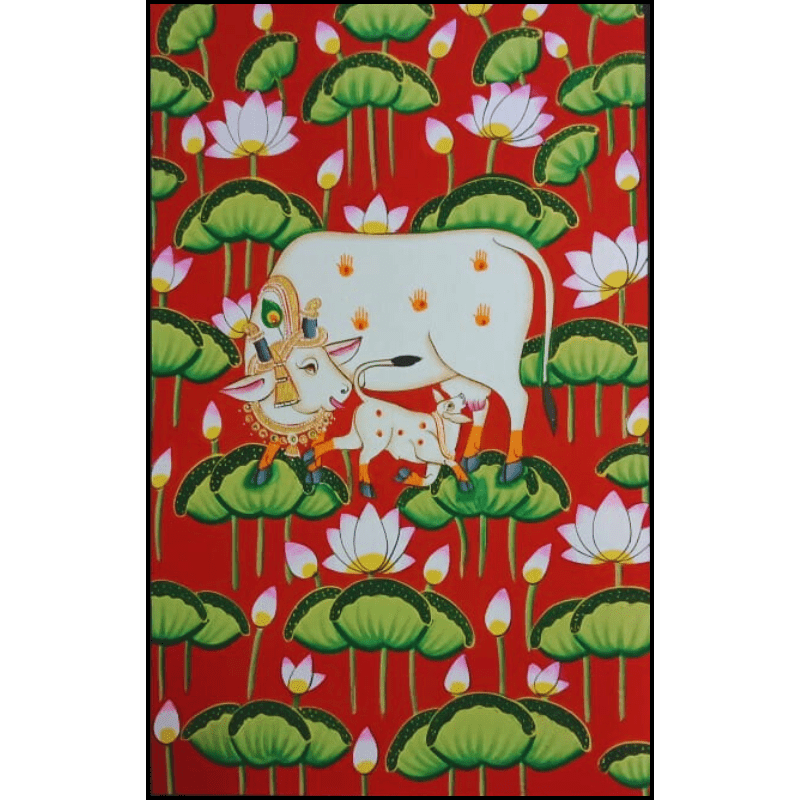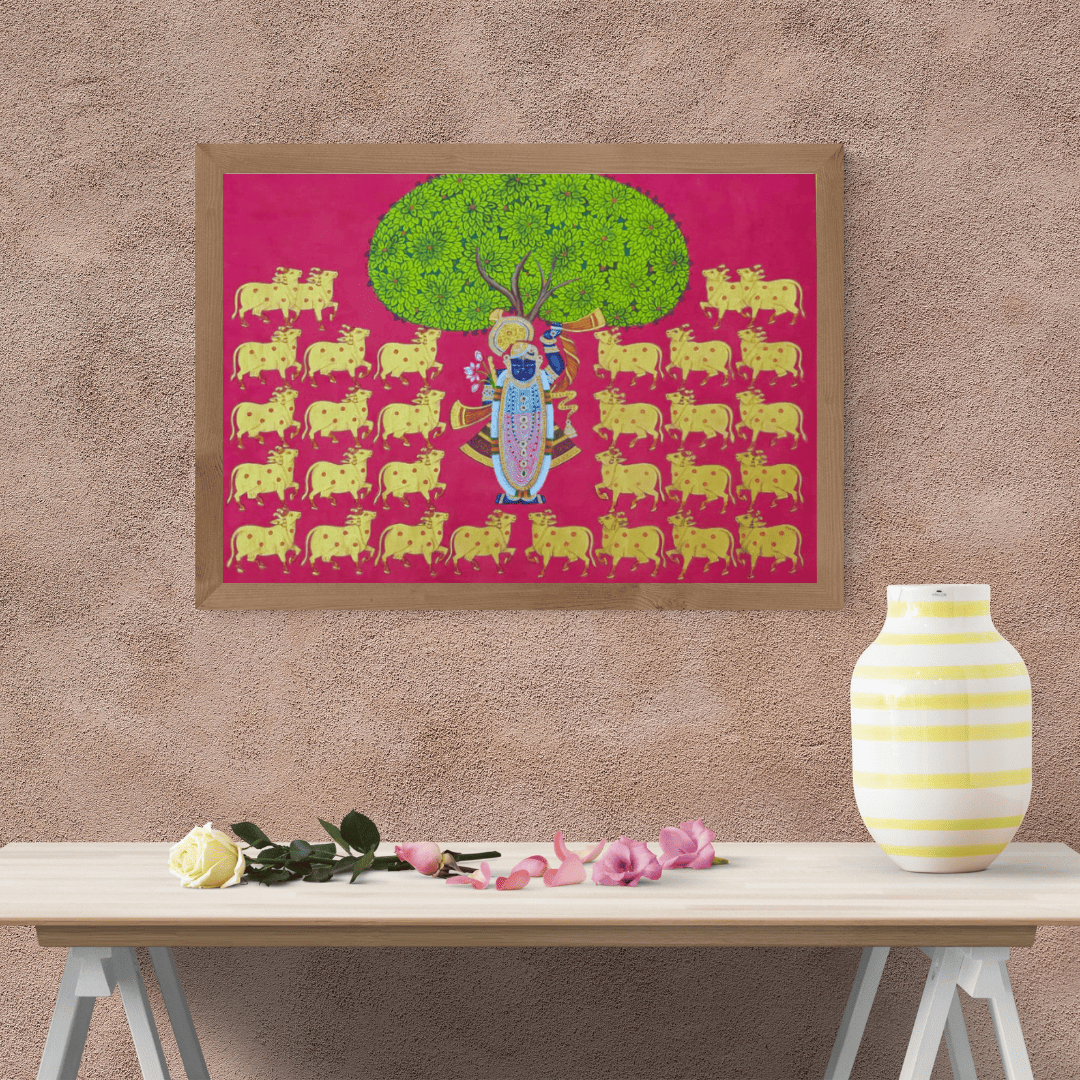
Pichwai paintings are among India’s most treasured traditional art forms, originating over 400 years ago in Nathdwara, Rajasthan. These intricate artworks were created as temple backdrops for Lord Shrinathji, a beloved form of Lord Krishna. Over time, Pichwai paintings evolved from devotional textiles into fine artworks admired by collectors, art enthusiasts, museums, and interior designers across the world.
Today, the art form stands as a testament to the devotion of Pushtimarg followers and the extraordinary skill of generations of Nathdwara artists. This article explores the complete history, cultural legacy, evolution, symbolism, and modern relevance of Pichwai paintings — from their origin to their global influence.
“Pichh” meaning back
“Wai” meaning hanging
Earlier, these paintings were created on large handwoven cloths and hung behind the idol of Shrinathji in temples. Their purpose was not merely decorative — they formed an important part of daily rituals, festivals, and seasonal celebrations in the Pushtimarg tradition.
Pichwai originated in the 17th century, during the rise of the Pushtimarg sect founded by Vallabhacharya. The art flourished after the idol of Shrinathji was moved from Govardhan (Mathura) to Nathdwara around 1670 AD to protect it from Mughal invasions.
The temple town soon became the sacred center of Pichwai art, attracting hundreds of skilled artists who dedicated their lives to creating devotional backdrops.
To understand the true legacy of Pichwai, it's important to trace its evolution through major historical periods:
1600–1700 AD – Birth of Pichwai in Nathdwara
Shrinathji temple established
Textile backdrops introduced for daily darshans
Artists developed signature detailing styles
Natural pigments and handmade brushes used
1700–1800 AD – Growth Under Royal Patronage
Supported by Mewar rulers and temple merchants
Paintings became larger and more intricate
Themes expanded beyond temple rituals
Mughal miniature style influence emerged
Festivals and seasons began to be depicted
1800–1900 AD – Spread to Udaipur & Jaipur
Artists migrated to Udaipur, Jaipur, and Kota
Large murals appeared in palaces and mansions
Use of cloth, cotton, and thicker canvas increased
1900–2000 AD – Global Recognition
Museums in Europe, UK, and USA collected Pichwai
Gold-leaf Pichwai gained collector value
Became a heritage art form
2000–Present – Modern Revival
Rise due to art exhibitions
Popular in luxury interior décor
Increased global interest in Indian heritage
Growth through online platforms
3. What Makes Pichwai Paintings Unique?
Pichwai is more than just a painting style — it is a visual celebration of devotion, symbolism, and Indian heritage.
Intricate detailing
Rich natural colors
Lotus motifs
Cows (Gaumata)
Festivals and seasons
Gold leaf work
Sacred symbols of Lord Krishna
Each painting takes weeks or even months to complete, reflecting deep spiritual dedication.
Krishna lifting Govardhan Hill
Symbolizes protection, strength, and divine love
2. Seasonal Darshans
Summer: light colors, lotuses
Monsoon: peacocks, greenery
Winter: warm tones, woollen attire
3. Festival Celebrations
Annakut
Sharad Purnima
Holi
Janmashtami
Diwali
Natural pigments (indigo, zinc, red stone, charcoal, turmeric)
Handmade cotton or khadi cloth
Squirrel-hair brushes
22k gold leaf
Organic adhesives
10-Step Traditional Process
Cotton cloth preparation
Khadi coating
Sketching layout
Blocking colors
Layering details
Gold leaf application
Ornament detailing
Facial expressions
Border refinement
Final polishing
6. Evolution of Pichwai Over Centuries
Traditional
Textile base
Natural colors
Large temple artworks
Strict rules
Modern
Canvas, paper, silk
Acrylic + natural pigments
Miniature versions
Gold textured art
Contemporary styles
Nathdwara — birthplace
Udaipur — miniature & gold leaf artists
Jaipur — paper & cloth Pichwai
Mumbai & Delhi — collector hubs
London museums
Metropolitan Museum of Art (New York)
Asian Art Museum (San Francisco)
European galleries
8. Types of Pichwai Paintings
Cloth Pichwai – traditional temple use
Canvas Pichwai – modern décor
Gold Leaf Pichwai – luxurious style
Miniature Pichwai – fine detailing
Wall Pichwai / Murals – direct wall art
9. The Living Legacy of Nathdwara Artists
Skills passed from father to son
Work done in Chitrashala-style studios
Many still create temple backdrops
Luxury living rooms
Hotels & resorts
Meditation rooms
Restaurants
Boutique stores
Corporate offices
Long-lasting vs fades over time
Natural pigments vs synthetic colors
Spiritual value vs decorative print
Intricate details vs flat surface
Artist-made vs machine-made
Pichwai paintings represent one of India’s richest artistic traditions — a 400-year legacy of devotion, craftsmanship, and culture. From temple backdrops in Nathdwara to global art collections, Pichwai has evolved while preserving its divine essence.
For anyone who values Indian heritage and fine art, Pichwai is not just décor — it is a timeless expression of devotion.