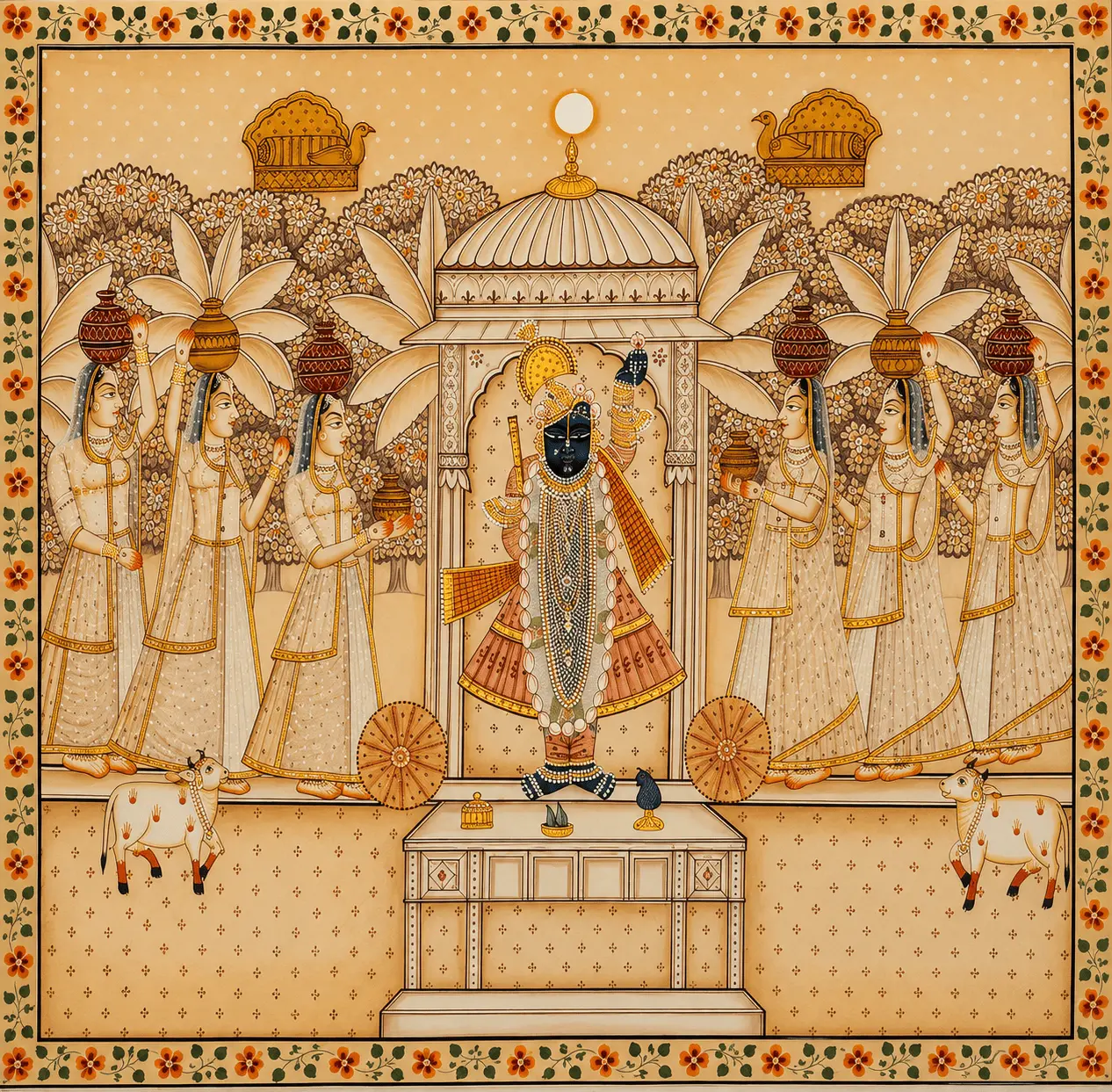
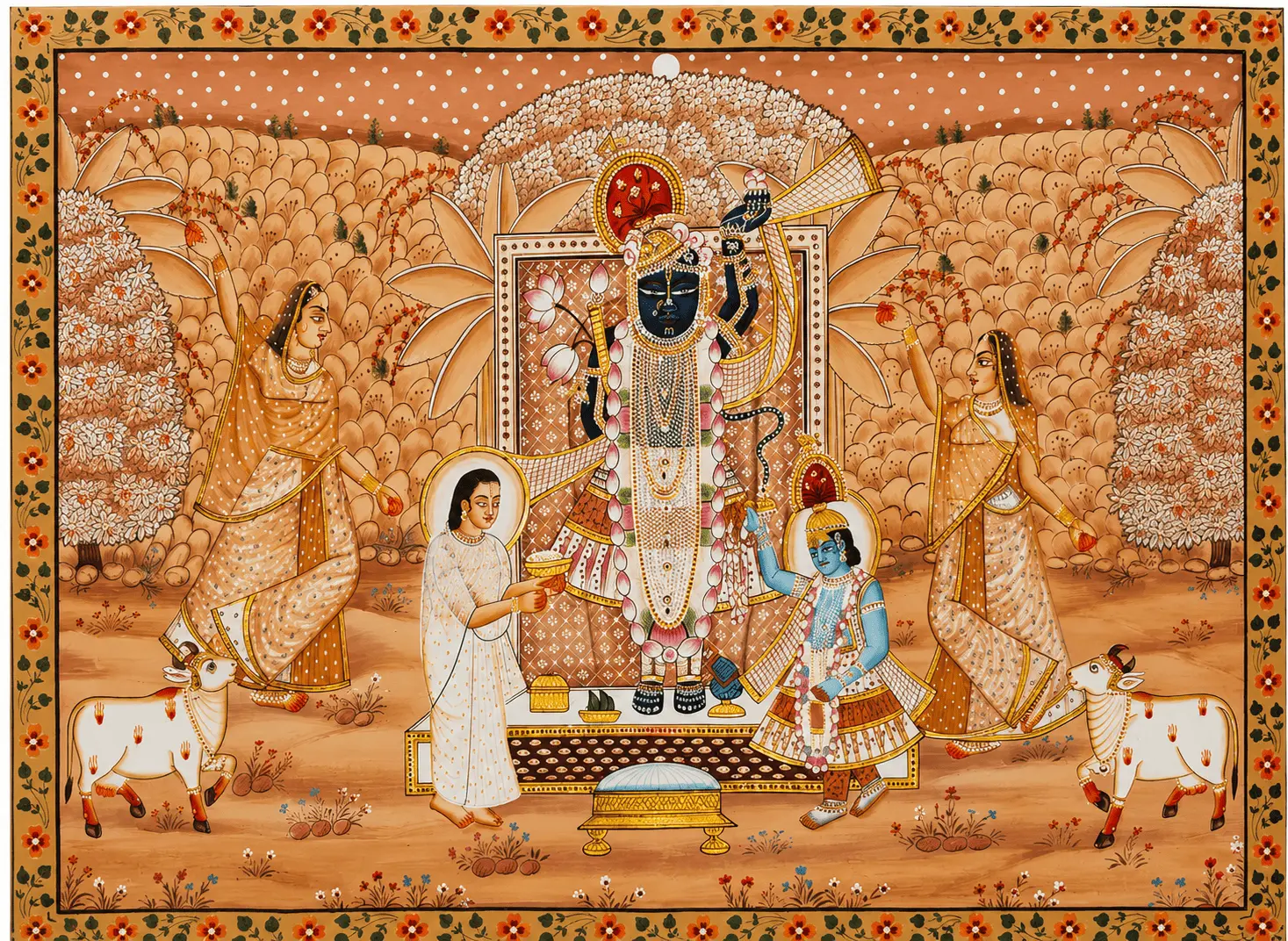
A Shrinathji Pichwai painting is a hand-painted devotional artwork that shows Shrinathji, the seven-year-old child form of Lord Krishna, as its central figure. It comes from Nathdwara, a temple town in Rajasthan, and the tradition is more than 400 years old. The word "Pichwai" means a hanging (wai) placed at the back (pichh), because these paintings were first made as large cloth backdrops hung behind the idol of Shrinathji.
In the Nathdwara temple, a different Pichwai is used for each season and festival. This is why Shrinathji Pichwai paintings show so many themes, from cows and lotus ponds to peacocks, gopis and festival scenes. Today the same art is painted for homes, pooja rooms, offices and collections. This guide explains who Shrinathji is, how the art began, what each part of the painting means, the main types, and how to recognise an authentic handmade piece.
Shrinathji Pichwai Painting at a Glance
- Subject: Shrinathji, Lord Krishna as a seven-year-old child
- Origin: Nathdwara, Rajasthan, over 400 years ago
- Tradition: Pushtimarg, where the deity is served like a living child
- Traditional base: handspun cotton cloth
- Materials: natural stone and plant pigments, fine brushes and gold foil
- Recognition: Nathdwara Pichhwai Painting is a registered Geographical Indication (GI), registered in 2023
Who Is Shrinathji?
Shrinathji is the child form of Lord Krishna worshipped at the Nathdwara temple. The name joins "Shri" (sacred), "Nath" (lord and protector) and "ji" (a word of respect). In the Vaishnava tradition, he is seen as a form of Vishnu-Krishna.
His image comes from the story of Mount Govardhan. According to the Bhagavata Purana, a seven-year-old Krishna lifted the Govardhan hill on the little finger of his left hand and held it for seven days, to shelter the people and cattle of Vrindavan from the heavy rain sent by Indra. This is why Shrinathji is shown with his left hand raised and his right hand lowered. His face shows calm, power and care at the same time.
History of Shrinathji Pichwai Painting
According to tradition, the idol of Shrinathji was brought from Mathura to Rajasthan in the 17th century. The cart carrying the idol could not be moved any further at Nathdwara, and devotees took this as a sign that Shrinathji wished to stay there. The temple was established around 1672 CE, and the town grew into the centre of Pichwai painting.
Followers of the Pushtimarg tradition worship Shrinathji as a living child, with daily care, dressing and festivals. Artists around the temple began painting large cloth backdrops for his sanctum, one for every mood, season and festival. Early Pichwais often showed lotus ponds, cows and peacocks to frame the deity. As the art moved into homes and collections, artists began placing Shrinathji himself at the centre of the painting. In 2023, Nathdwara Pichhwai Painting was registered as a GI for handicrafts from Rajasthan.
The Eight Darshans of Shrinathji
At the Nathdwara temple, Shrinathji is revealed to devotees eight times a day, and each darshan reflects a different moment in Krishna's daily life. Artists draw on these daily moods, along with the seasons and festivals, when they paint Shrinathji.
| Darshan | Time of day | Meaning |
|---|---|---|
| Mangala | Dawn | Waking up and morning blessings |
| Shringar | Morning | Dressing and adornment |
| Gwal | Mid-morning | Going out with the cows |
| Rajbhog | Midday | The main meal offering |
| Utthapan | Afternoon | Waking from the afternoon rest |
| Bhog | Late afternoon | Late-day food offering |
| Sandhya Aarti | Dusk | Evening worship |
| Shayan | Night | Putting the deity to rest |
Exact timings change with the season and are set by the temple.
What You See in a Shrinathji Pichwai Painting
Shrinathji at the Centre
Shrinathji is usually shown facing the viewer directly. His skin is dark, almost black, a colour linked with divine depth and mystery. His eyes look straight at the devotee, because darshan is a two-way act: you see the deity and the deity sees you. His clothes change with the season and occasion, and in authentic paintings his crown, necklace, earrings and waistband are made with gold foil.
The Lotus Border
Many Shrinathji Pichwais are framed with white lotus flowers. The lotus grows pure and white from muddy water, so it stands for purity, spiritual growth and the beauty that comes from devotion.
Gopis and Devotees
Around Shrinathji you often see gopis, the women of Vrindavan who stand for selfless devotion. They are painted in graceful postures of prayer and service, wearing richly decorated Rajasthani clothes in bright colours.
Sacred Cows
Cows appear in many Shrinathji compositions because Krishna is also Govinda, the protector of cows. They are painted with the same care as the human figures: decorated, calm and full of presence.
Types of Pichwai Paintings
Pichwai paintings come in many types, and many of them show Shrinathji. Each theme tells a different part of Krishna's story. These are the main types you will find:
- Lotus Pichwai (Kamal Talai): Shrinathji among blooming lotuses in a pond. Traditionally hung in summer to give the deity a feeling of coolness. See lotus Pichwai paintings · Read about lotus Pichwai meaning
- Cow Pichwai (Kamdhenu): Shrinathji with decorated cows, or the sacred wish-fulfilling Kamdhenu, standing for abundance and protection. See Kamdhenu cow Pichwai paintings
- Radha Krishna Pichwai: Krishna with Radha, surrounded by peacocks, lotus ponds and the landscape of Vrindavan. Here Krishna appears with Radha rather than as the child Shrinathji.
- Tree of Life Pichwai (Kalpavriksha): A tall, wish-fulfilling tree with cows resting beneath it, peacocks in its branches and a lotus pond at its feet. See Tree of Life Pichwai paintings
- Gopashtami Pichwai: Shrinathji surrounded by many cows, celebrating the day Krishna became a full cowherd. See Gopashtami Pichwai paintings
- Annakoot Pichwai: A mountain of food offered to the deity during Govardhan Puja, recalling Krishna lifting Mount Govardhan. See Annakoot Pichwai paintings
- Sharad Purnima Pichwai: A night scene with a bright full moon, celebrating the autumn full-moon night. See Sharad Purnima Pichwai paintings
- Raas Leela Pichwai: Krishna dancing with the gopis of Vrindavan, one of the most joyful themes in Pichwai art. See Raas Leela Pichwai paintings
- Janmashtami Pichwai: Celebrates the birth of Krishna with bright colours and garland motifs. See Janmashtami Pichwai paintings
What Makes a Shrinathji Pichwai Painting Special
A real Shrinathji Pichwai painting is made completely by hand. Artists in Nathdwara and Udaipur grind natural stone and plant pigments, use fine brushes for detailing, and apply gold foil by hand on the highlights. A single large painting can take 20 to 60 days to finish, depending on its size and detail. The result is a painting with layered colour, fine miniature-style detail and a devotional feeling that a printed copy cannot match.
How to Identify an Authentic Shrinathji Pichwai Painting
Because Shrinathji is such a popular subject, many canvas prints and digital copies are sold using the same keywords as handmade paintings. Here is what to check:
- Certificate of Authenticity: It should carry the artist's name, signature, painting title, materials, dimensions and date of completion.
- A live photo at an angle: Ask for a photo of the actual painting to see the texture of the pigments and the physical gold foil.
- The base material: Genuine Pichwai is painted on handspun cotton cloth or heavy canvas, not thin polyester fabric.
- The brushwork: Hand-painted work shows small natural variations. Prints look perfectly uniform.
- The price: An unusually low price for a large "handmade" painting is a red flag. At Rupasya, Pichwai paintings start from Rs 7,100 and go up to Rs 2,50,000, depending on size, gold foil work, base material and the complexity of the composition.
At Rupasya, every Shrinathji Pichwai is 100% handmade by master artisans from Nathdwara and Udaipur. We do not sell prints or reproductions, and every painting comes with a Certificate of Authenticity.
How to Choose the Right Shrinathji Pichwai Painting
People choose a Shrinathji Pichwai painting to bring a peaceful, spiritual feeling into the home, to gift to family, or to keep a piece of Rajasthani culture. Before you decide, think about:
- Size: Measure your wall first. A painting above a sofa looks balanced when it covers roughly two-thirds to three-quarters of the sofa's width.
- Theme: Choose cows, lotus or a festival scene based on the mood you want in the room.
- Colours: Pick shades that suit your room. Warm, earthy interiors go well with white and gold lotus themes, while bold interiors can carry deeper blues and reds.
- Placement: A pooja room suits a traditional Shrinathji darshan. A living room or bedroom can take a lotus or cow theme.
Where to Hang a Shrinathji Pichwai Painting
- Pooja room: on a clean wall near the mandir, where a traditional Shrinathji darshan fits best.
- Living room: above the sofa or on the main wall, often with a lotus or cow theme.
- Entrance hall: a warm, welcoming first view for guests.
- Office or study: a calm backdrop, often in a lotus or Tree of Life theme.
Hang the painting at or slightly above eye level, and leave some empty wall space around it so that the fine detailing can be seen. Soft, indirect light shows the gold foil best.
How to Care for Your Pichwai Painting
- Avoid direct sunlight: strong sun can fade natural pigments over time.
- Keep it dry: do not hang it on a damp wall or near a leaking area.
- Dust gently: use a soft, dry cloth and do not rub the gold foil.
- Avoid water and cleaners: never use water, sprays or chemicals on the surface.
To explore handmade options, see our Shrinathji Pichwai Paintings collection. You can also browse the wider Pichwai Paintings Collection for more styles and sizes.
Conclusion
A Shrinathji Pichwai painting is more than wall art. It carries over 400 years of devotion, craft and storytelling from Nathdwara. Whether you choose it for worship, for gifting or to bring warmth and meaning to your home, an authentic handmade piece will stay with you for generations. If you want a particular size, theme or colour, you can also ask for a custom Pichwai painting. We ship worldwide.
Frequently Asked Questions
What is the difference between a Shrinathji painting and a Pichwai?
A Pichwai is a large devotional cloth backdrop, originally hung behind the idol of Shrinathji. A Shrinathji painting is any work with Shrinathji as its main subject and can be smaller, focusing on his face or form. A Shrinathji Pichwai is a Pichwai with Shrinathji at the centre. Not every Pichwai shows him.
Why is Shrinathji shown with his left hand raised?
The raised left hand recalls the story of Krishna lifting Mount Govardhan on his little finger. He held it for seven days to protect the people and cattle of Vrindavan from the heavy rain sent by Indra. The lowered right hand completes the pose, showing calm and care.
How long does it take to make a Shrinathji Pichwai painting?
A large handmade Shrinathji Pichwai usually takes 20 to 60 days. The time depends on the size, the amount of fine detailing and the amount of gold foil work. Artists grind natural pigments and paint every detail by hand, so the process cannot be rushed.
How much does a Shrinathji Pichwai painting cost?
Handmade Pichwai paintings at Rupasya start from Rs 7,100 and go up to Rs 2,50,000. The price depends on size, gold foil detailing, base material and the complexity of the composition. Be careful of unusually low prices for large paintings sold as handmade, because these are often prints.