Imagine a festival of joy, colour and play, frozen in time on a beautiful cloth. This is the magic of a Holi Pichwai painting. Born in the temples of Nathdwara, these artworks do more than show a scene. They let you feel the laughter, the splash of colours and the divine love of Krishna and Radha. For centuries, Pichwai has been a visual prayer, and what subject is more full of prayerful joy than Holi, the festival that celebrates life itself? Let's step into this vibrant world.
What Is a Holi Pichwai Painting?
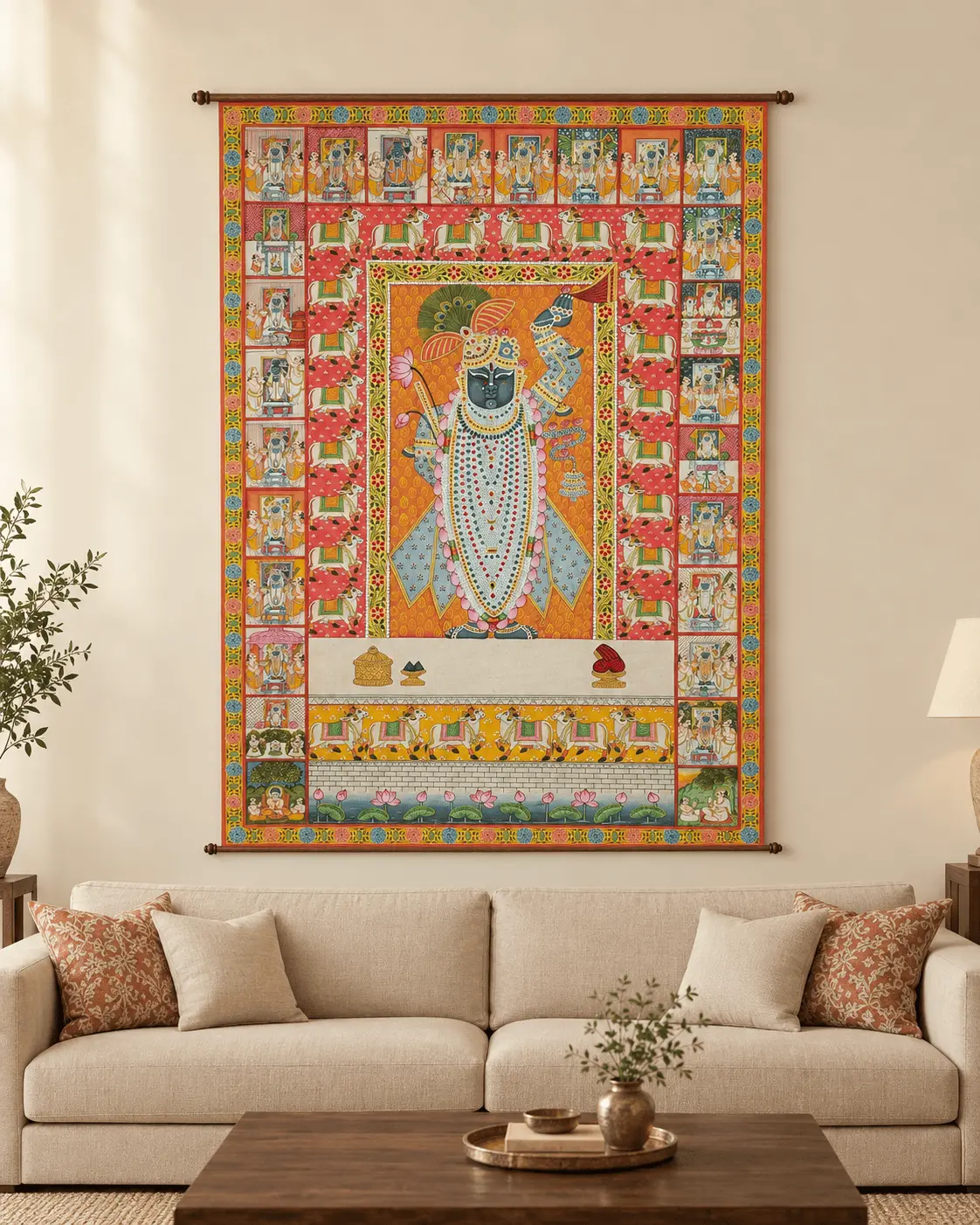
A Holi Pichwai painting is a handmade devotional artwork from Nathdwara, Rajasthan, that shows Krishna, Radha and the gopis (cowherd girls) celebrating Holi. Pichwai paintings were first made as large cloth backdrops behind the idol of Shrinathji, and the temple changes them with the seasons and festivals. Holi, the festival of spring and colour, is one of the most joyful themes among them.
A Playful Battle of Colours
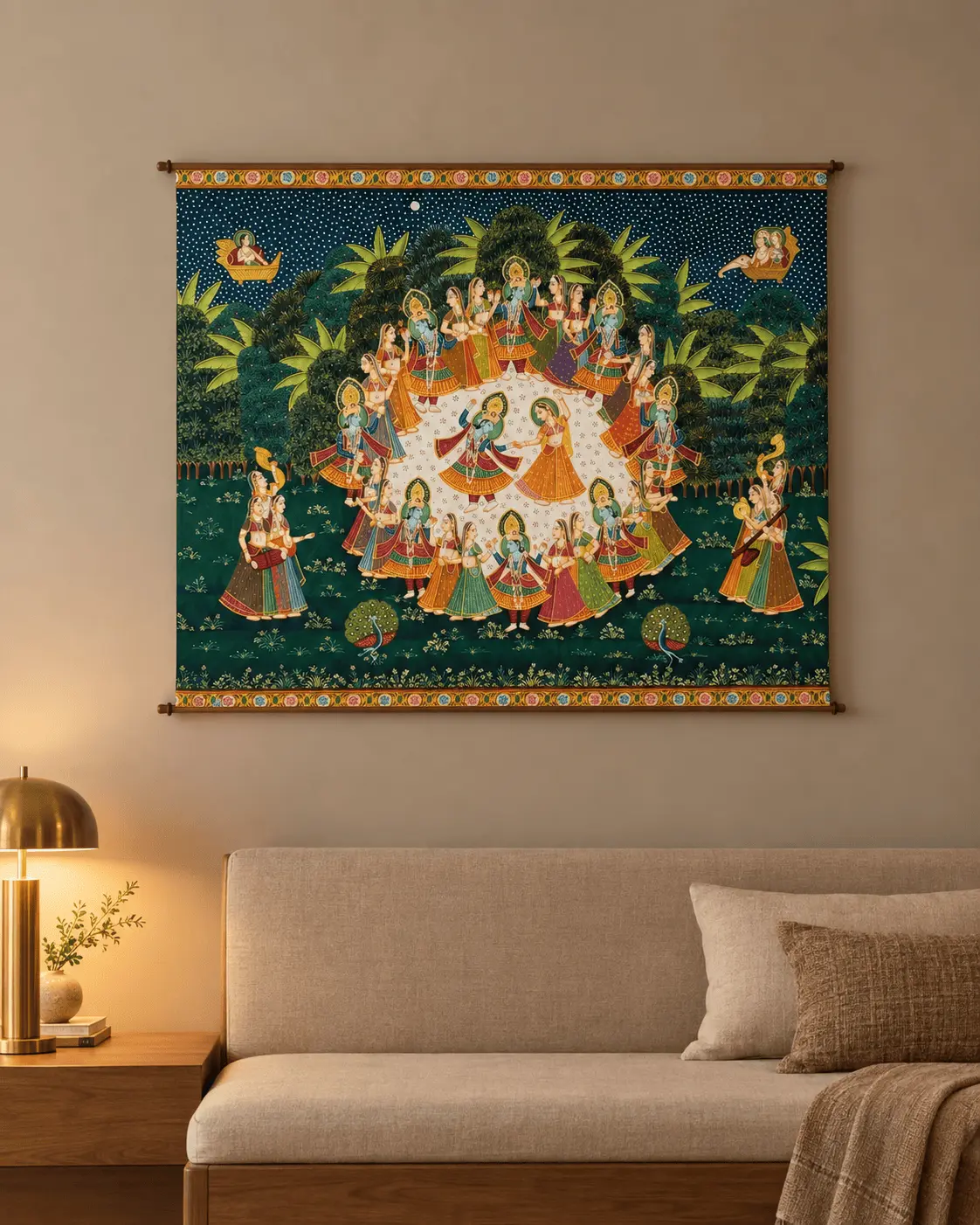
The paintings show Krishna, his beloved Radha and the gopis in the middle of a joyful colour fight. You can almost hear the laughter. Krishna might be aiming a pichkari (water gun) at Radha, while the gopis surround him with handfuls of bright powder. Every detail is full of movement and happiness.
According to popular tradition, this play of colour is remembered in the Holi celebrations of Braj, the region around Mathura and Vrindavan, where the festival is linked with Krishna's childhood. Artists paint it as a scene of divine love that is joyful, innocent and full of play.
Symbols of Spring and Fun
The artists fill the scene with signs of Holi and spring. These are not just decorations. They tell you it is a time of new beginnings, fun and celebration.
| Symbol | What it stands for |
|---|---|
| Pichkari (water gun) | Play, joy and the childlike spirit of Krishna |
| Pots of coloured water | The festival of colour and abundance of joy |
| Flowers in bloom | Spring, new beginnings and the beauty of Vrindavan |
| Green trees | Growth, life and the forest setting of Krishna's stories |
| Flying powder and colours | Energy, movement and celebration |
| Gopis | Devotion and the joy of being close to the divine |
Holi Pichwais are closely related to the Raas Leela, another joyful Krishna theme. To see how that scene is painted, browse our Raas Leela Pichwai paintings, or read our guide to Radha Krishna paintings.
Crafting the Festival: Colours and Skill
Making a Holi Pichwai is a special challenge because it needs so much colour and life.
A natural palette of joy
To paint these bright scenes, artists use colours from nature. Pichwai artists traditionally grind natural pigments made from minerals, stones and plants, and apply gold foil by hand on selected details. This means the painting's joy is not just in the subject but in the very materials. Each colour is pure and layered, and a handmade painting has a depth that a print cannot match.
The artist's steady hand
First, the scene is drawn lightly on the cloth. Then, layer by layer, the artist adds colour. The hardest part is painting the small, joyful details: the smile on Krishna's face, the fold of a wet saree, the splash of colour in the air. This requires a calm hand and a patient heart. It is a slow art in a fast world.
From Temple to Today: Holi Pichwai in Your Home
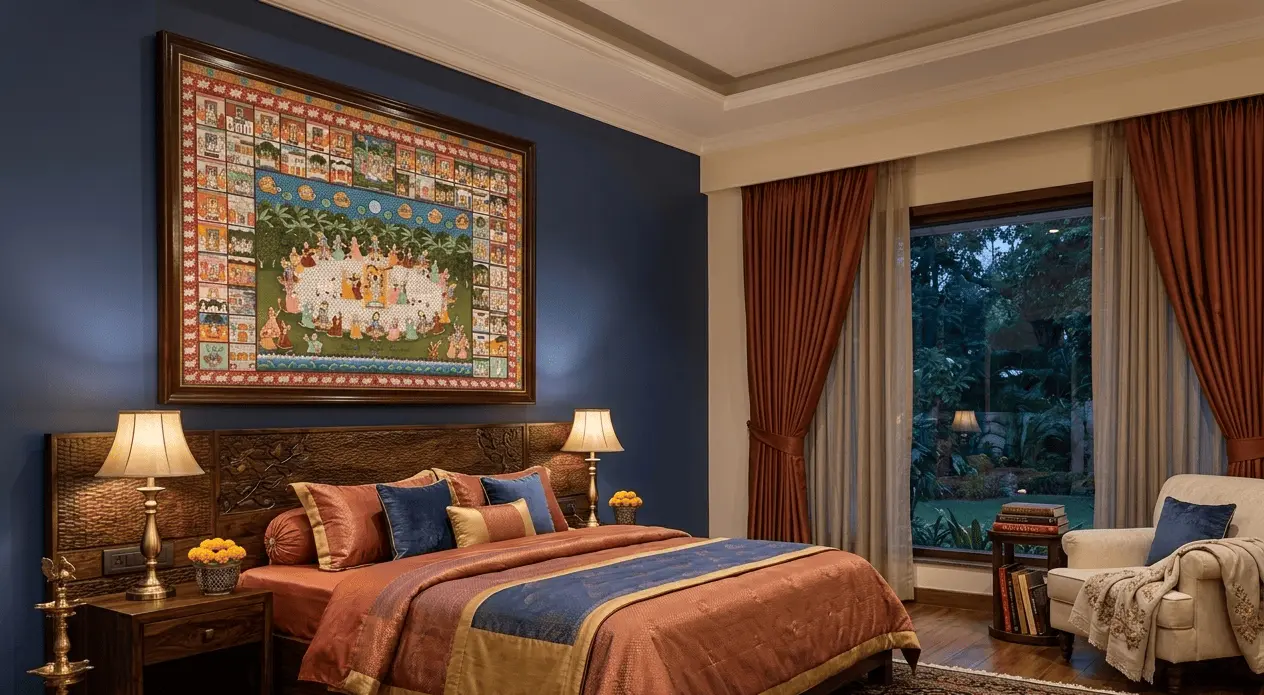
This art that started in temples now brings its festive spirit to homes around the world.
More than a festival painting
A Holi Pichwai does more than remember a holiday. In your home, it is a daily source of joy and warmth. It reminds you of love, playfulness and togetherness. It can brighten a living room, add warmth to an office or bring a smile to an entrance hall. It is a piece of eternal celebration.
Where to hang a Holi Pichwai
- Living room: above the sofa as the main wall art, where its bright colours become the centre of the room.
- Entrance hall: a cheerful first view for guests.
- Office or reception: a welcoming, lively backdrop.
- Family or dining area: a joyful scene for shared spaces.
Hang the painting at or slightly above eye level, and leave some empty wall space around it so that the fine details can be seen. Soft, indirect light shows the colours and gold foil best. For help choosing a base, read our guide on Pichwai painting on cloth vs canvas vs wall panel.
How to Choose a Handmade Holi Pichwai
| Check | What to look for |
|---|---|
| Handmade or print | Fine brush lines, small natural variations, layered colour |
| Base material | Cloth for a traditional look, canvas for easy hanging, wall panel for large walls |
| Size | Measure your wall first. A painting should cover about two-thirds of the furniture width below it |
| Colours | Match the main colours to your room. Bright scenes lift neutral walls |
| Proof | Certificate of Authenticity with the artwork name |
Keeping the Tradition Alive
When you choose a real, hand-painted Holi Pichwai, you help keep a 400-year-old story alive. You support the artists in Nathdwara who know these stories by heart. In a time of digital prints, an original painting is a precious treasure. It is a piece of cultural history you can touch.
How to Care for Your Holi Pichwai
- Avoid direct sunlight: strong sun can fade natural pigments over time.
- Keep it dry: do not hang it on a damp wall or near a leaking area.
- Dust gently: use a soft, dry cloth and do not rub the painted or gold surface.
- Avoid water and cleaners: never use water, sprays or chemicals on the surface.
Conclusion: Bring the Festival Home
A Holi-themed Pichwai painting is not just art about a festival. It is a piece of the festival itself: a permanent burst of colour, devotion and childlike joy on your wall. It celebrates a story that never gets old.
Ready to make every day a celebration? Explore our collection of authentic, hand-painted Pichwai paintings and bring the timeless play of Krishna and Radha into your space. If you want a special size or colour, we also make custom Pichwai paintings. Every painting is 100% handmade by artisans from Nathdwara and Udaipur, and we ship worldwide.
Frequently Asked Questions
What does a Holi Pichwai painting show?
A Holi Pichwai shows Krishna, Radha and the gopis in a joyful colour fight. Krishna may aim a pichkari (water gun) at Radha while the gopis surround him with handfuls of bright powder. Pots of coloured water, blooming flowers and green trees fill the scene, which is full of movement, laughter and spring.
Why is Holi linked with Krishna and Radha?
According to popular tradition, young Krishna playfully coloured Radha and the gopis, and this play of colour is remembered in the Holi celebrations of Braj, the region around Mathura and Vrindavan. Artists paint this story because it shows divine love as joy and play. Holi Pichwais turn that devotional mood into a colourful scene.
Are the colours in a handmade Holi Pichwai natural?
At Rupasya, our artisans from Nathdwara and Udaipur use natural stone and plant pigments, with gold foil on selected details. Natural pigments give a layered, matte depth that printed colours cannot match. Ask any seller for close-up photos and a Certificate of Authenticity to confirm that a Holi Pichwai is truly handmade.
Where should I hang a Holi Pichwai painting at home?
A living room, entrance hall or office reception suits a Holi Pichwai, because its bright, playful mood welcomes guests. It can also work in a family room or a dining area. Choose a wall with some empty space around the painting, away from direct sunlight and damp, so the colours and fine details are seen clearly.
Can I display a Holi Pichwai all year, not just at Holi?
Yes. Although the theme is linked to the spring festival, there is no rule that it must be displayed only then. Many families keep it up all year as a reminder of joy, love and playfulness, and some bring it forward in the weeks around Holi. Choose the wall and size that suit your room.