When you begin your search for a genuine handmade Pichwai painting, you quickly discover that there are three different base materials available: traditional hand-spun cotton cloth, artist-grade canvas stretched over a frame, and wall panels (rigid board formats). Each has genuine advantages and suits different contexts and preferences. This guide, written from our artisans' perspective, will help you choose confidently between a Pichwai painting on cloth, canvas or wall panel.
Table of Contents
- Pichwai on cloth
- Pichwai on canvas
- Pichwai on wall panel
- Comparison table
- Which base should you choose?
- How to care for each base
Pichwai on Cloth: The Most Traditional and Spiritually Authentic
What it is
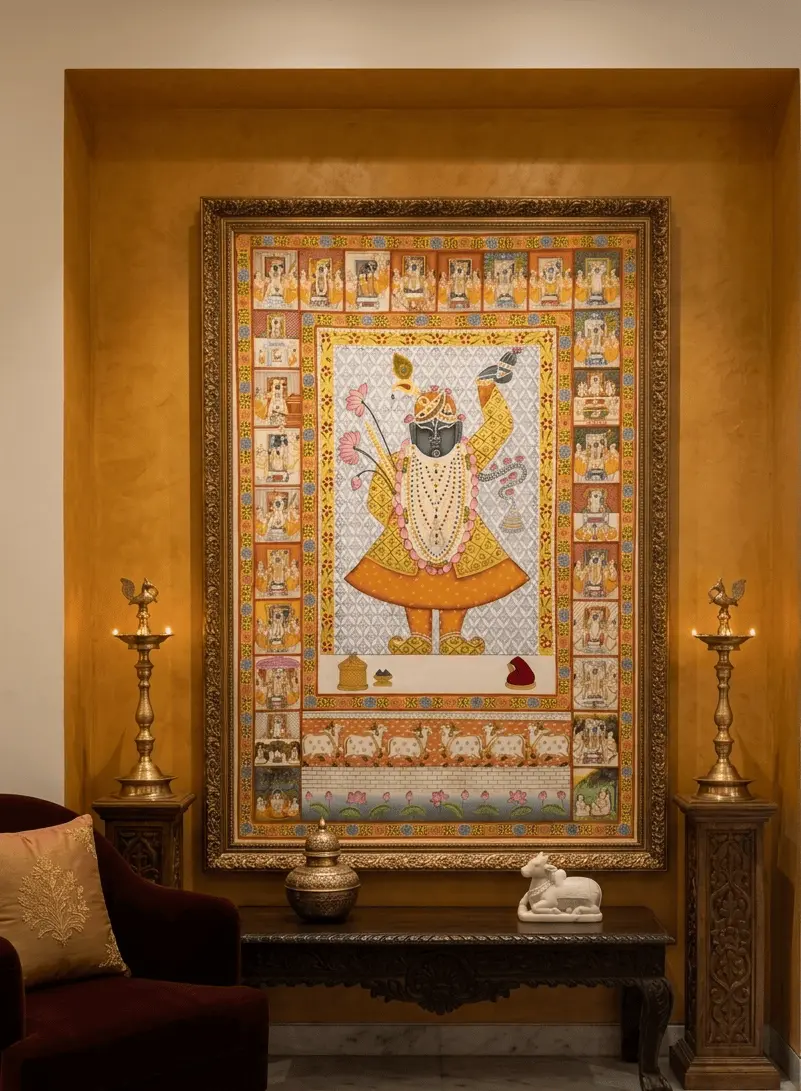
Traditional Pichwai painting is made on hand-spun starched cotton cloth. The cloth is stretched on a temporary frame for painting, then treated with multiple layers of a traditional sizing mixture, typically wheat starch or rice starch mixed with chalk powder. This creates a smooth, slightly absorbent surface that holds stone pigments beautifully. Once the painting is complete and dry, the cloth is removed from the frame. Cloth Pichwais are typically displayed mounted on a fabric-covered board, or framed behind protective glass.
Advantages
- Most authentic: cloth is the original and traditional Pichwai base, what the Nathdwara temple has used for 400 years.
- Texture and warmth: the cloth fibre visible through the pigment layers gives a warmth and organic quality that canvas cannot replicate.
- Heirloom quality: cloth Pichwais, properly cared for, can survive centuries. The oldest surviving Pichwais, some 200+ years old, are on cloth.
- Most valued by collectors: among serious Pichwai collectors and museum buyers, cloth is the most prized base material.
Considerations
- Requires framing or mounting for display. It is not ready to hang like stretched canvas.
- More sensitive to humidity, so it should be framed behind protective glass in humid environments.
- Typically more expensive than equivalent canvas work due to additional material preparation and framing costs.
Pichwai on Canvas: The Modern Home-Friendly Choice
What it is
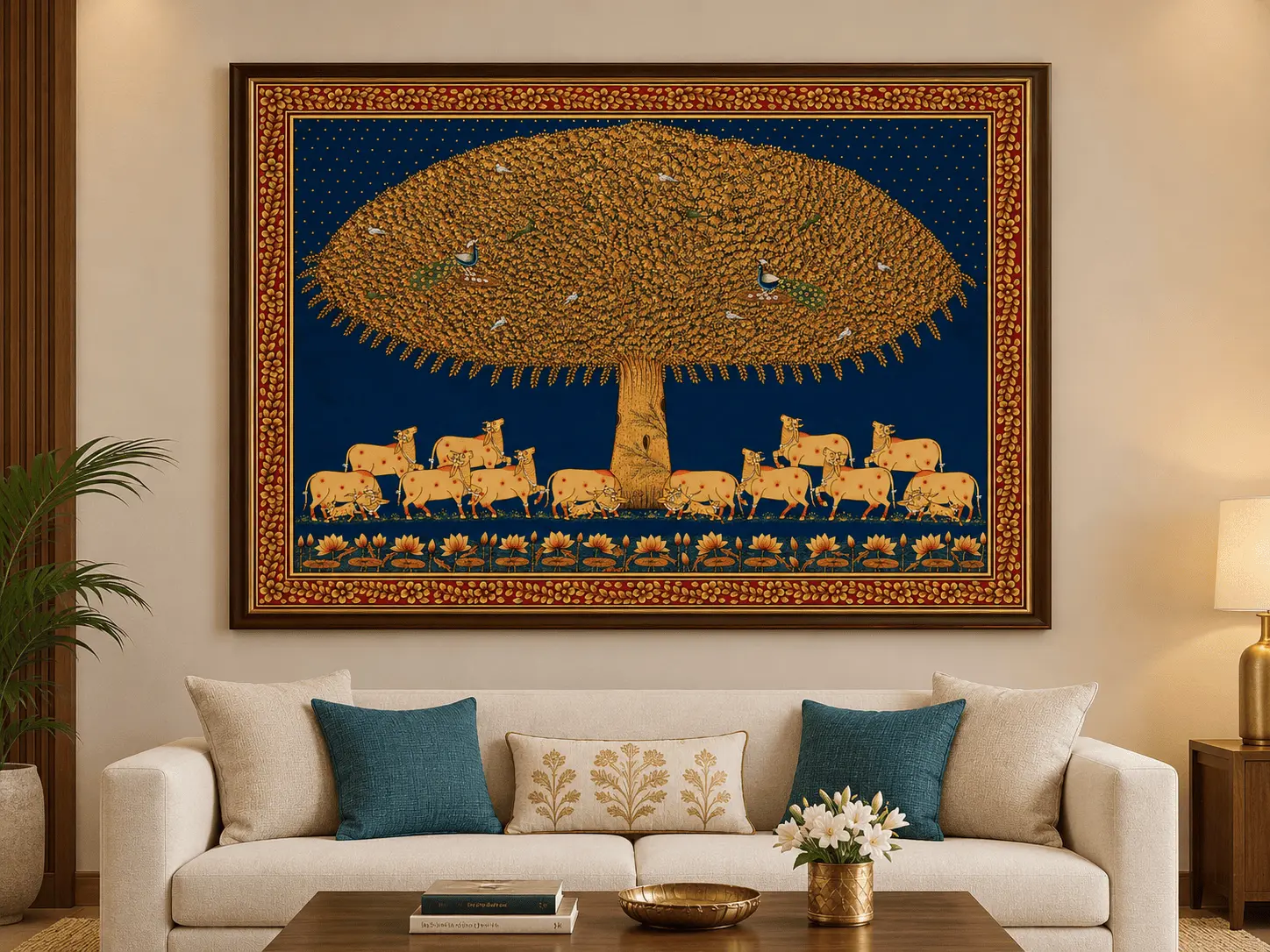
Canvas Pichwai paintings are made on heavy-duty cotton canvas, pre-stretched over kiln-dried wooden stretcher bars and pre-treated with gesso (a chalk and glue ground). The canvas format is familiar from Western oil painting and modern Indian art. Canvas Pichwais are ready to hang directly on the wall without framing.
Advantages
- Ready to hang: no framing or mounting required. The painting arrives ready to go on the wall.
- More durable for everyday handling: the stretched canvas format is resilient to minor impacts and handling.
- Works in any home interior: canvas Pichwais suit modern, contemporary and traditional interiors equally well.
- Easier care: there is no glass to clean, and you can dust it easily with a soft dry brush.
- More affordable: it usually costs less than equivalent cloth works, as no framing costs are included.
Considerations
- Slightly less traditional than cloth. For the pooja room or mandir, cloth is the more spiritually authentic choice.
- Very large canvas Pichwais (72 inches and above) can be difficult to transport without rolling.
Pichwai on Wall Panel: The Contemporary Statement Choice
What it is
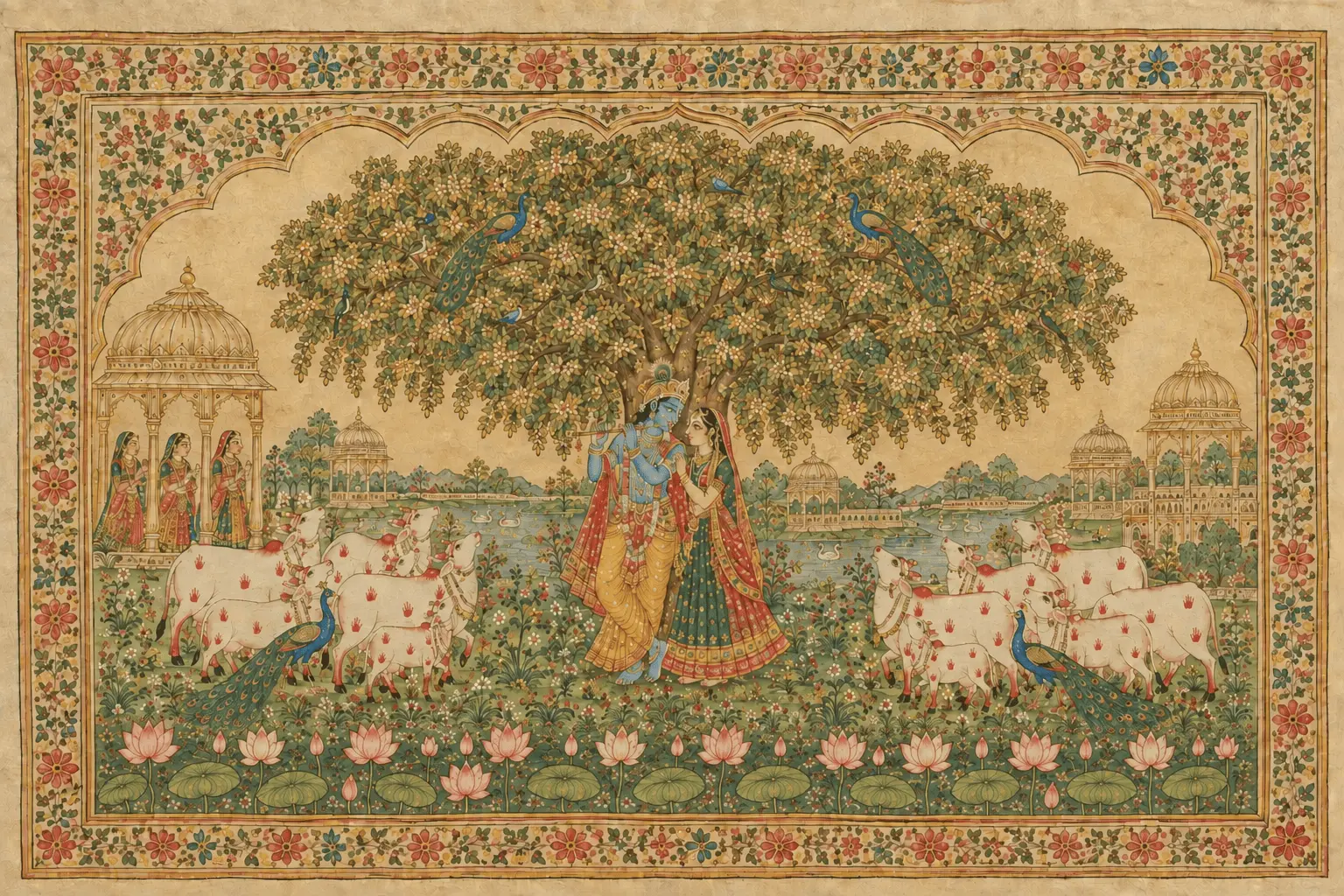
Wall panel Pichwais are created on rigid board formats, typically MDF, dibond or acrylic sheet, and are designed as ready-to-hang statement pieces for contemporary interior spaces. The same traditional painting techniques are used. Only the base material changes. Wall panels suit very large format works (48 inches and above), where the rigidity of the panel keeps the painting perfectly flat on the wall.
Advantages
- Perfectly flat: there is no canvas sag or frame warp over time.
- Striking contemporary presence: wall panels have a sleek, gallery-quality appearance that suits modern and high-end interior spaces.
- Ideal for corporate and hospitality interiors: hotels, offices and commercial spaces increasingly choose panel-mounted art.
- Easy installation: panels typically mount on two or four hooks. They are heavier than canvas but very stable.
Considerations
- Heavier than canvas, so large formats need secure wall anchoring.
- Less traditional. For devotional placement (pooja room), cloth or canvas is more appropriate.
- Limited to locations where the full weight can be supported.
The Definitive Comparison Table
| Feature | Cloth (Traditional) | Canvas (Modern) | Wall Panel (Contemporary) |
|---|---|---|---|
| Authenticity | Highest: original Pichwai base | High: traditional technique on a modern base | Medium: traditional art on a modern substrate |
| Ready to hang? | No: requires framing or mounting | Yes: directly on the wall | Yes: directly on the wall |
| Best for | Pooja room, collectors, gifts | Living room, bedroom, any home space | Large walls, corporate, hotel, modern interior |
| Durability | Excellent with proper care | Excellent | Excellent |
| Price (relative) | Higher (framing and premium material) | Mid-range | Higher (panel material and mounting) |
| Recommended size range | All sizes | All sizes | Large format (36 inch and above) |
Which Base Should You Choose?
Our recommendation: for a pooja room or as a serious collector's piece, choose cloth. For a living room, bedroom or gifting, canvas is the most practical and beautiful choice. For large corporate or hotel installations, wall panels are the premium choice.
- Pooja room or mandir: cloth, mounted on a cloth-covered board or framed behind glass.
- Living room or bedroom: canvas, ready to hang and easy to care for.
- Gift: canvas, because it needs no framing and is easy to carry.
- Office, hotel or very large wall: wall panel, for a flat, gallery-quality finish.
Whichever base you choose, check that the painting is truly handmade. Look for fine brushwork, natural pigment texture, real gold foil and a Certificate of Authenticity. You can also read our guide to lotus Pichwai painting or our cow painting guide to see how themes, sizes and colours are chosen.
How to Care for Each Base
- Cloth: keep it away from damp walls, and frame it behind protective glass in humid places.
- Canvas: dust gently with a soft, dry brush, and avoid water or cleaners.
- Wall panel: mount it on secure anchors, especially for large sizes, and wipe the surface only with a soft, dry cloth.
- All bases: avoid direct sunlight, which can fade natural pigments over time.
Choose Your Handmade Pichwai
At Rupasya, we create Pichwai paintings on all three base materials. Browse our full Pichwai paintings collection, or ask for a custom Pichwai painting in your preferred size and base. Every painting is 100% handmade by artisans from Nathdwara and Udaipur, and we ship worldwide.
Frequently Asked Questions
Which base is best for a Pichwai painting: cloth, canvas or wall panel?
It depends on where the painting will hang. Cloth is the most traditional base and suits a pooja room or a collector's piece. Canvas is ready to hang and works in most homes and as a gift. Wall panels suit large walls in offices, hotels and modern interiors. All three use the same hand-painting techniques.
Can I request a Pichwai painting on cloth if the product listing shows canvas?
Yes. Rupasya creates Pichwai paintings on cloth, canvas and wall panels. If a listing shows canvas, contact us on WhatsApp with your subject, size and base preference, and we will create a custom order for you.
How do I display a cloth Pichwai without framing?
A cloth Pichwai can be mounted on a cloth-covered board using archival adhesive and displayed as a mounted panel. This is the traditional way of displaying Pichwai in homes, and it is the preferred method for large cloth works. Ask us for framing options if you want a glass-fronted frame instead.
Is a canvas Pichwai less authentic than a cloth one?
Not in terms of craft. A canvas Pichwai uses the same traditional painting technique, natural pigments and gold work. Cloth is simply the original base used at the Nathdwara temple, so it is seen as more traditional and is often preferred for pooja rooms and by collectors. Canvas is more practical for everyday homes.
Are wall panel Pichwai paintings good for hotels and offices?
Yes. Wall panels stay perfectly flat, look sleek and suit very large formats, which is why hotels, offices and modern homes choose them. They are heavier than canvas, so large pieces need secure wall anchoring. For a devotional space like a pooja room, cloth or canvas is more appropriate.