What Is Nathdwara Painting?
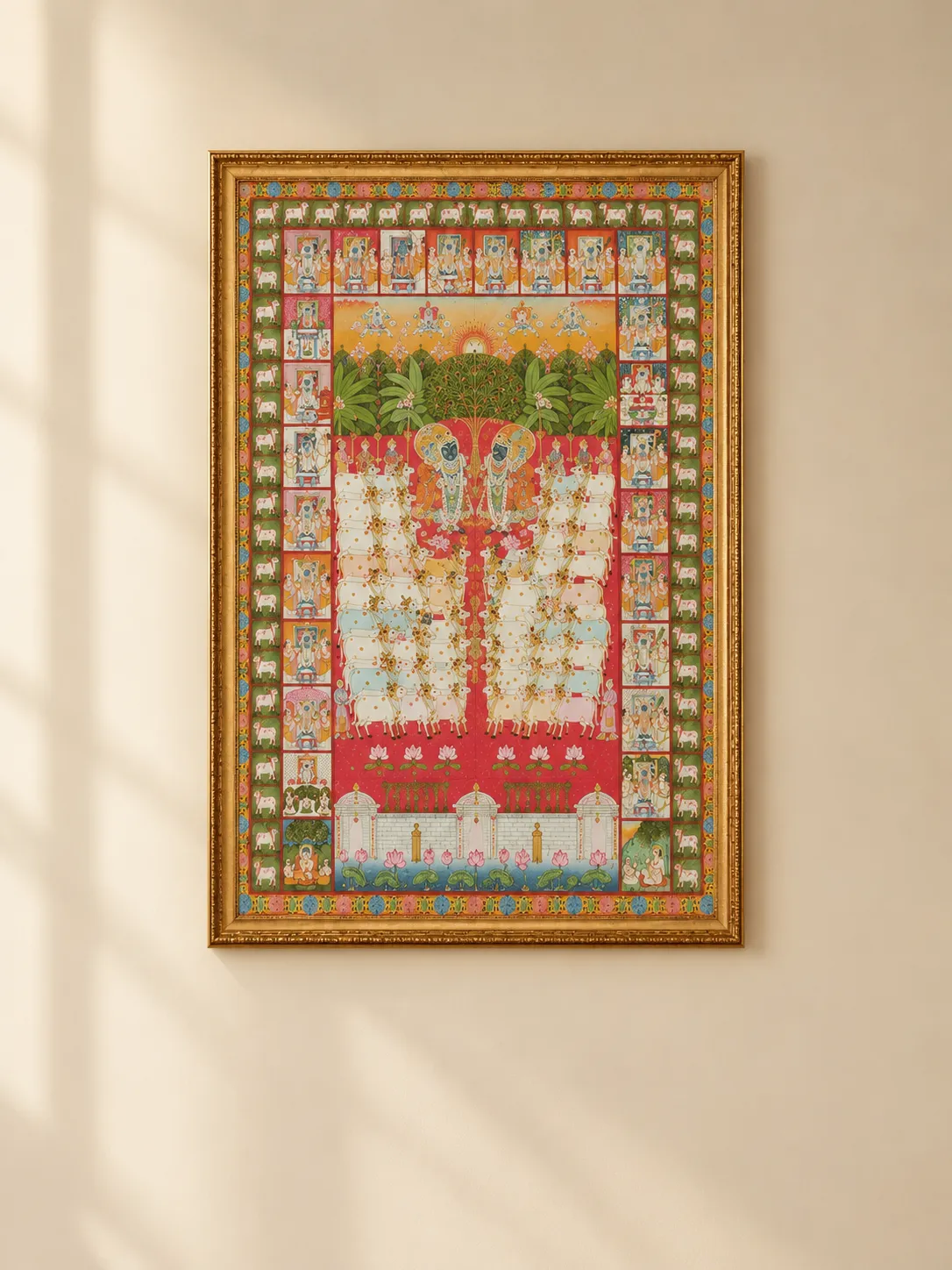
Nathdwara painting is the devotional art tradition of Nathdwara, a temple town in Rajasthan's Rajsamand district, about 45 km from Udaipur. It is built around Shrinathji, the seven-year-old form of Krishna worshipped in the Pushtimarg tradition founded by Vallabhacharya. Art historians treat it as a branch of the wider Mewar school, and its best-known sub-style is the Pichwai, the painted cloth hung behind the deity.
The same workshops also produce smaller paintings of Shrinathji on paper, wood and panel. Some writers note a Thanjavur influence on the gold-heavy, decorative side of Nathdwara work, though this point is debated and not firmly documented. What is clear is the subject: almost every Nathdwara painting centres on Shrinathji, his seasonal dress, and the festivals of Braj.
How the Tradition Began
Pushtimarg tradition holds that the image of Shrinathji appeared on Govardhan Hill, near Mathura. In the late 17th century the image was moved to protect it, and most accounts say it was installed at Nathdwara in 1672 under the protection of Maharana Raj Singh of Mewar. According to tradition, the chariot carrying the image stopped at the village of Sihad, and the temple was built on that spot. Sources differ on some details of the journey, so treat the dates as the widely cited ones rather than a settled record.
Painters are said to have travelled with the temple's sevaks. Over time, Pichwais for the temple's festival calendar grew into a wider school. Artists lived and worked in the lane known as Chitrakaron ki Gali, and many Pichwais were made as a group effort under a master painter. Pichwai makers rarely signed their work, because painting was treated as service to the deity as much as a trade.
As the town drew pilgrims, painters also began to make portable images of Shrinathji for devotees to take home. That is how the compact paintings, framed panels and wooden pieces in today's market grew out of a temple tradition.
Types of Nathdwara Paintings
"Nathdwara painting" is a family of formats, not a single product. These are the main types you will see, including the two that make up Rupasya's Nathdwara collection.
| Type | What it is | Usually suits |
|---|
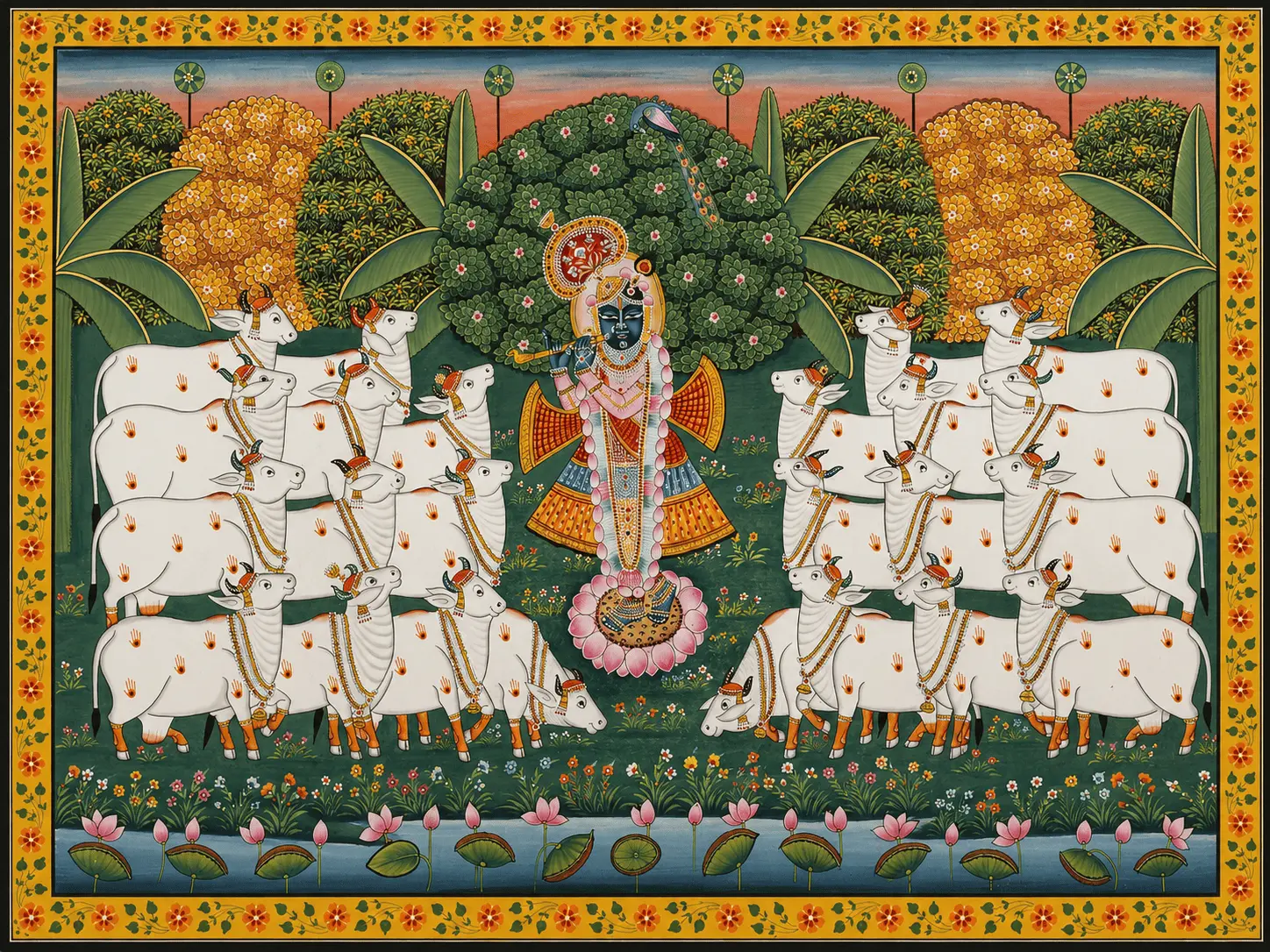
| Pichwai | Large painted cloth backdrop. Themes include lotus, cows, Sharad Purnima and Annakut. See Pichwai paintings. | Living rooms, large walls, temples |
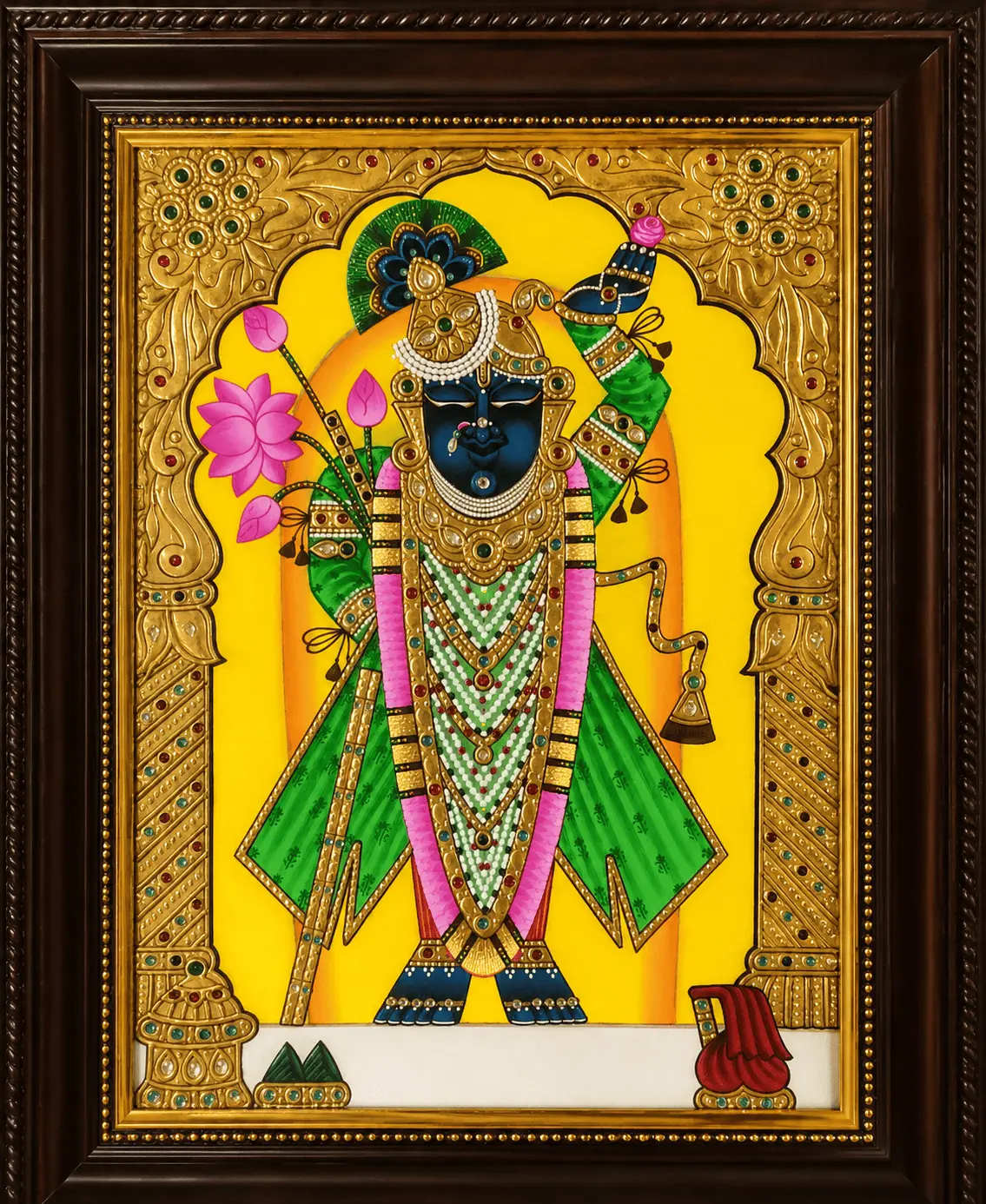
| Shrinathji Tanjore gold foil painting | Shrinathji painted in the Nathdwara manner with Tanjore-style gold foil and relief work. See the Shrinathji Tanjore gold foil collection. | Home temples, gifting, collectors |
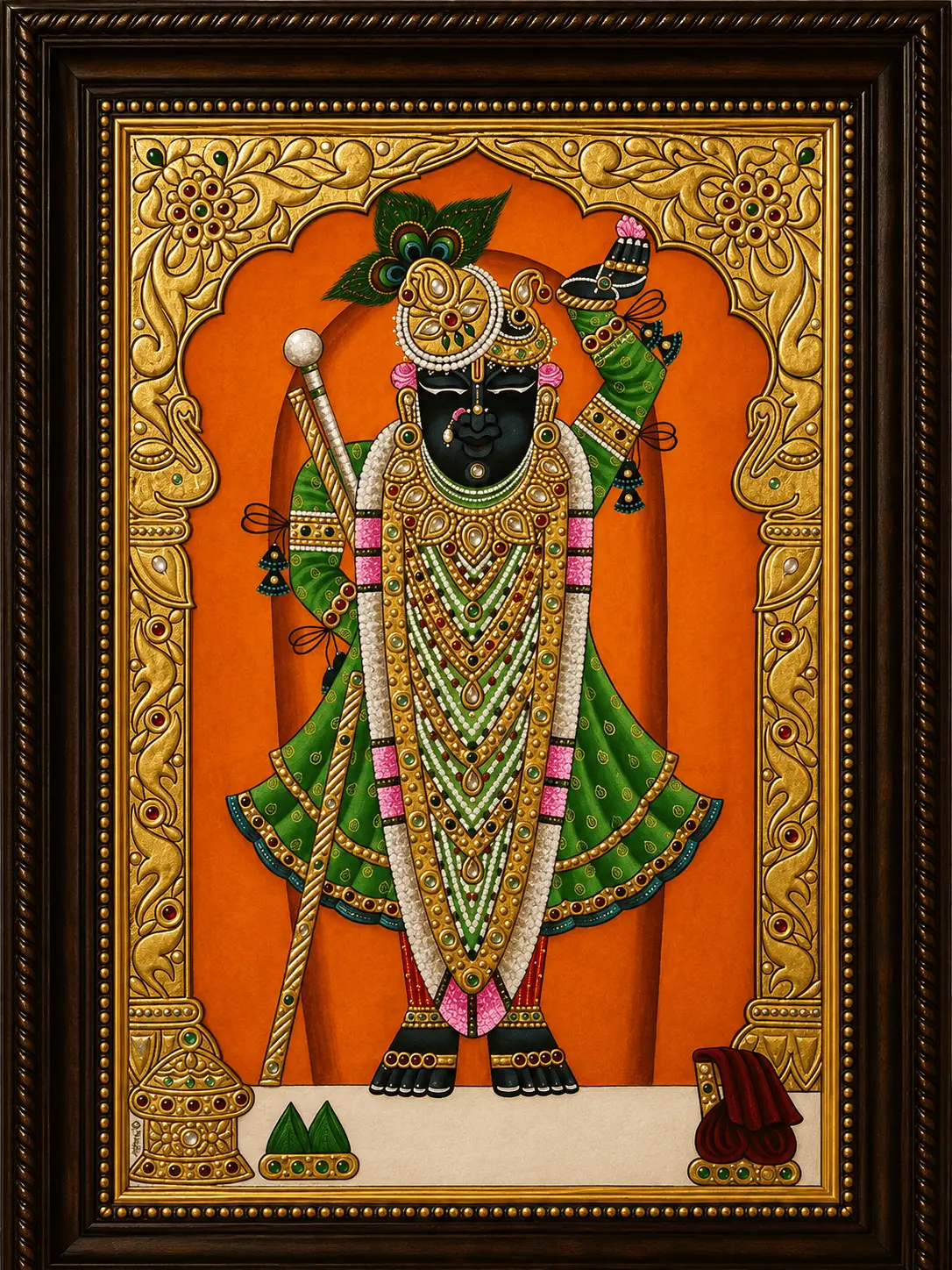
| Shrinathji embossed wooden painting | Hand-painted wood panel with raised, gold-detailed work and a decorative frame, some with LED lighting. See the Nathdwara paintings collection. | Pooja rooms, shelves, altar-style display |
| Shrinathji paper paintings | Portrait-style paintings of Shrinathji on paper, in the classic Nathdwara manner. See Shrinathji paintings. | Everyday display at a lower price point |
The Tanjore-style pieces deserve a plain explanation. Thanjavur painting is a separate South Indian tradition known for raised gesso work and gold foil. When a Nathdwara artist borrows that gold-relief technique for a Shrinathji subject, the result is a hybrid. It is a legitimate handmade category, but it should be described honestly as Nathdwara iconography in a Tanjore-style finish, not as a classical Pichwai.
Nathdwara Painting vs Pichwai: What Is the Difference?
The simplest way to remember it: all Pichwai art is Nathdwara art, but not all Nathdwara art is Pichwai. Pichwai refers specifically to the cloth backdrop, a word meaning "that which hangs at the back". Nathdwara painting is the larger school that also includes smaller devotional works on paper, wood and panel. Buyers searching for one often want the other, which is why both collections link to each other.
Symbols and Iconography in Nathdwara Paintings
Shrinathji's form follows a fixed pattern, which is why even small paintings feel familiar. The left arm is raised, recalling Krishna lifting Govardhan Hill to shelter the people of Braj. The right hand rests at the waist. The image is shown frontal and standing, dressed and adorned for the season or festival.
- Cows and calves: pastoral Braj, and the cowherd life of Krishna.
- Lotus: a classic summer theme, often painted as a pond filled with buds and blooms.
- Peacocks and parrots: common companion motifs in the background and borders.
- Sharad Purnima: a night scene under a full moon, linked to the Raas Leela.
- Annakut: a festival scene built around offerings of food, celebrated a day after Diwali.
At the Nathdwara temple, Shrinathji is shown in eight darshans through the day: Mangala, Shringar, Gwal, Rajbhog, Utthapan, Bhog, Sandhya and Shayan. Paintings often reflect this rhythm through dress, ornaments and mood. Followers of the tradition would say the meaning of each darshan belongs to the temple and its own guides, so this hub describes it only in outline.
Materials and Technique
Traditional Nathdwara work is painted by hand with mineral and natural pigments, fine brushes, and gold or silver foil on cloth, paper or wood. Colour goes on in layers, the foil is laid over areas prepared with adhesive, and the finest details come last. In the Tanjore-style pieces, a raised relief is built up first so the gold catches the light at different angles.
How to tell a handmade painting from a print
- Surface: brushwork and layered colour you can see, not a flat, even finish or a dot pattern under magnification.
- Gold: foil that shifts with the light, with fine edges, not a flat yellow or bronze print.
- Small variations: no two handmade pieces of the same theme are exactly alike.
- Information: the seller can tell you the base material, the pigments and foil used, and where the work was made.
- Origin label: Nathdwara Pichhwai Painting is a registered Geographical Indication for Rajasthan handicrafts (application no. 748). This covers the Pichhwai tradition, so ask what a seller means when they use the label for other formats.
How to Choose a Nathdwara Painting
Start with where it will hang, then work out size and format.
- Pick the space. A pooja room or home temple suits a Shrinathji painting or wooden panel. An entryway or living room can carry a Pichwai or a larger framed work.
- Pick the size. Rupasya's Nathdwara collection is available in 12 x 16, 14 x 20, 18 x 24 and 24 x 36 inch sizes. Measure the wall and leave breathing room around the frame.
- Pick the format. Gold foil and relief work for a statement piece, a paper painting for a quieter look, a wood panel for a compact altar-style display.
- Check the details. Ask about materials, frame, delivery and care before you pay.
Prices depend on size, the amount of gold work and the format. At the time of writing, the Nathdwara collection is listed from about ₹21,000 to ₹40,000, and the page always shows the current price.
Want a Custom Nathdwara or Pichwai Painting?
If you do not find the right size, theme or composition, you can commission one. Rupasya's custom Pichwai painting service lets you share your wall size, theme and references, and an artist creates a new painting around them. You can discuss size, orientation, theme, composition, colour palette, gold detailing, material and framing.
The process runs from your requirement and reference upload, through artist matching and a concept or sketch discussion, to your approval before painting starts. Progress photos are shared while the work is being made. If you want a Nathdwara-style painting other than a Pichwai, mention it in the request form and the team will tell you what is possible. International orders are supported, so add your country in the form.
Frequently Asked Questions
What is a Nathdwara painting?
A Nathdwara painting is a devotional artwork from Nathdwara, Rajasthan, centred on Shrinathji, the child form of Krishna in the Pushtimarg tradition. It covers Pichwai cloth backdrops and smaller works on paper, wood and panel, usually made with mineral pigments and gold or silver foil.
What is the difference between Nathdwara painting and Pichwai?
Pichwai is the painted cloth backdrop hung behind the deity. Nathdwara painting is the wider school that includes Pichwais as well as smaller paintings of Shrinathji on paper, wood and panel. All Pichwai art is Nathdwara art, but not every Nathdwara painting is a Pichwai.
Is a Shrinathji Tanjore painting a traditional Nathdwara painting?
It is a hybrid. The subject and iconography come from the Nathdwara tradition, while the raised relief and gold foil finish borrow from Thanjavur painting. It is a genuine handmade category, but it differs from a classical Pichwai in format and technique.
How can I tell if a Nathdwara painting is handmade?
Look for visible brushwork and layered colour, gold foil that changes with the light, and small variations from piece to piece. Printed copies look flat and even. A trustworthy seller can name the materials, the foil and the place the painting was made.
Can I order a custom Nathdwara or Pichwai painting?
Yes. On the custom Pichwai page you can share your size, theme and references, then agree the plan with the artist before painting begins. You receive progress photos along the way, and international orders are supported.