What is an oil painting?
An oil painting is made with pigments bound in a drying oil, most often linseed oil pressed from flax seed. Poppy seed, walnut and safflower oils are also used. The oil does not evaporate the way water does. It hardens by reacting with oxygen, which is why a canvas can feel dry within days and still keep curing for months.
That slow drying is what artists value in the medium. They can blend soft edges while the paint is wet, add thin transparent glazes over dry layers, or leave thick strokes that hold the mark of the brush. It is also why a good oil painting looks slightly different each time the light in the room changes.
A short history of oil painting
According to the materials history on Eclectic Light, drying oils appear in northern European painting from about the 12th century, with much wider use from around 1400. By the 15th century Early Netherlandish painters were making panels in oil, and by the 16th century easel painting in pure oils had become the norm across much of Europe.
You will often read that Jan van Eyck invented oil painting. The evidence does not support that. There is no sign he discovered techniques nobody had used before him, and there is evidence of oil being used in Afghanistan earlier still.
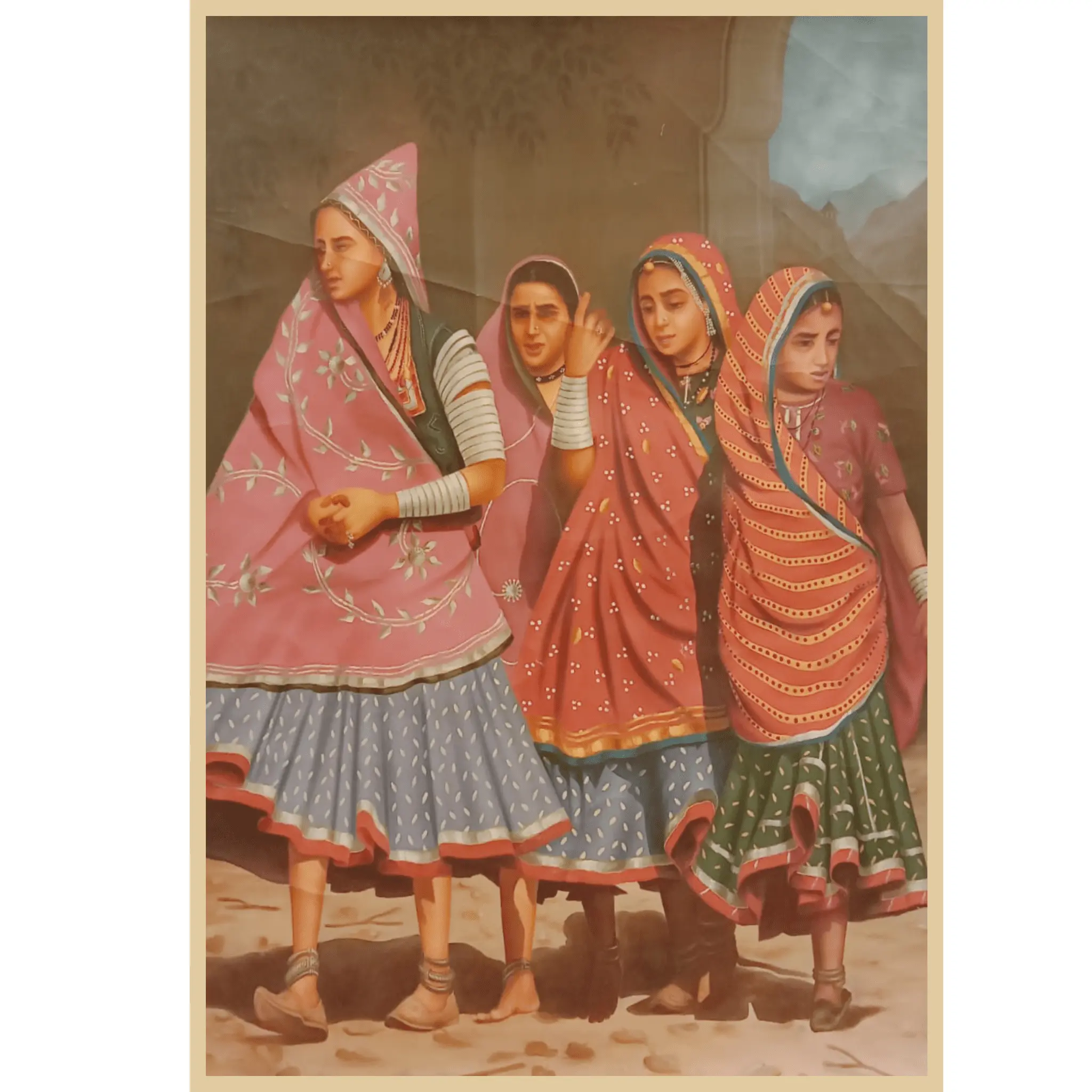
Oil painting took root in Indian art mainly through Raja Ravi Varma (1848 to 1906), born at Kilimanoor in Travancore. He learned the technique from a visiting European portrait painter, Theodor Jensen, and the V&A's catalogue entry notes that he broke with Indian tradition by working from human models. He painted Indian women in regional dress and scenes from the epics in oil, and in the 1890s he set up a press to print oleographs of his work so ordinary homes could own an image. The realistic, softly lit Indian lady portrait that many buyers still look for owes a great deal to his example.
For the longer story, read The Journey of Oil Painting and Old Art, New Ideas: The Story of Oil Painting.
Popular oil painting subjects in Indian homes
The subject matters as much as the size. Each of these has its own collection and, where we have written one, its own guide.
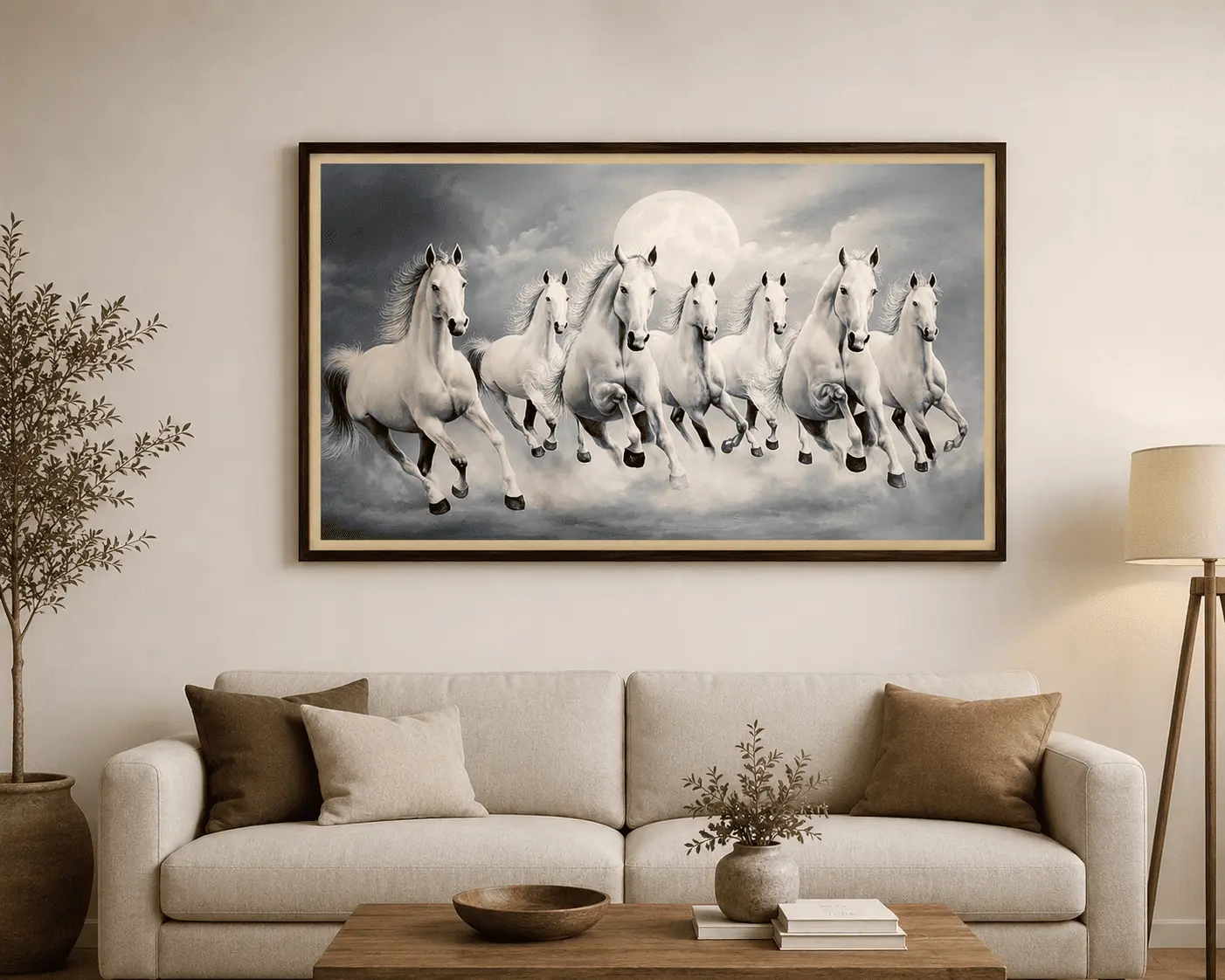
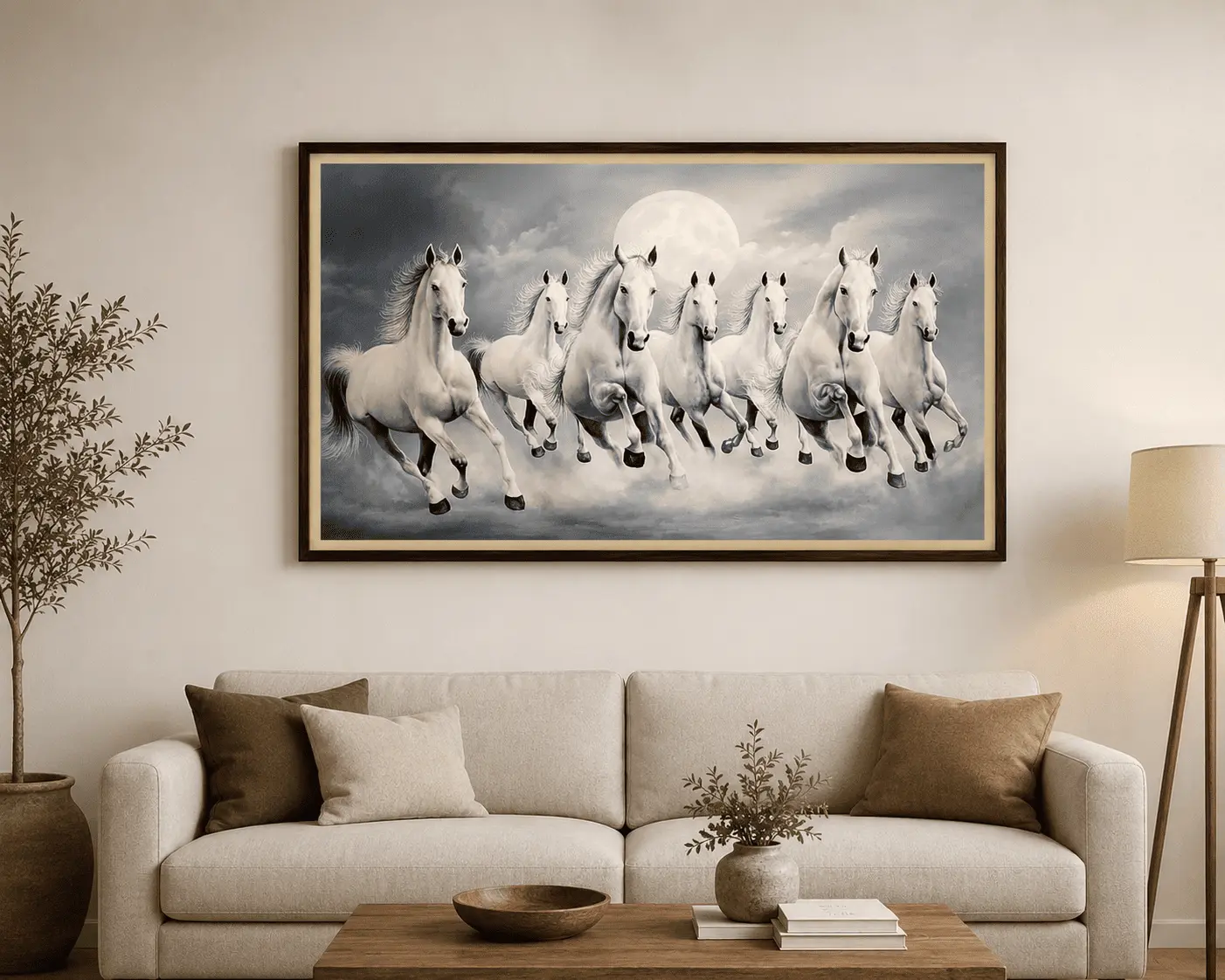
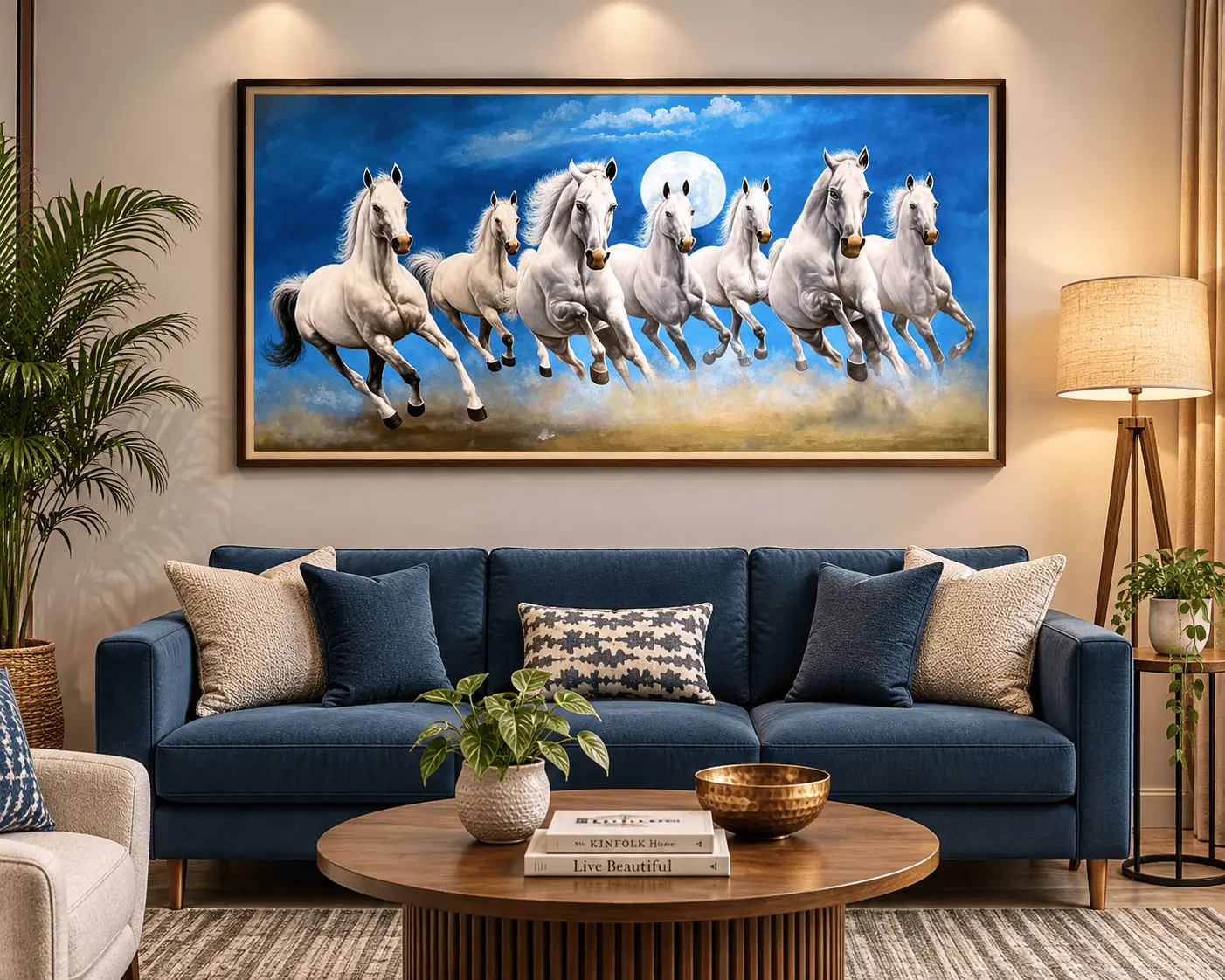
Horse paintings, including 7 horse Vastu art
Horses stand for speed, strength and forward movement, and a painting of seven running horses is a popular Vastu choice for success and progress. In Vastu belief, direction matters, and the sunrise, sunset and moonlit versions are usually matched to different walls. Sources differ on the finer rules, so read how we explain them in the 7 horse painting Vastu guide, then use which 7 horse painting is best for your home to pick one. If you are weighing oil against other media, see 7 Horses Oil Painting vs. Other Mediums. Ready to look? Browse the 7 horse Vastu paintings.
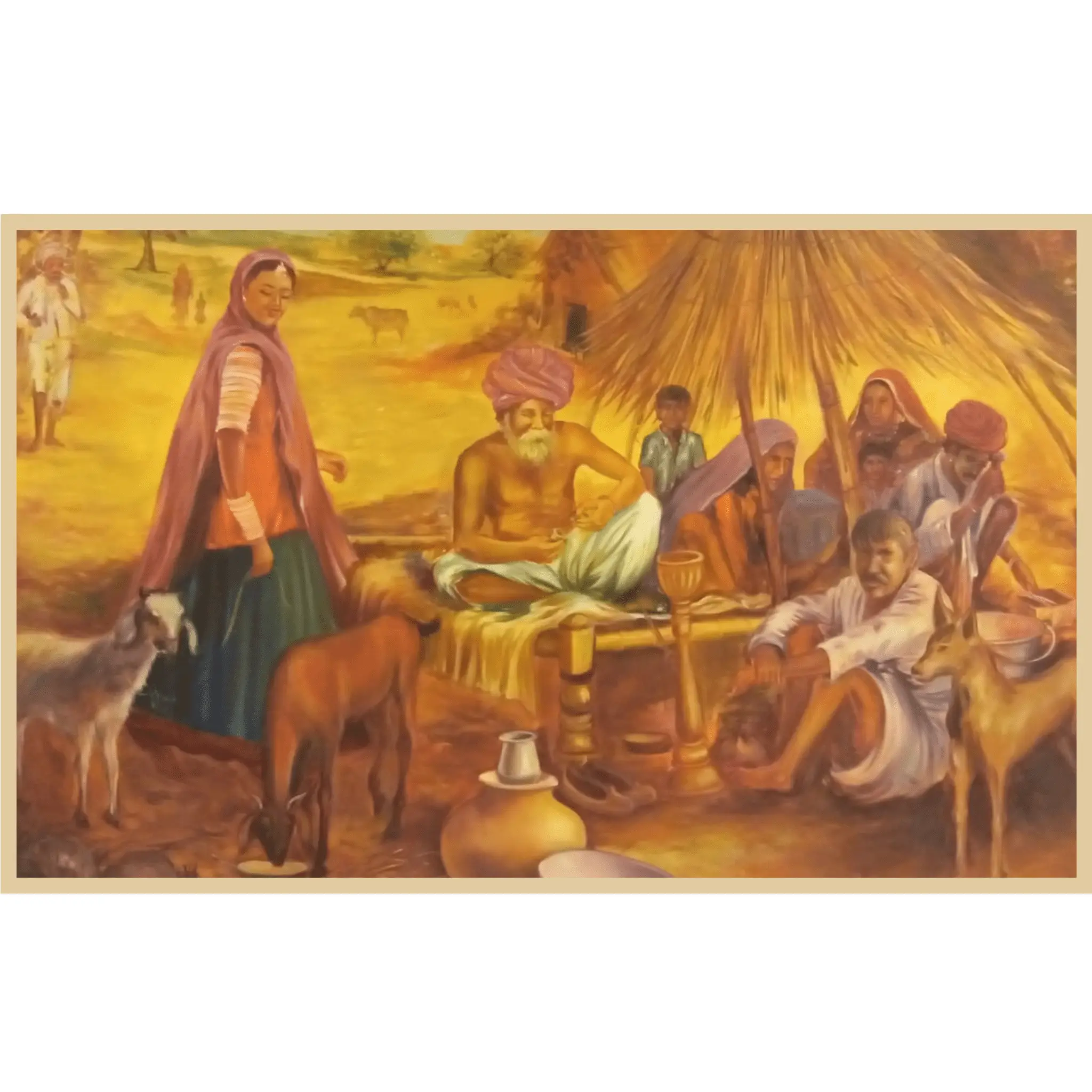
Village life paintings
Bullock carts on dusty paths, women carrying water pots, harvest fields, cattle at dusk. Village scenes are a favourite for living and dining rooms because their warm, earthy palette sits easily with both traditional and plain modern interiors. Our village life painting guide explains how to match a scene to your room, and the village life paintings collection has the originals.
Tiger and wildlife paintings
A large tiger painting gives a study, office or reception a strong and steady focal point. Oil paint shows its depth in fur texture and water reflections. Some Vastu guides advise against fierce animals in the main living area, which is why many buyers hang them in a study or office. See the tiger oil paintings.
Indian lady portraits in the Raja Ravi Varma style
These portraits of women in traditional dress and jewellery are inspired by the academic style Ravi Varma made popular. They are new paintings by our artists, not copies of his work. Explore the Indian lady portrait paintings, or ask for a portrait of your own through portrait from photo.
Which subject suits which room?
| Subject | Rooms it suits | Mood it sets |
|---|
| 7 horse painting | Living room, office, entrance hall | Energy and forward movement |
| Village life | Living room, dining room, bedroom | Warm and nostalgic |
| Tiger or wildlife | Study, office, reception | Strength and focus |
| Indian lady portrait | Bedroom, lounge, hallway | Elegant and heritage-led |
For wall size, lighting and colour matching, read How to Choose the Perfect Oil Painting for Your Home.
How to tell an original oil painting from a print
A printed canvas is a photograph of a painting on fabric. An original is built from real paint. Before you pay, check a few things:
- Surface. Real brushwork has ridges and varying thickness that catch light as you move. A print is flat with an even sheen.
- Close-ups. Ask for detailed photos of the surface, the edges and the back of the canvas.
- Price. A large hand-painted canvas takes days or weeks of work. A very low price for a big "oil painting" usually means a print.
- Paperwork. Ask who painted it, what materials were used, and whether a certificate of authenticity comes with it.
Our complete buyer's guide goes through pricing and delivery in detail.
Oil or acrylic?
Oil dries slowly, which allows smooth blending and a deep, layered finish. Acrylic is water-based and dries fast, so it suits flatter, bolder work and quick projects. Neither is "better" in general. For a statement piece that you plan to keep for years, many buyers prefer oil. The oil painting vs acrylic guide compares them for Indian homes.
How to care for an oil painting
- Hang it away from direct sunlight, which can fade pigments over time.
- Avoid damp walls, bathrooms and spots close to a stove. Large swings in humidity and temperature stress the canvas.
- Dust gently with a soft, dry brush. Never use water or cleaning sprays.
- Do not rush to varnish. Paint keeps curing under the surface, and conservators generally advise waiting at least six months, and longer for thick paint, before a varnish goes on.
Custom oil paintings
If no ready painting fits your wall, you can commission one with your own subject, size and colours. Start with our custom painting commission page and share a photo of the wall if you can.
Frequently asked questions
Who invented oil painting?
No single person did. Drying oils were used in painting in northern Europe from around the 12th century, and Early Netherlandish painters made oil the main medium in the 15th century. Jan van Eyck is often credited, but the evidence does not show he invented it, and oil was used in Afghanistan earlier.
How long does an oil painting take to dry?
The surface usually feels dry in days, but oil paint cures by oxidising, so the layers underneath keep hardening. Thin paint can be fully cured in a few months. Thick, textured paint can take a year or more. This is why varnishing is normally delayed.
How can I tell if an oil painting is original?
Look for raised brushwork, uneven paint thickness and visible texture at the edges, and ask for close-up photos of the surface and back. A flat, uniform sheen suggests a print. Ask about the artist and materials, and whether a certificate of authenticity is included.
Are oil paintings suitable for Indian homes?
Yes, with sensible placement. Keep the painting out of direct sun and away from damp walls, bathrooms and cooking areas, and avoid sudden changes in humidity. Dust it with a soft dry brush and never clean it with water. Looked after this way, an oil painting can last for generations.
Can I order a custom oil painting?
Yes. You can choose the subject, size and colour palette, or ask for a portrait from a photograph. Use the custom painting commission page to start, and share the wall size and room so the artist can plan the composition.
Explore the collection
Every painting in our handmade oil paintings collection is painted on canvas by hand, not printed. Pick a subject above, or message us with a photo of your wall and we will help you choose.