The story of oil painting is older and wider than most people think. We usually link it with the Old Masters of Europe, but the oldest known surviving oil paintings are Buddhist murals made around 650 AD in Bamiyan, Afghanistan. From there the medium travelled a long road, through Renaissance workshops, Dutch studios and Impressionist gardens, to the large canvases hanging in galleries and homes today. This is that journey, told in order.
The short version: oil paint is made by mixing pigment with a drying oil, such as linseed oil. It dries slowly, which lets artists blend and rework, and that single quality shaped five centuries of European painting.
Before the Old Masters: oil was already in use
A common belief says Jan van Eyck invented oil painting. Art historians do not agree. Oil-based paint was used earlier, including in the Bamiyan murals, and a medieval treatise dating to about 1125 (by a writer known as Theophilus) gives instructions for painting with oil on sculpture, woodwork and outdoor objects. What changed in the early 1400s was how artists used it.
The Early Netherlandish painters: oil becomes the main medium
Painters such as Jan van Eyck and Robert Campin, working in the early to mid-15th century in the Netherlands, made oil their usual medium. They built pictures in thin, transparent layers called glazes, which let them paint the glint of a jewel or the fold of a cloth in very fine detail.
The technique then moved south. Oil reached Italy through Venice in the late 15th century, and Venetian painters began using canvas instead of wooden panels. By around 1540, tempera on panel (paint made with egg yolk) had almost died out.
Leonardo and Rembrandt: two different eras
The two names are often put together, but they lived about 150 years apart. Leonardo da Vinci (1452 to 1519) belongs to the High Renaissance. In the Mona Lisa, an oil painting on a wooden panel, he layered oil paint thinly and blended it so smoothly that the brushstrokes are hard to see. The soft shading around the face is known as sfumato, or "smoke".
Rembrandt (1606 to 1669) worked during the Dutch Golden Age. He is known for dramatic light and shadow, often called chiaroscuro, which can make a face seem to step out of the dark. Both artists show what oil allows: slow, careful building of form and mood.
Oil paint arrives in India
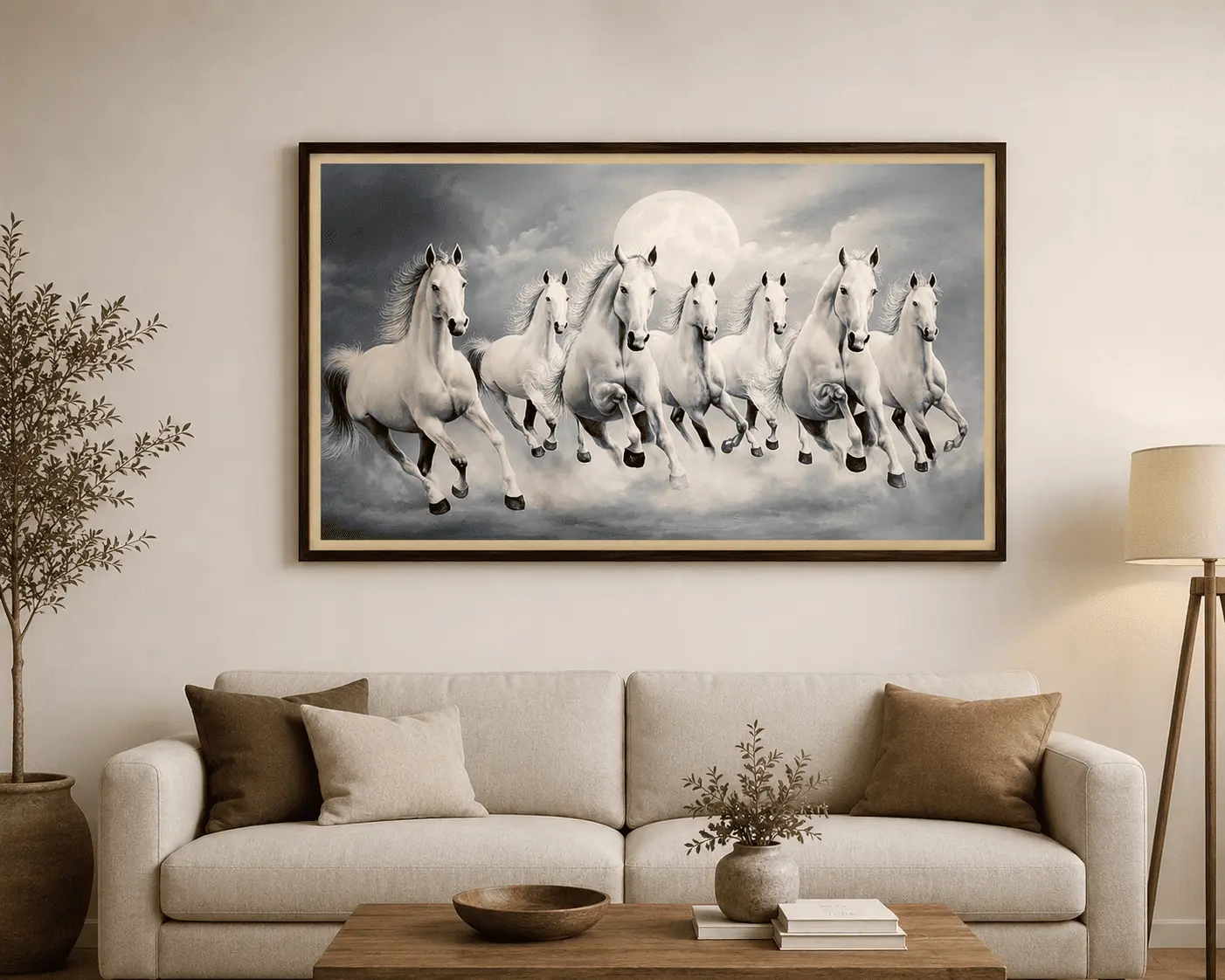
Oil painting reached India through European contact. Raja Ravi Varma (1848 to 1906) learned oil painting from a British portrait painter, Theodore Jenson, and his work is usually described as a fusion of European academic technique with Indian subjects and sensibility. Art historian Geeta Kapur called him "the indisputable father figure of modern Indian art", though some critics have judged his work harshly. Today Indian oil painting covers everything from portraits and village scenes to Vastu-themed subjects like the seven horses.
The 1800s: paint tubes and painting outdoors
In 1841 the American portrait painter John Goffe Rand invented the squeezable metal paint tube. It sounds small, but it meant artists no longer had to grind and mix paint in the studio. They could carry ready paint outside.
The Impressionists took full advantage. Their first group exhibition was held in Paris in April 1874, and the name came from Claude Monet's 1872 oil painting Impression, Sunrise. Working outdoors, they used short, visible strokes and often painted wet paint into wet paint, to catch the changing light before it moved. The aim was the overall effect of a scene, not fine detail.
The 1900s: abstraction and new materials
In the 20th century many painters stopped depicting scenes at all. Jackson Pollock poured and dripped paint across huge canvases between 1947 and 1950, in a style critic Harold Rosenberg later called "action painting". One detail is often misreported: Pollock mostly used alkyd enamels and other household paints, not traditional artist's oils. He belongs to the wider story of oil-era painting, but not strictly to the story of oil paint.
Oil painting today
Contemporary painters still use oil for what it does best.
- Gerhard Richter (born 1932, German) paints in oil. He is known for photo-based paintings and for abstract works in which he drags and scrapes layers of wet paint with a squeegee, a method he has used since the mid-1980s.
- Jenny Saville (English) is known for very large oil paintings of the human body, often at least six by six feet.
The two show how far the medium has stretched, from photographic blur to monumental figures.
Why oil changed painting: how the paint works
Oil paint dries by slowly reacting with air, not by evaporating like water-based paint. That is why a painter can keep working a passage for hours or days, soften an edge, or paint over a mistake. It also explains the two classic oil techniques. Glazing lays thin transparent layers over a dry base for glow and depth. Impasto applies thick paint, with a brush or palette knife, so the strokes stand up from the surface and catch light. Almost every artist in this story used one or both. For a side-by-side with other paints, read our oil painting vs acrylic guide.
The story of oil painting at a glance
| Period | What happened | Key names |
|---|---|---|
| About 650 AD | Oldest known surviving oil paintings (Buddhist murals, Bamiyan) | Unknown artists |
| Early to mid-1400s | Oil becomes the usual medium in the Netherlands | Jan van Eyck, Robert Campin |
| Late 1400s to 1500s | Oil and canvas spread through Venice and Italy | Leonardo da Vinci |
| 1600s | Dramatic light and shadow in the Dutch Golden Age | Rembrandt |
| 1800s | Paint tubes (1841) and painting outdoors | Claude Monet and the Impressionists |
| 1900s | Abstraction and new paints | Jackson Pollock |
| Today | Photo-based, abstract and monumental figure painting | Gerhard Richter, Jenny Saville |
Common confusions
- "Van Eyck invented oil paint." No. He and his Early Netherlandish contemporaries made it the usual medium and refined glazing.
- "Leonardo and Rembrandt belong to the same golden age." They were about 150 years apart and worked in different traditions.
- "Pollock's drips are oil paintings." He mainly used enamel and household paints.
- "Oil painting is only European." The earliest known examples come from Afghanistan, and Indian artists have worked in oil for well over a century.
Why the story of oil painting matters when you buy
An oil painting on your wall belongs to this story. The slow-drying layers, the visible brushwork and the depth of colour come from the same material used by Rembrandt and Monet. To see why that texture suits one popular subject, read 7 Horses Oil Painting vs Other Mediums. If you are comparing oil with acrylic, read oil painting vs acrylic. For a fuller timeline, see our history of oil painting.
When you are ready to choose, our guide to buying original oil paintings online in India explains how to spot real hand-painted work. You can browse original handmade oil paintings or see more in the Oil Paintings knowledge hub. For a deeper read on the medium's beginnings, see the Wikipedia overview of oil painting.
Frequently Asked Questions
Who invented oil painting?
No single person did. The oldest known oil paintings are Buddhist murals from around 650 AD in Bamiyan, Afghanistan, and a medieval treatise from about 1125 describes oil-based painting. Jan van Eyck and other Early Netherlandish painters did not invent it, but made it the usual medium in the 1400s and developed glazing.
When did oil painting become popular in Europe?
It became the standard medium in the Netherlands in the early to mid-1400s, with painters such as Jan van Eyck and Robert Campin. It reached Italy through Venice in the late 15th century, and by around 1540 tempera on panel had nearly disappeared. Canvas gradually replaced wooden panels during the same period.
Why did Impressionists paint outdoors with oil?
The squeezable metal paint tube, invented by John Goffe Rand in 1841, made oil paint portable. Premixed paint let artists work spontaneously outdoors and capture changing light. They often painted wet into wet, because they had little time to wait for layers to dry, which gave their work its visible, broken brushstrokes.
Did Jackson Pollock use oil paint?
Mostly not for his famous drip paintings, made between 1947 and 1950. He used alkyd enamels and other household paints instead of traditional artist's oils. Critic Harold Rosenberg coined the term "action painting" in 1952, and Pollock's pouring and dripping technique is thought to be one of its origins.
Who brought oil painting to India?
Oil painting arrived through European contact. Raja Ravi Varma (1848 to 1906) learned it from British portraitist Theodore Jenson and is described as fusing European academic technique with Indian subjects. Art historian Geeta Kapur called him the father figure of modern Indian art, though critics have judged his work differently.