The Question Every Art Buyer Asks
When you start shopping for original handmade paintings in India, you will quickly encounter two mediums: oil and acrylic. Both are used on canvas. Both can look stunning. But they are very different materials that produce very different results — and for most Indian homeowners buying premium art, the differences matter a great deal.
This is an honest comparison from artists who work in both mediums. We will tell you what each does well, what its limitations are, and help you decide which is the right choice for your home and budget.
What is Oil Painting?
Oil painting uses pigments suspended in drying oils — most commonly linseed oil, walnut oil, or safflower oil. The oil acts as both a binder (holding the pigments together) and a medium that gives the paint its characteristic slow-drying, blendable quality. Oil paints have been used by artists for over 500 years, and works by Rembrandt, Vermeer, and Van Gogh — all painted in oil — still hang in museums today, as vivid as the day they were created.
The slow drying time of oil paint (hours to days per layer, weeks to months for full cure) is actually one of its greatest strengths. It allows artists to blend colours seamlessly, rework passages, build up multiple transparent glazes, and achieve a depth and luminosity that fast-drying media cannot match.
What is Acrylic Painting?
Acrylic paints use pigments suspended in a polymer (plastic) emulsion. They dry very quickly — often within minutes to hours — by water evaporation. Acrylics are versatile: they can be used thin like watercolour or thick like oil paint, and they dry to a flexible, water-resistant film.
Acrylics are a 20th century invention, widely adopted because of their convenience, low odour, and easy cleanup with water. Many contemporary Indian artists use acrylics for their speed and versatility. The results can be very beautiful — but they are different from oil, and in important ways, they fall short.
Head-to-Head Comparison
Feature Oil Painting Acrylic Painting
Colour Depth & Richness Exceptional — oil gives unmatched luminosity and depth due to transparent layering Good — colours are vibrant but can appear flatter than oil
Blending Capability Excellent — artists can blend wet-into-wet for hours Limited — dries fast, making seamless blending harder
Texture & Brushwork Rich physical texture possible; brushstrokes remain defined Can mimic oil texture but often less pronounced
Longevity Centuries — museum paintings from the 1400s survive in oil 40-70 years with good care; long-term archival quality unproven
Drying Time Days to weeks — allows reworking and fine detail Minutes to hours — faster for production, less flexibility
Colour Shift When Dry Minimal shift — what you see wet is close to dry result Colours darken slightly when dry (significant for light tones)
Durability in Indian Climate Excellent — oil film is stable in heat and humidity with varnish Good — polymer film is flexible and handles humidity well
Odour During Creation Moderate — solvents used in studio (not present in finished work) Very low — water-based, minimal odour
Price (for originals) Higher — more artist time, premium materials Moderate — faster to produce
Best For Premium, long-lasting fine art and heirloom pieces Vibrant contemporary art, faster commissions, murals
Why Oil Paintings Win for Indian Homes
1. The Indian Climate Advantage
India's climate — hot summers, humid monsoons, and wide temperature swings — is actually well-suited to oil paintings, provided they are varnished properly (which all Rupasya paintings are). The oil film is remarkably stable across temperature changes. Acrylics are also stable, but the plastic binder can show micro-cracking over decades in very hot climates.
2. Light and Depth in Indian Interiors
Indian homes often have strong directional light — morning sunlight flooding east windows, evening golden light from the west. Oil paintings respond to this light with extraordinary richness. As light angles change throughout the day, an oil painting shifts and glows in ways that flat acrylic or printed canvas simply cannot match.
3. Long-Term Value
If you are spending Rs 15,000 to Rs 75,000 on a piece of art, you want it to last generations. Oil paintings consistently outperform acrylics on archival longevity. The world's greatest museums preserve oil paintings from 500 years ago. No acrylic painting has yet survived 100 years — it is simply too new a medium to have that track record.
4. The Handmade Experience
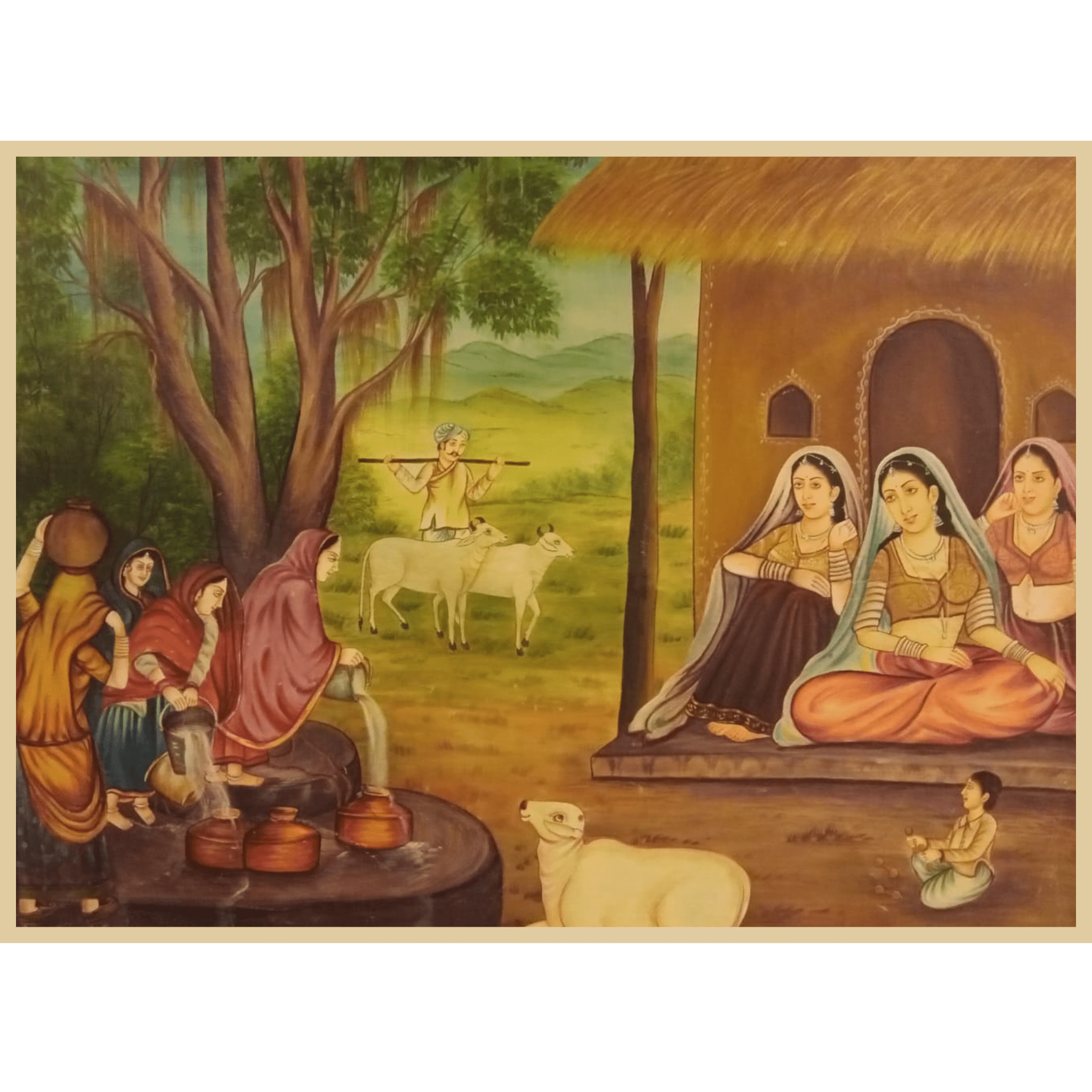
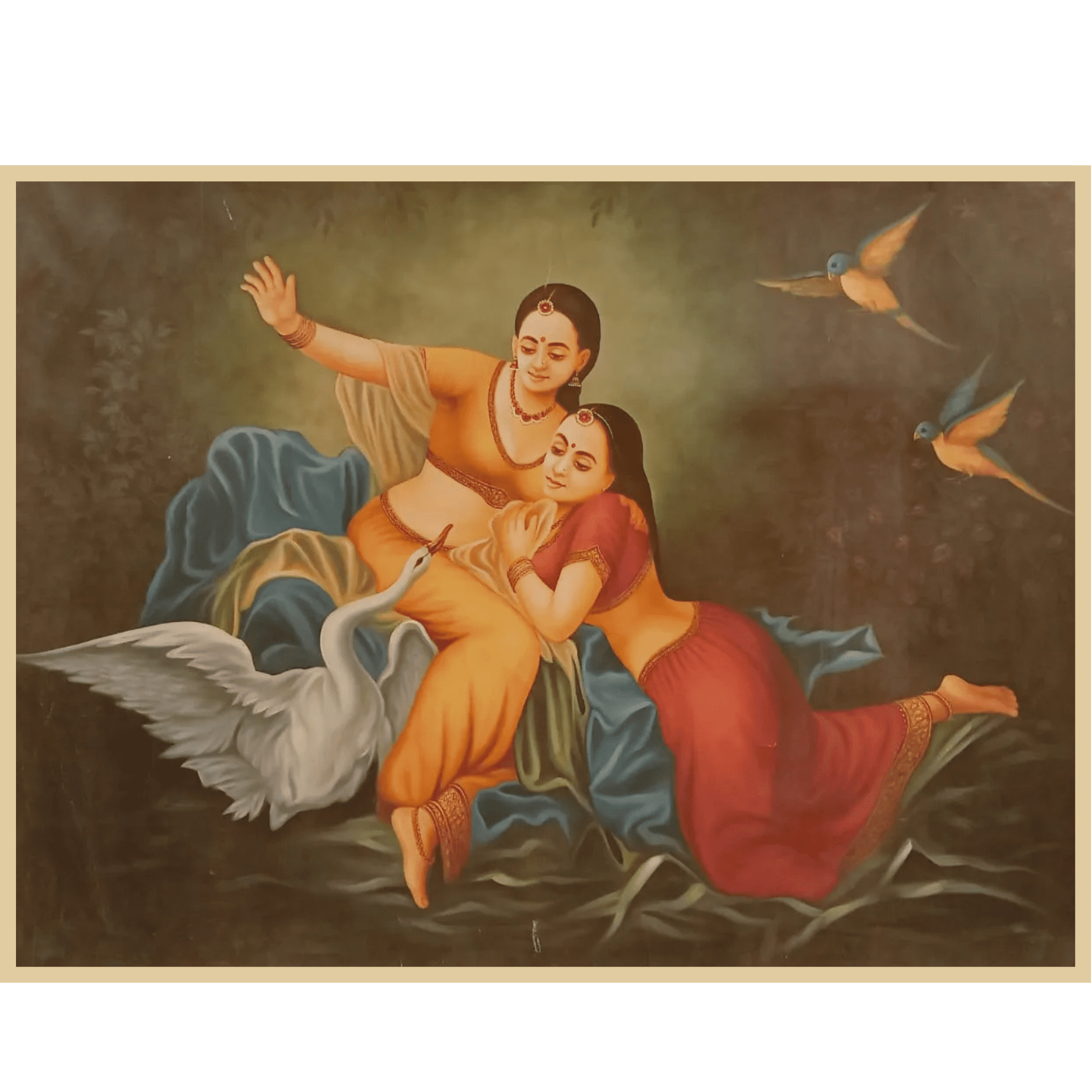
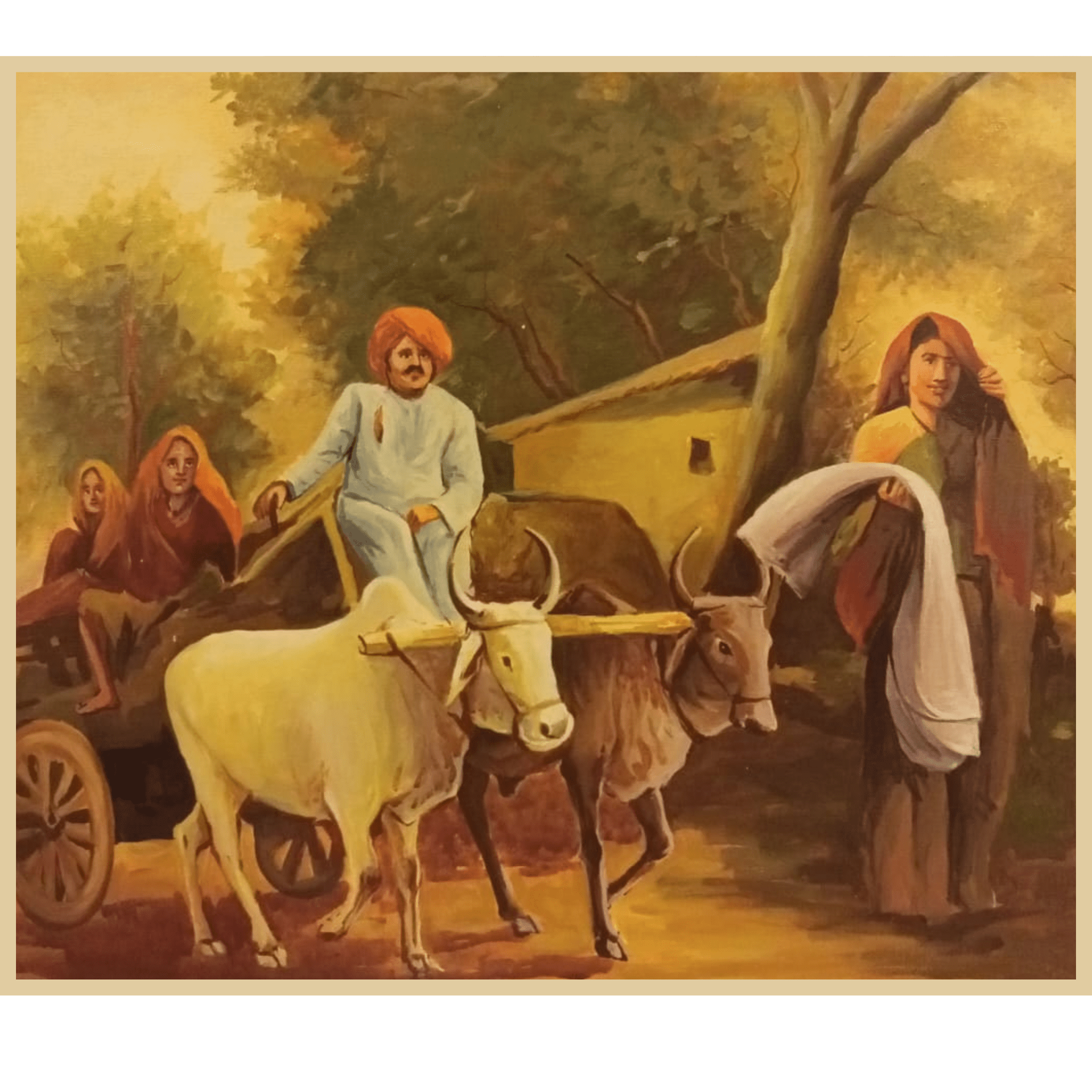
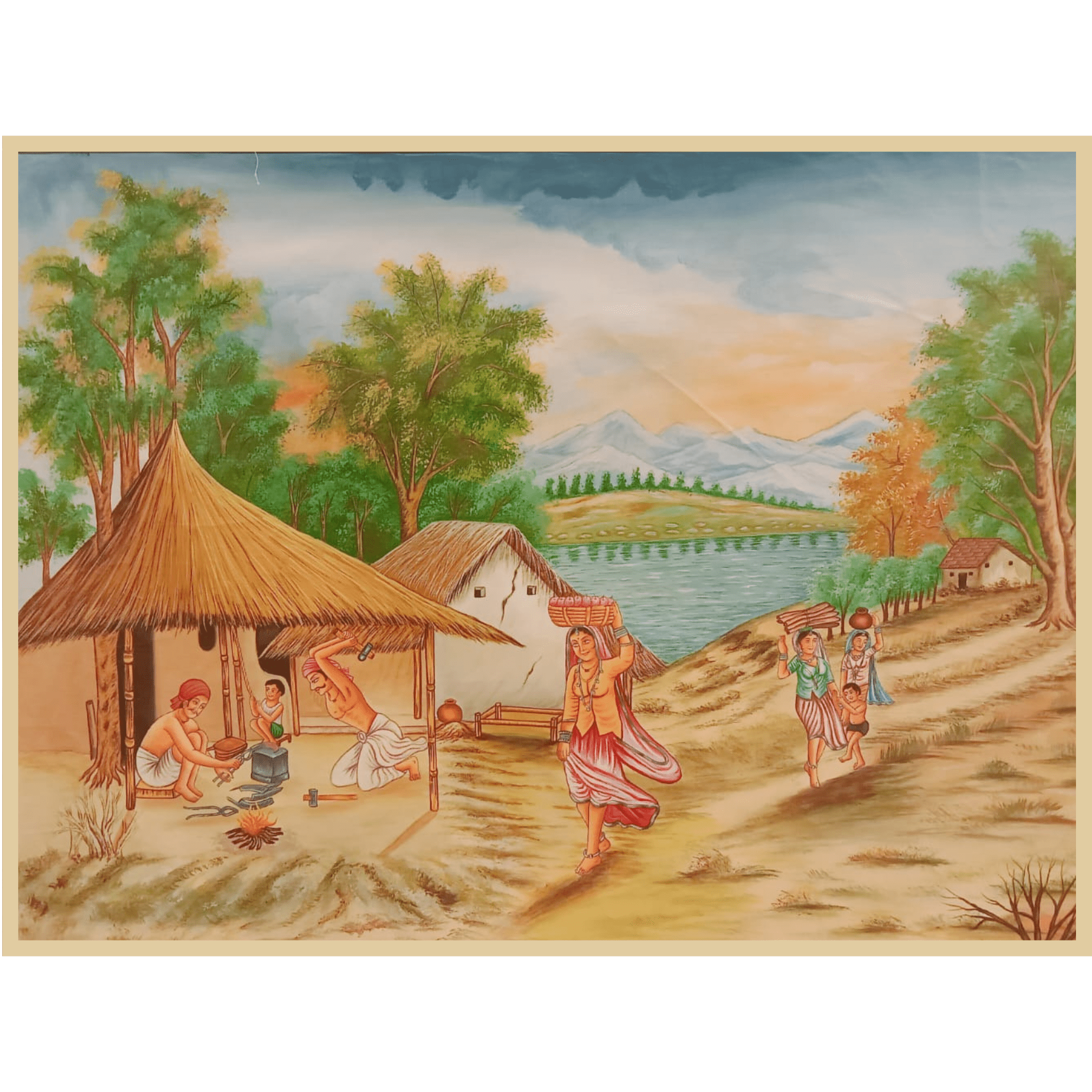
High-quality Indian oil paintings, especially those from Udaipur's artistic tradition, carry a cultural weight and aesthetic presence that elevates them above any other medium. When you hang a Rupasya oil painting on your wall, you are displaying a piece of living Rajasthani heritage — something made by a human hand using techniques refined over generations.
When Acrylics Are the Right Choice
Acrylics are not inferior — they are different, and right for specific situations. If you are commissioning a mural that needs to dry overnight, acrylics are the practical choice. If you want a very contemporary, graphic style with flat colour blocks, acrylics can deliver that aesthetic more efficiently. If budget is a primary concern and you want a handmade piece at a lower price point, acrylics offer good value.
But for statement living room art, Vastu paintings, heirloom-quality portraits, and any piece where long-term quality matters — oil is the clear choice.
Frequently Asked Questions
Q: Can oil paintings fade in Indian sunlight?
All paintings fade with prolonged direct UV exposure. Oil paintings should be kept out of direct sunlight — indirect natural light is fine and actually beautiful. A UV-filtering glass or acrylic cover can be added for very sunny rooms.
Q: Are Rupasya oil paintings varnished?
Yes. All our oil paintings are finished with a protective varnish once fully cured. This adds a final layer of protection against dust, humidity, and UV light, and enhances the depth and richness of the colours.
Q: Can I order a custom painting in oil or acrylic?
Yes — we offer custom commissions in both oil and acrylic. For portraits, landscapes, and Vastu art, we strongly recommend oil. For contemporary and abstract subjects, we can discuss the best medium with you.
CALL TO ACTION: Browse Original Handmade Oil Paintings — Udaipur Artists www.rupasya.com/oil-paintings/