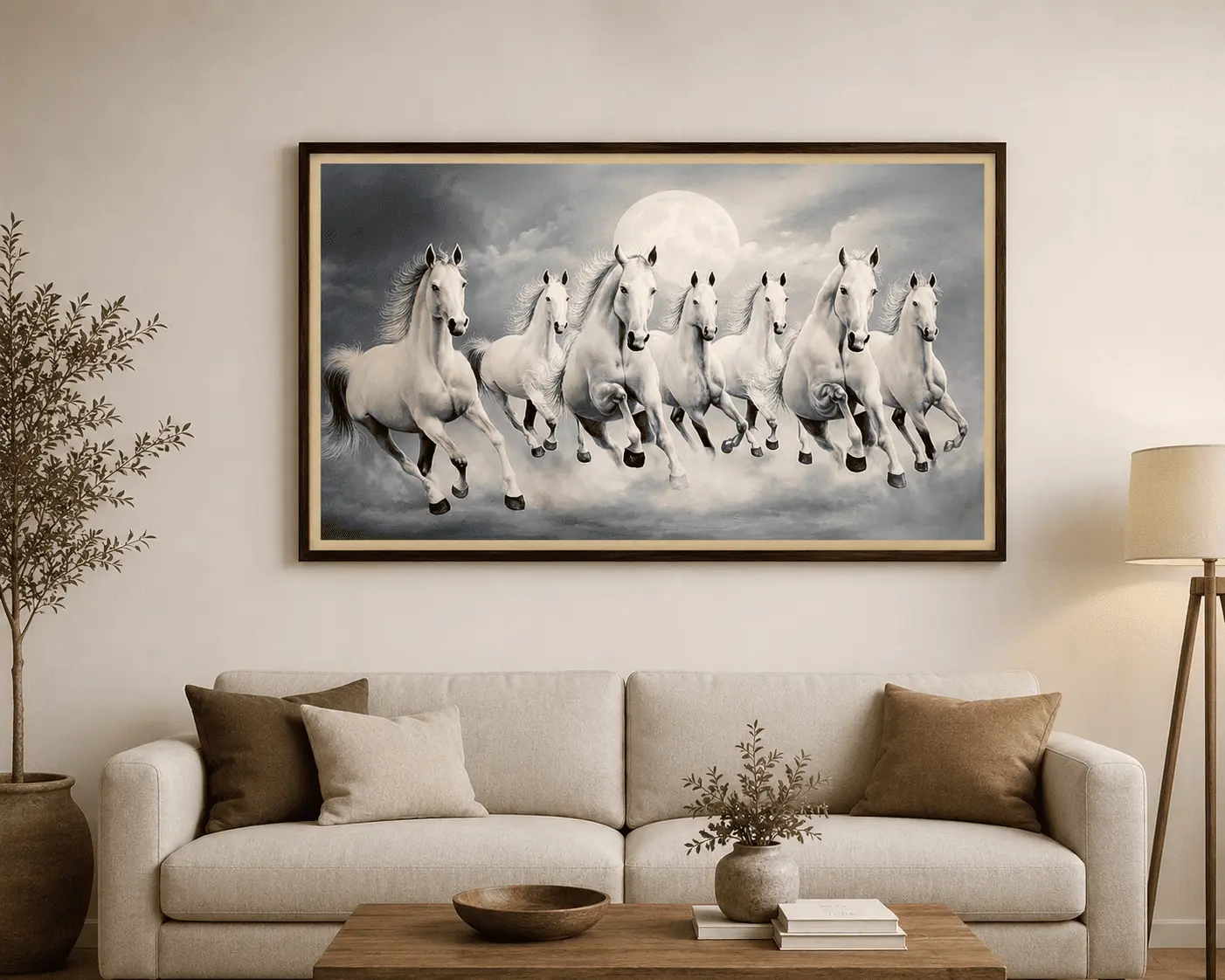
To commission an oil painting in India, you share what you want and where it will hang, an artist is matched to your brief, you approve a sketch, and only then does the painting begin. It sounds simple, but most problems with commissions come from a vague brief, unclear costs or last-minute deadlines. This guide explains each stage, what to put in your brief, what affects price and timing, and what to check before you pay.
The short version:
- Send a clear brief: where it hangs, size, subject, colours, references and a budget range.
- Get a written quote before any work starts.
- Approve the sketch, because painting begins only after your approval.
- Ask for the time estimate and give a realistic "required by" date.
- Remember that custom paintings are generally not returnable, so be sure at the sketch stage.
Commissioned or ready-made: which is right for you?
Buying a ready painting is faster, and you see exactly what you get. Commissioning suits you when you have a specific size, subject, colour palette or story that you cannot find in the collection. Here is how the two compare.
| Question | Ready-made painting | Custom commission |
|---|---|---|
| Subject and size | Choose from what is listed | You describe it, and the artist plans it with you |
| What you see before paying | The painting itself | A sketch or concept, then progress updates |
| Time | Dispatch times in the shipping policy | Estimated after your requirement is confirmed |
| Price | Listed | Quoted before work starts |
| Returns | Damage or wrong item can be reported | Custom paintings are generally not returnable |
If you are not sure which you need, browse the ready oil paintings first. If nothing fits your wall or your idea, a custom piece makes sense.
How a custom commission works, step by step
Rupasya's custom painting service follows six steps. The process can vary with the type and size of the artwork, but this is the general path.
- Submit your requirement. Say what you want to create and where it will hang.
- Share references and dimensions. Send reference images, your wall size and any colour or theme ideas.
- Artist matching. Your brief is matched with an artist suited to the work and the level of detail.
- Concept or sketch discussion. Production begins only after you approve.
- Painting and progress updates. The artist paints by hand, and you receive progress updates.
- Final quality check and delivery. The painting is checked, a certificate is added where applicable, and it is packed and shipped.
Custom paintings at Rupasya are made as oil on canvas. Say this clearly in your brief, along with your size, subject and references. If you have a question before you send your requirement, you can write on WhatsApp.
How to write a brief an artist can use
A good brief saves time and money, because the artist can quote accurately and the sketch is closer to what you imagine. The request form asks for the same details, so prepare them in advance.
- Where it will hang. The room, the wall and what is around it. Our guide to how to choose an oil painting for your home helps you decide the size.
- Width, height and orientation. Vertical, horizontal or square, in inches or centimetres.
- Subject and mood. Say what you want to see and how it should feel. "Calm village scene at sunrise" helps more than "something nice".
- Colours. Share the colour of your wall and furniture, and any colours you love or want to avoid.
- Reference images. Photos, sketches or examples you like, with a note on what you like in each.
- Budget range. A realistic range lets the artist plan the size and detail to fit.
- Required-by date. The date you need it, and the reason (a wedding or a housewarming, say).
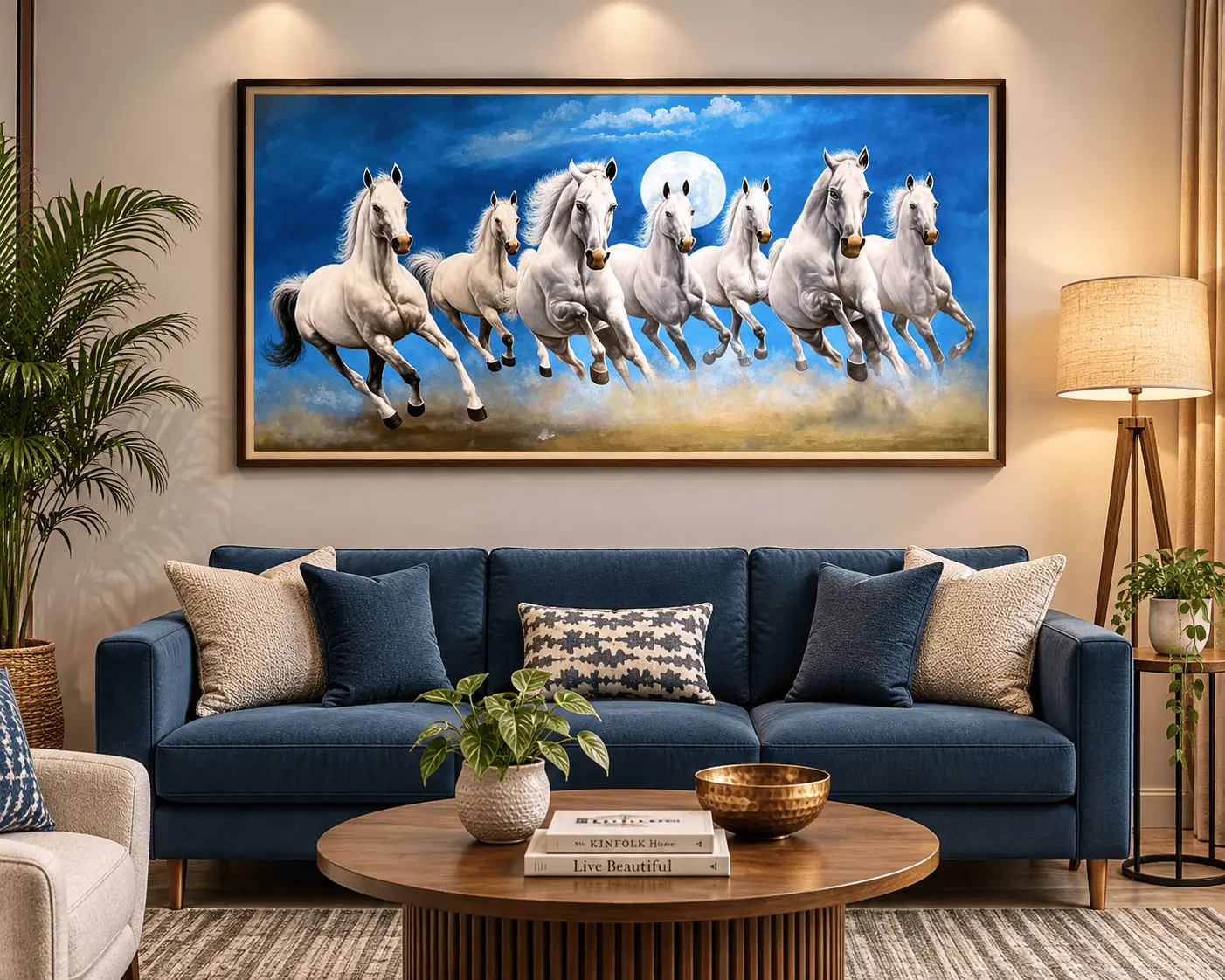
A vague brief: "A horse painting for my living room." A useful one: "Seven running horses, horizontal, about 48 by 30 inches, for a cream sofa wall. Warm browns and whites, no blue. Reference image attached for the sunset sky. Budget Rs X to Y, needed before Diwali." Fill in your own details, and the artist knows where to start.
Reference images: what to send and what to be careful about
A reference tells the artist what you mean far better than words. Send clear, high-quality images, and say whether you want the artist to follow the image closely or use it only for mood, colour or composition. For a portrait, see our page on custom portrait from photo.
Be careful with images you did not take. Copying someone else's photograph or artwork closely can raise copyright questions, especially if the painting is later displayed or sold. For a painting that stays in your home, use your own photos or images you have permission to use. This is general information, not legal advice, and the sources I read are not specific to Indian law, so if you have a doubt, ask an expert.
What changes the cost of a custom oil painting
Rupasya says the price depends on size, the art form, detailing, materials (such as gold work) and the artist's time, and that you get a clear quote before work starts. In practice, think of it this way:
- Size. A larger canvas needs more paint and more hours.
- Detail. A scene with many figures, faces or fine textures takes longer than a simple composition.
- Materials. Special materials or finishes add to the cost.
- Artist time and skill. The longer the work takes, the more it costs.
- Extras. Framing, special packing and international delivery may be charged separately. Ask what the quote includes.
Ask for the quote in writing, and ask what it covers. To understand how prices work across the range, you can also read our guide to buying original oil paintings online in India.
How long does a custom oil painting take?
Rupasya says it gives a time estimate when it confirms your requirement, and that the estimate depends on the size and detailing of the artwork. The details of your artwork decide the timeline, so there is no standard number. Ask for a date in writing.
Oil adds a natural limit. Oil paint dries by reacting with air and is usually touch-dry in about two weeks, though some colours dry within days. Artists often work in layers, waiting for each to dry, so a detailed oil painting cannot be rushed the way a quick sketch can. On top of the painting time, add the time to pack and deliver the work. Read the shipping policy for delivery details.
Give yourself a generous buffer, especially for gifts and events. Order well before your deadline, and say your required-by date in the first message.
The sketch stage: what to check before you approve
Production begins only after you approve the sketch or concept, so this is your best chance to make changes. Look at it carefully before saying yes.
- Composition. Is everything you asked for there, and is the main subject where you want it?
- Proportions and orientation. Does the shape match your wall?
- Colour direction. Does the palette suit your room?
- Details that matter. Faces, symbols, text or special elements.
Rupasya's page does not describe how changes after approval are handled, so ask before you approve what can still be changed and how.
Questions to ask before you pay
- Which artist will paint it, and can I see examples of their oil paintings?
- What is the full quote, and what does it include (canvas, framing, packing, delivery)?
- What is the time estimate, and what could delay it?
- What are the payment terms for my artwork? These depend on the details of the commission, so ask when each payment is due and whether an advance is needed.
- How will I see progress, and what happens if I want a change after the sketch is approved?
- Will there be a certificate of authenticity, and will it name this painting?
- What are the return terms for a custom piece?
On the last point, Rupasya's return and refund policy treats custom paintings as non-returnable, so read it before you order. For orders from outside India, see the international shipping page.
Common mistakes when you commission an oil painting in India
- Starting without a size. Measure first.
- Sending only one blurry reference. Send several clear ones.
- Leaving out the budget. It helps the artist choose the right level of detail.
- Approving the sketch in a hurry. Take a day and look again.
- Setting a tight deadline. Oil needs time between layers.
- Assuming it can be returned. Custom work generally cannot.
Ready to start?
Prepare your brief, then send it through the custom painting commission page. If you prefer to talk first, message us on WhatsApp. For a whole wall, our mural art service may suit you better, and it is available in India only. To compare the two ways to decorate a wall, see the Oil Paintings knowledge hub. To understand the medium itself, read the Wikipedia overview of oil painting, or our guide to oil painting vs acrylic if you are still choosing a medium.
Frequently Asked Questions
How does commissioning a custom oil painting work?
You share your requirement, references and wall size, and an artist is matched to your brief. A sketch or concept is discussed, and painting begins only after you approve it. The artist paints by hand with progress updates, then the work is quality-checked, a certificate is added where applicable, and it is packed and shipped.
How much does a custom oil painting cost?
There is no fixed price. At Rupasya, the cost depends on size, detailing, materials and the artist's time, and you get a clear quote before work starts. A bigger, more detailed painting costs more. Give the artist a realistic budget range in your brief and ask the quote to be written, including what it covers.
How long does a custom painting take?
Rupasya gives a time estimate once your requirement is confirmed. It depends on size and detailing. Oil paint is usually touch-dry in about two weeks, and artists often wait between layers, so allow a generous buffer before any deadline and ask for the estimate in writing, plus time for packing and delivery.
Can I send my own photo as a reference?
Yes, clear reference images are part of the brief, and for portraits you can start from a photo. Use your own photos or images you have permission to use, because copying someone else's work closely can raise copyright questions. This is general information, not legal advice, so ask an expert if unsure.
Can I return a custom painting?
Rupasya's return policy treats custom paintings as non-returnable, so be certain at the sketch stage. Production begins only after you approve it. If you are unsure, ask what can be changed after approval before you pay, and read the return and refund policy in full before ordering.
How do I pay for a custom painting?
Payment terms depend on the details of your artwork, such as size and detailing, so they are agreed for each commission. You get a clear quote before work starts. Before you approve the sketch, ask in writing what the quote covers, when each payment is due, and whether an advance is needed.