How to choose an oil painting for your home is easier to answer when you start with the wall and not the picture. Most people fall for a painting first and only then discover that it is too small for the sofa or too bold for the bedroom. This guide takes you through the steps in the right order: measure, pick the room's mood, choose a subject, match colours, plan the frame and look after the painting.
The short version:
- Size the painting to about two thirds of the furniture width below it.
- Hang the centre at about 57 inches (145 cm) from the floor.
- Pick a subject and mood that suit what the room is used for.
- Match colours to the room, but do not worry about matching exactly.
- Leave glass off oil paintings and keep them out of sun and damp.
Step 1: Measure before you choose
A painting that is too small looks lost. One that is too large crowds the room. The rule used by most interior guides is simple: art above a piece of furniture should be roughly two thirds of that furniture's width. One art retailer's guide gives a slightly wider range of 65 to 75 per cent. Measure the sofa, bed, sideboard or console, and multiply by 0.67.
For height, put the centre of the painting at about 57 inches (145 cm) from the floor, which is roughly eye level. Above a sofa, leave about 6 to 8 inches between the top of the sofa and the bottom of the painting. Guides vary a little (anything from 5 to 10 inches), so use that as a starting point.
Before you order, cut paper to the painting's size or mark it with painter's tape on the wall. This two-minute test shows you whether the size works. Also check whether the listed size includes a frame.
Step 2: Match the painting to the room
Each room has a different job, so the same painting will not suit all of them. These are starting points, and sizes are guides to adjust for your own wall.
| Room | Mood that works | Size and placement |
|---|---|---|
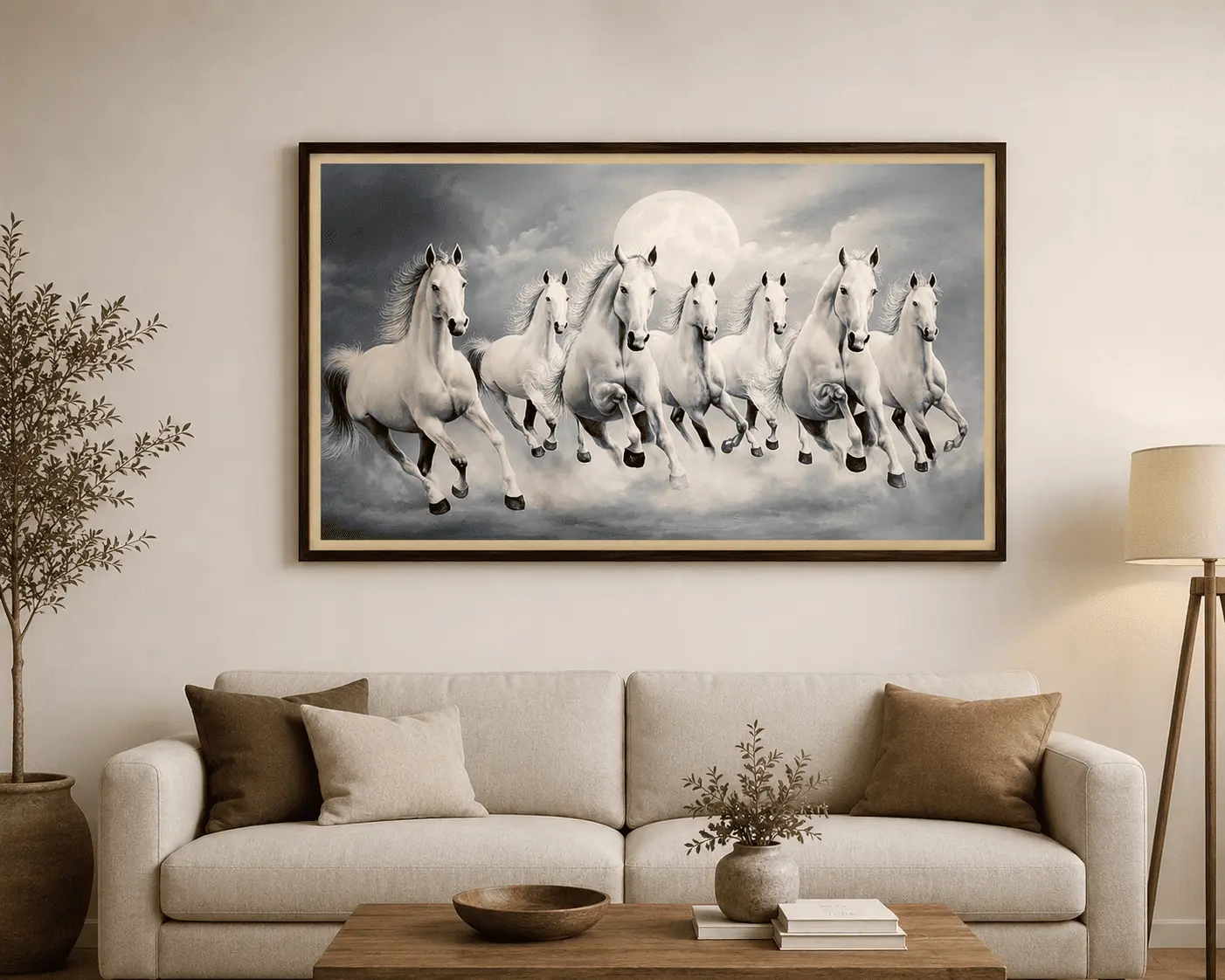
| Living room | Bold, warm, a clear focal point | About two thirds of the sofa width. For a 6-foot (72 inch) sofa, roughly 48 to 55 inches wide. |
| Bedroom | Calm, soft, personal | Sized to the headboard, hung a little above it, clear of lamps and pillows. |
| Dining area | Warm, earthy, nature or village scenes | About two thirds of the sideboard width, visible from seated height. |
| Hallway or entrance | A welcoming first impression | About half to two thirds of the console width, or a series at one centre height. |
| Home office or study | Strong, focused, not distracting | About half to two thirds of the desk width, away from screen glare. |
Step 3: Choose a subject you will live with
Pick a subject that means something to you, because you will see it every day. Oil paintings in Indian homes often fall into a few groups:
- Horses. Popular for living rooms and offices as a symbol of speed and progress. Read which 7 horse painting is best for your home, or browse the 7 horse paintings.
- Village scenes. Warm and nostalgic, and good for family rooms and dining areas. See our village life painting guide and the village life paintings.
- Wildlife. A tiger or lion gives a study or modern living room a strong focus. See the tiger oil paintings.
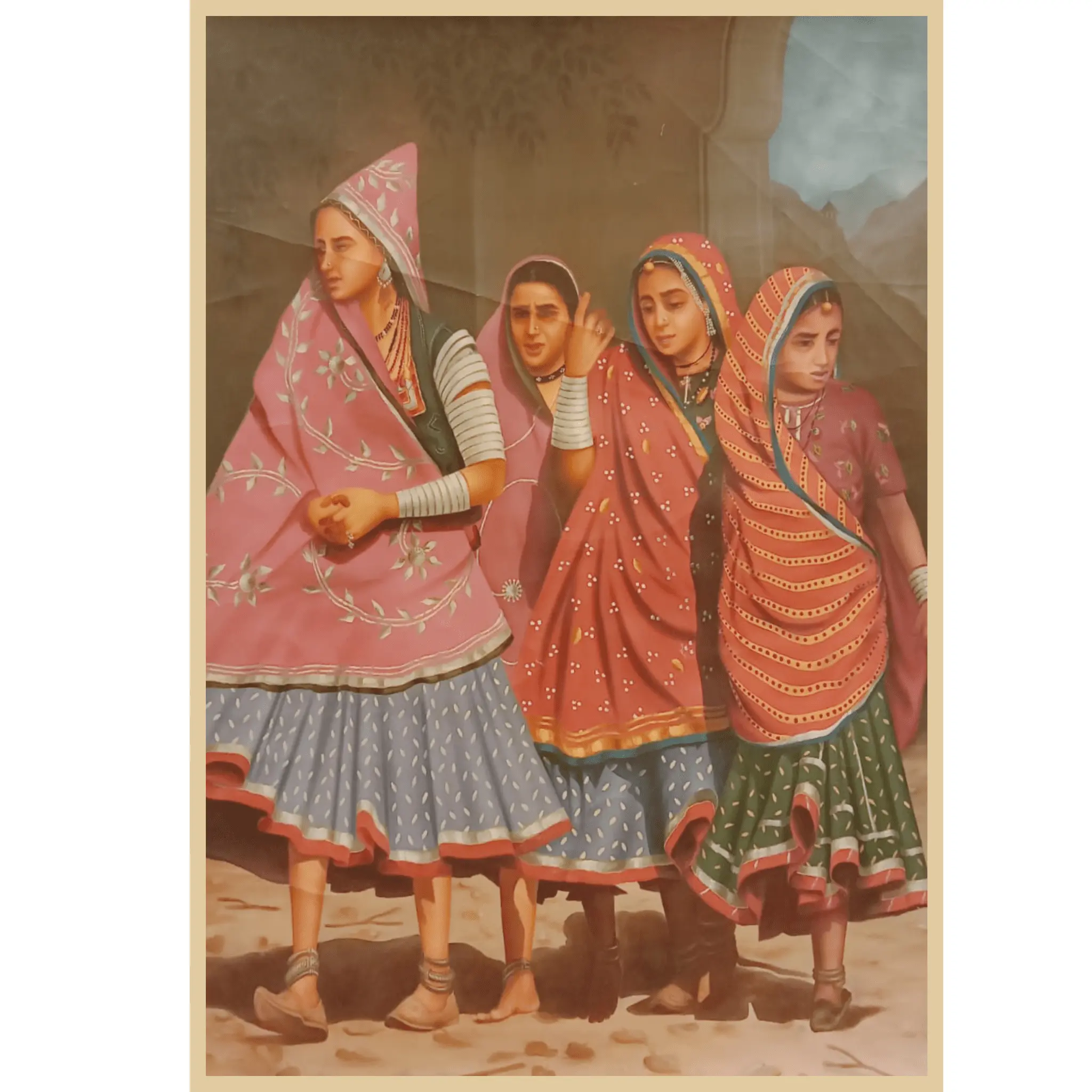
- Portraits. Add character and a story. See the Indian lady portraits.
Style matters too. A realistic painting shows fine detail. An impressionist one uses visible brushstrokes to suggest light and mood. An abstract one works with colour and form. None is better than the others, so choose the one you respond to. If you hang a painting following Vastu guidance, remember that this is a matter of belief and that guides differ. Our 7 horse painting Vastu guide covers placement.
Step 4: Work out colours and balance
Your painting does not have to match your furniture or walls exactly, but it should work with them.
- Neutral or white walls: almost any palette works, so a colourful painting can be the focal point.
- Dark walls: choose a painting with bright, contrasting colours so it does not disappear.
- Warm walls (beige, yellow, terracotta): deeper tones and earthy scenes sit comfortably.
- Already busy rooms: a softer, quieter painting gives the eye a rest.
Colour is often said to change mood: blues and greens calm, warm yellows and oranges energise, and deep reds feel rich and dramatic. Treat this as a rough guide, not a rule. Research on how colour affects mood is mixed, and responses depend a lot on the individual and the culture. If a colour makes you feel good, it is the right one for your home.
Step 5: One painting or several
A single large painting creates a clear focal point and suits a bold wall. A group of paintings suits a long or empty wall and lets you tell a small story. If you hang several, keep gaps even, about 2 to 4 inches, and treat the group as one unit when you measure. For a very wide wall where you want one painting in a specific size, a custom painting may be better than a standard size.
Step 6: Plan the frame
A frame should support the painting, not compete with it. Classic frames with moulding suit traditional subjects, and slim frames suit modern work. A floater frame, which leaves a small gap around the canvas, shows the full edge. One practical point: framers advise that you should not put glass directly against an oil painting, and if you glaze one in a traditional frame, spacers should keep it clear of the paint. Many oil paintings are hung without glass for this reason.
Ask the seller whether the painting is sold framed, unframed or gallery-wrapped, and check the depth of the canvas before you buy a frame.
Step 7: Set a budget and buy from a trusted seller
Decide your budget before you browse, so you can focus on paintings in range. The price of a hand-painted oil painting depends mainly on its size, detail and the time the artist spends on it. A very low price for a large "oil painting" is a warning sign, since it may be a print. Our guide to buying original oil paintings online in India explains how to check the seller, spot a print and read the delivery and returns terms.
Caring for your oil painting
Hang it away from direct sunlight, heat sources and damp walls, and avoid sudden changes in humidity. Dust it gently with a soft dry brush. Do not use water or household cleaners, and do not touch the paint surface. The Canadian Conservation Institute covers these points in its guide to the basic care of paintings. For deeper cleaning or damage, ask a professional conservator.
Common mistakes when you choose an oil painting for your home
- Choosing too small. Measure the furniture first.
- Hanging too high. Aim for the centre at about 57 inches.
- Matching a colour too exactly. Complementing works better than copying.
- Too many statement pieces in one room. Pick one focal painting per wall.
- Ignoring light. Strong sun fades colours over time and glare hides the surface.
Ready to choose?
Take your measurements, pick your room and then look. Browse our original handmade oil paintings, or read more in the Oil Paintings knowledge hub. If nothing fits your wall, tell us the size and the mood and we can discuss a custom piece.
Frequently Asked Questions
What size oil painting should I choose for my living room?
Aim for about two thirds of the width of the furniture below it. For a 6-foot sofa, that means roughly 48 to 55 inches wide. Measure the sofa first, mark the size on the wall with painter's tape, and check it looks balanced. On a very wide wall, a group of paintings or a custom size can work better.
How high should I hang an oil painting?
Hang it so the centre sits at about 57 inches (145 cm) from the floor, roughly eye level. Above a sofa, leave about 6 to 8 inches between the top of the sofa and the bottom of the painting. Guides vary slightly, so treat these as starting points and test with tape before drilling.
What kind of oil painting suits a bedroom?
A calm, soft one. Gentle landscapes, muted scenes and quiet abstracts suit a room for rest, while high-contrast or very busy pictures can feel stimulating. Size it to the headboard, hang it a little above it, and keep it clear of lamps and pillows. Choose a colour you personally find restful.
Should an oil painting be framed under glass?
Usually not. Framers advise against putting glass directly against an oil painting, and if you do glaze one in a traditional frame, spacers should keep the glass clear of the paint. Many oil paintings are hung without glass, in a floater frame or gallery-wrapped. Ask the seller how the painting is supplied.
Does the colour of a painting need to match my walls?
No. It should complement them. On neutral walls almost any palette works, on dark walls choose brighter, contrasting colours so the painting does not disappear, and in busy rooms a quieter painting helps. Colour is often said to affect mood, but evidence is mixed, so trust your own response.