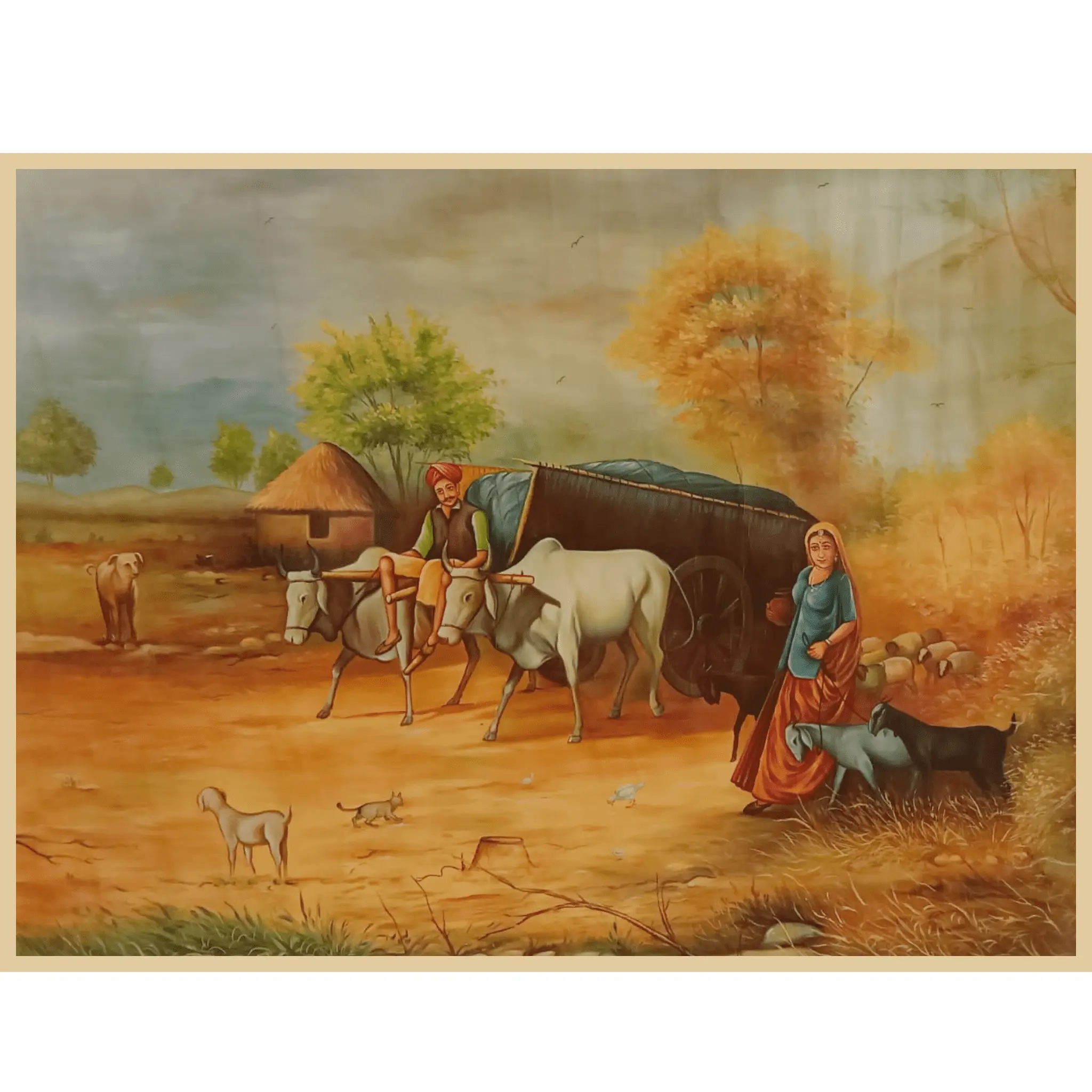
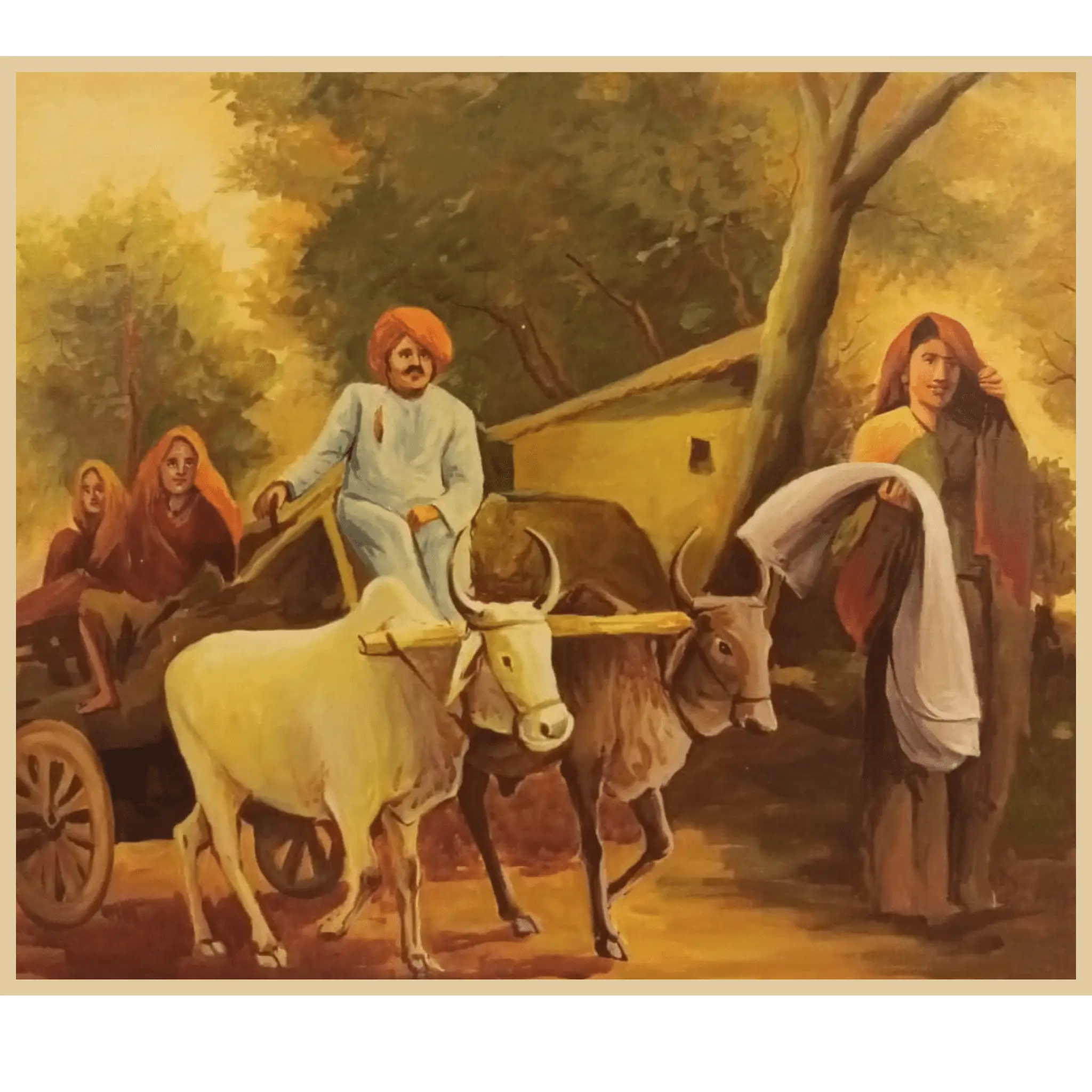
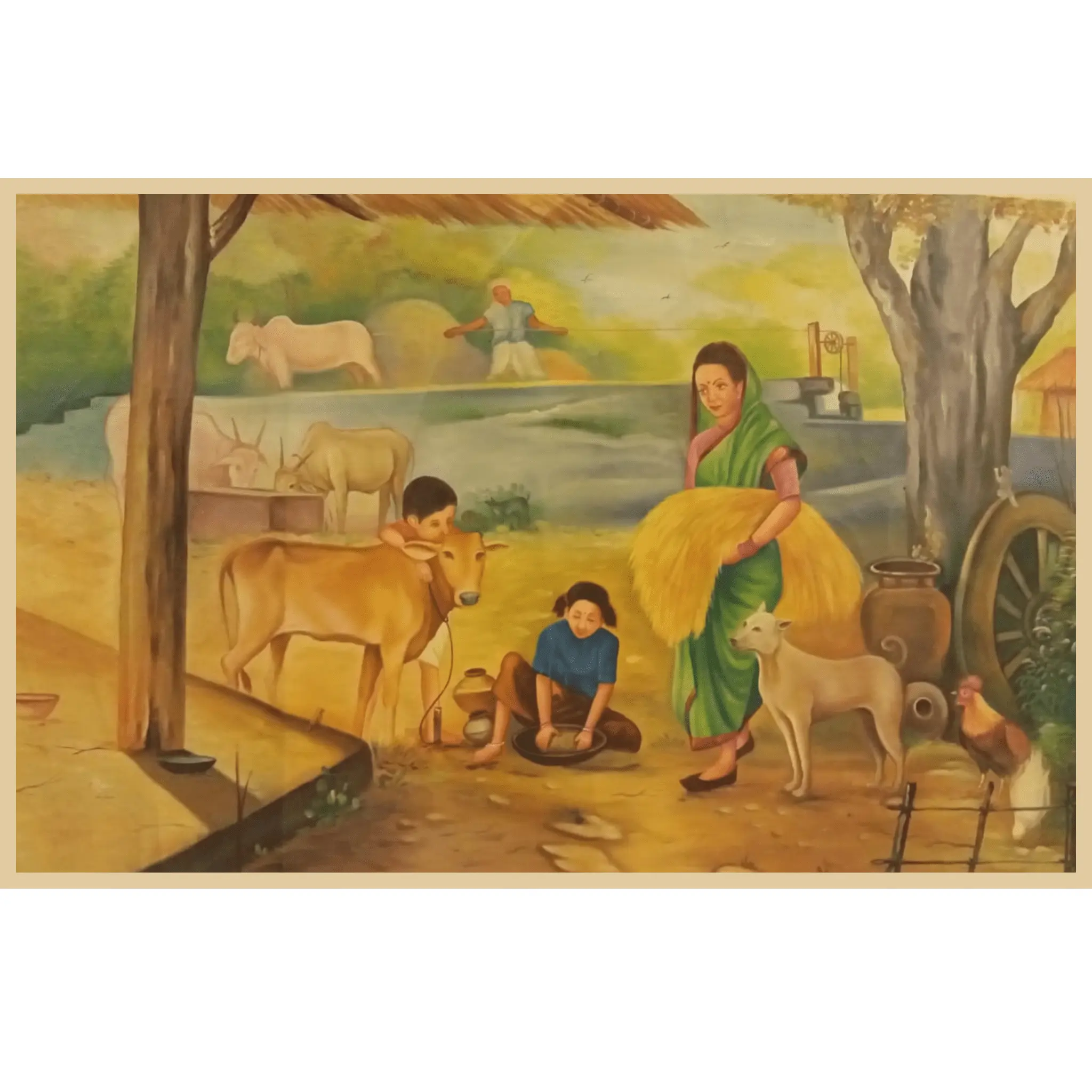
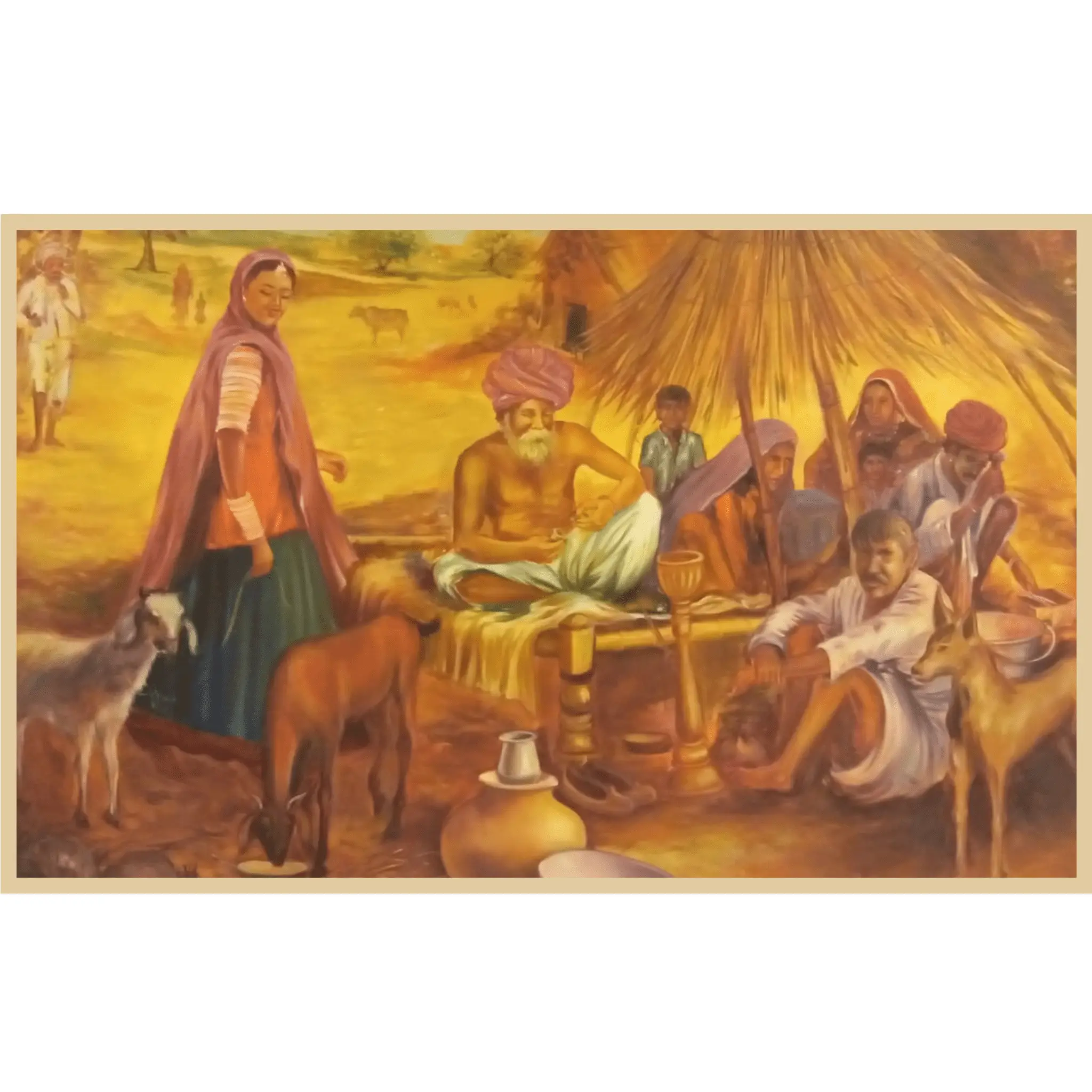
A village life painting is a hand-painted scene of everyday rural life: a bullock cart on a dusty track, women walking home from the well with water pots, a family at harvest. In oil on canvas it works in a living room, dining room or bedroom, and it is one of the easier subjects to live with every day. This guide covers how to pick the scene, the size, the wall colour and the hanging height, and how to tell a real handmade oil from a print. You can browse all our handmade oil paintings or go straight to our village life paintings.
Table of Contents
- What is a village life painting?
- Why village scenes suit Indian homes
- Which village scene should you choose?
- Oil painting vs watercolour vs print
- Best room and size for your painting
- How high to hang it
- How to match colours with your walls
- Three common confusions
- How to check it is a real handmade oil painting
- Care tips for Indian homes
- Custom village scenes
What is a village life painting?
A village life painting shows everyday rural scenes: farming, harvest time, village paths, animals, wells and families at work. Some people search for it as a "painting of village scene", "village scenery painting" or "Indian village painting". They all mean the same idea: a calm picture of simple country life.
Village scenes appear in more than one Indian art tradition, and the medium changes how the picture feels. This guide is about oil on canvas, where the paint is built up in layers and the brushwork stays visible. If you are curious about the miniature tradition, read our separate guide to Rajasthani village life painting.
Why village scenes suit Indian homes
Many of us have a link to a village: a grandparent's home, a school holiday, a family wedding in the old town. A rural scene brings that memory onto the wall without being heavy about it. The earthy browns, greens and golden yellows also sit comfortably in both traditional and modern interiors, and a village scene usually reads as peaceful rather than loud. That makes it a safe choice for a shared room that several people look at every day.
Which village scene should you choose?
The subject matters as much as the size. A quiet scene with one or two figures suits a bedroom or a corner. A wider scene with several figures, animals and a long field gives a living room wall more to look at, and rewards a second glance.
| Scene | Listed size | Where it fits |
|---|---|---|
| Bullock Cart Journey | 24 x 21 inch | Hallway, bedroom side wall, desk wall |
| Women Carrying Water Pots | 23 x 22 inch | Hallway, bedroom, small gap between windows |
| Village Blacksmith | 24 x 20 inch | Study or office nook |
| Farm Family with Cattle | 34 x 22 inch | Dining room, above a console table |
| Handmade Rural Artwork | 38 x 24 inch | Dining room or a medium living room wall |
| Indian Village Harvest | 41 x 29 inch | Living room feature wall |
| Village Life Scene with Women | 46 x 34 inch | Large living room or hall |
| Ox Cart and Herding Scene | 45 x 34 inch | Large living room or hall |
Sizes are in inches as listed on each product page at the time of writing, so check the page for what is currently available.
Oil painting vs watercolour vs print
| Type | Look and feel | Best for |
|---|---|---|
| Oil on canvas | Rich colour, visible brush texture, depth | Living rooms, statement walls, long-term keeping |
| Watercolour on paper | Soft, light, needs framing under glass | Small spaces, quiet corners |
| Flat surface, same copy as many others | Low budget, temporary decor |
If you want something that looks real and lasts, hand-painted oil on canvas is the better choice. Oil dries slowly, which lets the artist blend soft edges and build layers, and that is where the depth comes from. If you are also weighing acrylic, our oil painting vs acrylic guide compares the two for Indian homes.
Best room and size for your painting
| Room | Suggested size | Placement tip |
|---|---|---|
| Living room | Large, about 36 x 24 inch or bigger | Above the sofa or console, centred |
| Dining room | Medium to large landscape | On the main wall facing the table |
| Bedroom | Medium, calm scenes | Above the bed or on a side wall |
| Entrance or hallway | Small to medium | At eye level, away from direct sun |
A simple rule that designers repeat: the painting should be roughly two thirds of the width of the furniture below it. Measure the sofa, multiply by 0.67, and you have your target width. A 72-inch (six-foot) sofa points to a painting about 48 inches wide. A 60-inch console points to about 40 inches.
Before you order, cut a piece of paper or use painter's tape to mark the size on the wall. It takes two minutes and shows you straight away whether the painting will feel lost or crowded. On a very wide wall, two medium paintings hung side by side can look better than one very large piece.
How high to hang it
Most guides suggest placing the centre of the painting at about 57 inches (145 cm) from the floor, which is roughly average eye level. Over a sofa, though, the gap matters more than the floor height. Leave about 6 to 8 inches between the top of the sofa and the bottom edge of the painting. Some sources allow anything from 4 to 10 inches, and a low sofa or a tall household can use the higher end.
Use two hooks rather than one. It is easier to keep the painting level, and the weight is shared.
How to match colours with your walls
- Cream, white or beige walls: almost any village scene works, especially warm golden harvest scenes.
- Dark or deep-coloured walls: choose a painting with a lighter sky or bright fields so it stands out.
- Grey or cool-toned walls: pick a scene with amber and earth tones, which add warmth to the room.
- Wooden furniture: earthy, terracotta-toned scenes look natural with it.
A useful trick: pick two colours from the painting, such as a clay red and a field green, and repeat one of them in a cushion, a vase or a curtain. The painting then feels part of the room instead of something added to it.
Three common confusions
- "Village scenes only suit traditional homes." Not really. The palette is earthy and quiet, so it sits well against plain walls and clean furniture lines.
- "Any painting sold as an oil painting is hand-painted." No. Printed canvas is often sold under that name. Check the surface and the seller's details, as explained below.
- "A big painting needs a big room." Scale to the wall and the furniture beneath it, not the size of the room. A 48-inch painting above a six-foot sofa works even in a modest living room.
How to check it is a real handmade oil painting
- The brush strokes and paint texture can be seen and felt, not flat.
- The seller clearly says "not a print" and names the artist or city.
- Close-up photos of the surface, the edges and the back of the canvas are available on request.
- A certificate of authenticity comes with the painting.
- No two pieces look exactly the same.
For a longer checklist on pricing, delivery and what to ask a seller, read our complete buyer's guide to original oil paintings in India.
Care tips for Indian homes
- Keep it out of direct sunlight at every hour of the day. The Canadian Conservation Institute's basic care guide for paintings gives the same advice.
- Choose a spot with steady humidity. The same guide warns against extremes above 60% or below 40%, which is worth remembering through the monsoon and in rooms with a running air conditioner.
- Avoid damp walls, bathrooms, and anywhere air from an AC vent or a heater blows straight onto the canvas.
- Do not touch the paint surface or press on the back of the canvas.
- Dust gently with a soft dry brush. Do not use water or cleaners, and leave any deeper cleaning to a professional conservator.
Custom village scenes
Want a particular scene, such as your family's village, a harvest festival or a specific size for your wall? Our artists accept custom commissions. Start with the custom painting commission page and send your wall measurements, a photo of the room and any reference pictures. If you would like a village scene across a whole wall instead of on canvas, we also offer mural art services in India.
Ready to choose? Explore all original oil paintings on canvas or pick your favourite from the village life painting collection. More guides on this subject are in our Oil Paintings knowledge hub. Free Pan India delivery.
Frequently Asked Questions
Which room is best for a village life painting?
The living room and dining room are the most popular choices because they usually have the largest walls and the most visitors. A smaller village scene also works well in a bedroom, hallway or study. Pick the room first, then the size: a calm, single-subject scene suits a bedroom, while a busier harvest or well scene gives a living room wall more to look at.
What size village life painting should I buy for my living room?
Aim for a width of roughly two thirds of the furniture below it. For a 72-inch (six-foot) sofa that is about 48 inches wide. Hang it with its centre near 57 inches from the floor and about 6 to 8 inches of space above the sofa. On a very wide wall, two medium paintings side by side can work better than one large piece.
Is a village life painting suitable for a modern home?
Yes. The earthy browns, greens and golden yellows of a village scene balance clean, modern lines and add a human touch to plain walls. Choose a painting with a tone or two that echoes your cushions or curtains, and leave generous empty wall around it so the scene has room to breathe.
How can I tell if a village life painting is hand-painted oil and not a print?
Look for visible, raised brushwork and uneven paint thickness, which a print cannot copy. Ask for close-up photos of the surface, edges and back of the canvas, and check that the seller names the artist and offers a certificate of authenticity. A flat, even sheen across the whole canvas usually points to a print.
How should I care for a village life oil painting in an Indian home?
Keep it out of direct sunlight at every hour of the day, and away from AC vents, damp walls and bathrooms. The Canadian Conservation Institute advises steady humidity and avoiding extremes above 60% or below 40%, which matters through the monsoon. Dust gently with a soft dry brush, never water, and leave deep cleaning to a professional conservator.
Can I order a custom village scene?
Yes. Our artists accept custom commissions, so you can ask for a particular scene, such as your family's village or a harvest festival, in the size your wall needs. Send your wall measurements, a photo of the room and any reference pictures through the custom painting commission page so the artist can plan the composition.