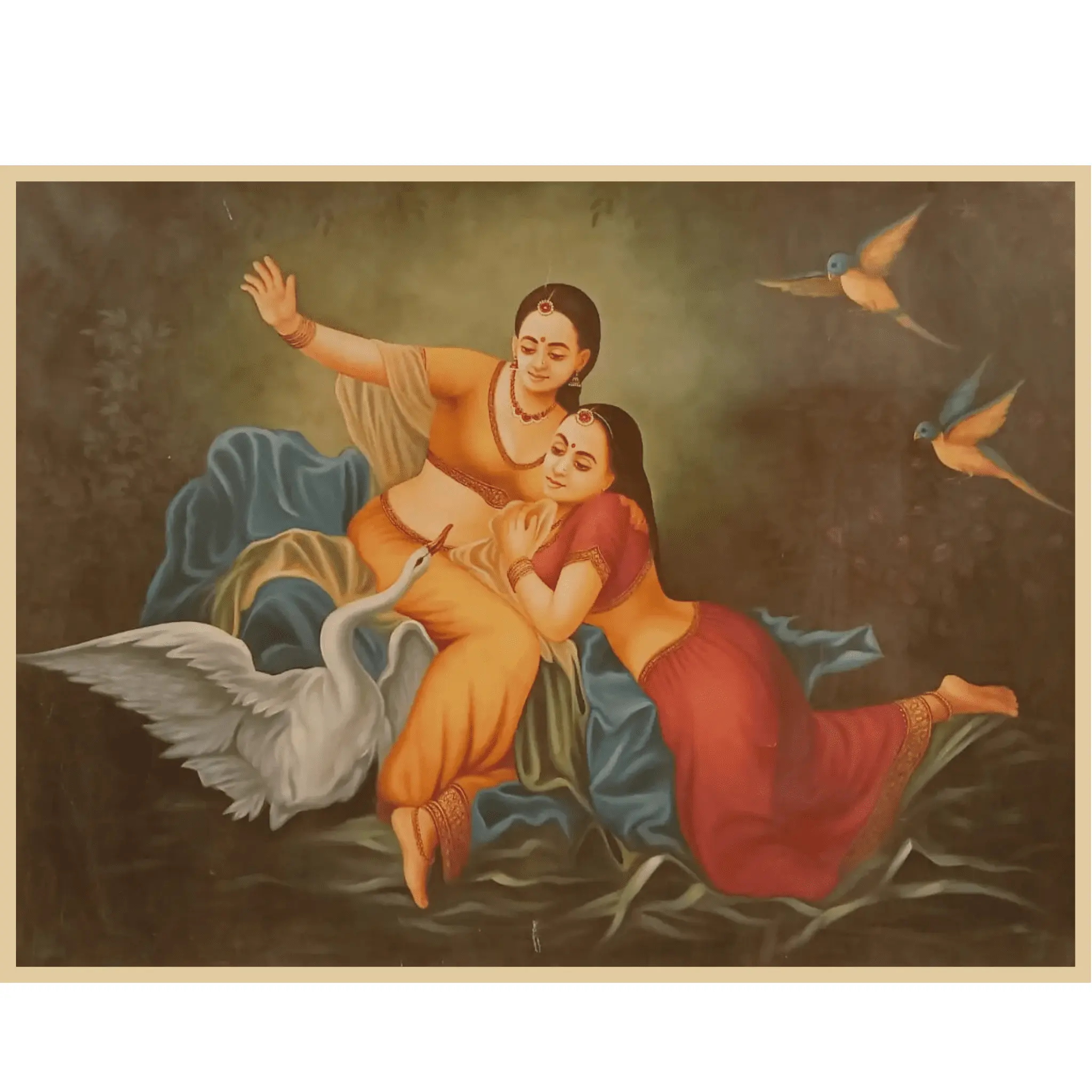
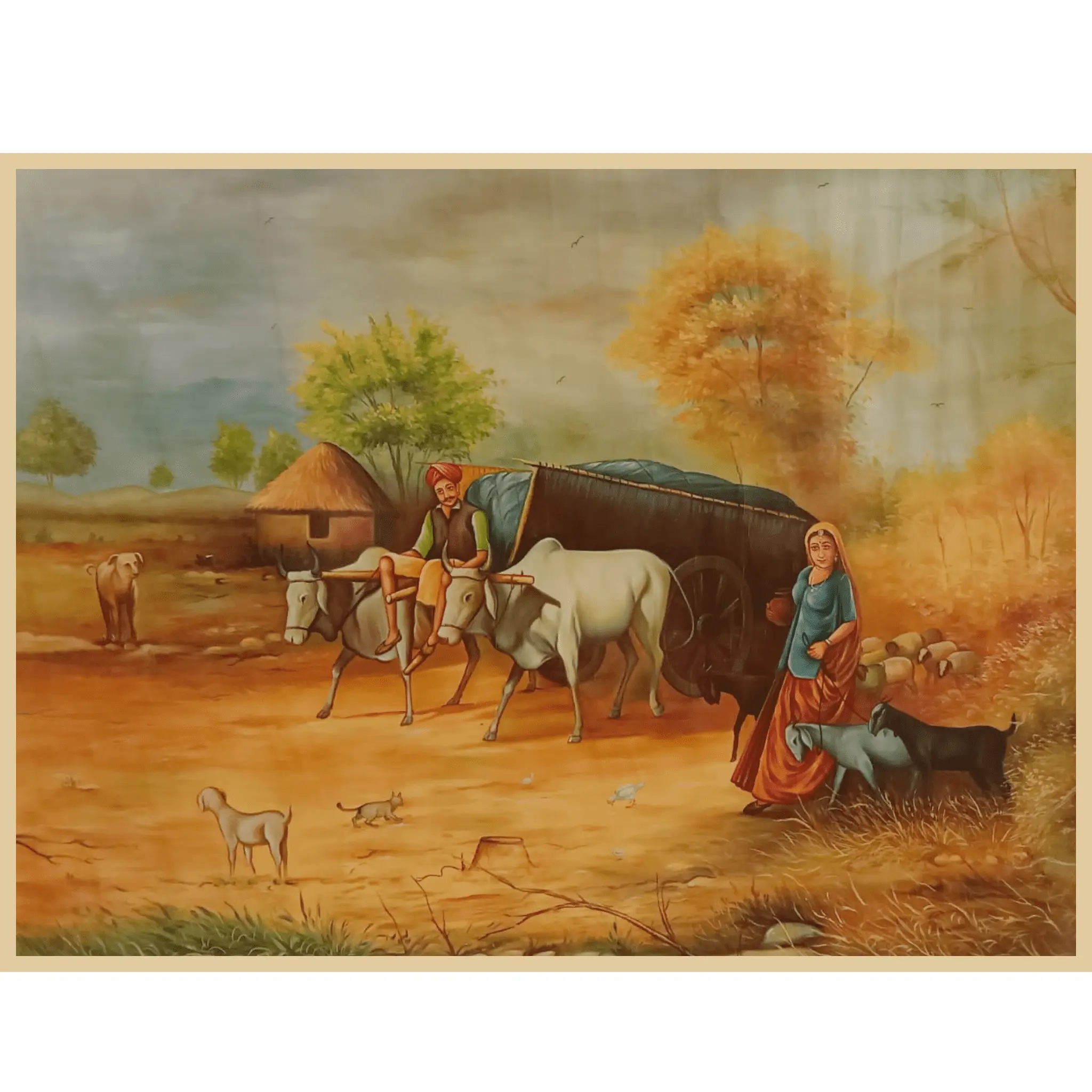
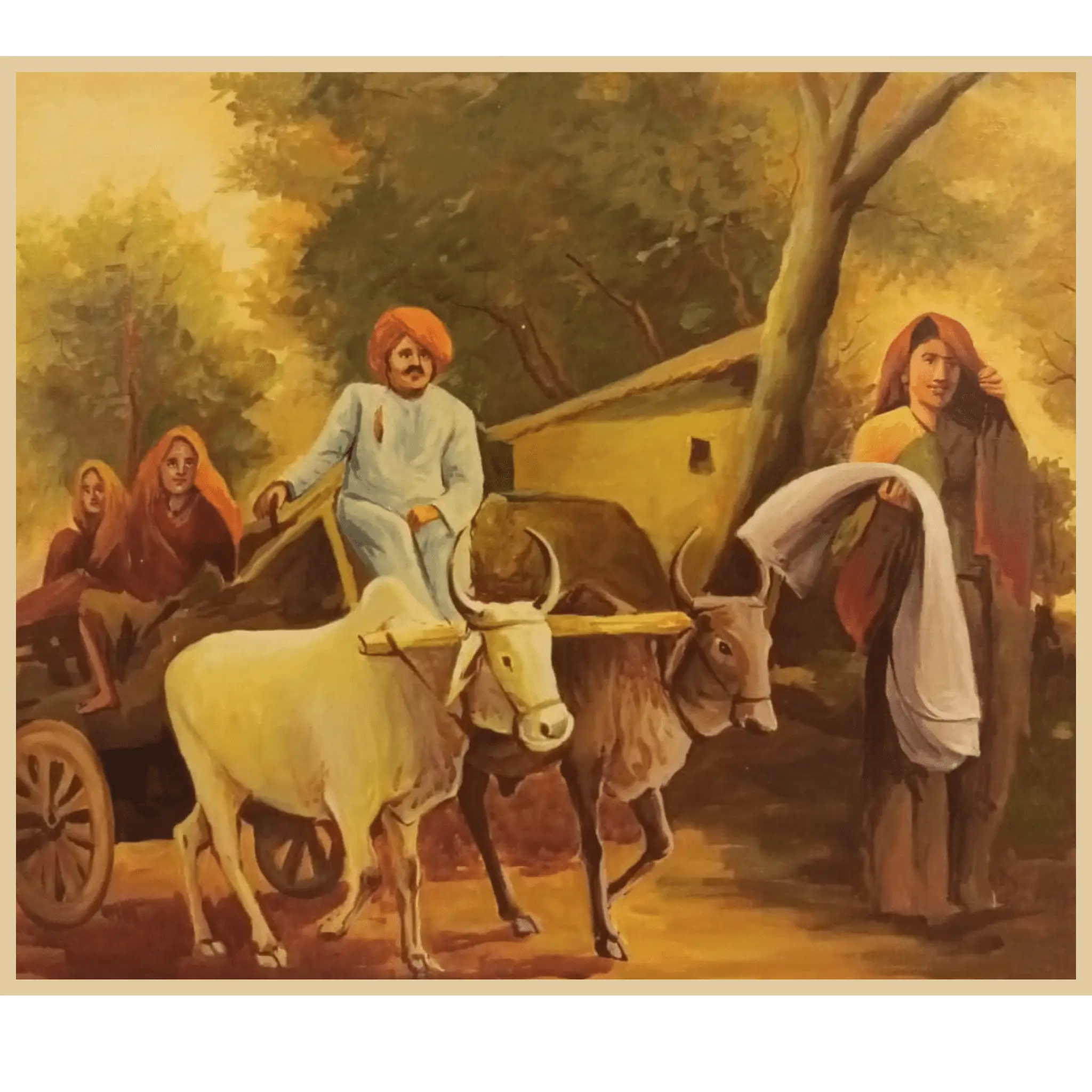
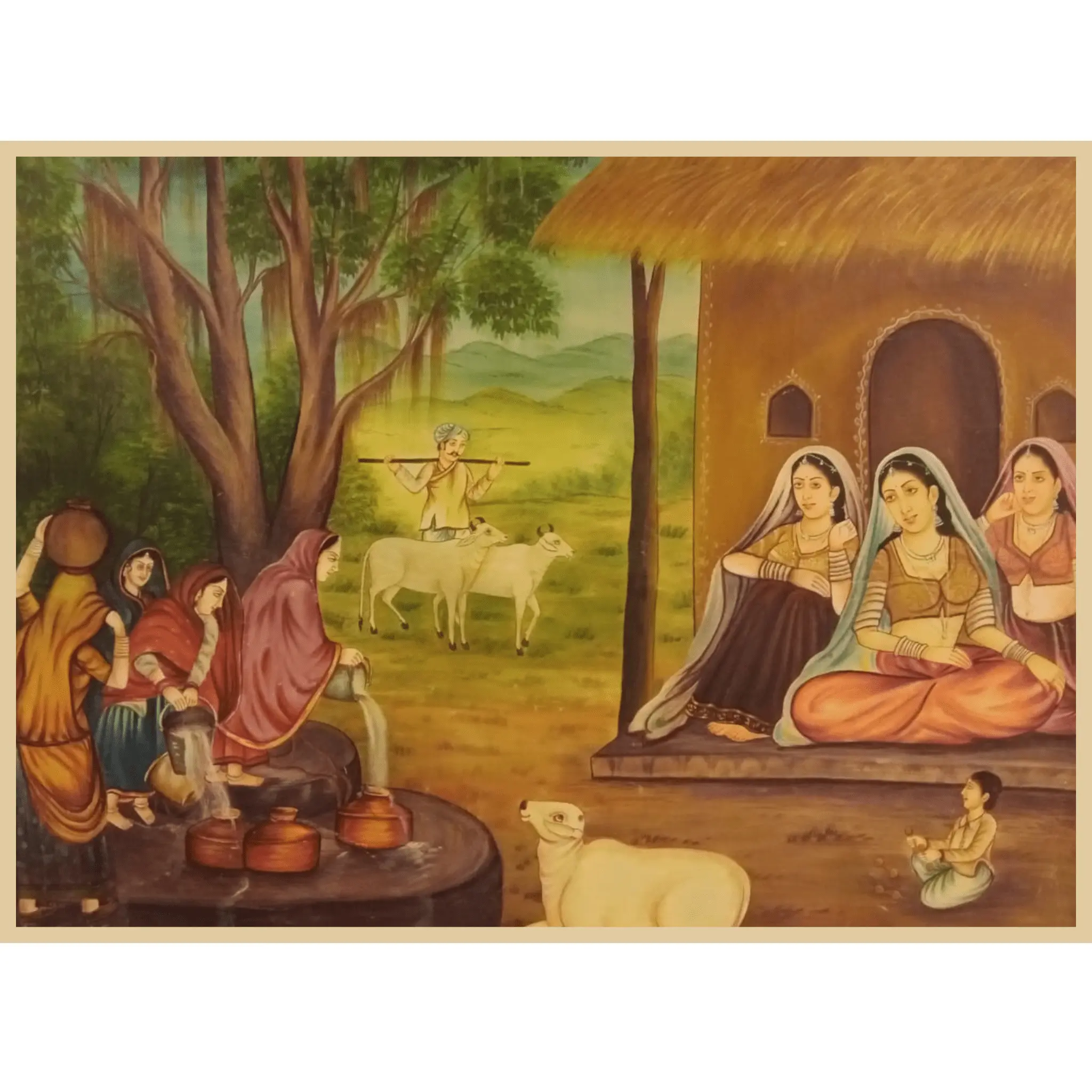
Oil painting vs acrylic is the first question many buyers of handmade art in India ask, and the honest answer is that both can look excellent on canvas. They behave very differently, though, in how they dry, how they age and how they look on your wall. This guide compares them point by point, using what museum conservators and paint scientists say, and tells you when each is the better choice for an Indian home.
The short answer:
- Choose oil for a statement piece you plan to keep for years. It gives more depth, visible brushwork and a track record of about 500 years.
- Choose acrylic if you want a flexible, fast-drying paint, a lower price, or a mural.
- Neither lasts forever. Old oil paintings crack and yellow. Acrylic collects dust and is hard to clean. Where you hang the painting matters as much as the medium.
What is oil painting?
Oil paint is pigment bound in a drying oil, most often linseed, and sometimes walnut, safflower or poppy seed oil. The oil does not evaporate. It hardens by reacting with oxygen, so a layer can take around two days to feel dry to the touch, according to the Smithsonian's conservation institute, and far longer to cure fully.
That slow drying is the medium's strength. The artist can blend colours while they are wet, rework a passage, and build thin transparent layers called glazes that give oil its depth. Oil has been the main medium of European easel painting for roughly 500 years, and works by Rembrandt, Vermeer and Van Gogh survive in museums today. Many old oil paintings have cracked or darkened with age, which is normal for the medium. Read more in our story of oil painting.
What is acrylic painting?
Acrylic paint is pigment in a water-based polymer (plastic) emulsion. It dries by evaporation, often within about half an hour, into a flexible film. Artists can use it thin like watercolour or thick like oil.
Acrylic is young. According to Tate's conservation research, the first solvent-based artists' acrylic appeared in 1947 and the first water-based line in 1954. Many contemporary Indian artists use it for its speed and convenience, and the results can be very good. It is a different material from oil, with different strengths.
Oil painting vs acrylic: head-to-head
| Feature | Oil painting | Acrylic painting |
|---|---|---|
| How it dries | Reacts with oxygen. Touch-dry in about 2 days, full cure takes months | Water evaporates. Dry in about 30 minutes to a few hours |
| Depth of colour | Many artists and buyers find it richer, thanks to transparent layering | Vibrant, but often looks flatter in a side-by-side comparison |
| Blending | Easy. Stays workable for hours or days | Harder, because it dries fast |
| Texture and brushwork | Thick, defined strokes stay visible | Can imitate oil texture, often less pronounced |
| Flexibility and cracking | Becomes harder and more brittle with age, and old oils often crack | More flexible and cracks less often, but is brittle in freezing cold |
| Yellowing | Drying oils yellow over time | Yellows much more slowly |
| Dust and cleaning | Harder surface, easier to dust gently | Soft surface holds dust and dirt, and cleaning is difficult |
| Heat | Stable at normal room temperatures | Softens at around 60°C, far above room temperature, but keep it away from heat sources |
| Track record | About 500 years | About 70 years |
| Price for originals | Often higher, because it takes more artist time | Often lower, but size and artist matter more than medium |
| Best for | Statement walls, portraits, heirloom pieces | Contemporary styles, quicker commissions, murals |
What museum conservators actually say
Most comparisons you read online, including our old version of this guide, make oil sound flawless. The picture from conservators and paint scientists is more balanced, and it helps you choose well.
- Oil cracks and yellows with age. Paint scientist Frank Jones writes that yellowing is an unavoidable feature of drying oils, and that many oil paintings over 100 years old in leading museums have cracked. He also notes that oil tolerates cold better than acrylic. Read his article. Note that it was published by an acrylic paint maker.
- Acrylic is more flexible but dirtier. The Smithsonian's conservation institute says acrylics crack less often than oil, but the soft film holds dust and dirt, can be dented by light pressure, and has no completely acceptable cleaning method yet. See its guide to caring for acrylic paintings.
- Acrylic's long-term future is not yet proven. Acrylic has about 70 years of history against about 500 for oil. The evidence suggests it ages slowly, but nobody can yet say how it will look in 200 years.
So "oil lasts centuries, acrylic only 40 to 70 years" is not a safe claim. A better way to say it: oil has a long, well-understood history, and acrylic is promising but still young.
Which is better for Indian homes?
Dust and cleaning
Indian homes collect dust, especially near open windows and busy roads. A harder oil surface is easier to dust gently with a soft dry brush. Acrylic's soft film can hold onto dust, so it needs more regular dusting. For either medium, do not use water or cleaners, and leave deep cleaning to a professional conservator.
Heat, cold and humidity
Indian summers are not a problem for either medium on an ordinary wall. Acrylic softens only near 60°C. Just keep any painting away from heaters, direct sun and kitchen heat. Cold rarely matters except in hill-station homes or when a painting is shipped through freezing conditions, where acrylic turns brittle. Tate's research also notes that warm, humid conditions can encourage mould on acrylic. For both media, avoid damp walls and bathrooms, and keep humidity steady through the monsoon.
Light in Indian interiors
Many Indian rooms get strong side light from east or west windows. Thick oil brushwork looks different as that light moves across it, which is a big part of why oil feels alive on a wall. The same light fades pigments over time in any medium, so keep the painting out of direct sun.
Long-term value
If you are spending roughly Rs 15,000 to Rs 75,000 on a painting, you probably want it to last. Oil has the longer track record, which is a real reason to prefer it. Beyond medium, how long a painting lasts depends on the quality of paint and canvas, how it is hung and how it is cared for.
When acrylic is the right choice
Acrylic is not inferior. It is different, and it suits some jobs better:
- Murals. A large wall needs paint that dries quickly and stays flexible, which is why many muralists work in acrylic. If you want a village scene or a design across a whole wall in India, see our mural art services.
- Contemporary, graphic styles with flat blocks of colour, which acrylic delivers efficiently.
- Tighter budgets. If you want a handmade piece at a lower price point, acrylic can offer good value.
- Quick turnaround on a commission.
Which should you pick? A quick guide
| Your situation | Better choice |
|---|---|
| Statement painting for the living room that you want to keep for years | Oil |
| Portrait or family heirloom | Oil |
| Dusty room, little time for regular cleaning | Oil |
| Full-wall mural (India) | Acrylic |
| Bold contemporary or abstract look | Acrylic, or discuss with the artist |
| Lower budget, handmade piece | Acrylic |
For classic Indian subjects, such as our village life paintings and 7 horse paintings, oil is the medium our artists work in. If you want to know why oil suits the 7 horse subject in particular, read 7 Horses Oil Painting vs. Other Mediums. Vastu texts do not name a medium, so the choice is about look and durability, not about Vastu.
Three common confusions
- "Acrylic is cheap plastic paint." Not for artist-grade acrylic. Museums have collected it since the 1950s. Quality varies by brand, and some products sold as acrylic are blends with other plastics, which paint scientists consider less durable.
- "Oil paintings never crack or fade." They do both over many decades. Old oil paintings in museums show cracks and darkening, and strong sun fades pigments in any medium.
- "Anything sold as an oil painting on canvas is oil." Printed canvases are often sold under that name. Ask for the medium, the artist and close-up photos before you buy.
How to check what you are buying
- Ask the seller to state the medium clearly on the product page and in writing.
- Ask whether it is hand-painted, and who painted it. Real brushwork can be seen and felt, not flat.
- Ask for close-up photos of the surface, the edges and the back of the canvas.
- Check what the painting is finished with. Varnish is usually applied only after oil paint has fully cured, which can take six months or more, so ask whether the painting you are buying is varnished or still to be varnished.
Our complete buyer's guide to original oil paintings in India has a fuller checklist. For the case for oil in general, see why oil paintings still rule the art world.
Custom paintings in oil or acrylic
Our artists accept custom commissions in both oil and acrylic. For portraits, landscapes and Vastu themes, they usually recommend oil. For contemporary and abstract subjects, we can talk through the best medium with you. Start with our custom painting commission page and share your wall size and room.
Ready to see them in person? Browse our original handmade oil paintings, made by Udaipur artists. More guides are in our Oil Paintings knowledge hub.
Frequently Asked Questions
Is oil or acrylic better for a living room painting?
Oil is usually the better choice for a statement living room painting you want to keep for years. It gives more depth and visible brushwork, and it has a track record of about 500 years. Acrylic is a good alternative when you want a lower price, a contemporary style or a faster commission.
Do acrylic paintings last as long as oil paintings?
Nobody can say yet. Oil has about 500 years of history, while artists' acrylic dates only from the late 1940s and 1950s, so it has about 70 years. Evidence suggests acrylic ages slowly, but its long-term behaviour is unproven. Both can last for decades with care, away from sun, damp and heat.
Can oil paintings fade or crack in the Indian climate?
Yes, over time, in any climate. Strong sunlight fades pigments, and old oil paint becomes brittle and can crack. Heat and sudden humidity changes add stress to the canvas. Hang the painting away from direct sun, damp walls and air-conditioner vents, and keep conditions steady through the monsoon to slow this.
Does acrylic paint attract more dust than oil?
Generally yes. The Smithsonian's conservation institute notes that the soft acrylic film holds onto dust and dirt, and that cleaning it safely is difficult. A harder oil surface is easier to dust gently. For either medium, use a soft dry brush, avoid water and cleaners, and leave deep cleaning to a professional conservator.
Should an oil painting be varnished?
Varnish protects against dust and pollutants, but it should go on only after the paint has fully cured. Conservators generally advise waiting at least six months, and longer for thick paint. Ask the seller whether your painting is already varnished or should be varnished later, and never apply household polish.
Can I order a custom painting in oil or acrylic?
Yes. Our artists accept custom commissions in both. For portraits, landscapes and Vastu themes they usually recommend oil, while contemporary and abstract subjects can be discussed case by case. Share your wall size and room through the custom painting commission page, and we will help you pick the right medium.