Why the Right Painting Transforms a Living Room
The living room is the most seen room in any Indian home — by your family, your guests, and by you every single day. A well-chosen painting on the right wall does not just decorate the space; it sets the emotional tone of the room, creates a focal point that draws the eye, and communicates your taste and values to everyone who enters.
Yet choosing a painting for the living room is something many people find genuinely difficult. The walls feel too big, the choices feel overwhelming, and the fear of making an expensive mistake is real. This guide eliminates that uncertainty. Follow these steps — size, colour, subject, Vastu, and budget — and you will find your perfect painting.
Step 1: Get the Size Right — This Is the Most Important Decision
The single biggest mistake people make when buying art for the living room is choosing a painting that is too small. A 16 x 12 inch painting on a 10-foot wall looks like a postage stamp. Before you look at any subjects or prices, measure your wall.
Living Room Size Recommended Wall Art Size Best Placement
Small (10x10 ft), wall up to 8 ft wide 24 x 18 to 30 x 24 inches Single painting, centred on feature wall
Medium (12x14 ft), wall 8-12 ft wide 36 x 24 to 42 x 32 inches Single large painting or pair of 30x24
Large (14x18 ft), wall 12+ ft wide 45 x 32 to 55 x 36 inches Large statement piece or triptych
Very large hall (18 ft+ wide) 55 x 36 inches or custom Feature painting with side accent pieces
Use painter's tape to mark the exact dimensions of a potential painting on your wall before ordering. This simple two-minute exercise eliminates guessing and is the single most effective buying tip our team gives to customers.
Step 2: Match the Painting Colour to Your Room
Oil paintings are rich in colour — and the wrong palette can clash with your existing furnishings or walls. Here is how to think about colour matching:
For Neutral / White Walls (Most Common in Indian Homes)
You have the most freedom here. Paintings with warm tones (oranges, ambers, golds) create a welcoming, energetic living room. Cool tones (blues, greens) create a calm, sophisticated mood. Both work well. A 7 horse painting in sunrise tones is a timeless choice for white or off-white walls.
For Dark-Toned Walls (Grey, Charcoal, Deep Green)
Choose paintings with bright, contrasting colours — warm-toned village scenes, golden sunrise horse paintings, or portraits with rich jewel tones. Dark paintings against dark walls disappear.
For Warm-Toned Walls (Beige, Yellow, Terracotta — Common in Rajasthani and Traditional Decor)
Wildlife paintings (tiger, lion) and deep-toned village scenes look spectacular against warm walls. The colours complement rather than compete with each other.
Step 3: Choose the Right Subject for Your Living Room
Horse Paintings — For Energy, Success, and Vastu
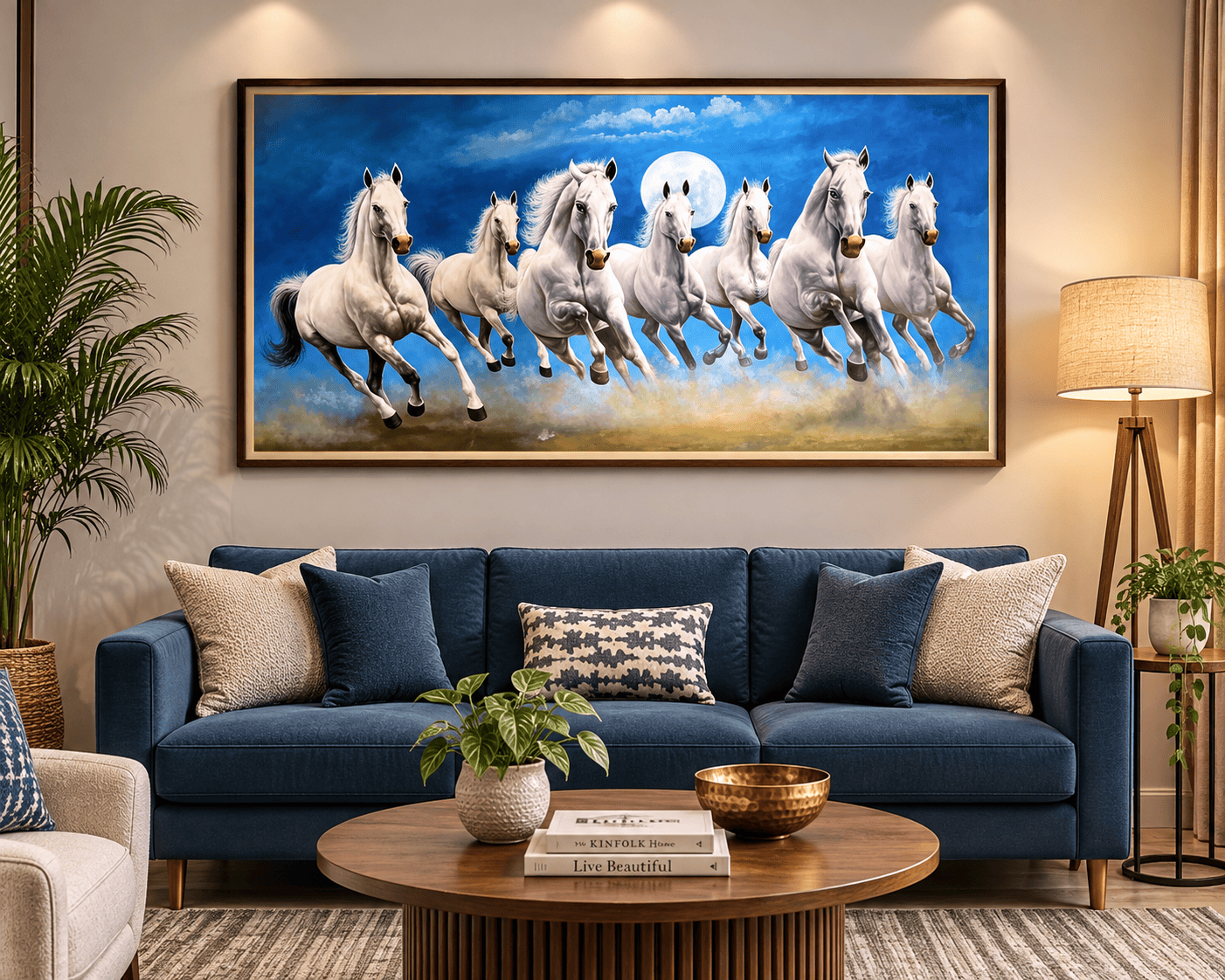
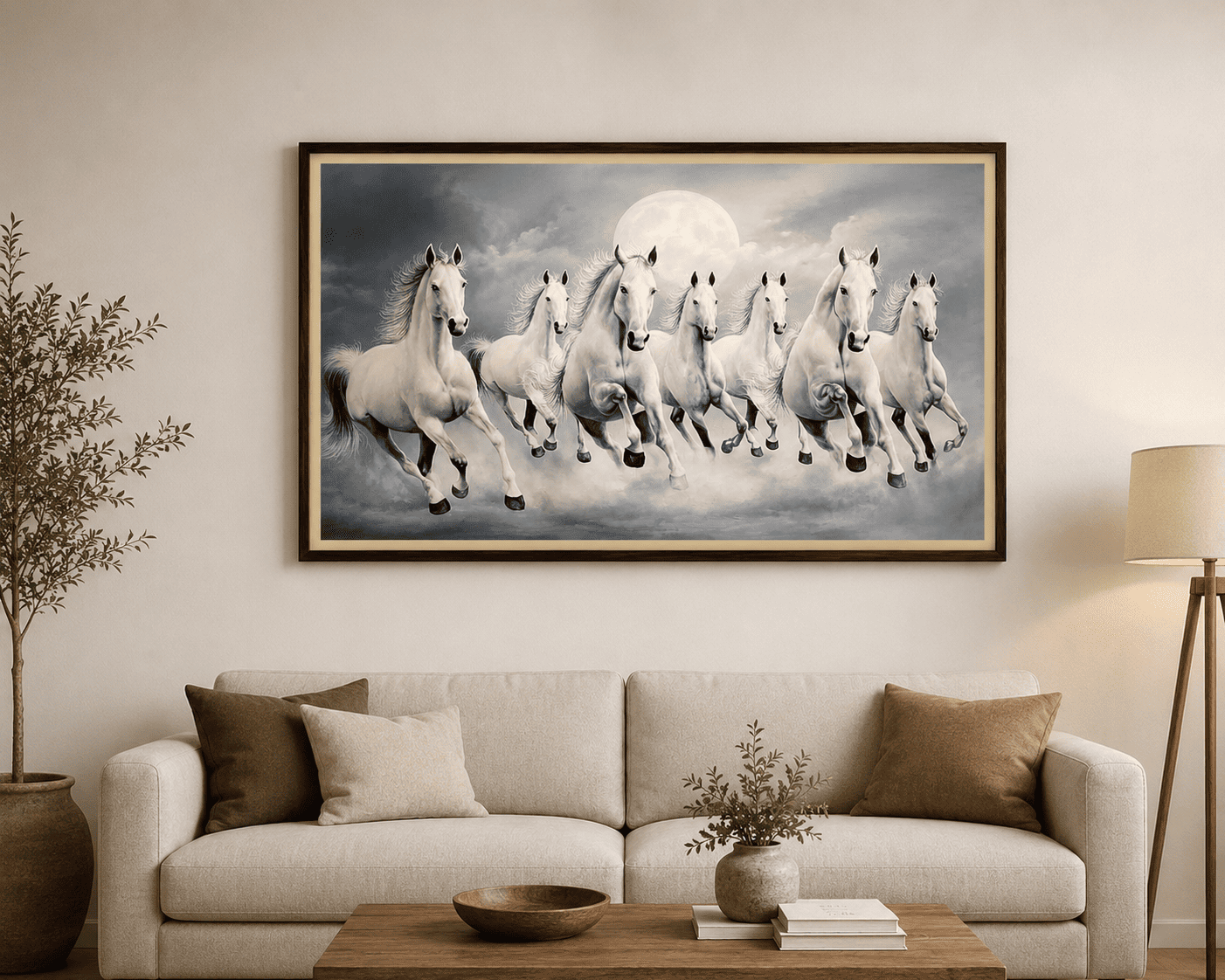
Seven horse paintings are the most popular choice for Indian living rooms, and for good reason. They are visually dramatic, Vastu-approved for the south wall, and available in a range of sizes to suit any room. They communicate ambition and positive energy — exactly what you want your living space to project.
Village Scene Paintings — For Warmth and Nostalgia
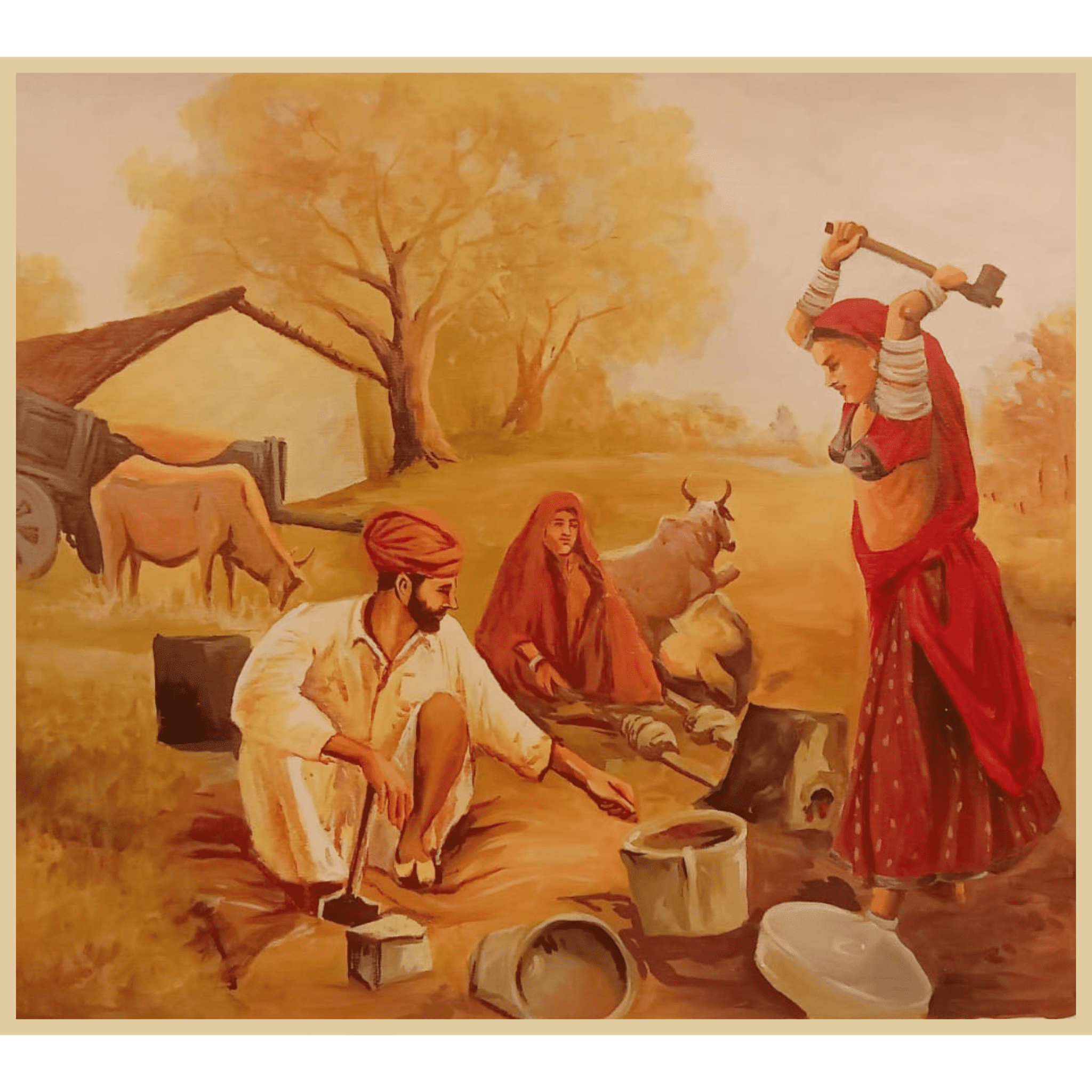
Village life oil paintings bring a sense of earthy authenticity and emotional warmth to a living room. They are the choice of homeowners who want art that sparks conversation, evokes a sense of cultural connection, and fills the room with human stories. These work especially well in family living rooms and dining areas.
Wildlife Paintings — For Bold, Modern Statement
A large tiger or lion painting in oil commands attention in any room. These pieces work best in modern or contemporary living rooms where you want a single dominant focal point. They project confidence, boldness, and a deep aesthetic sensibility.
Portrait Paintings — For Character and Elegance
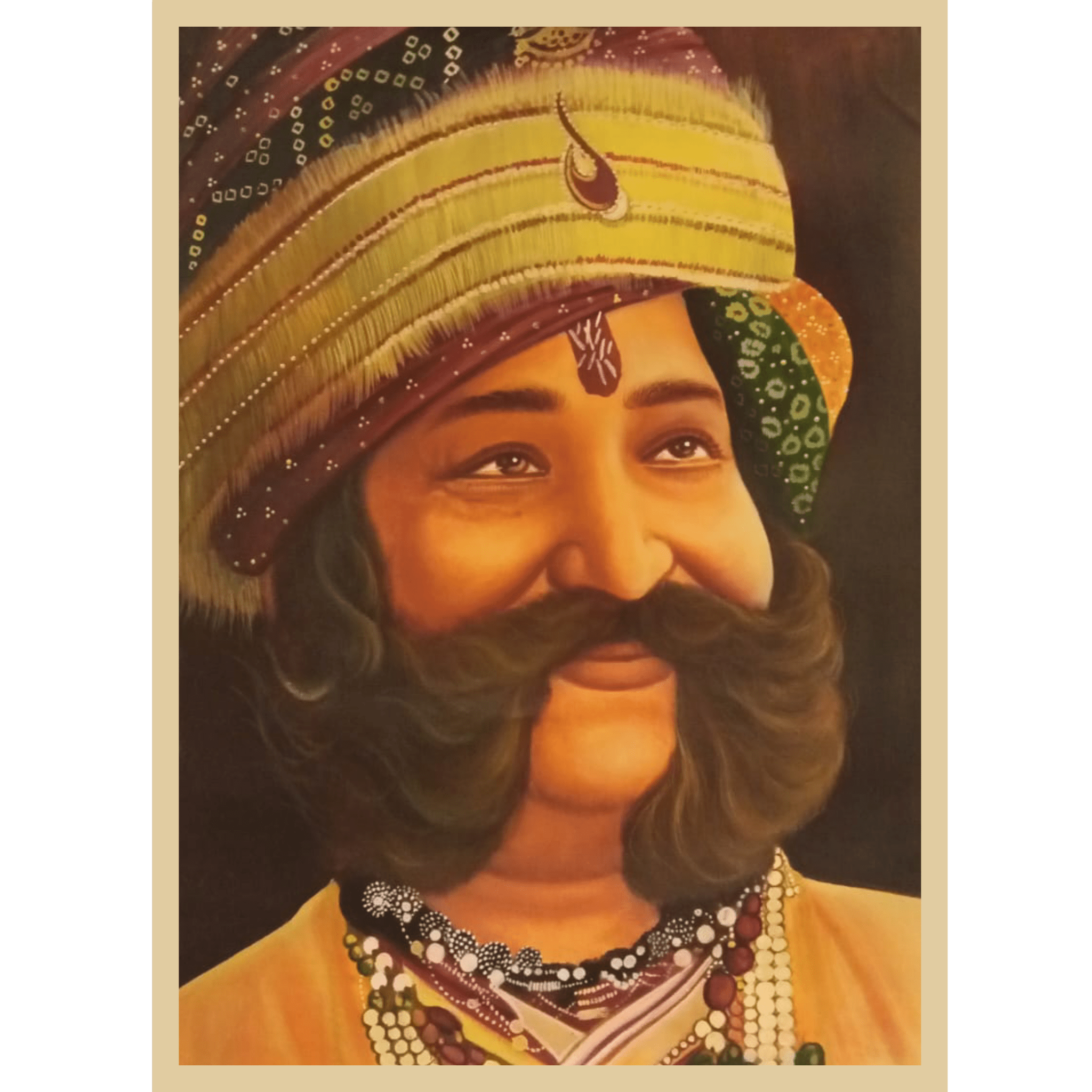
A beautiful Indian portrait — a Rajasthani woman in full traditional attire, a regal king portrait, or a dignified elder — adds layers of cultural meaning and character to a living room. These are the choice of discerning buyers who want something that tells a story and ages beautifully.
Step 4: Vastu Guidance for Living Room Art
Most Indian homeowners consider Vastu when placing artwork. Here are the key principles for the living room:
• South wall: Best for horse paintings and images of power, fame, and success. Most auspicious for career-oriented subjects.
• North wall: Best for paintings with water, greenery, or abundance themes. Governed by Kuber (wealth deity).
• East wall: Best for sunrise tones, nature scenes, and energising imagery. Morning light falling on east-wall art is considered auspicious.
• West wall: Suitable for family scenes, children, creative imagery.
• Avoid: Images of crying, suffering, war, or destruction anywhere in the living room. Avoid single horse or broken animal imagery.
Step 5: Set Your Budget — What to Expect at Each Price Point
Budget What You Get Best Rupasya Pick
Rs 15,000 - 25,000 Medium size (23-30 inch), single subject, skilled artisan work Village Scene, Portrait, Single Horse
Rs 25,000 - 40,000 Medium-large (33-36 inch), detailed composition, experienced artist 7 Horse Vastu, Tiger Portrait, Indian Woman
Rs 40,000 - 60,000 Large format (39-45 inch), complex multi-figure scene, senior artist Village Harvest, Lion & Lioness, Seven Horses Large
Rs 60,000+ Statement piece (45-55 inch+), gallery-quality, most detailed work Seven Running Horses 55x32, Traditional Couple, Three Women
Remember: an original handmade oil painting is a one-time purchase that lasts a lifetime. The price per year of enjoyment — when spread over 20, 30, or 50 years — is extraordinarily small compared to any other home purchase.
Practical Tips Before You Buy
• Always ask for the exact dimensions in centimetres AND inches before ordering.
• Request a photo of the actual painting (not just the product photo) via WhatsApp — at Rupasya we always share your specific piece before shipping.
• Check the return and care policy — original oil paintings require specific care that printed canvas does not.
• Ask about the Certificate of Authenticity — this protects your investment and confirms the painting is genuinely handmade.
Frequently Asked Questions
Q: Can I hang more than one painting in my living room?
Yes — in fact, a gallery wall of 3-5 smaller paintings around one large focal painting is a popular and effective design approach. Ensure the paintings are from a consistent collection or colour palette for a curated look rather than a cluttered one.
Q: Is it okay to hang a painting above the sofa?
Yes, and this is one of the most popular placements. The bottom of the painting should be approximately 6-8 inches above the top of the sofa back. For a sofa on a south wall, a 7 horse painting directly above it is a classic and Vastu-approved arrangement.
Q: How long does delivery take for a large oil painting?
At Rupasya, paintings are finished to order — the artist adds final touches before shipping. Delivery across India takes 7-15 days from confirmation of order.
CALL TO ACTION: Browse Oil Paintings for Your Living Room — Free Pan-India Delivery [Link: rupasya.com/oil-paintings/]
BLOG 3 OF 12
Primary Keyword: canvas oil painting india | oil vs acrylic painting india | Target Word Count: ~1,800 words
Canvas Oil Painting vs Acrylic: Which is Better for Indian Homes?
Meta Description: Oil painting vs acrylic — which should you choose for your Indian home? This honest comparison covers colour richness, durability, drying time, and cost. Find out why oil paintings are the premium choice and shop originals from Udaipur artists.
The Question Every Art Buyer Asks
When you start shopping for original handmade paintings in India, you will quickly encounter two mediums: oil and acrylic. Both are used on canvas. Both can look stunning. But they are very different materials that produce very different results — and for most Indian homeowners buying premium art, the differences matter a great deal.
This is an honest comparison from artists who work in both mediums. We will tell you what each does well, what its limitations are, and help you decide which is the right choice for your home and budget.
What is Oil Painting?
Oil painting uses pigments suspended in drying oils — most commonly linseed oil, walnut oil, or safflower oil. The oil acts as both a binder (holding the pigments together) and a medium that gives the paint its characteristic slow-drying, blendable quality. Oil paints have been used by artists for over 500 years, and works by Rembrandt, Vermeer, and Van Gogh — all painted in oil — still hang in museums today, as vivid as the day they were created.
The slow drying time of oil paint (hours to days per layer, weeks to months for full cure) is actually one of its greatest strengths. It allows artists to blend colours seamlessly, rework passages, build up multiple transparent glazes, and achieve a depth and luminosity that fast-drying media cannot match.
What is Acrylic Painting?
Acrylic paints use pigments suspended in a polymer (plastic) emulsion. They dry very quickly — often within minutes to hours — by water evaporation. Acrylics are versatile: they can be used thin like watercolour or thick like oil paint, and they dry to a flexible, water-resistant film.
Acrylics are a 20th century invention, widely adopted because of their convenience, low odour, and easy cleanup with water. Many contemporary Indian artists use acrylics for their speed and versatility. The results can be very beautiful — but they are different from oil, and in important ways, they fall short.
Head-to-Head Comparison
Feature Oil Painting Acrylic Painting
Colour Depth & Richness Exceptional — oil gives unmatched luminosity and depth due to transparent layering Good — colours are vibrant but can appear flatter than oil
Blending Capability Excellent — artists can blend wet-into-wet for hours Limited — dries fast, making seamless blending harder
Texture & Brushwork Rich physical texture possible; brushstrokes remain defined Can mimic oil texture but often less pronounced
Longevity Centuries — museum paintings from the 1400s survive in oil 40-70 years with good care; long-term archival quality unproven
Drying Time Days to weeks — allows reworking and fine detail Minutes to hours — faster for production, less flexibility
Colour Shift When Dry Minimal shift — what you see wet is close to dry result Colours darken slightly when dry (significant for light tones)
Durability in Indian Climate Excellent — oil film is stable in heat and humidity with varnish Good — polymer film is flexible and handles humidity well
Odour During Creation Moderate — solvents used in studio (not present in finished work) Very low — water-based, minimal odour
Price (for originals) Higher — more artist time, premium materials Moderate — faster to produce
Best For Premium, long-lasting fine art and heirloom pieces Vibrant contemporary art, faster commissions, murals
Why Oil Paintings Win for Indian Homes
1. The Indian Climate Advantage
India's climate — hot summers, humid monsoons, and wide temperature swings — is actually well-suited to oil paintings, provided they are varnished properly (which all Rupasya paintings are). The oil film is remarkably stable across temperature changes. Acrylics are also stable, but the plastic binder can show micro-cracking over decades in very hot climates.
2. Light and Depth in Indian Interiors
Indian homes often have strong directional light — morning sunlight flooding east windows, evening golden light from the west. Oil paintings respond to this light with extraordinary richness. As light angles change throughout the day, an oil painting shifts and glows in ways that flat acrylic or printed canvas simply cannot match.
3. Long-Term Value
If you are spending Rs 15,000 to Rs 75,000 on a piece of art, you want it to last generations. Oil paintings consistently outperform acrylics on archival longevity. The world's greatest museums preserve oil paintings from 500 years ago. No acrylic painting has yet survived 100 years — it is simply too new a medium to have that track record.
4. The Handmade Experience
High-quality Indian oil paintings, especially those from Udaipur's artistic tradition, carry a cultural weight and aesthetic presence that elevates them above any other medium. When you hang a Rupasya oil painting on your wall, you are displaying a piece of living Rajasthani heritage — something made by a human hand using techniques refined over generations.
When Acrylics Are the Right Choice
Acrylics are not inferior — they are different, and right for specific situations. If you are commissioning a mural that needs to dry overnight, acrylics are the practical choice. If you want a very contemporary, graphic style with flat colour blocks, acrylics can deliver that aesthetic more efficiently. If budget is a primary concern and you want a handmade piece at a lower price point, acrylics offer good value.
But for statement living room art, Vastu paintings, heirloom-quality portraits, and any piece where long-term quality matters — oil is the clear choice.
Frequently Asked Questions
Q: Can oil paintings fade in Indian sunlight?
All paintings fade with prolonged direct UV exposure. Oil paintings should be kept out of direct sunlight — indirect natural light is fine and actually beautiful. A UV-filtering glass or acrylic cover can be added for very sunny rooms.
Q: Are Rupasya oil paintings varnished?
Yes. All our oil paintings are finished with a protective varnish once fully cured. This adds a final layer of protection against dust, humidity, and UV light, and enhances the depth and richness of the colours.
Q: Can I order a custom painting in oil or acrylic?
Yes — we offer custom commissions in both oil and acrylic. For portraits, landscapes, and Vastu art, we strongly recommend oil. For contemporary and abstract subjects, we can discuss the best medium with you.
CALL TO ACTION: Browse Original Handmade Oil Paintings — Udaipur Artists www.rupasya.com/oil-paintings/