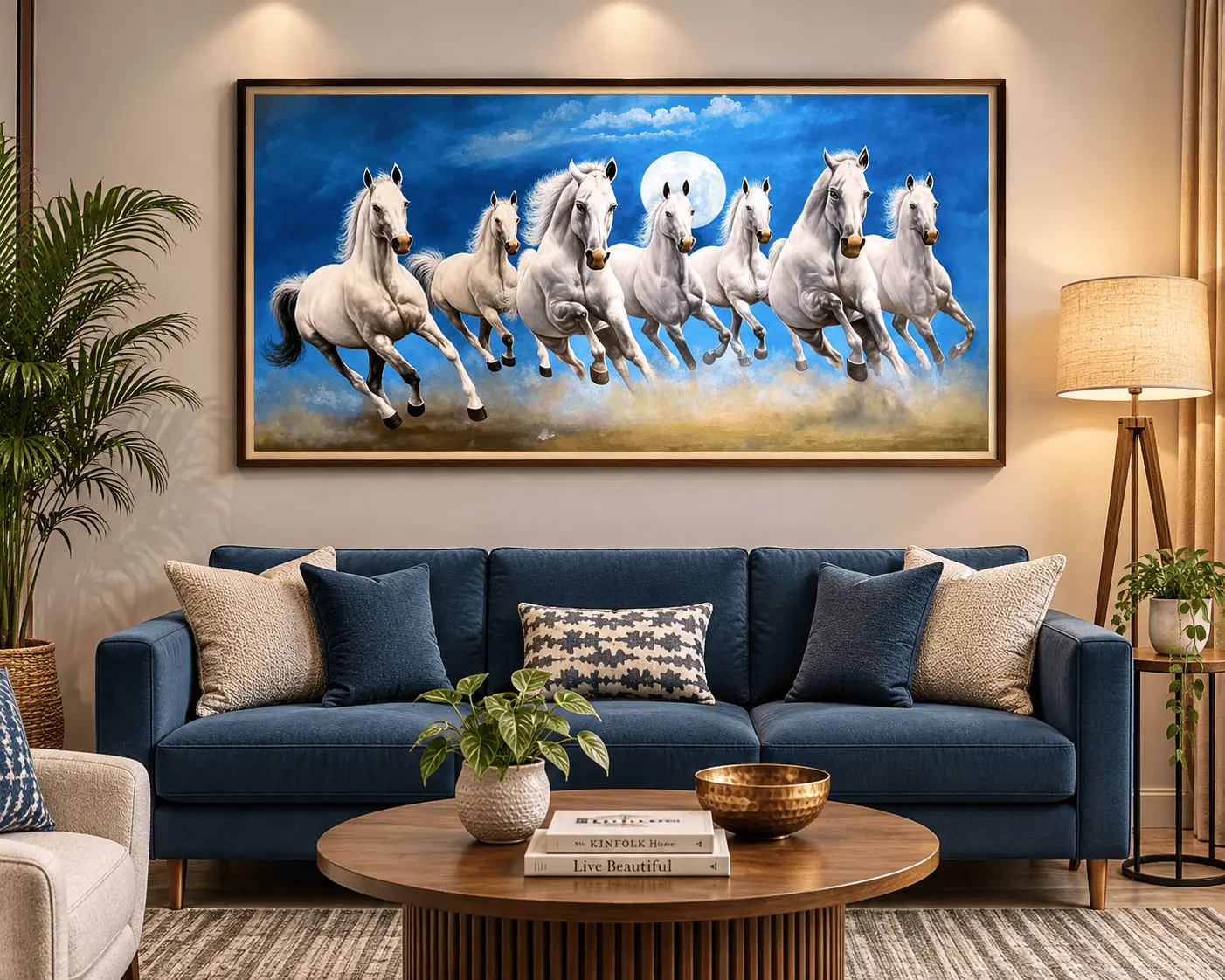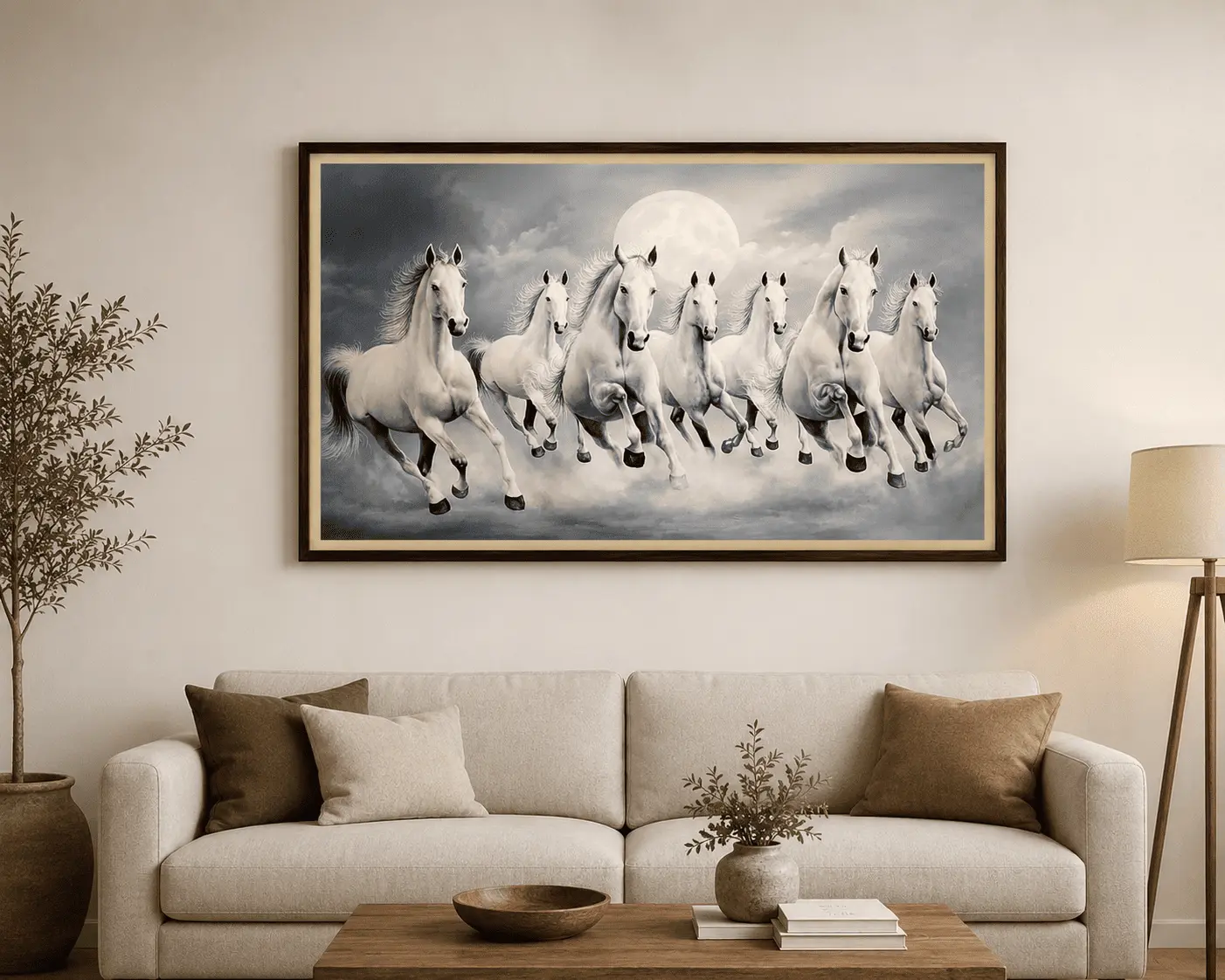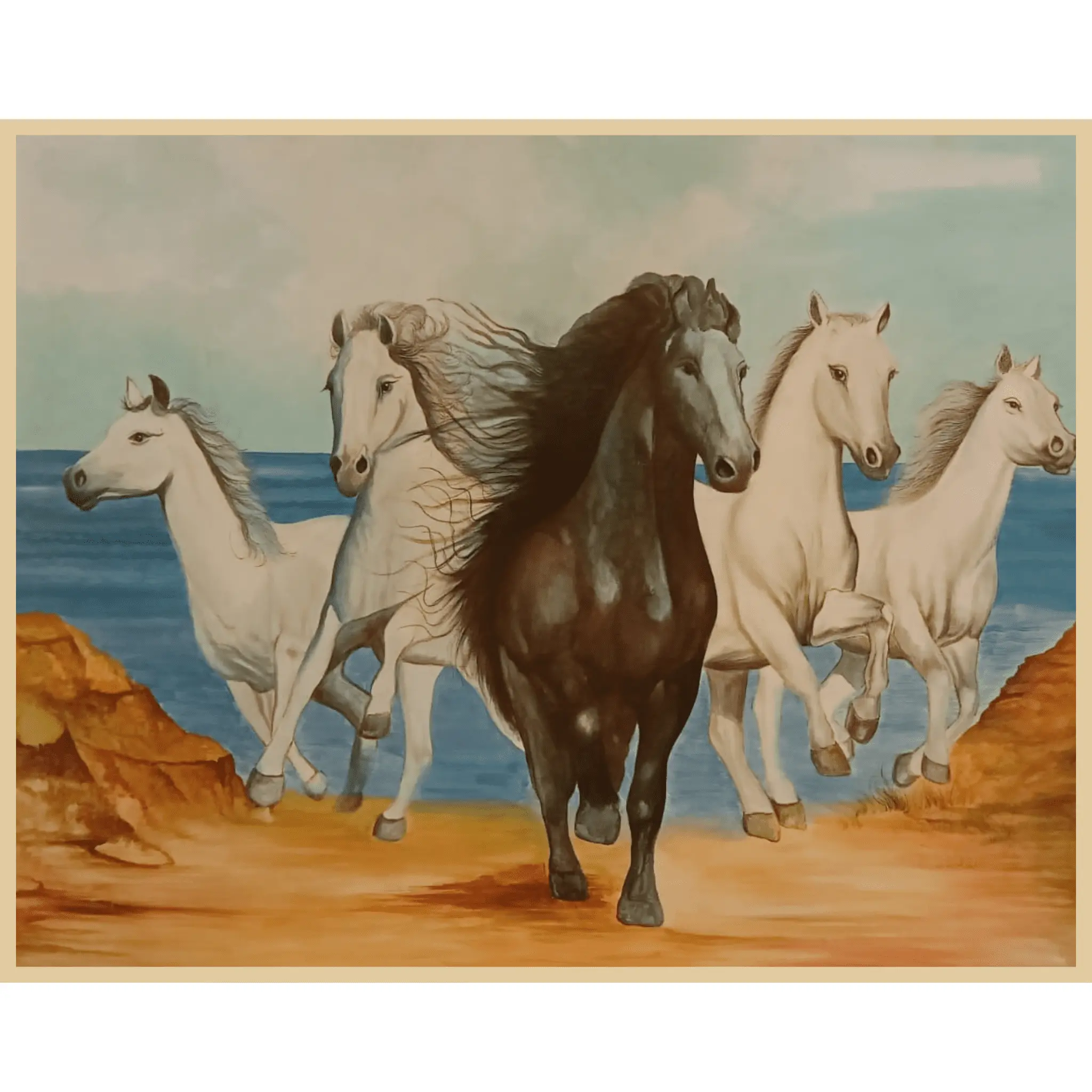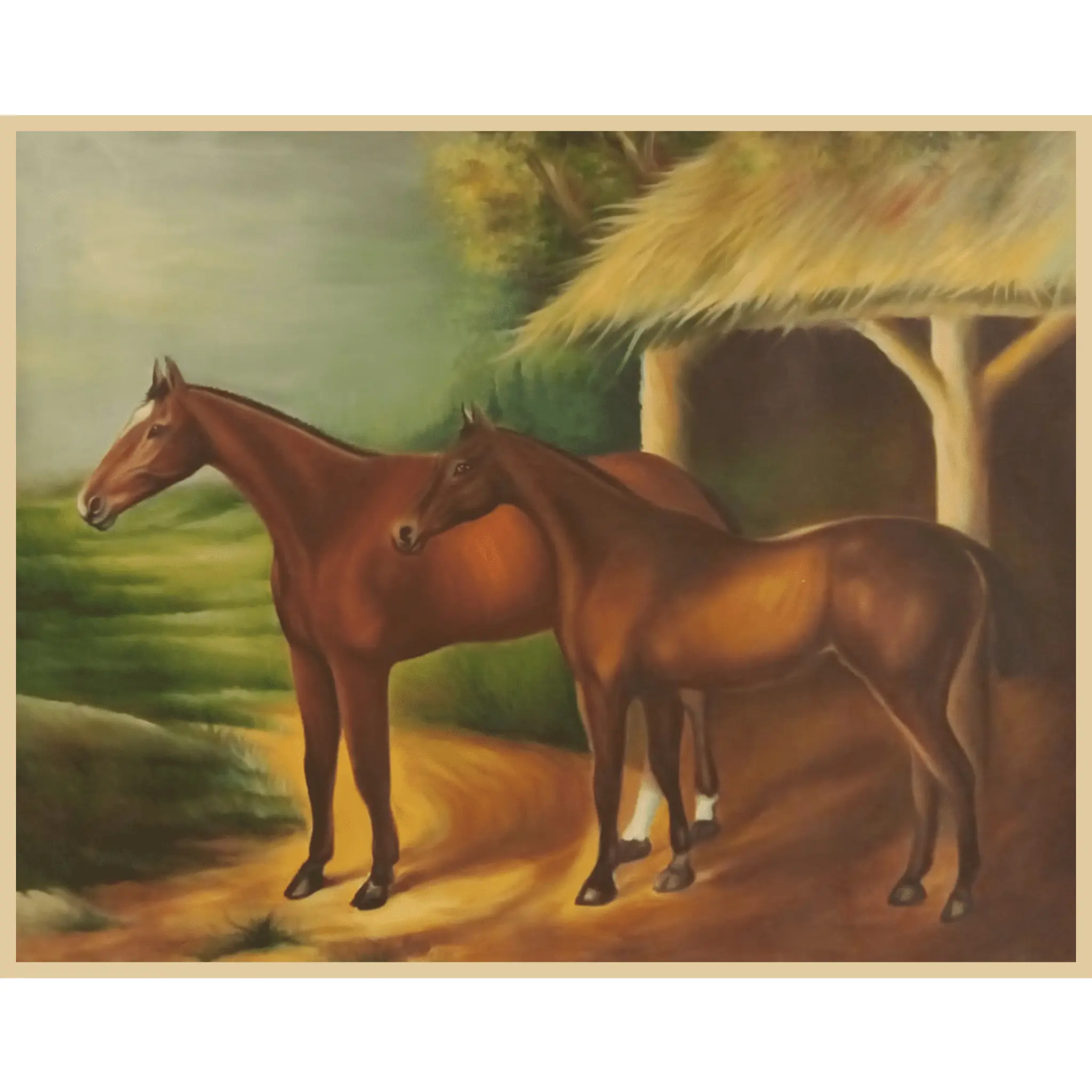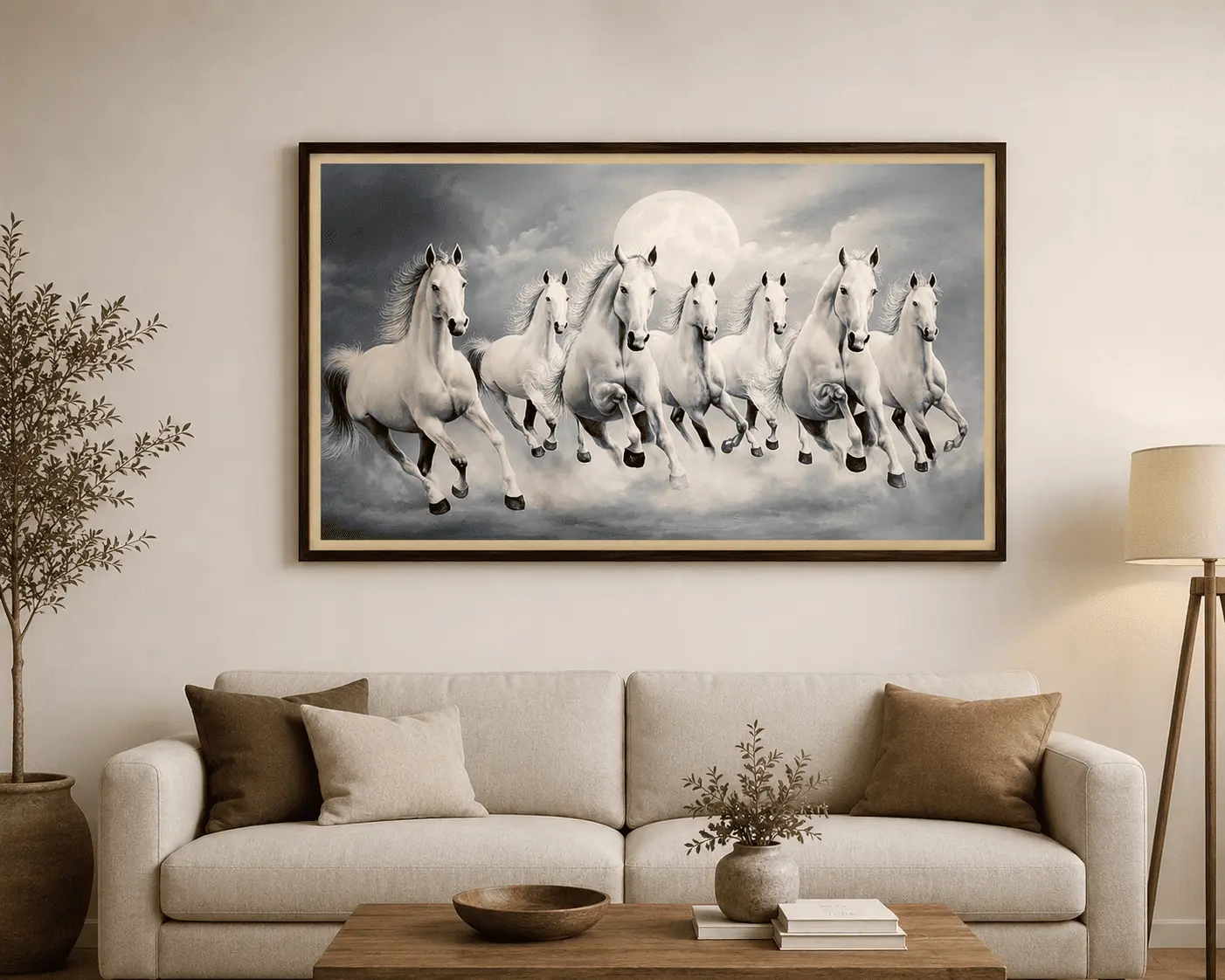
A 7 horses oil painting works because oil paint is good at the two things the subject needs: smooth, believable movement and a surface with real texture. Seven horses at full gallop have muscle, light and motion in every direction, and the medium decides how well all of that comes across. Acrylic, watercolor and pastel can all be used for horses. Oil simply has some advantages that suit this particular subject.
The short version:
- Oil dries slowly, so an artist can blend light and shadow across a horse's body.
- Thick oil paint can build up the manes and tails so they catch real light.
- Acrylic is faster to work with but usually needs more planning for smooth blends.
- Watercolor and pastel give a softer look and need more careful framing and care.
Why the seven horses subject is so popular
The seven horses are linked to Surya, the Sun god in Hindu tradition, who is usually shown riding a chariot pulled by seven horses. According to the accounts summarised on Wikipedia's page on Surya, the horses are said to represent the seven colours of visible light and the seven days of the week, and are named after seven metres of Sanskrit verse. These are traditional readings, and different texts and artists tell the story in different ways.
In homes today, the seven running horses are popularly read as a symbol of speed, strength and progress. Many people also hang them following Vastu guidance, which is a matter of belief and not a rule. Our 7 horse painting Vastu guide covers placement, and which 7 horse painting is best for your home helps you choose a style.
What oil paint does well for 7 horses
Blending light and shadow
Oil paint stays workable for a long time, so an artist can blend colours on the canvas and soften the edge where light meets shadow on a horse's shoulder or flank. That slow drying is the main reason oil is the traditional medium for realistic animals and portraits.
Layers and depth
Oil painters often build a picture in layers, with thin transparent glazes over a darker base. The result can have depth that looks different as light moves across the room. Seven horses overlapping each other show off this layered look well.
Texture in the manes and tails
Thick strokes of paint, often called impasto, can be applied with a brush or palette knife. Used on a mane or a tail, they make the hair look wild and three-dimensional, and the raised paint catches light from the side. This is one of the clearest differences between a hand-painted oil painting and a printed canvas, which stays flat. Our buyer's guide to oil paintings online explains how to check for it.
How other mediums handle the 7 horses
Acrylic
Acrylic dries fast. That helps with quick, crisp work and layering, but it makes soft blends harder, because the paint begins to set before you can smooth it. Acrylics also usually darken a little as they dry, which Winsor and Newton explains as the binder changing from white to clear, so artists have to allow for it when mixing colours. Acrylic can look excellent for horses, especially for bold, graphic work. Read our full oil painting vs acrylic comparison.
Watercolor
Watercolor is transparent and light, which suits flowing, atmospheric scenes more than the weight and power of seven galloping stallions. It is also harder to correct than oil, since the artist works from light to dark and cannot easily paint over a mistake. It needs framing under glass.
Pastel
Pastel can give soft, velvety horses with beautiful texture. The drawback is the surface. Museum conservators note that pastels are fragile and vulnerable to shock and vibration, and should be framed under glass with a gap between the pastel and the glass. The Pastellists conservation guidance suggests at least 6 mm. That makes pastel harder to live with in a busy home or to ship safely.
Oil vs other mediums at a glance
| Medium | Blending motion | Texture | Care at home |
|---|---|---|---|
| Oil | Very good (slow drying) | Strong (thick strokes, glazes) | Keep from sun and damp, dust gently |
| Acrylic | Moderate (fast drying) | Good, can be built up | Similar basic care |
| Watercolor | Soft, flowing | Light, transparent | Needs glass, avoid damp and sun |
| Pastel | Soft, velvety | Powdery | Fragile, needs glass with a gap |
What makes a good seven horses composition
The medium only helps if the painting itself is well composed. When you look at a 7 horses painting, whatever the medium, check a few things:
- Direction of movement. The horses should lead the eye across the canvas, not scatter it. Many buyers prefer horses that run towards the viewer or across the wall, in line with the message of progress they want from the painting.
- Variety within the herd. Seven horses painted as identical copies look stiff. Different head angles, leg positions and shades of coat make the group feel alive.
- A clear background. Sky, water or dust should support the horses without competing. Moonlit and sunrise versions change the mood of a room, so match them to the space.
- Colour against your wall. White and brown horses suit most walls. On a dark wall, choose a painting with bright highlights so the horses do not disappear.
Caring for an oil painting at home
Oil on canvas is easy to live with, but a few habits protect it. Hang it away from direct sunlight and damp walls, and avoid places above a stove or near an air conditioner outlet that blows directly on it. Dust it gently with a soft dry brush, and never use water or household cleaners. Fresh paint and varnish need time to cure fully, so ask the seller how long the painting has dried before it ships. For deeper cleaning or repair, go to a professional conservator.
Myths and confusions
- "Only oil can do it." Not true. Skilled artists paint good horses in every medium. Oil is a strong fit for a rich, textured, realistic look.
- "Oil lasts forever." A well-made oil painting that is cared for can last for generations, but it still needs protection from sunlight, damp and rough handling.
- "Acrylic is a cheaper copy." It is a different medium with its own strengths. Price depends mostly on size, detail and the artist's time.
- "A bright, glossy look means it is oil." Gloss depends on varnish and finishing, so it is not a reliable test. Look at the brushwork and texture instead.
- "Vastu says it must be oil." Vastu guidance is about the subject and placement, not the medium.
What to look for when you buy a 7 horses oil painting
- Ask whether it is hand-painted oil on canvas, not a print.
- Ask for close-ups of the manes, tails and edges to see the real brushwork.
- Check the size. A wide wall or sofa needs a wide painting, roughly two thirds of the furniture width.
- Read the dispatch, damage and returns terms before you pay.
For a step-by-step checklist, read How to Buy Original Oil Paintings Online in India. For the background of the medium itself, see Old Art, New Ideas: The Story of Oil Painting.
Bring the 7 horses home
Browse our hand-painted 7 horse oil paintings or the full oil painting collection. If you want a particular size or colour scheme, ask about a custom painting. You can also explore more in our Oil Paintings knowledge hub.
Frequently Asked Questions
Why is oil paint preferred for a 7 horses painting ?
Oil dries slowly, so an artist can blend light and shadow smoothly across a horse's body to show motion. Thick oil paint can also build up manes and tails so they look three-dimensional and catch light. Other mediums can paint horses well, but oil gives this rich, textured look more easily.
Is a 7 horses oil painting better than an acrylic one?
Neither is better in every case. Oil suits soft blends and layered depth, while acrylic dries faster and suits bolder, crisper work. Acrylic usually darkens a little as it dries, so artists plan for it. Choose by the look you like, and judge any painting by its brushwork and care.
How can I tell if a 7 horses painting is real oil and not a print?
Look for raised, uneven brushwork, especially in the manes and tails, and ask for close-up photos of the surface, edges and back. A print is flat with an even sheen. Ask the seller to confirm in writing that it is hand-painted oil on canvas and who painted it.
Does a 7 horses painting have to be oil for Vastu?
No. Vastu guidance, which is a matter of belief, talks about the subject and where you hang it, not the medium. Popular guides often suggest the south wall, though they differ. Choose the medium for the look and care you prefer, and read our Vastu guide for placement.
Are pastel or watercolor horse paintings suitable for a living room?
They can be, but both need framing under glass, and pastel is fragile. Conservators advise a gap between pastel and glass and protection from knocks and vibration. Oil on canvas is usually easier to live with in a busy home, though it still needs shade from direct sun and damp.