Shrinathji Pichwai Painting: History, Meaning & Where to Buy Authentic Art Online
Pichwai-Paintings |
June 13, 2026
The God at the Centre of It All
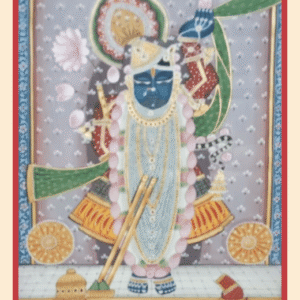
Of all the subjects in Indian devotional art, few command the reverence, the emotional depth, and the artistic sophistication of Shrinathji. This seven-year-old child form of Lord Krishna — left hand raised, right hand lowered, black face of divine gravity and tender grace — is the presiding deity of one of India's most important temples and the originating subject of an entire 400-year artistic tradition.
To understand Shrinathji Pichwai painting is to understand the soul of Pichwai art itself. Every lotus, every cow, every gopi, every season depicted in Pichwai art exists in relationship to Shrinathji. He is the sun around which the entire visual universe of Pichwai revolves.
Who is Shrinathji? The Seven-Year-Old Who Lifted a Mountain
Shrinathji is one of the most significant manifestations of Lord Vishnu-Krishna in the Vaishnava tradition. The name combines 'Shri' (sacred, auspicious), 'Nath' (lord, protector), and 'ji' (a term of reverence). He is Lord Krishna as a seven-year-old child — in the full power and grace of divine childhood.
The defining moment of Shrinathji's iconography is the lifting of Mount Govardhan. According to the Bhagavata Purana, Lord Krishna, at age seven, lifted the entire Govardhan mountain on the little finger of his left hand and held it aloft for seven days to shelter the people and cattle of Vrindavan from torrential rain sent by Indra (the rain deity). This act of divine protection — a child holding up a mountain for seven days — is the image that defines Shrinathji forever. His left hand is raised, the mountain held overhead; his right hand hangs at his side. His face is a profound expression of divine calm, power, and care.
The Eight Darshan Swaroops of Shrinathji — Eight Daily Revelations
The Nathdwara temple follows a unique daily ritual: Shrinathji is 'revealed' to devotees eight times per day — each Darshan corresponding to a different aspect of Lord Krishna's daily life. For each Darshan, the deity is dressed, adorned, and set against a specific Pichwai backdrop. These eight Darshans are:
Darshan Time Symbolism Typical Pichwai Theme
Mangala Darshan Dawn (before sunrise) Awakening, morning blessings Sunrise lotus, first light landscape
Shringara Darshan Morning Daily adornment, beauty Ornate floral Pichwai with rich decoration
Gwal Darshan Mid-morning The cowherd going to tend cows Pastoral cow scene, Kamdhenu Pichwai
Raj Bhog Darshan Noon The royal feast — 56 offerings Annakoot (Chhappan Bhog) Pichwai
Uthapan Darshan Afternoon (after rest) Awakening from midday rest Serene landscape, lotus pond
Bhog Darshan Late afternoon Evening meal offering Festival scene, devotee gathering
Sandhya Aarti Darshan Sunset Evening worship, twilight atmosphere Sharad Purnima, moonlit landscape
Shayan Darshan Night Putting the deity to rest Night sky, stars, moonlit Vrindavan
Each of these eight Darshan moments has inspired a distinct Pichwai tradition. A collector seeking to assemble the full Darshan cycle — eight paintings representing one complete day in Shrinathji's divine life — would possess one of the most extraordinary private collections of Indian devotional art possible.
Visual Elements of a Shrinathji Pichwai Painting
The Central Figure
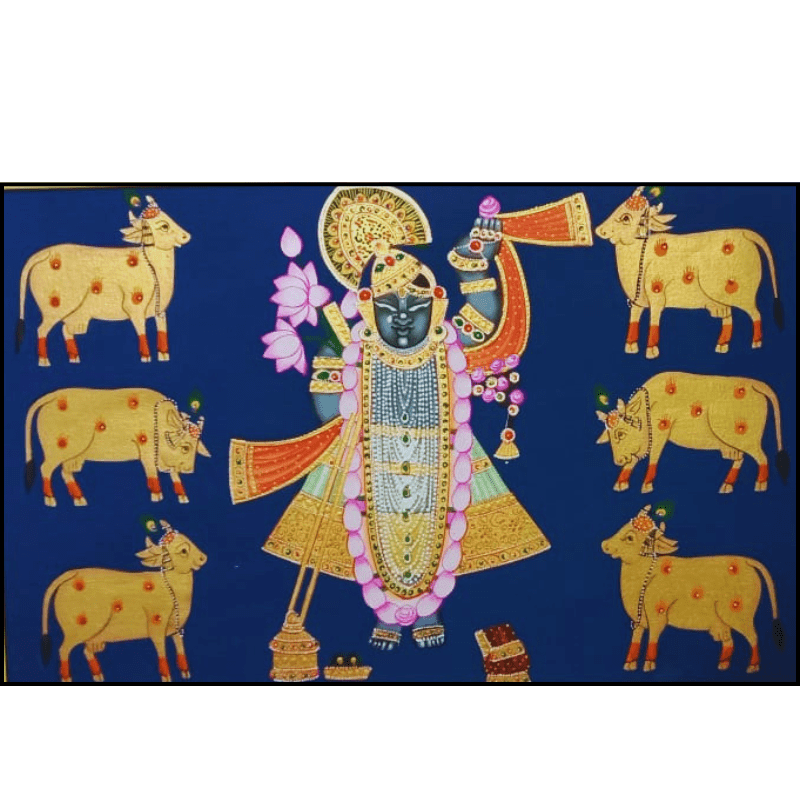
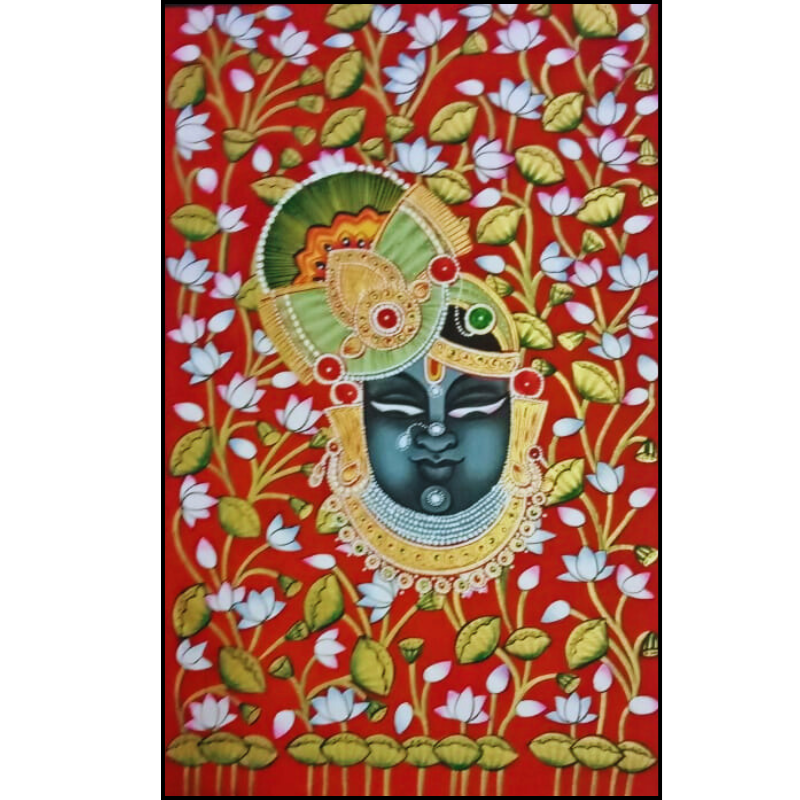
Shrinathji is depicted frontally — facing the viewer directly. His skin is dark, almost black — a colour of infinite depth, associated with Lord Vishnu and the divine mystery. His eyes are wide open, looking directly at the devotee: the Darshan is mutual — you see the deity, the deity sees you. His clothing is typically rich and elaborately decorated, varying by season and occasion. His ornaments — crown, necklace, earrings, waistband — are rendered in gold foil in authentic pieces, gleaming with divine luminosity.
The Lotus Border
Almost every Shrinathji Pichwai features a border of white lotus flowers. The lotus — blooming in pure white from the mud of the Yamuna river — is one of Pichwai art's most recurring and meaningful symbols. It represents divine purity, spiritual transcendence, and the beauty that emerges from devotion.
Gopis and Devotees
Surrounding Shrinathji in most Darshan compositions are gopis — the female devotees of Vrindavan who represent the ideal of selfless devotion. They are depicted in graceful postures of prayer and service, wearing elaborately decorated Rajasthani attire in vivid colours.
Sacred Cows
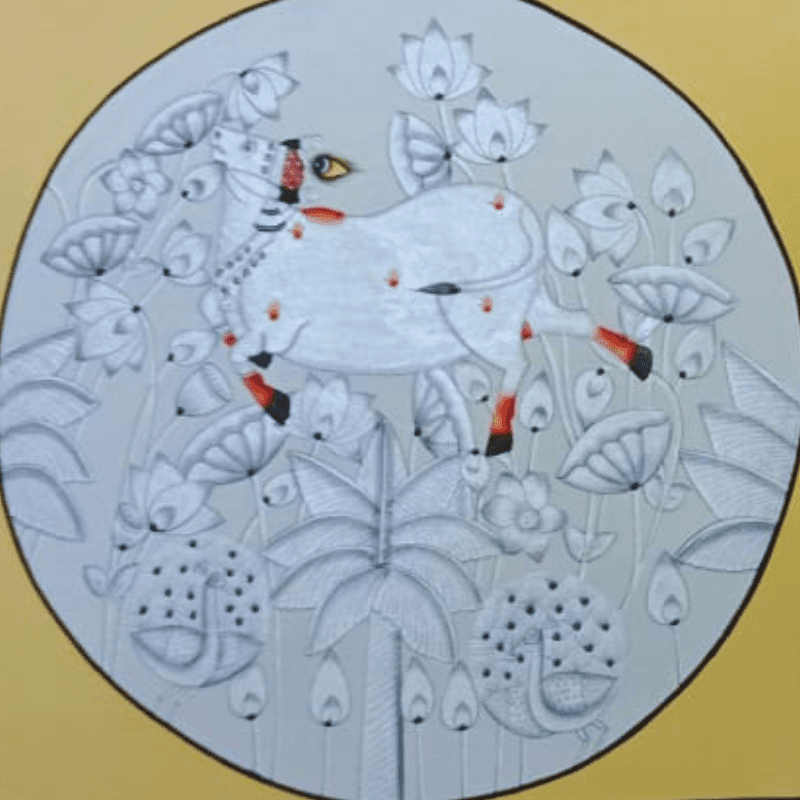
Cows appear in nearly every composition that features Shrinathji as Govinda — the lord and protector of cows. They are depicted with the same care and dignity as the human figures: adorned, serene, and deeply present.
How to Buy Authentic Shrinathji Pichwai Paintings Online
The enormous popularity of Shrinathji as a devotional subject has created a marketplace full of imitations. Canvas prints, digitally enhanced photographs of originals, and synthetic reproductions are sold under the same keywords as genuine handmade paintings. Here is how to ensure you buy genuine:
6. Ask for a Certificate of Authenticity with the artist's name and signature.
7. Request a live photo of the actual painting at an angle — to show the texture of the stone pigments and the physical presence of gold foil.
8. Verify the price: a genuine medium-format Shrinathji Pichwai starts at Rs 7,000-7,500 for small pieces and Rs 35,000-40,000 for large, complex Darshan compositions. Anything significantly below this is almost certainly a print.
9. Check the base material: genuine Pichwai is on hand-spun cloth or heavy canvas — not thin polyester fabric.
At Rupasya, every Shrinathji Pichwai in our collection is 100% original handmade by Nathdwara and Udaipur master artisans. We never sell prints or reproductions. Every painting ships with a Certificate of Authenticity, and we share a live photo of your specific painting before it ships.
Frequently Asked Questions
Q: What is the difference between a Shrinathji painting and a Pichwai?
All Shrinathji Pichwai paintings are devotional works depicting Shrinathji as the central subject. All Pichwai paintings are made in the Nathdwara tradition, but not all Pichwai feature Shrinathji as the sole subject — some are lotus compositions, cow paintings, or Raas Leela scenes. Shrinathji Pichwai specifically means a Pichwai painting with Shrinathji as the primary divine figure.
Q: Is it okay to buy a Shrinathji painting if I am not Vaishnava?
Yes. Lord Krishna and his Shrinathji form are revered across virtually all Hindu traditions. The spiritual and artistic power of a Shrinathji Pichwai painting is accessible and meaningful to any devotee of Lord Vishnu or Lord Krishna, regardless of specific sampradaya.