What Are Mughal Miniature Paintings?
Mughal miniature paintings are small-format, richly detailed paintings made for the Mughal court. Artists worked with fine brushes on handmade paper, using opaque water-based colours, and the paintings were used to illustrate books and to make portraits, court scenes and nature studies for imperial albums.
A Short History of Mughal Painting
The tradition began when Humayun returned to India from Persian exile in 1555 with two master painters, Mir Sayyid Ali and Abd al-Samad. Under Akbar, the royal painting workshop grew into a large studio where Persian and Indian artists worked side by side. Their first great project was the illustrated Hamzanama, which mixed Persian conventions with bolder colour and more natural movement.
Akbar, Jahangir and Shah Jahan
- Akbar (1556–1605): big illustrated manuscripts, lively storytelling and a growing Indian influence.
- Jahangir (1605–1627): the style shifted towards portraits, birds, animals and flowers, with a strong interest in realism.
- Shah Jahan (1628–1658): a more formal, polished look with rich ornament, gold and jewel-like detail.
Mughal court painting faded in the 18th century, but its influence continued in later Indian painting traditions.
Key Features of Mughal Miniature Art
- Very fine outlines and tiny, precise detail.
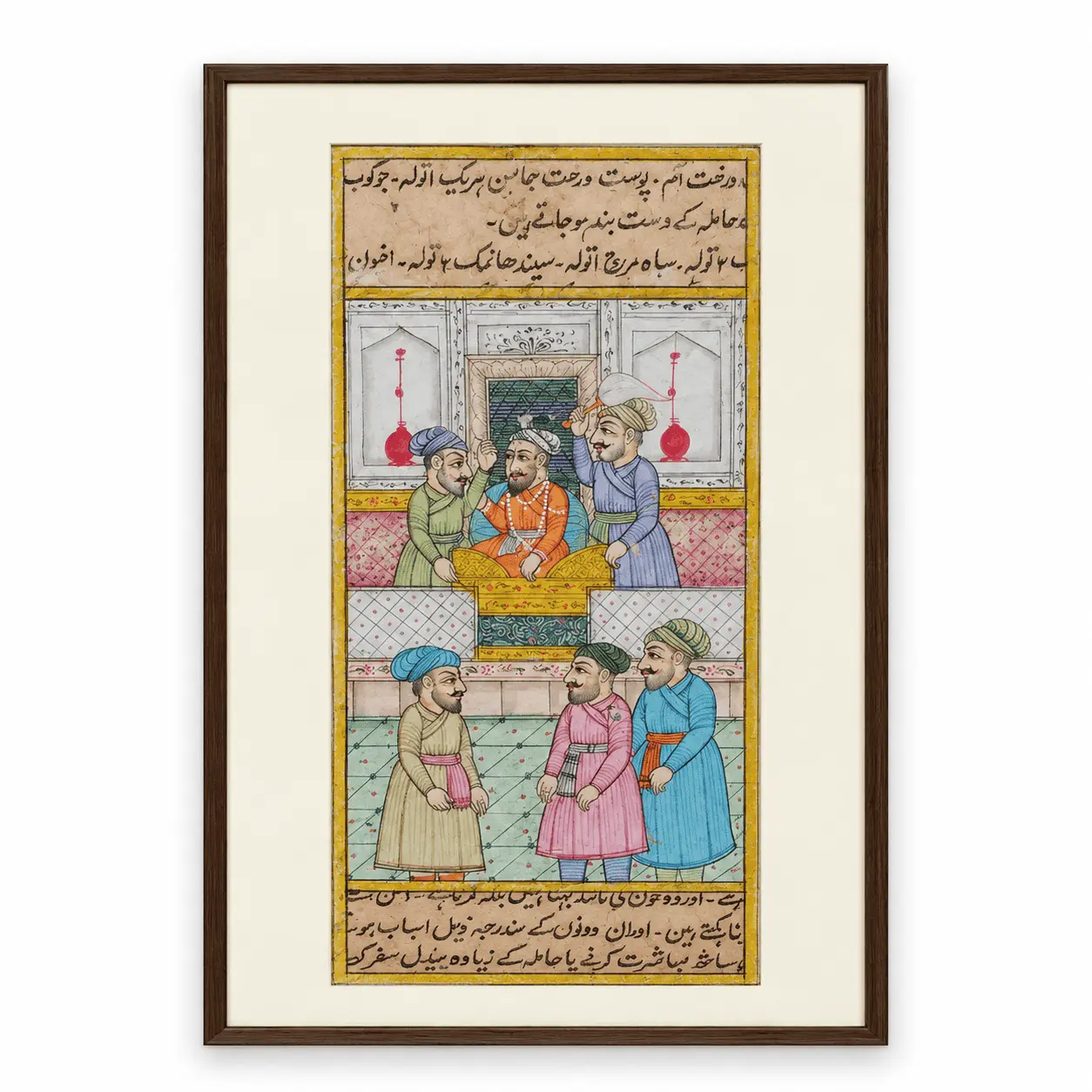
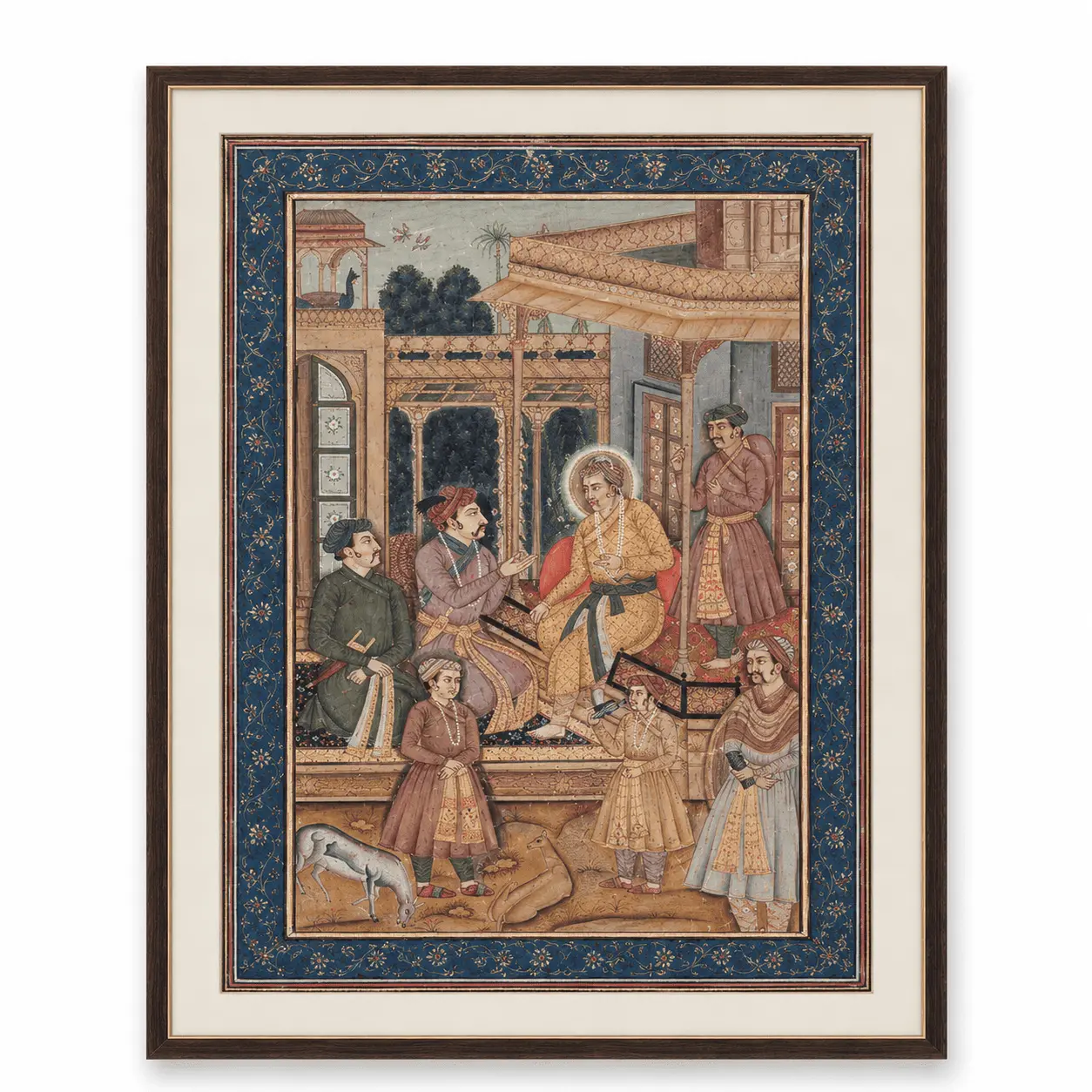
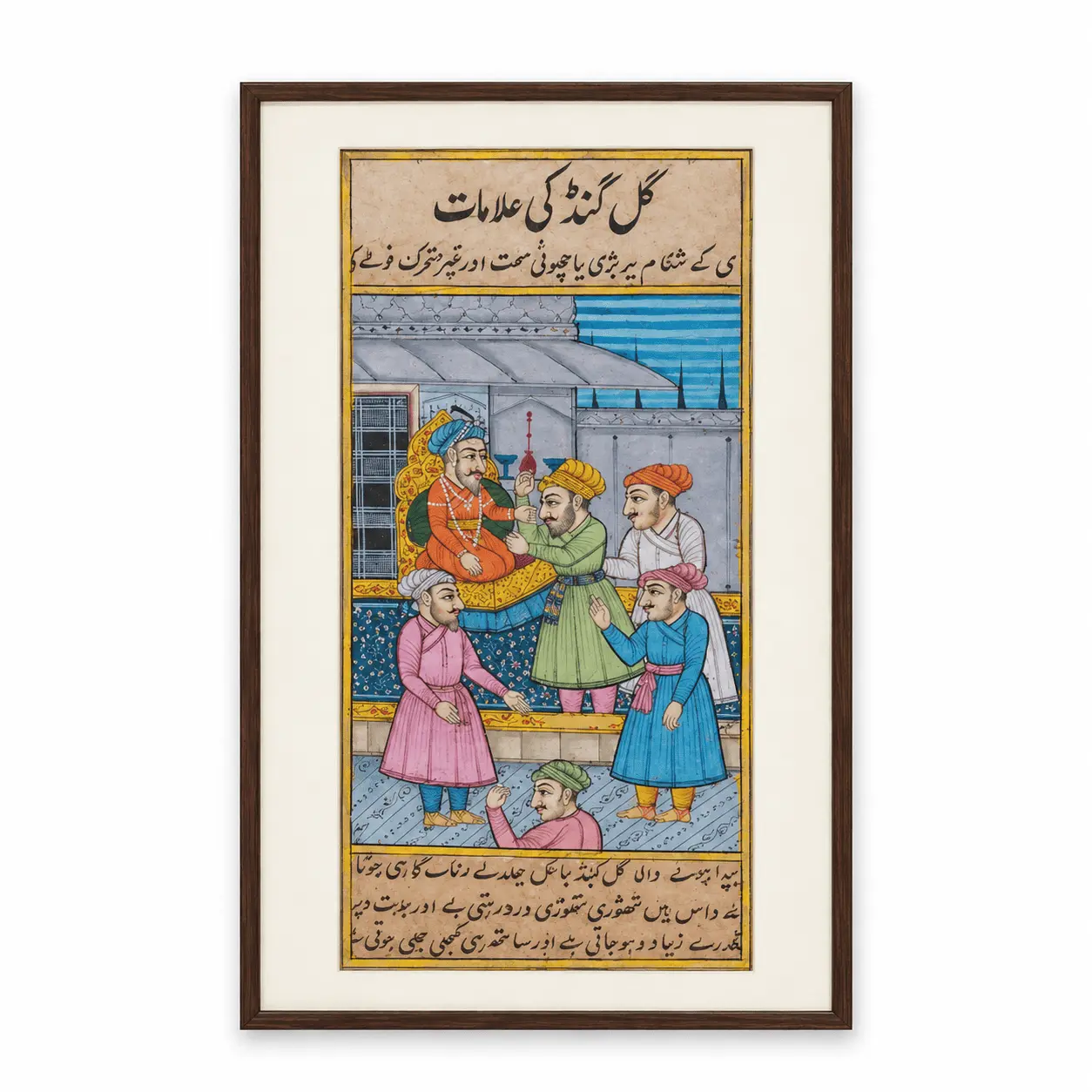
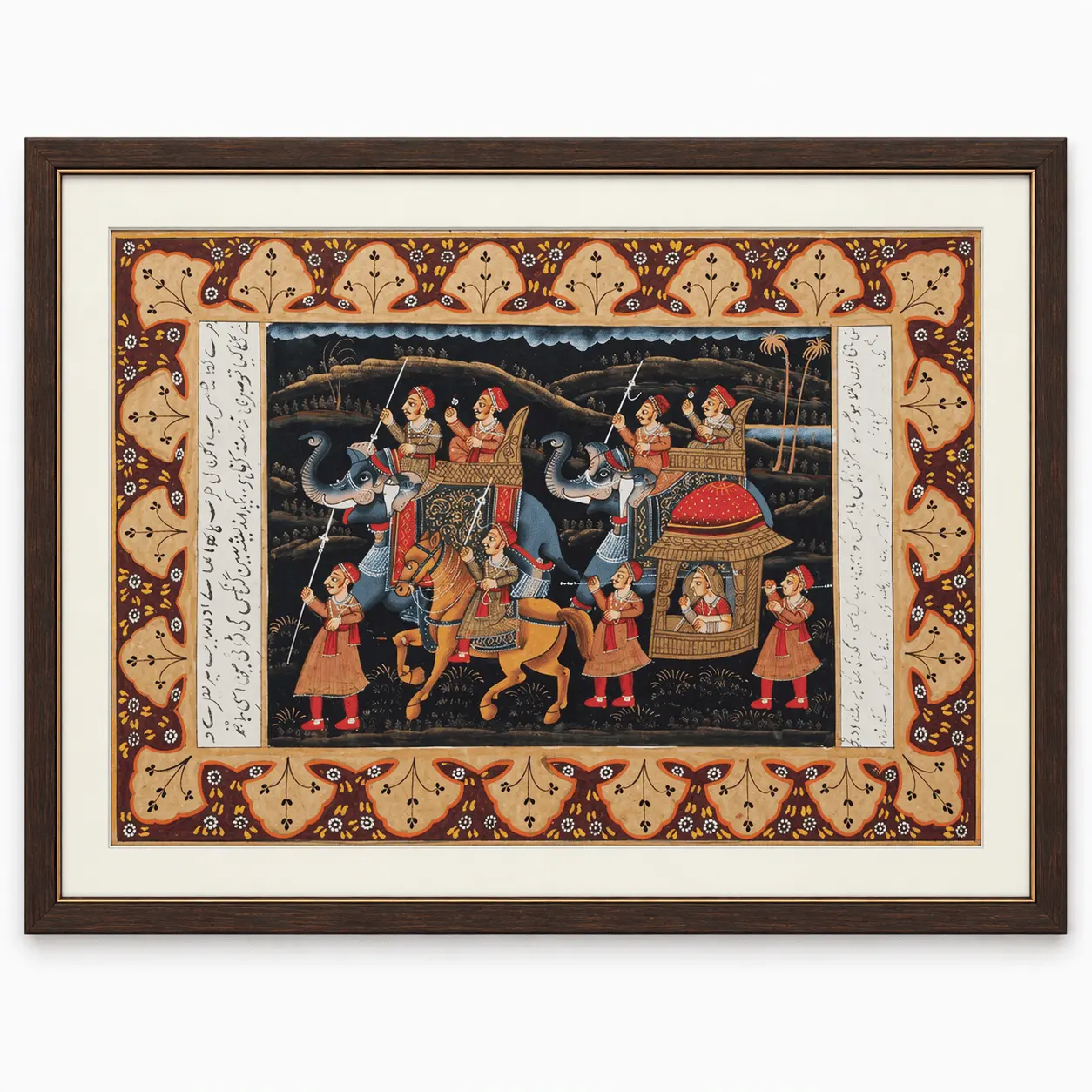
- Portraits of emperors and nobles, court scenes, hunts, processions and romantic scenes.
- Careful studies of birds, animals and plants.
- Rich colour with gold highlights and ornamental borders.
- A mix of Persian, Indian and, in later periods, European ideas about space and shading.
Materials and Technique
Traditional Mughal-style miniatures are painted on wasli paper, a handmade paper built up from several thin sheets bonded with starch paste and then burnished smooth. Artists use natural mineral and plant pigments, gold, and very fine squirrel-hair brushes to reach the tiny detail the style is known for.
Mughal vs Rajasthani Miniature Painting
| Point | Mughal miniature | Rajasthani miniature |
|---|
| Main themes | Court life, portraits, hunts, nature studies | Devotional stories, epics, folk and royal themes |
| Look | Refined, naturalistic, detailed | Bold colour, flatter forms, strong emotion |
| Origin | Imperial Mughal workshops | Rajput courts of Rajasthan |
Want to compare both styles? Read our Rajasthani miniature paintings hub and our wider miniature art hub.
How to Choose an Authentic Mughal Miniature Painting
- Check for hand-painted detail that looks sharper under a magnifying glass than any print can.
- Look for the matte, earthy finish of natural pigments rather than a glossy, flat surface.
- Feel for the slight thickness and texture of layered wasli paper.
- Choose a theme that suits the room: court scenes for living rooms, hunting or procession scenes for studies and offices.
- Ask about the materials and the artist before you buy.
You can browse our handmade Mughal miniature paintings collection, and we also take custom miniature painting requests.
Frequently Asked Questions
What is a Mughal miniature painting?
It is a small, highly detailed painting made in the Mughal court between the 16th and 18th centuries, mixing Persian and Indian styles. Typical subjects are portraits, court scenes, hunts and nature studies.
Who started Mughal painting?
Humayun laid the foundation by bringing Persian masters to India, and Akbar grew it into a large royal workshop. Jahangir's reign is widely seen as its peak.
What is wasli paper?
Wasli is handmade paper made by bonding several thin sheets with starch paste and burnishing them smooth. It gives miniature painters a firm surface that holds fine detail and mineral colours.