Buy Authentic Handmade Pichwai Paintings Online — Original Nathdwara & Udaipur Art
Shop 100% authentic, handmade Pichwai paintings online — crafted by master artisans from Nathdwara and Udaipur, Rajasthan. Our collection features traditional themes like Shrinathji darshan, sacred Kamdhenu cows, blooming lotus motifs, Radha Krishna, and Raas Leela. Each Pichwai painting is hand-painted using natural stone pigments and pure gold foil on cloth, canvas, or wall panels. Free shipping across India.
100% Handmade Nathdwara Master Artisans Stone Pigments & Gold Foil Free Shipping Across India Secure Payment Custom Sizes Available
Pichwai paintings are not all the same — each theme carries its own symbolic meaning, spiritual significance, and visual character. Understanding the themes helps you choose a painting that resonates with your space and your intention. At Rupasya, every painting is 100% handmade on cloth or canvas by master artisans from Nathdwara and Udaipur, using traditional stone pigments and pure 24K gold foil.
Shrinathji Pichwai Paintings — The Heart of the Tradition
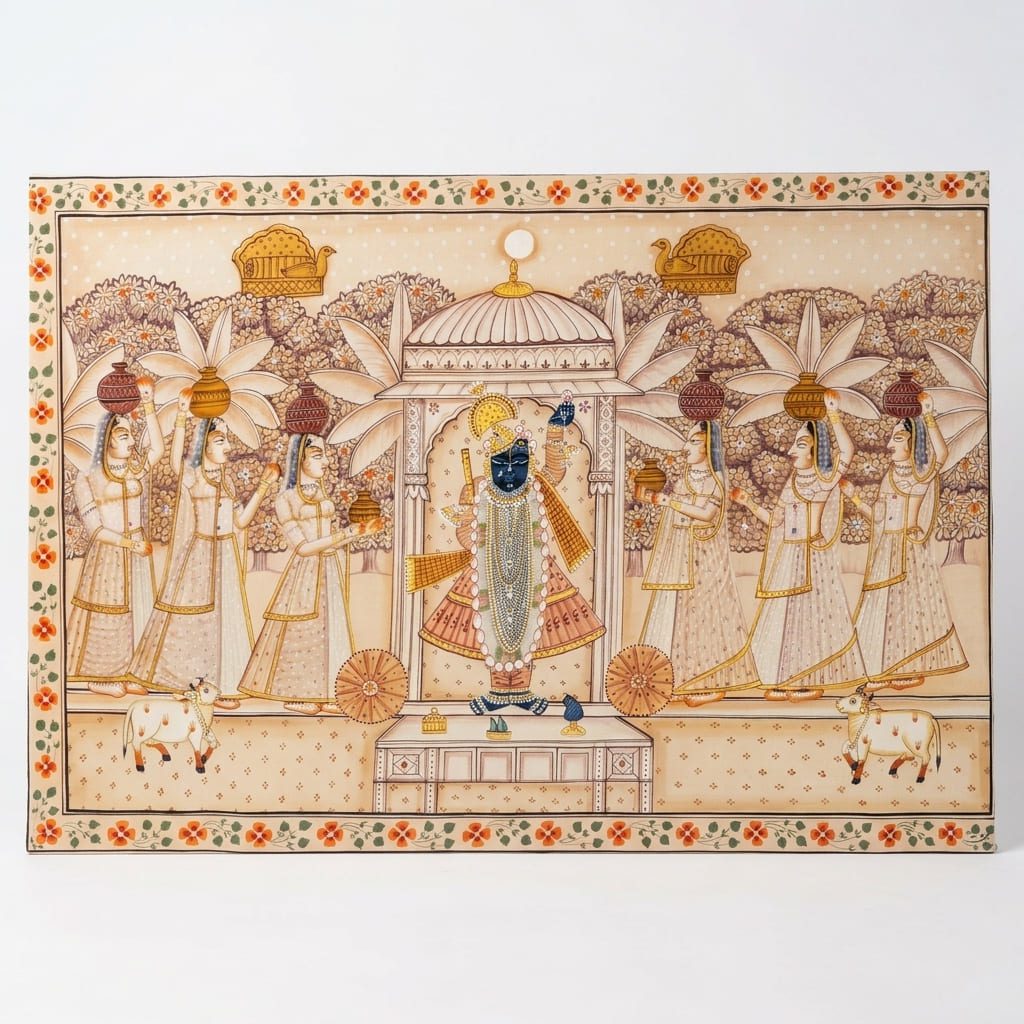
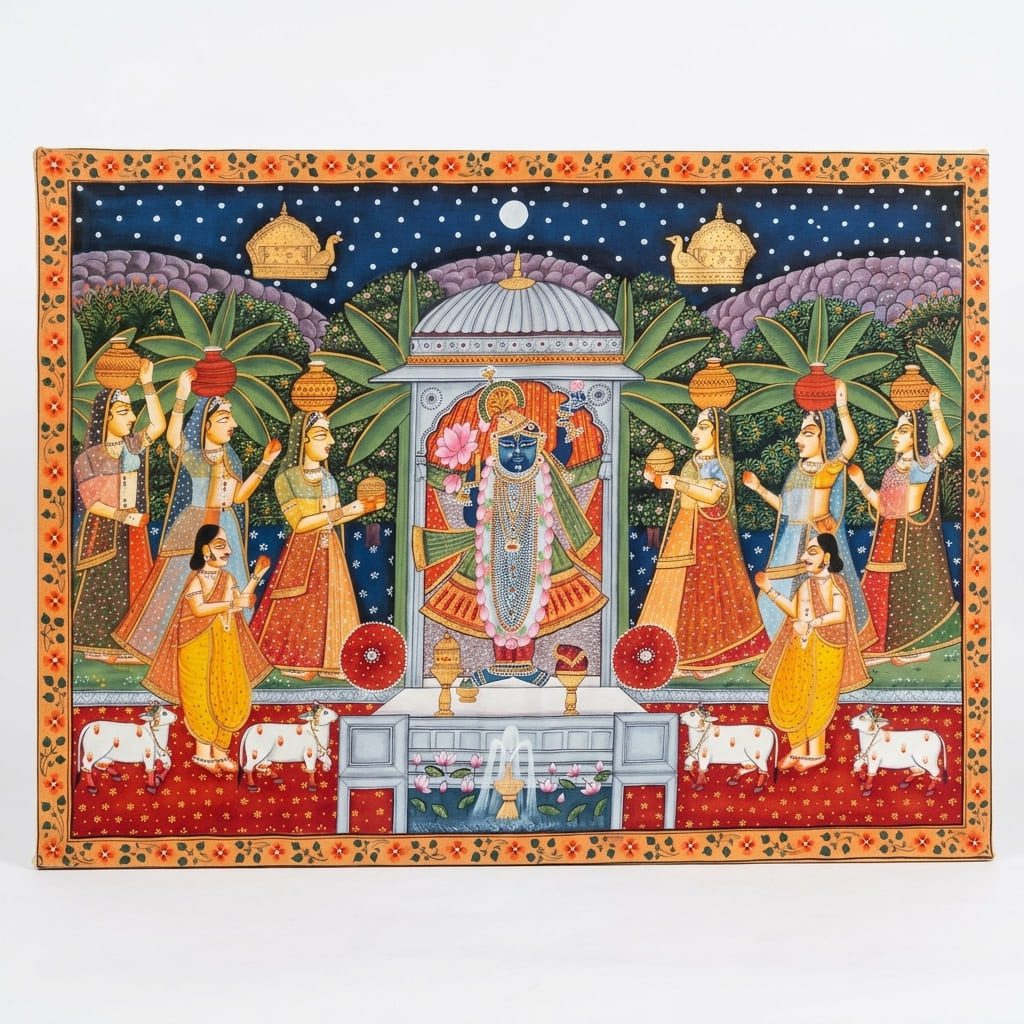
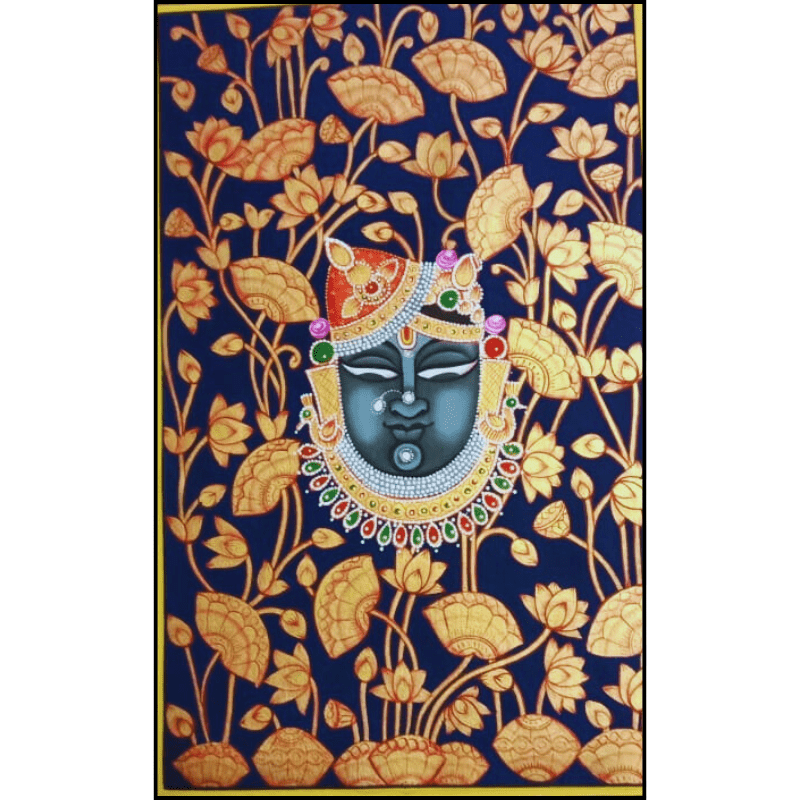
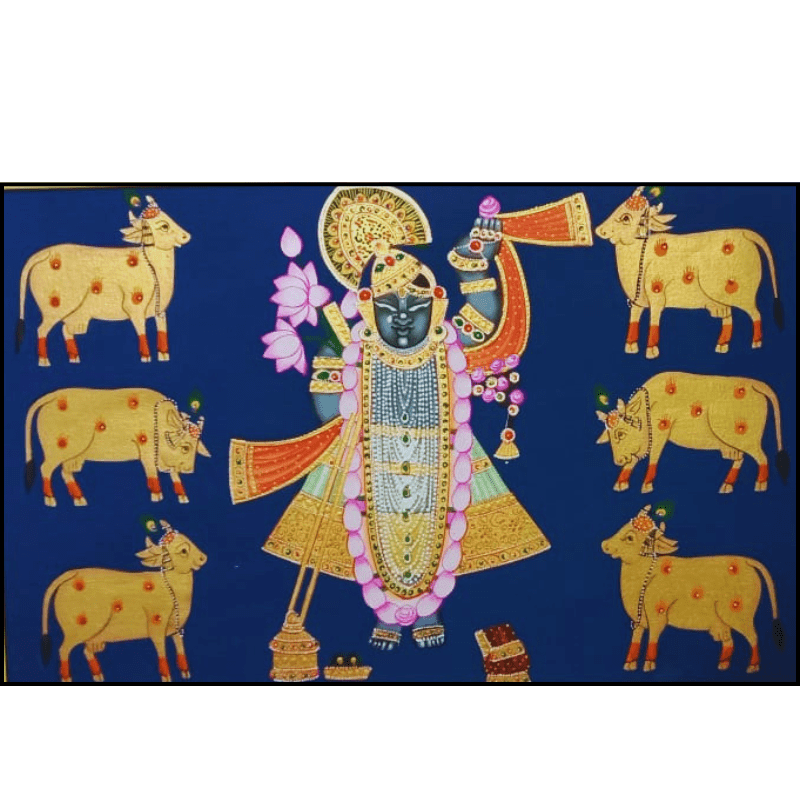
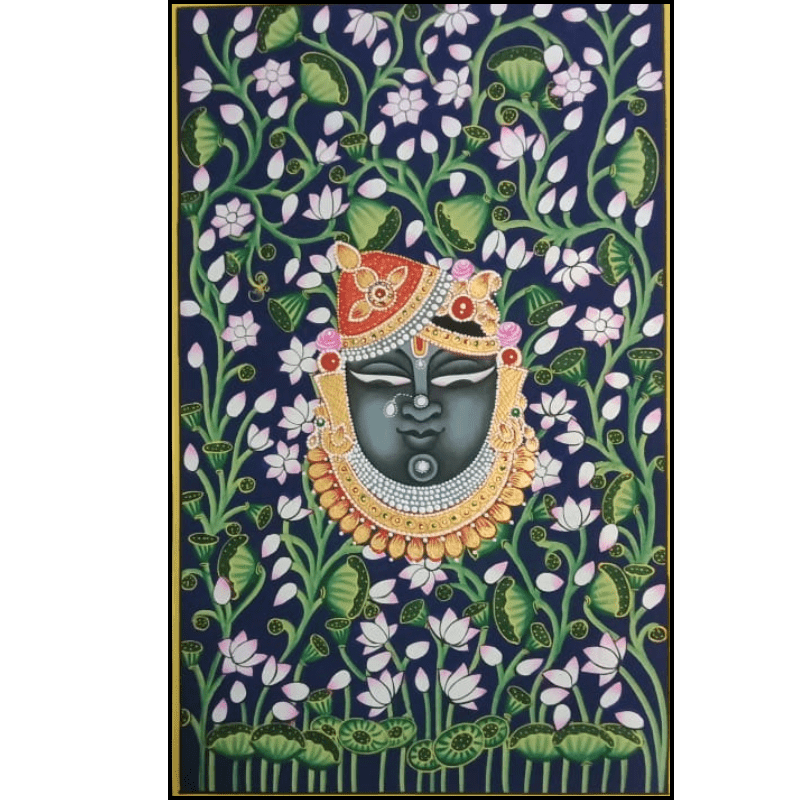
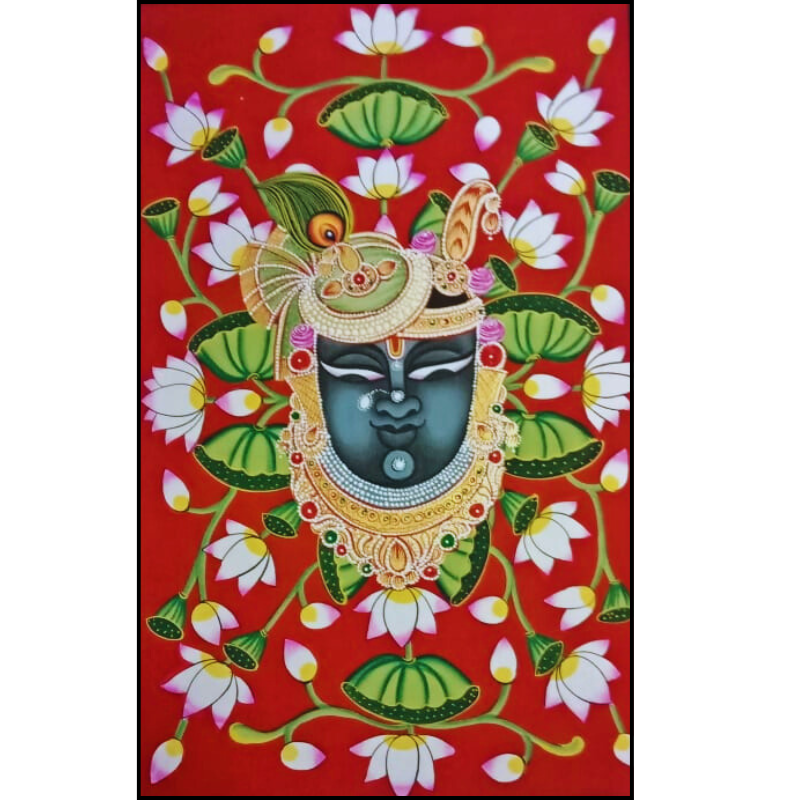
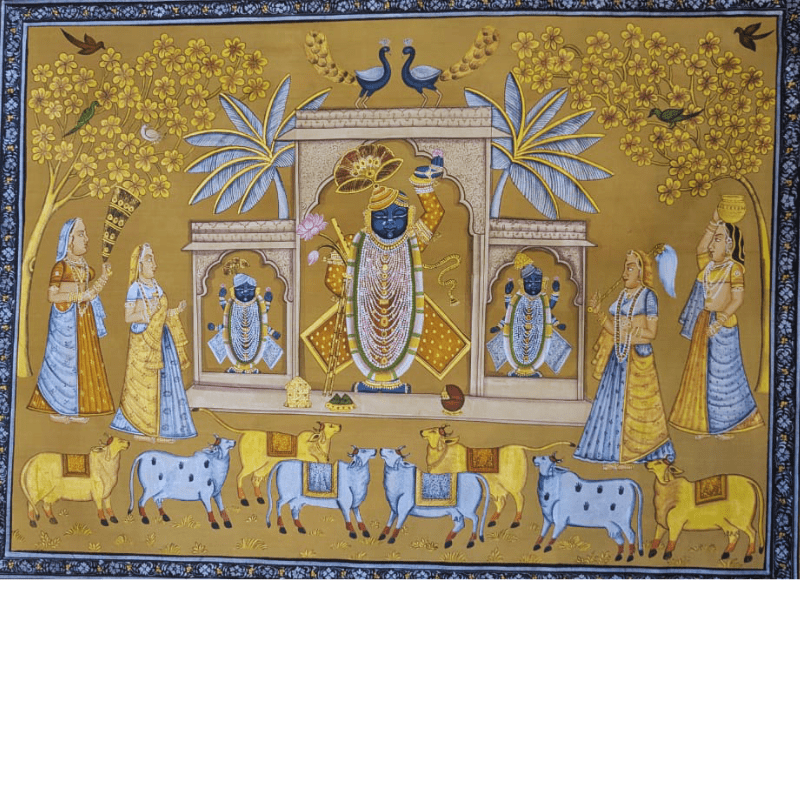
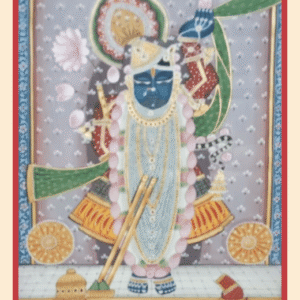
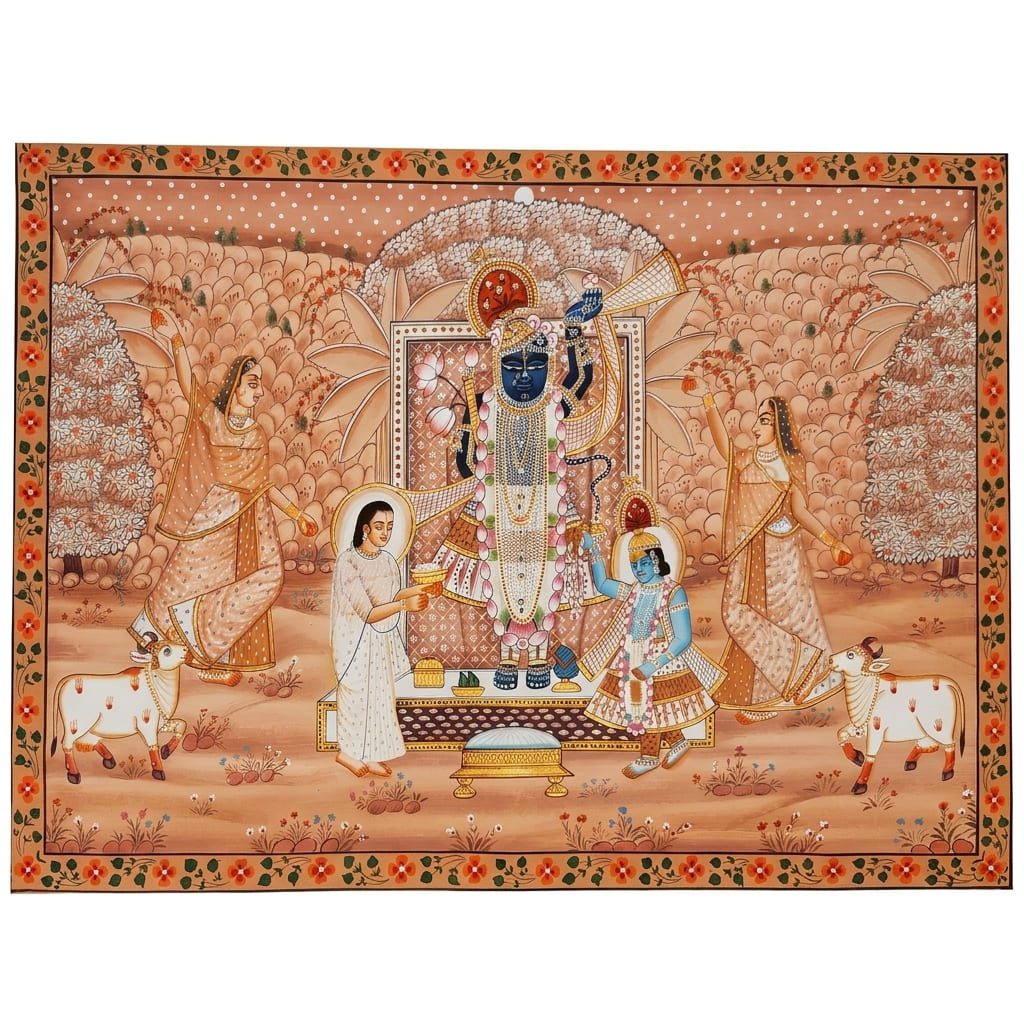
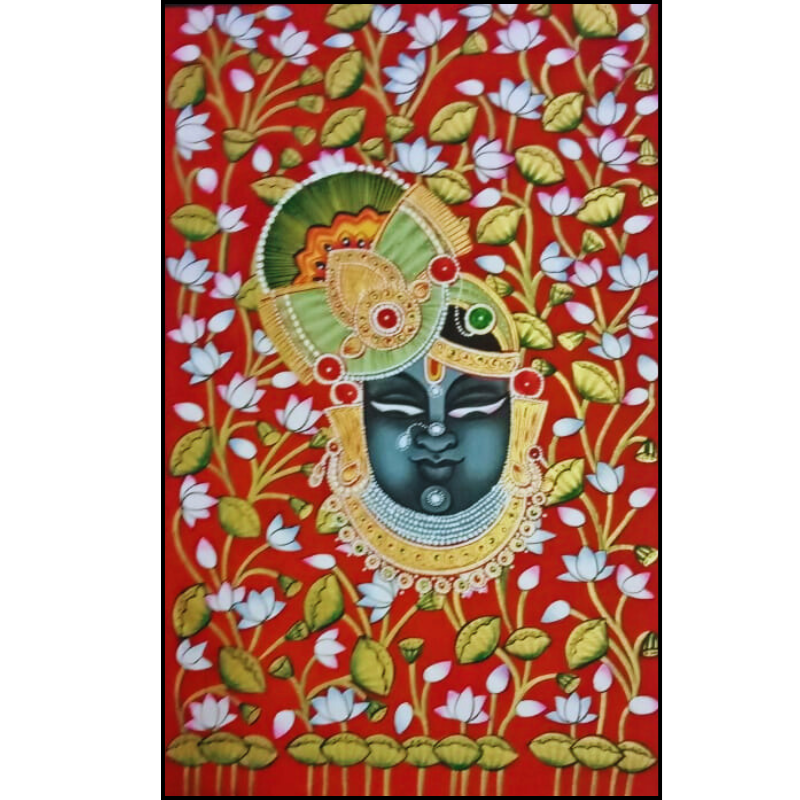
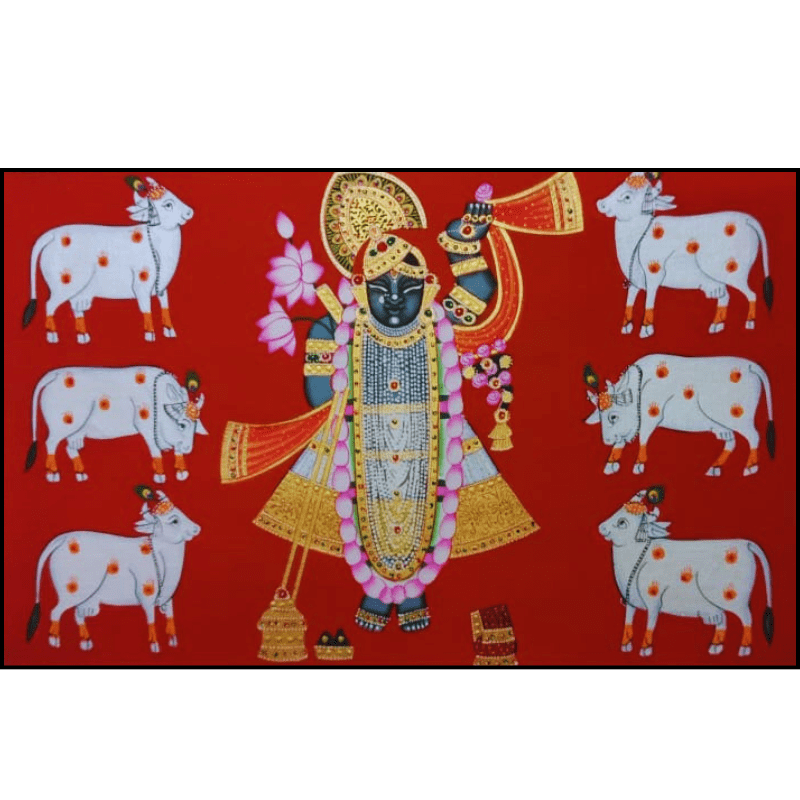
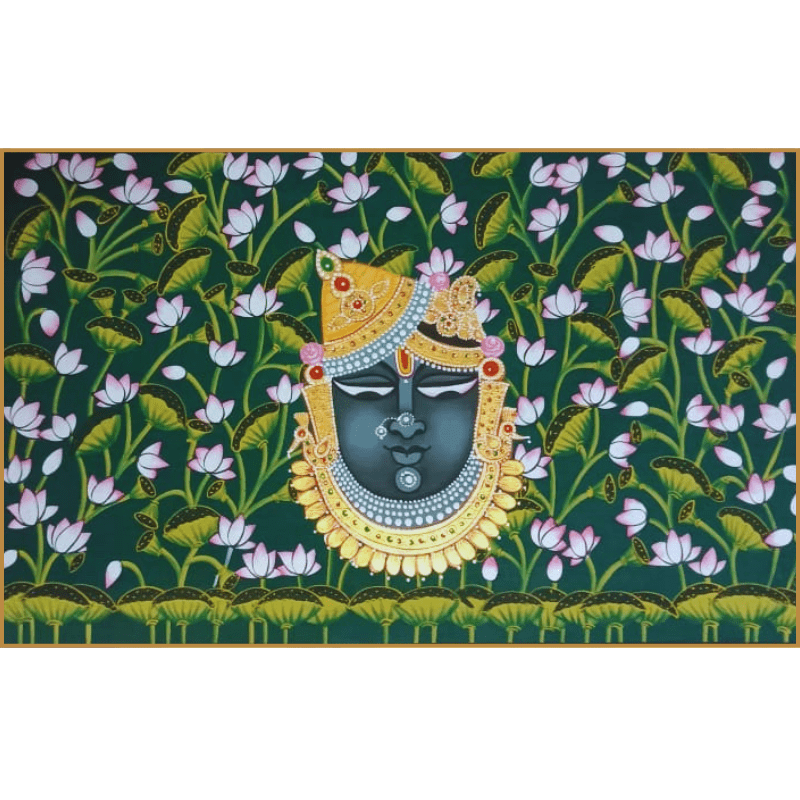
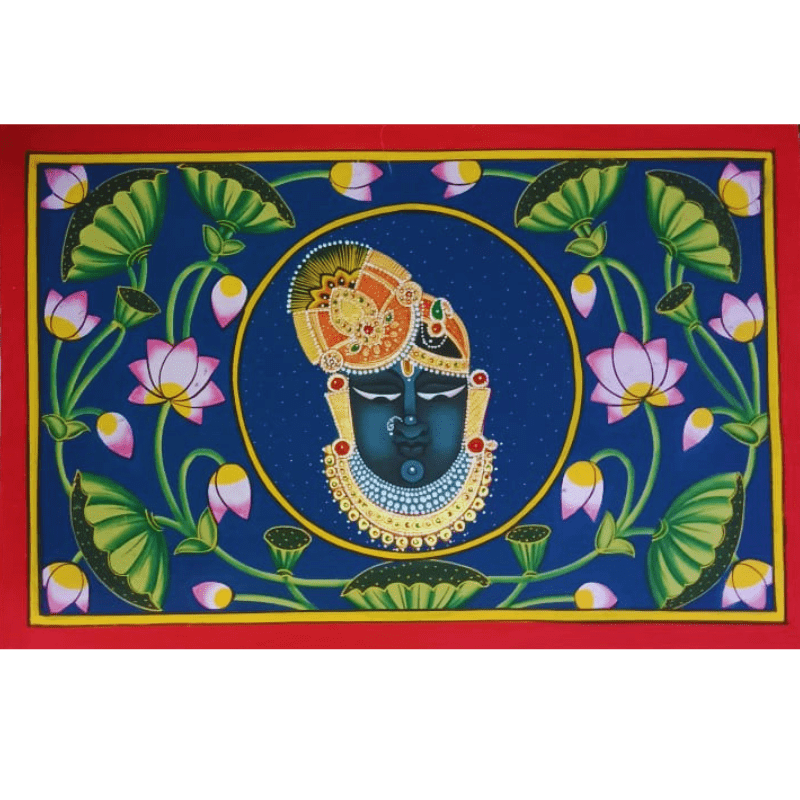
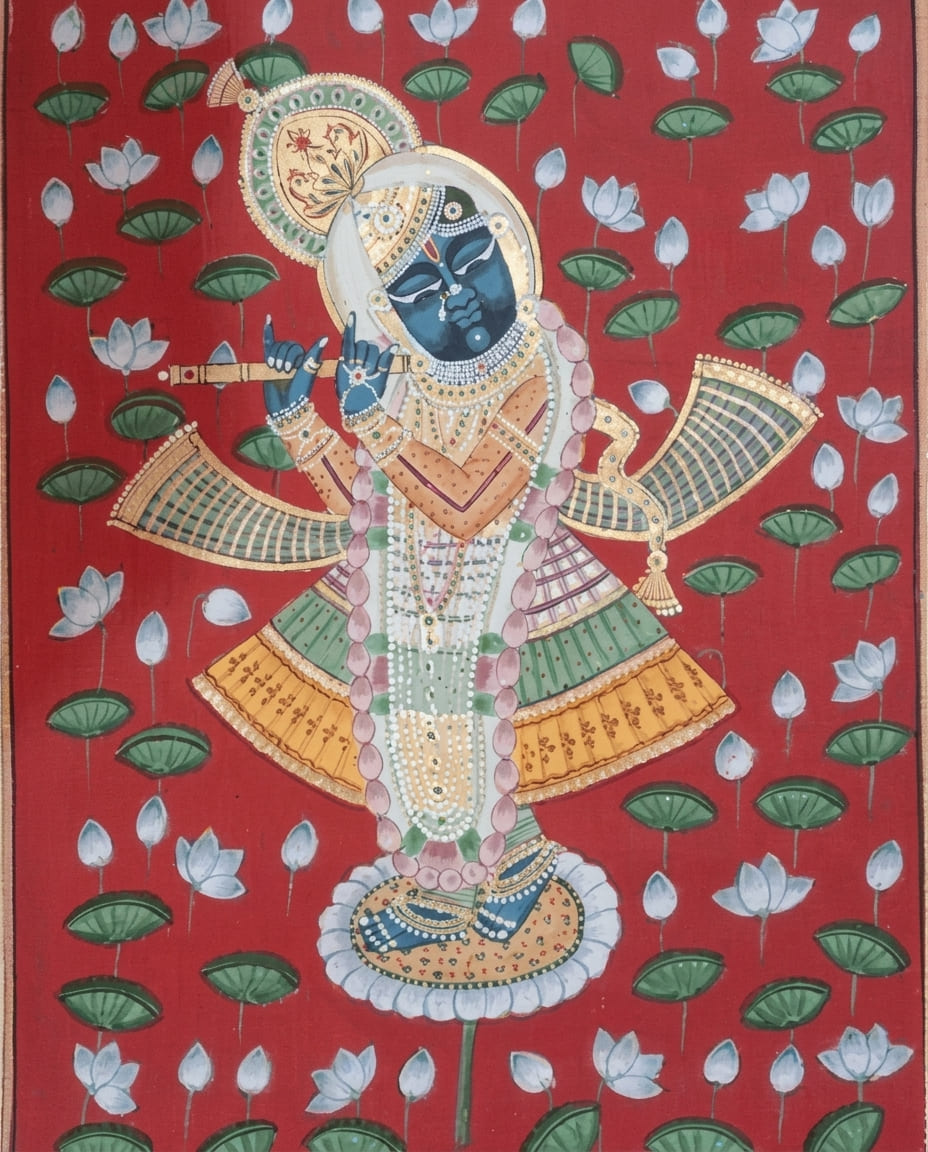
Shrinathji — Lord Krishna depicted as a seven-year-old child lifting the Govardhan Hill with one hand raised — is the most sacred and most searched subject in Pichwai art. The Shrinathji form is the presiding deity of the Nathdwara temple, and every Pichwai tradition begins and centres on His divine presence. Our Shrinathji Pichwai paintings range from intimate portrait pieces showing His serene face surrounded by white lotus blooms to elaborate Darshan compositions showing the deity flanked by devotee gopis, sacred cows, and peacocks in ceremonial celebration. Ideal for pooja rooms, entrance halls, and as the centrepiece of a living room feature wall.
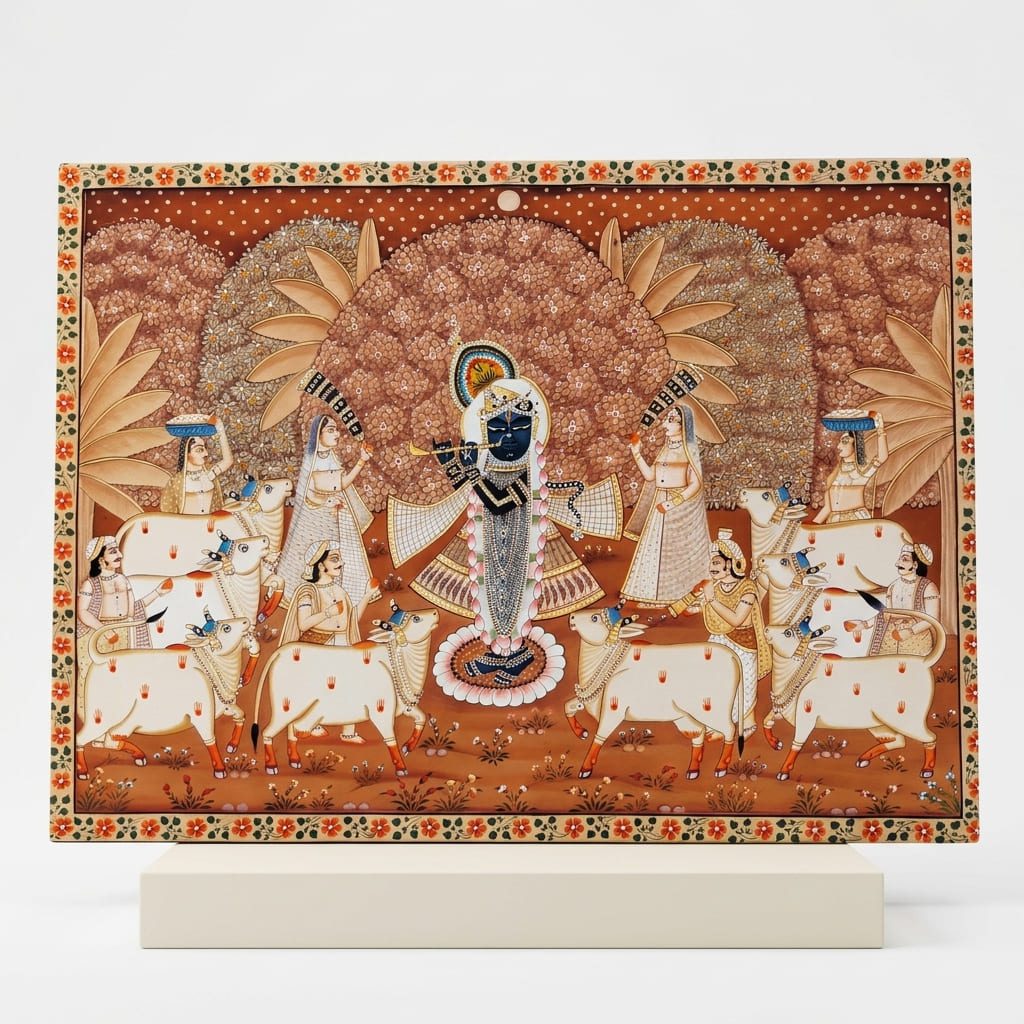
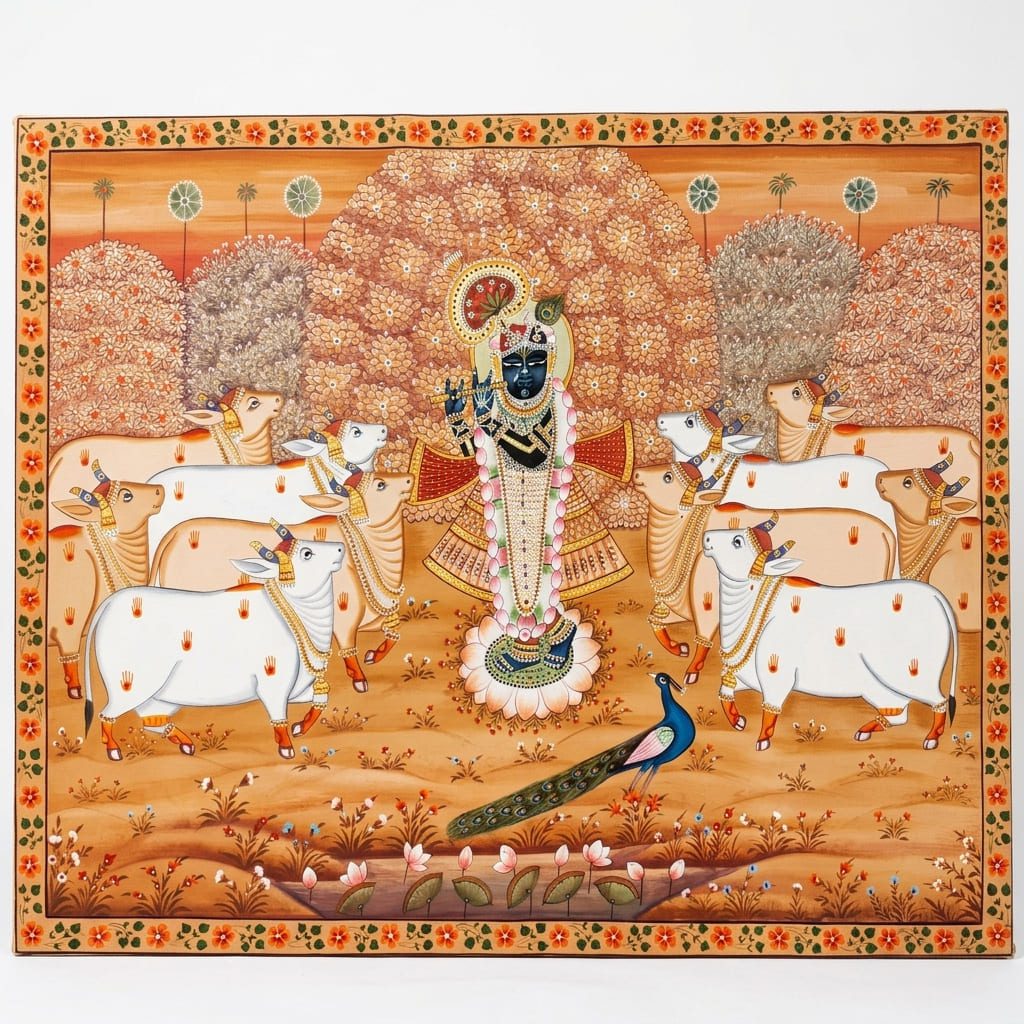
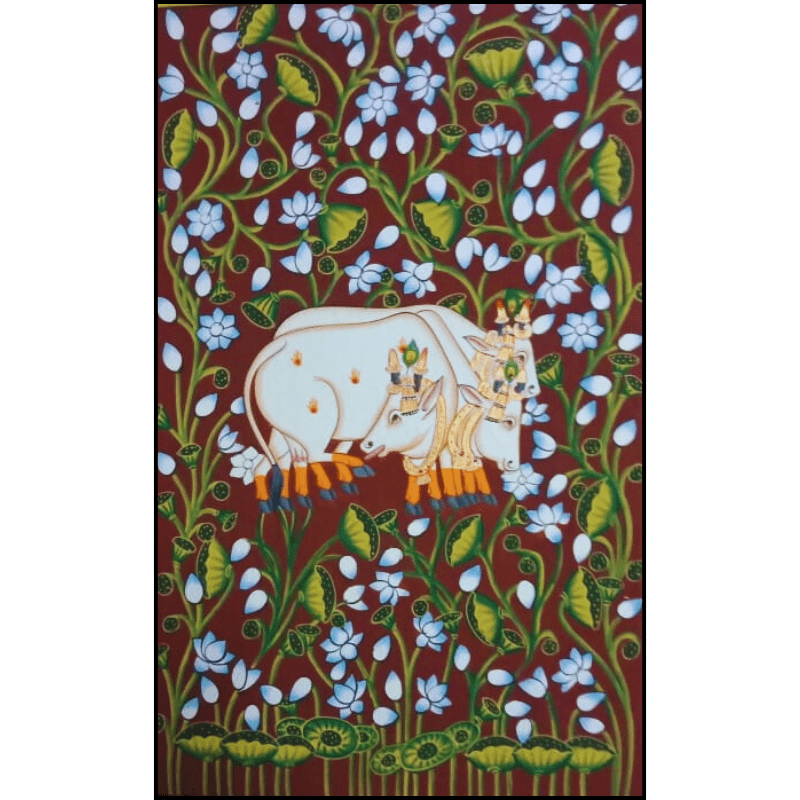
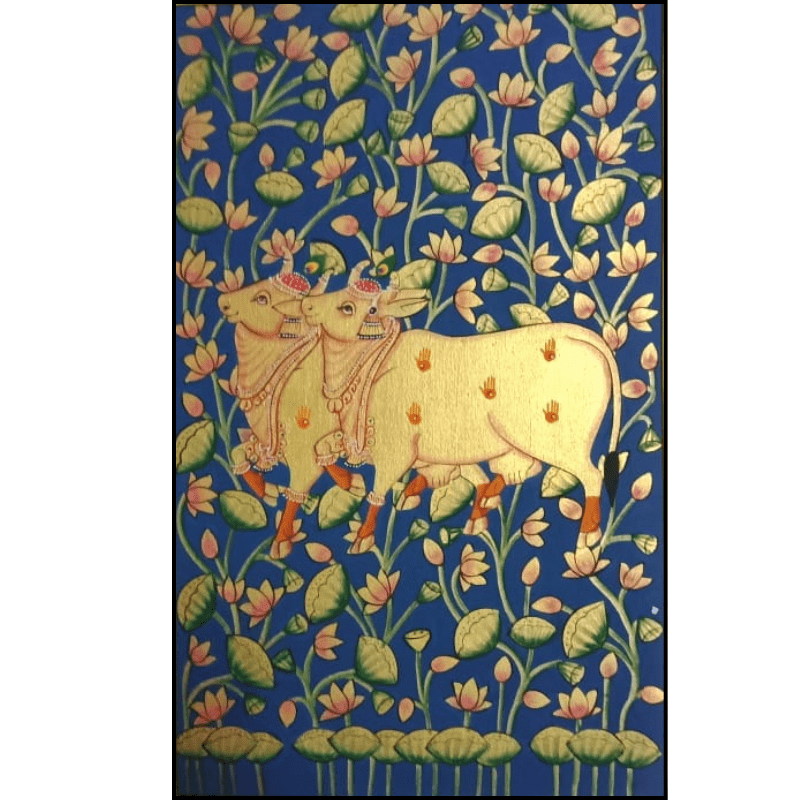
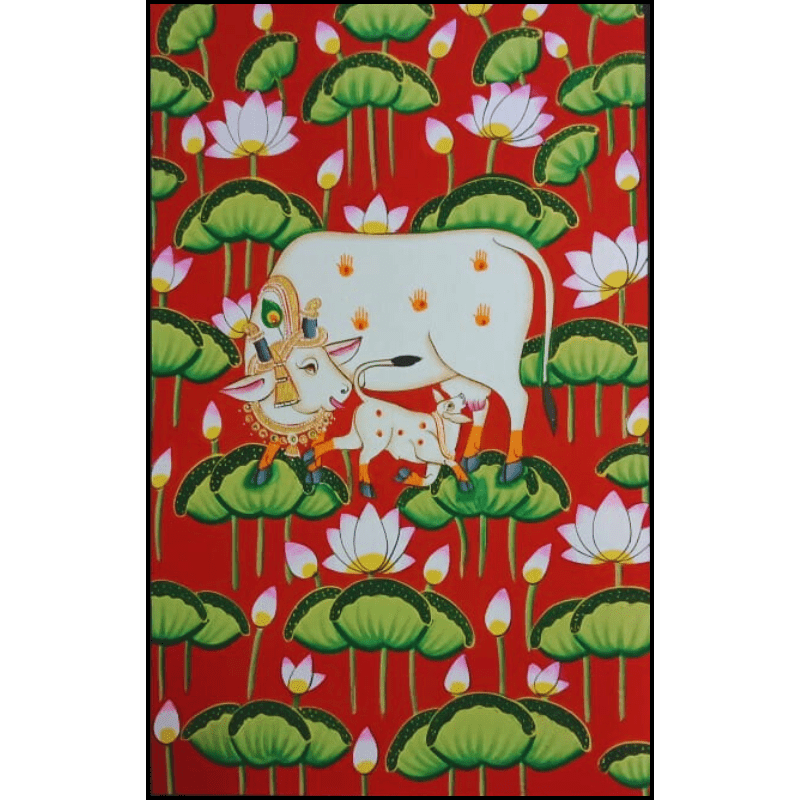
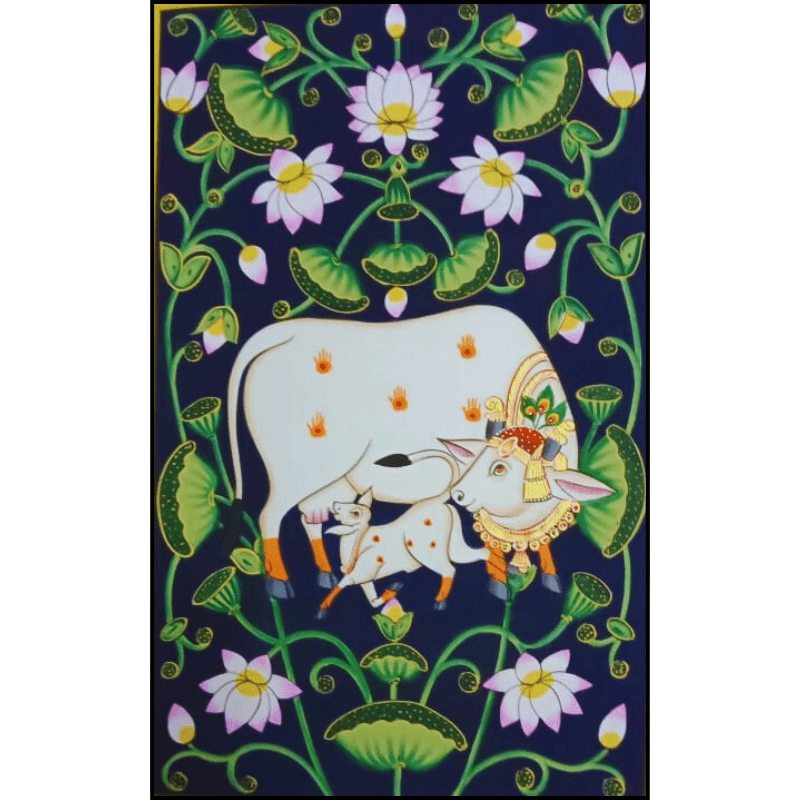
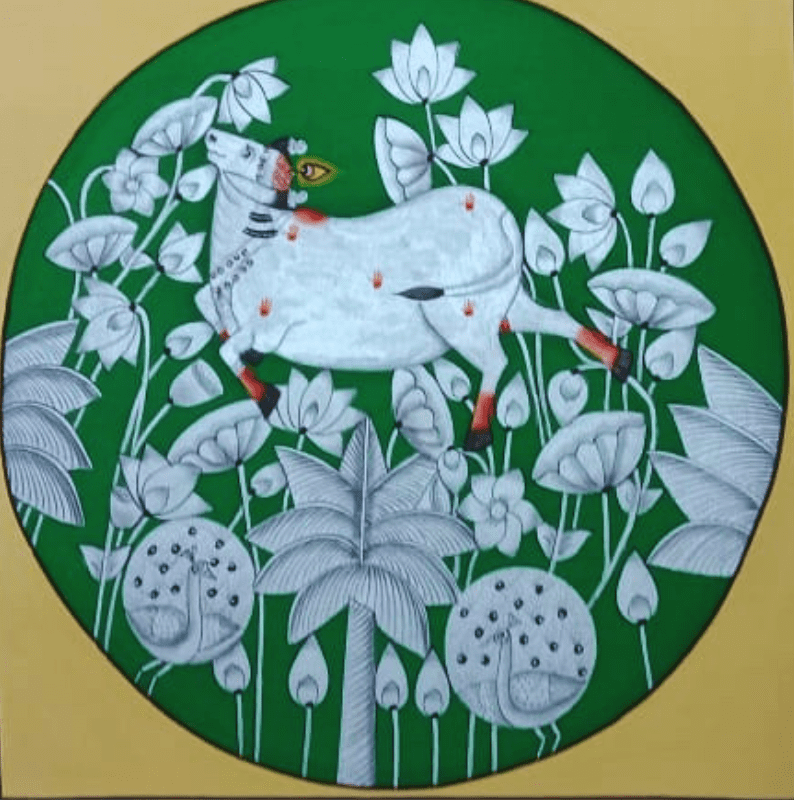
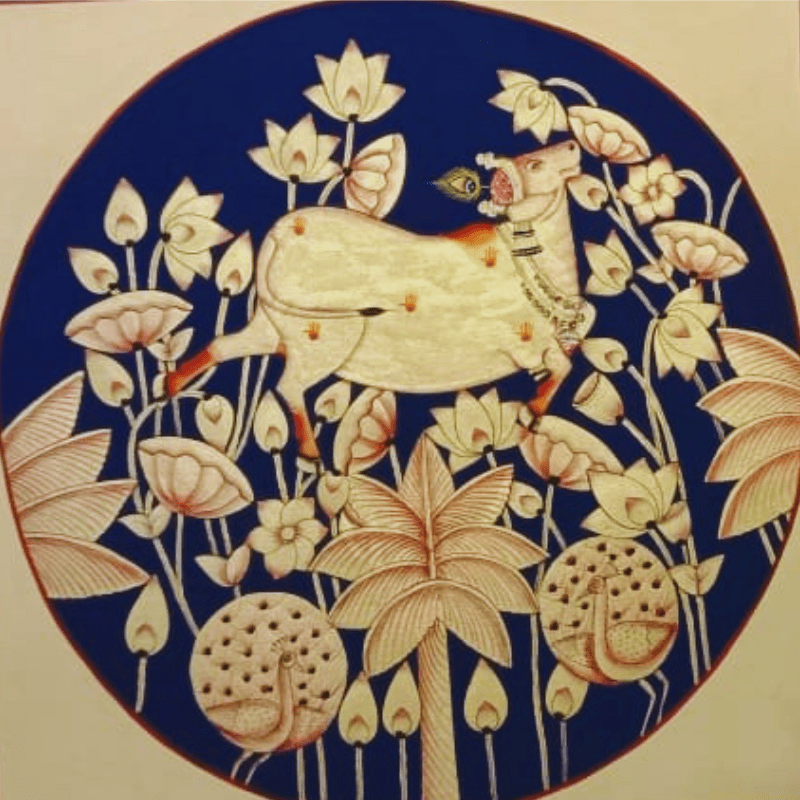
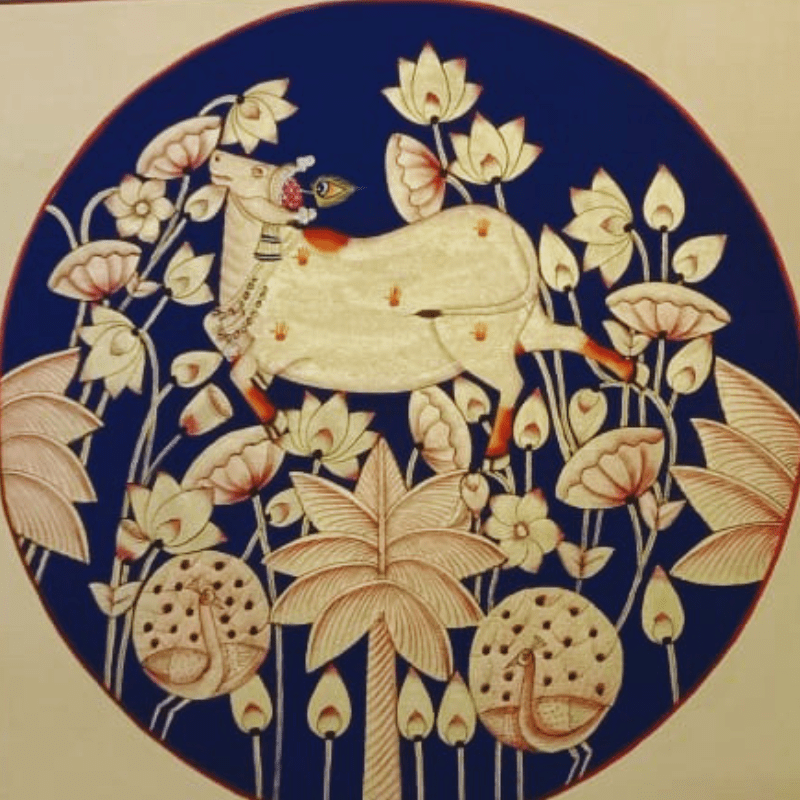
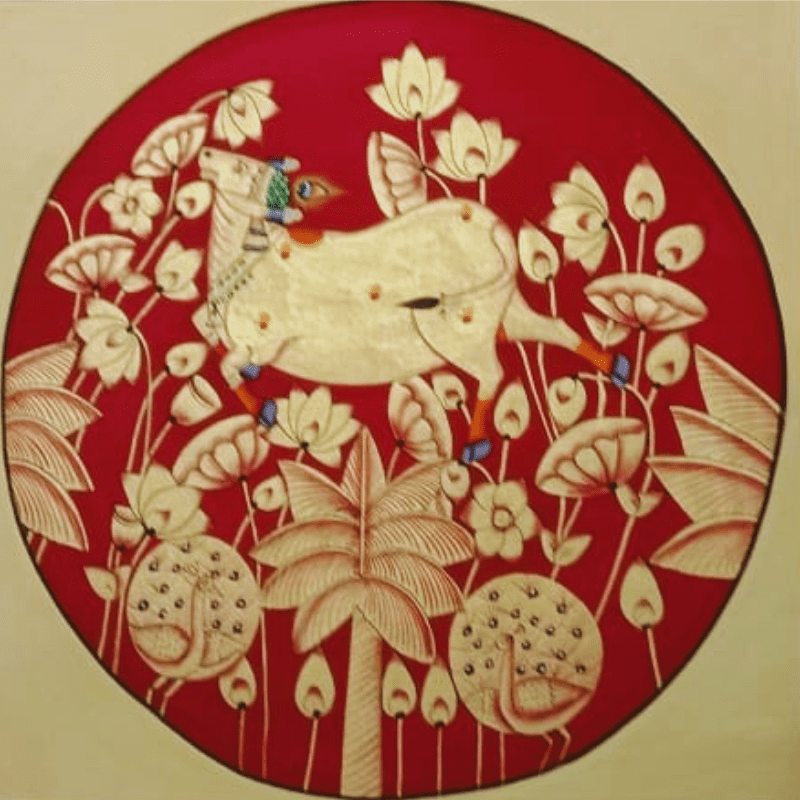
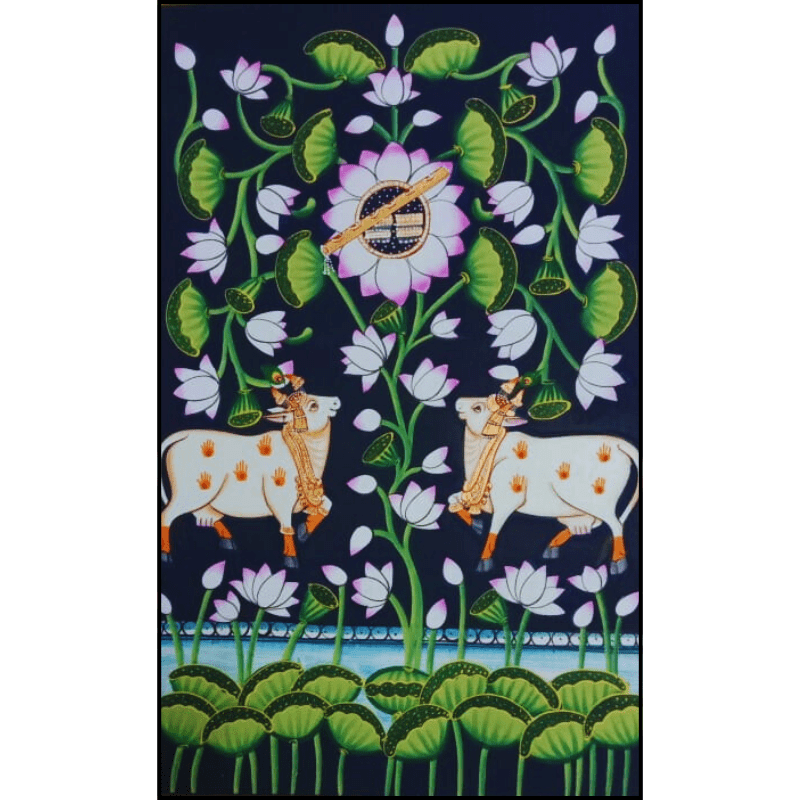
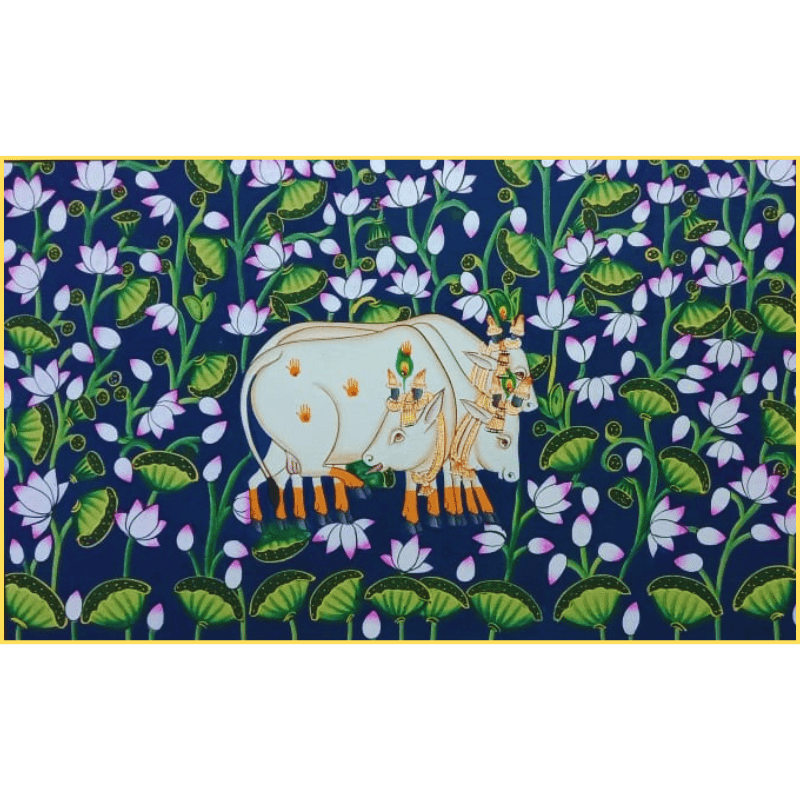
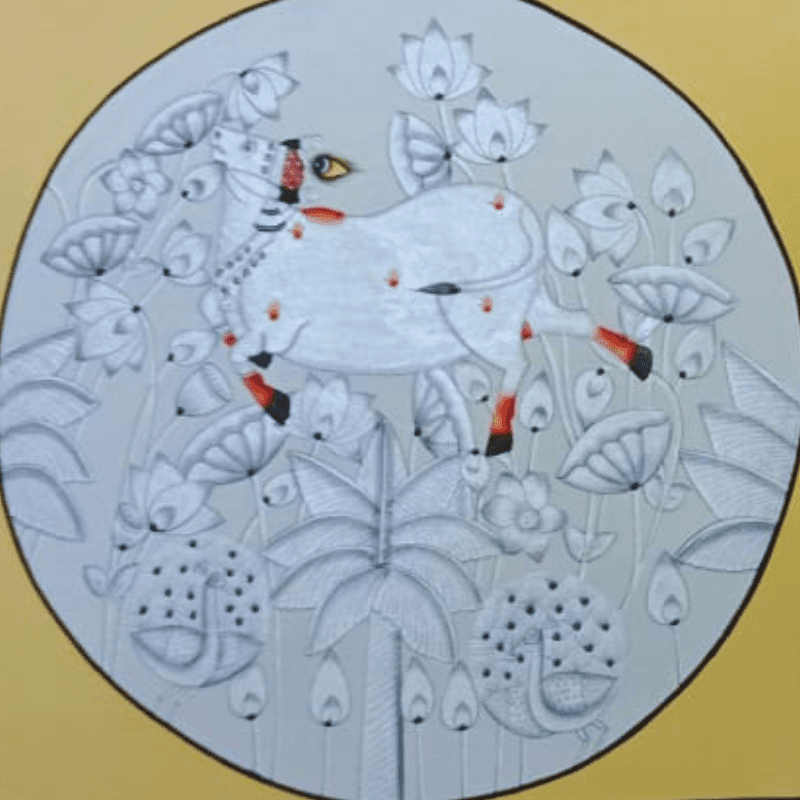
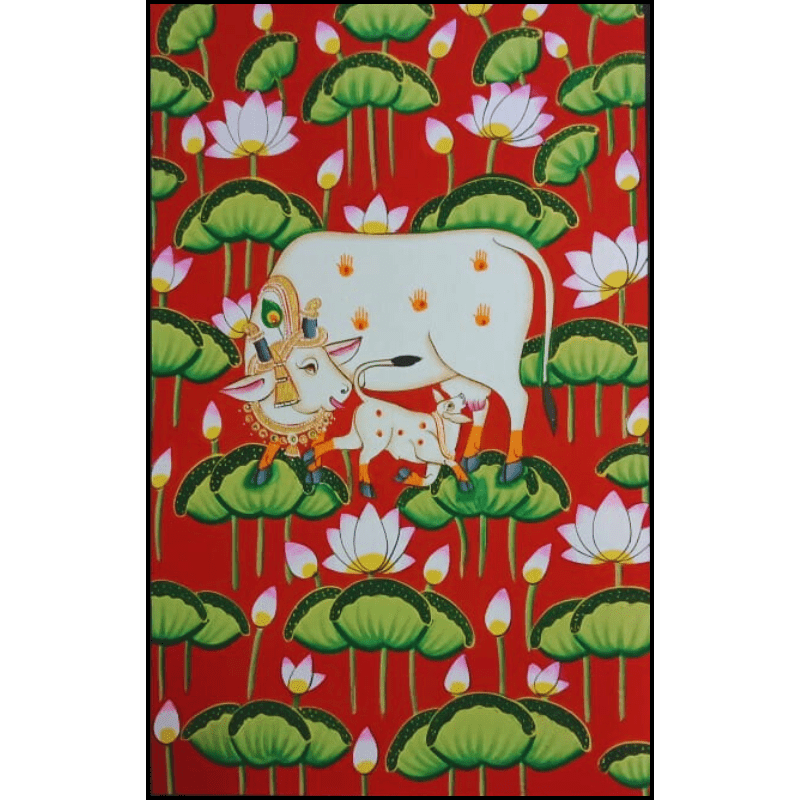
The sacred cow — Kamdhenu — is the divine wish-fulfilling cow of Hindu tradition and one of Lord Krishna most beloved companions. In Pichwai art, Kamdhenu is always depicted with extraordinary dignity: adorned with peacock feather jewellery, painted with vibrant colours on a background of blooming lotus motifs. A Kamdhenu Pichwai painting is believed to bring prosperity, abundance, and positive energy into the home. Our cow Pichwai collection includes single Kamdhenu compositions, cow-and-calf pairs symbolising maternal love and protection), and multi-cow celebrations on red, blue, yellow, and green backgrounds. These are among the most popular choices for living rooms, offices, and as Diwali gifts.
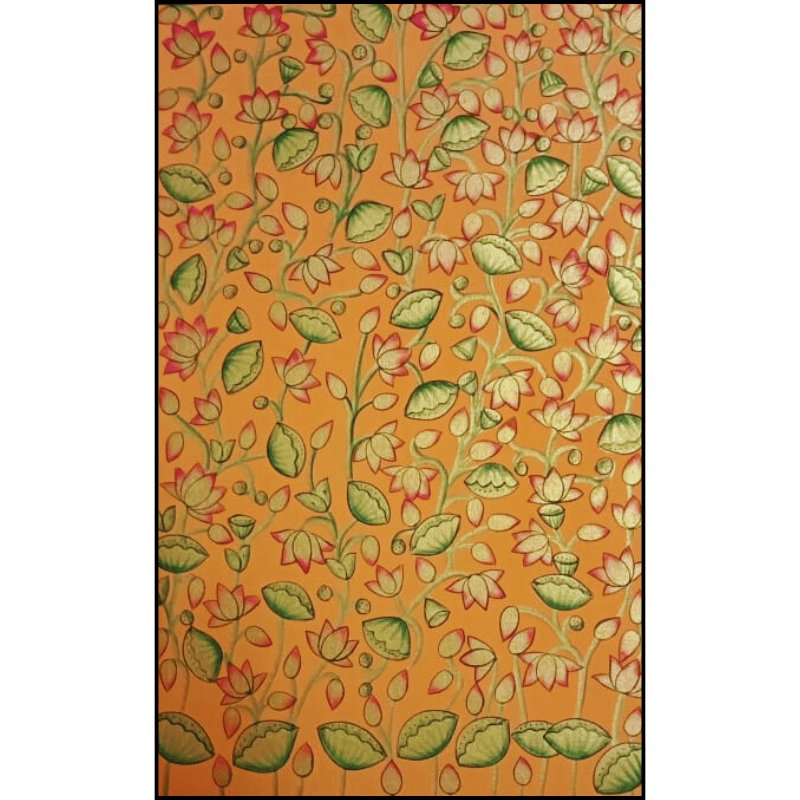
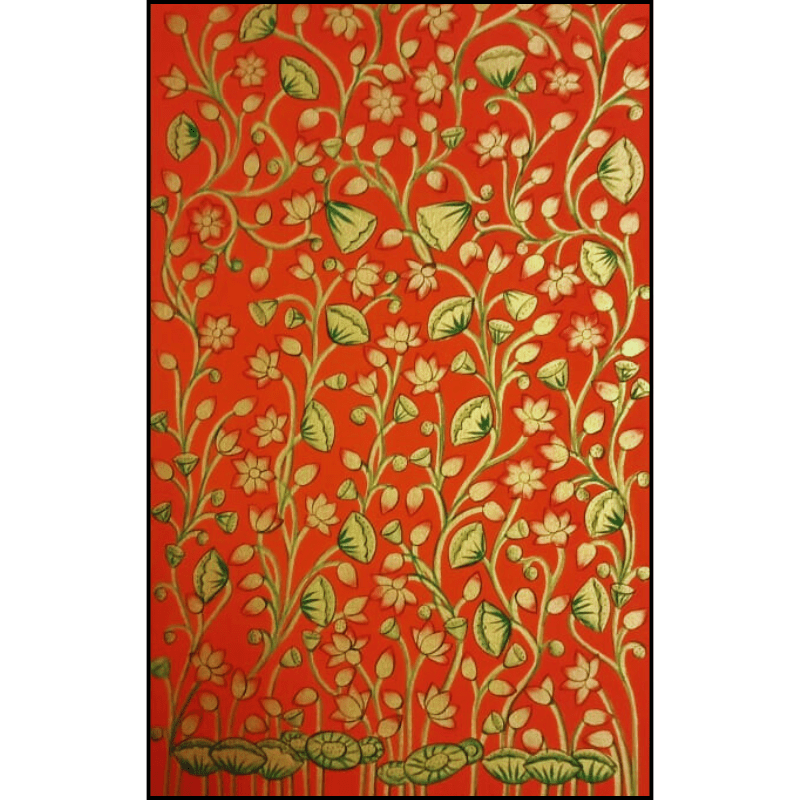
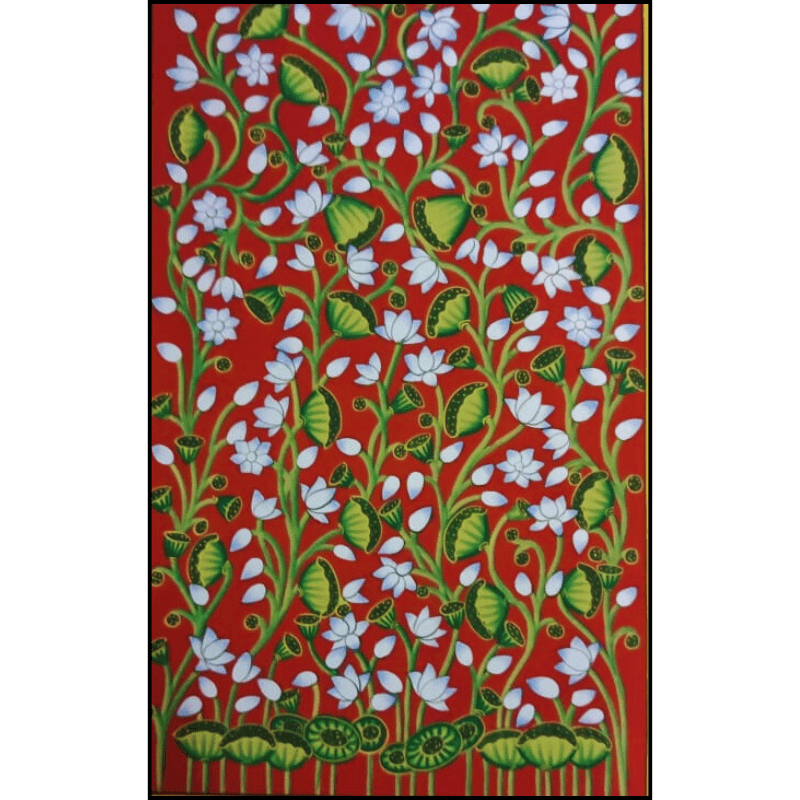
Kamal Talai — literally lotus pond — depicts the sacred Yamuna riverbank where Lord Krishna played with the gopis in Vrindavan. These paintings are filled from edge to edge with blooming lotus flowers in white, pink, gold, and red — with the divine figure of Shrinathji at the centre, or the lotus pond as a standalone devotional composition. Kamal Talai Pichwai paintings carry an atmosphere of profound peace and spiritual purity. They are the traditional summer Pichwai — hung in the Nathdwara temple during the hot months to offer the deity symbolic coolness and beauty. For homes, they work in any room where you want a serene, spiritually elevating presence.
Raas Leela & Radha Krishna Pichwai — The Joy of Divine Love
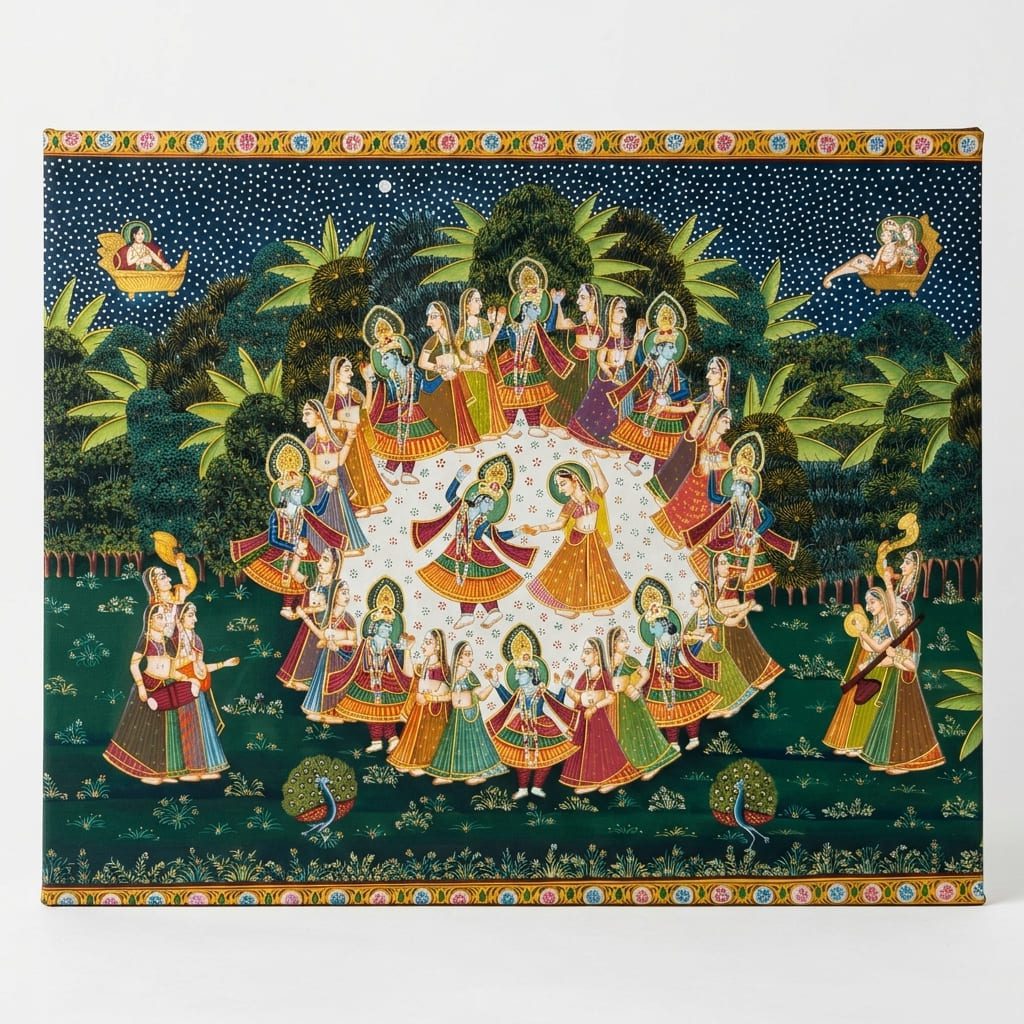
The Raas Leela — Lord Krishna divine dance with the gopis of Vrindavan under the full moon — is one of the most joyous and spiritually profound themes in all of Indian art. Raas Leela Pichwai paintings are characterised by dynamic composition, a celestial full-moon atmosphere, figures in rhythmic movement, and an overall feeling of ecstatic celebration. Radha Krishna Pichwai paintings depict the eternal bond between Radha (representing the devotee soul) and Krishna (the divine beloved), surrounded by peacocks, lotus ponds, and the lush landscape of Vrindavan. These paintings bring joy, love, and positive relational energy to living spaces, bedrooms, and dining areas.
Gold Foil Pichwai Paintings — The Pinnacle of Traditional Craftsmanship
The most opulent expression of Pichwai art uses pure 24K gold foil applied by hand to highlight divine details: the jewellery of Shrinathji, the borders of the composition, the halo of lotus flowers. Gold foil Pichwai paintings glow in the light in a way that no printed or synthetic reproduction can mimic. These are among our most sought-after works for serious collectors, as wedding and Diwali gifts, and for corporate and hotel interiors where a statement of cultural luxury is desired. Every gold foil Pichwai at Rupasya uses genuine 24-carat gold leaf — not gold-coloured paint or metallic ink.
Pichwai Painting Size Guide
Room / Space
Recommended Painting Size
Best Pichwai Theme
Pooja Room / Mandir (small)
12x12 to 19x24 inches
Shrinathji portrait, small Kamdhenu
Pooja Room (large / featured)
24x36 to 48x36 inches
Shrinathji Darshan, Kamal Talai, Raas Leela
Living Room (medium — 12x14 ft)
24x36 to 36x48 inches
Shrinathji Darshan, Kamdhenu, Kamal Talai
Living Room (large — 14x18 ft+)
48x36 to 72x36 inches
Large Raas Leela, multi-cow Pichwai, Gold Foil Darshan
Bedroom
19x24 to 30x24 inches
Radha Krishna, Lotus, single Shrinathji
Home Office / Study
24x24 to 36x24 inches
Kamdhenu (prosperity), Shrinathji Darshan
Entrance Hall
19x24 to 30x36 inches
Shrinathji, Kamdhenu facing entrance
Corporate Reception
48x36 to 72x36 inches
Large Raas Leela or multi-panel Darshan
Hotel / Hospitality
Custom sizes — contact us
Curated thematic collections available
Vastu Guide for Pichwai Paintings
Vastu Shastra and Pichwai art are natural companions — both are rooted in the intention of creating spaces of positive, sacred energy. Here is a simple guide to placing your Pichwai painting for maximum spiritual and Vastu benefit:
• Shrinathji Pichwai: Place on the east wall of your pooja room or the north wall of your living room. East faces the rising sun — the direction of new beginnings, divine light, and spiritual energy. The north wall is governed by Kuber (wealth deity) and is ideal for devotional art associated with abundance and grace.
• Kamdhenu Cow Pichwai: Place on the north or east wall of the living room or entrance hall. The cow symbolises abundance and Kuber blessings — the north wall amplifies this energy. Avoid south wall for cow Pichwai paintings.
• Kamal Talai / Lotus Pichwai: Excellent for the east wall (sunrise energy, spiritual awakening) or the north wall (abundance). Lotus paintings are universally auspicious and work in any positive room placement.
• Raas Leela / Radha Krishna Pichwai: Ideal for the living room north or east wall, or the bedroom east wall. Divine love and joyful energy — avoid south wall for bedroom placement.
• Never place devotional Pichwai paintings in bathrooms, toilets, kitchens directly over stoves, or on floors. These are considered disrespectful placements for sacred art.
The Nathdwara Artists Behind Our Pichwai
Pichwai painting is not a skill learned in weeks or even years — it is a tradition passed through generations of artisan families in Nathdwara and Udaipur, Rajasthan. Our artists have trained for 10 to 20 years before their work reaches the standard that Rupasya requires. Many come from families with multiple generations of Pichwai master painters, carrying techniques, colour formulations, and compositional knowledge that cannot be found in any book.
The materials our artists use are as traditional as the methods. Stone pigments — made from lapis lazuli, saffron, indigo, zinc white, and charcoal black — are ground and prepared by hand. Squirrel-hair brushes, each with a few dozen individual hairs, are used for the finest detailing: the expression in Shrinathji s eyes, the individual petals of a lotus, the delicate pattern of a cow ornamentation. Pure 24K gold foil is applied by hand to divine highlights. A single large Pichwai painting takes between 20 and 60 days to complete.
Every Rupasya Pichwai painting comes with a Certificate of Authenticity bearing the artists name, signature, the paintings title, materials used, dimensions, and date of completion. When you purchase from Rupasya, you know exactly whose hands created your painting — and that it is a genuine, original artwork of lasting cultural and spiritual value.
Questions? Talk directly to our team: WhatsApp +91 6367053010
Why Choose Rupasya for Pichwai Paintings?
Every painting is 100% handmade — not printed or digitally reproduced.
Our artists are based in Nathdwara and Udaipur, Rajasthan — the historic birthplace of Pichwai art.
We use traditional natural stone pigments, saffron-based colours, and pure 24K gold foil.
Each painting is made to order, ensuring freshness, originality, and personal attention.
500+ original artworks sold. Worldwide shipping available.
What Is Pichwai Painting? A 400-Year-Old Sacred Art from Nathdwara
Pichwai painting is one of India's most revered and spiritually rich art traditions, born over 400 years ago in the holy temple town of Nathdwara in Rajasthan. The word Pichwai itself comes from two Sanskrit-Hindi words — 'pich' meaning 'at the back' and 'wai' meaning 'fabric wall hanging'. These paintings were originally created as large, elaborate cloth backdrops to be hung directly behind the idol of Shrinathji — a beloved child form of Lord Krishna — inside the Nathdwara temple.
Every Pichwai painting tells a devotional story. Each artwork was designed to celebrate a specific season, festival, or event in Lord Krishna's life. The Nathdwara temple follows a tradition of displaying a different Pichwai for each occasion — from the summer lotus Pichwais (displayed to offer the deity relief from the heat) to the monsoon Morkuti Pichwais (celebrating peacocks dancing in the rain), to the Gopashtami Pichwais (honouring Krishna's role as a cowherd). Over time, as these extraordinary artworks began to be appreciated beyond the temple walls, Pichwai art found its place in the homes, offices, and art collections of admirers worldwide.
At Rupasya, every Pichwai painting in our collection is 100% handmade by master artisans from Nathdwara and Udaipur, Rajasthan — the very towns where this tradition was born and continues to thrive. We use only traditional techniques: natural stone pigments sourced from minerals and plants, saffron and indigo for colour, squirrel-hair brushes for fine detailing, and pure 24K gold foil for divine embellishments. No digital printing. No mass production. Each painting is a singular, original work of art.
Popular Themes in Our Pichwai Paintings Collection
Our collection spans the most beloved and sought-after themes in Pichwai art. Each theme carries deep symbolic meaning and spiritual significance:
Shrinathji Pichwai Paintings
Shrinathji — Lord Krishna depicted as a seven-year-old child lifting the Govardhan Hill — is the most sacred and recognisable subject of Pichwai art. A Shrinathji Pichwai painting is the centrepiece of the entire tradition. Our Shrinathji Pichwai paintings capture the deity's serene and powerful presence, surrounded by the iconic white and gold lotus motifs, with devotees (gopis) paying obeisance. These works are considered spiritually uplifting and are ideal for temple rooms, puja spaces, and as the centrepiece of a living room wall.
Pichwai Cow Paintings (Kamdhenu)
The sacred cow is one of the most symbolic elements in all of Pichwai art. Known as Kamdhenu — the divine wish-fulfilling cow — these animals are inseparably connected to Lord Krishna's identity as Govinda, the protector and nurturer of cows. A Kamdhenu Pichwai painting or Pichwai cow painting is believed to bring abundance, prosperity, and positive energy into the home. Our cow Pichwai artworks depict the majestic Kamdhenu adorned with peacock feather ornaments, surrounded by lotus flowers on vibrant red, blue, and green backgrounds.
Lotus Pichwai Paintings
The lotus is perhaps the most recurring motif in all Pichwai paintings. It symbolises purity, divine beauty, and enlightenment — the ability to bloom perfectly even in murky water. Lotus Pichwai paintings — especially the summer lotus Pichwais — fill the canvas with layer upon layer of blooming white, gold, and red lotus flowers. These paintings are created to offer Lord Shrinathji symbolic relief during the hot summer months. Standalone lotus Pichwai artworks make stunning wall art for living rooms and meditation spaces.
Raas Leela & Krishna Pichwai Art
Raas Leela Pichwai paintings depict Lord Krishna's divine dance (raas) with the gopis of Vrindavan — one of the most joyous and spiritually significant themes in all of Indian art. Our Raas Leela Pichwai paintings are characterised by their vibrant colour palettes, intricate border designs, and the dynamic movement conveyed through the figures. Radha Krishna Pichwai artworks similarly celebrate the eternal divine love between Radha and Krishna, filled with peacocks, lotuses, and the lush greenery of Vrindavan.
Pichwai Painting on Cloth vs Canvas — What to Choose?
One of the most common questions from buyers is about the base material for Pichwai paintings. Here is a simple guide:
Pichwai painting on cloth (traditionally handspun cotton cloth, treated with natural starch) is the most authentic and traditional format. The texture of the cloth gives the colours a warm, organic quality that canvas cannot replicate. Cloth Pichwais were the original temple hangings — they have an heirloom quality and are particularly prized by serious art collectors. They are best displayed mounted or framed behind glass.
Pichwai painting on canvas is more suited to modern home interiors. Canvas Pichwais are stretched over a frame and can be hung directly on the wall without framing. They are slightly more durable for everyday handling. Our canvas Pichwai paintings maintain the same level of detailing and colour fidelity as cloth works.
Pichwai on wall panels is the most contemporary interpretation — ideal for large accent walls in living rooms or offices. These panels come ready to hang and make a dramatic visual statement.
All three formats are available in our collection, with sizes ranging from 12x12 inches to 72x36 inches. Custom sizes are available on request.
Where to Hang Your Pichwai Painting — Ideal Spaces
Pichwai paintings are among the most versatile forms of traditional Indian art when it comes to placement. Here are the most popular choices:
Puja Room or Temple Space: A Shrinathji Pichwai painting hung behind a home deity is the most traditional and spiritually powerful placement. It recreates the sacred atmosphere of the Nathdwara temple within your home.
Living Room: A large Pichwai painting — particularly a Raas Leela, lotus, or Kamdhenu cow Pichwai — makes a breathtaking focal point above a sofa or on a feature wall. The vibrant colours and intricate detail create a richness that modern art often cannot match.
Bedroom: Smaller Pichwai paintings with serene themes (lotus, peacock, or a singular Shrinathji portrait) bring peace and calm to bedroom spaces.
Office & Corporate Spaces: Pichwai art has become increasingly popular in premium office and boardroom interiors as a statement of Indian cultural identity. Large-format Pichwai wall panels work especially well in such settings.
Gifting: A handmade Pichwai painting is one of the most meaningful and culturally rich gifts for weddings, housewarmings, Diwali, and corporate gifting.
Frequently Asked Questions About Pichwai Paintings
What is a Pichwai painting?
A Pichwai painting is a traditional Indian art form that originated over 400 years ago in Nathdwara, Rajasthan. The word Pichwai means fabric wall hanging (pich = back, wai = cloth). These paintings were created as large devotional backdrops for the idol of Shrinathji, a form of Lord Krishna, in the Nathdwara temple. Today, Pichwai paintings are prized as wall art for homes, offices, and spiritual spaces.
Where can I buy authentic handmade Pichwai paintings online?
You can buy 100% authentic, handmade Pichwai paintings online at Rupasya (rupasya.com/pichwai-paintings). All our Pichwai artworks are made by master artisans from Nathdwara and Udaipur, Rajasthan, using traditional natural stone pigments and gold foil. We offer free shipping across India and worldwide shipping on request.
How much does a Pichwai painting cost?
Pichwai painting prices at Rupasya start from around Rs 6,700 for smaller pieces and go up to Rs 40,000 or more for large, elaborate handmade works. The price depends on size, complexity, gold foil use, and base material (cloth, canvas, or wall panel).
What is the difference between a Pichwai and a Nathdwara painting?
Pichwai paintings are large devotional cloth backdrops originally designed to hang behind the Shrinathji deity in the Nathdwara temple. Nathdwara paintings include smaller, highly detailed works directly depicting the face or swaroop of Shrinathji. All Pichwai art is Nathdwara art, but not all Nathdwara art is Pichwai.
What materials are used in making Pichwai paintings?
Traditional Pichwai paintings are made on handspun starched cotton cloth or handmade paper. Artists use natural stone pigments from minerals and plants — indigo, saffron, zinc white, and charcoal black. Fine squirrel-hair brushes are used for detailing. Many works include 24K pure gold foil for a divine luminous effect.