
What Is Miniature Painting? A Complete Guide to History, Styles & Techniques
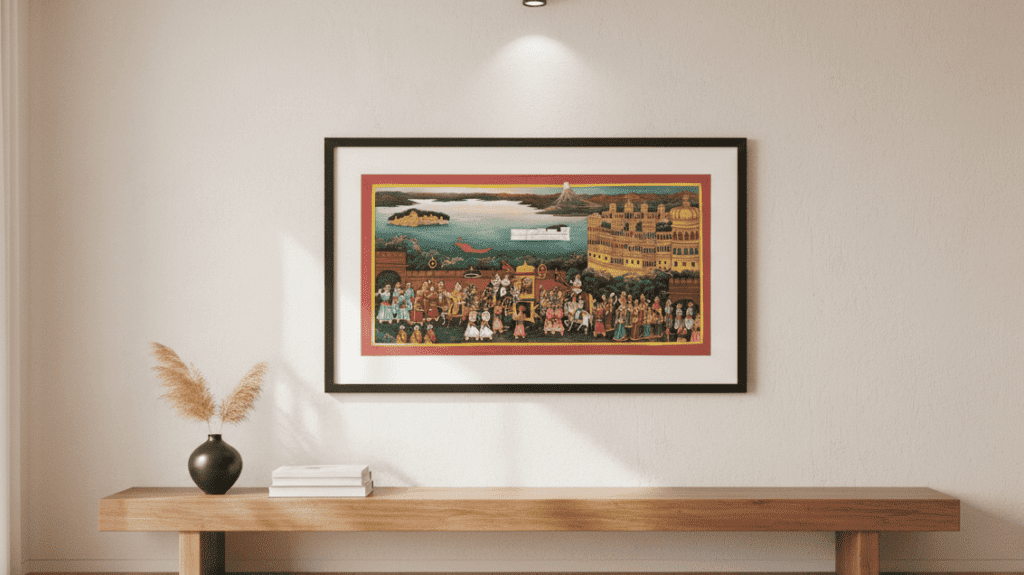
Have you ever held something so small it made you stop and stare? That’s what miniature painting does. It pulls you close. Makes you lean in. Forces you to pay attention.
I remember the first time I saw one up close. A painting no bigger than my hand, but it held an entire world. Kings sitting on thrones. Flowers so detailed you could count the petals. Gold that caught light like morning sun. And I thought – how? How did someone make this with just their hands and a brush?
That’s what we’re going to explore today.
What Actually Is Miniature Painting?
Let’s clear something up right away.
Miniature painting isn’t just “small painting.” That’s like saying a symphony is just “some music.” Technically true, but you’re missing everything that matters.
The word “miniature” comes from *miniare* – a Latin word meaning “to color with red lead.” Old manuscript writers used this red ink for chapter headings and decorations. Over time, the word stuck to any small, detailed illustration.
But here's what really defines miniature painting:
**It’s made to be held.** Not hung on a wall across the room. Not glanced at while walking past. Held. Studied. Turned in your hands to catch the light.
**It uses materials that matter.** We’re talking ground lapis lazuli for blue. Crushed beetles for red. Real gold leaf that you can actually see shimmering. These aren’t paints from a tube. They’re substances with history.
**It takes forever to make.** A single miniature could consume months of someone’s life. Multiple artists sometimes worked on one piece – a face specialist here, a background painter there, someone else just for the gold details.
**The flatness is on purpose.** You know how Renaissance paintings try to trick you into seeing depth? Miniatures don’t do that. They stay flat. Color stays bright. Figures look stylized rather than “real.” This isn’t failure – it’s choice. Beauty lives on the surface here, not in illusion.
Think of miniature painting as the opposite of a movie screen. Movies want to swallow you up from far away. Miniatures want you to come close and breathe the same air as the paint.
Where Did Miniature Painting Come From?
The Indian Beginning
Here’s something surprising: miniature painting started in monasteries.
Way back in 7th-century Bengal, Buddhist monks needed to teach their texts. So they illustrated palm leaves with pictures. Narrow, long leaves became tiny canvases.
By 999 AD, they’d gotten really good at it. The *Prajnaparamita* manuscript from this time shows refined work – sinuous lines, careful colors, techniques already mature. These monks weren’t copying anyone. They invented this tradition themselves, out of devotion and necessity.
Jain monks later picked up the practice. Their *Kalpasutra* manuscripts from the 10th to 14th centuries are some of the most beautiful surviving examples. Different religion, same impulse: make the sacred visible and portable.
The Persian Thread
Meanwhile, over in Persia, something else was happening.
Persian courts cultivated their own miniature tradition. Timurid rulers (14th-15th centuries) and Safavid emperors (1501-1736) collected illustrated manuscripts like kings collect crowns. Cities like Herat, Tabriz, and Isfahan became centers of artistic refinement.
The Safavids created a signature style – merging the restraint of Herat with the expressive energy of Tabriz. Masters like Kamaliddin Behzad set standards so high that artists still studied his work centuries later.
These weren’t just book illustrations. They were independent artworks, collected in albums called *muraqqa*, meant for private enjoyment among cultured people.
When Worlds Collide
Here’s where it gets interesting.
These two traditions – Indian and Persian – developed separately for centuries. Then they met.
When Mughal emperors came to power in India, they actively recruited Persian artists. They studied Persian techniques. Learned from them. Then created something new that was neither purely Indian nor purely Persian.
This mixing matters. It shows that great art doesn’t come from staying pure. It comes from meeting, borrowing, transforming.
How Miniature Painting Flowered in India
The Mughal Explosion
Akbar became emperor in 1556. He was 13 years old.
By the time he finished, he’d commissioned around 1,400 illustrations for just one book – the *Hamza Nama* (Amir Hamza epic). Think about that number. 1,400 paintings. That’s not patronage. That’s an industry.
Mughal style absorbed Persian delicacy, Indian boldness, and even European influences from Jesuit missionaries who showed up with prints by artists like Dürer. The result? Paintings with incredible realism, jewel-like color, and flattened perspective all at once.
Then came Jahangir (1605-1627). Akbar’s son took the tradition and pushed it somewhere new. He wanted accuracy. Portrait studies that actually looked like people. Botanical illustrations so precise they worked as scientific records.
His artist Ustad Mansur painted birds so exactly that modern ornithologists can identify the species. That’s not just art. That’s documentation.
Beyond the Mughal Court
But Mughal painting wasn’t the only game in town.
Rajasthani kingdoms developed their own styles. Mewar, Marwar, Bundi, Kota, Kishangarh – each court cultivated something distinct. These schools favored stylization over realism. Devotional intensity over courtly splendor. The Krishna-Radha stories from the *Gita Govinda* became their favorite subject.
In the hill kingdoms of the northwest – what we now call Himachal Pradesh and Jammu – the Pahari tradition emerged. Kangra school paintings from the late 1700s are almost impossibly delicate. Soft pinks and yellows. Pale greens. Figures that seem to float. These aren’t paintings about events. They’re paintings about longing, devotion, spiritual states.
Down in the Deccan, the sultanates of Bijapur, Golkonda, and Hyderabad developed something else again. More lyrical than Mughal work. More dynamic than many Rajasthani examples. Dreamy landscapes. Elongated figures. Romantic intensity.
India didn’t have one miniature tradition. It had dozens.
What Makes a Miniature Painting? The Key Elements
Let me walk you through what actually goes into these works.
Size and Scale
Most Mughal miniatures fit within 25 square inches. That’s about the size of a modern smartphone screen. Some of the big Mughal illustrations reached 22 by 28 inches – but even those were painted up close, with the artist working at intimate range.
You don’t view a miniature. You enter it.
Natural Materials
This is where it gets almost alchemical.
Lapis lazuli from Afghanistan – a stone prized for 4,000 years – ground to powder makes the blues. Vermillion comes from minerals. Ochres from earth. Blacks from lamp soot or burnt bone.
These aren’t colors you buy. They’re colors you make. Grinding, washing, testing – sometimes weeks of preparation just to get the hue right.
The binders matter too. Egg white. Gum arabic. Fish glue. Each holds pigment differently, creates different effects. Gold and silver leaf – real metal, not paint – transform the surface into something that literally glows.
This commitment to natural materials isn’t just practical. It connects the artist to the earth. To permanence. To traditions stretching back centuries.
Fine Tools
Those incredibly detailed lines you see? They come from brushes made with selected animal hair – sable, marten tail, squirrel. Not the “single hair” myth you sometimes hear, but refined multi-hair implements capable of extraordinary sensitivity.
A master might have dozens of brushes, each for specific tasks. Some artists modified their own, calibrating them to personal technique over years.
Burnishing tools – smooth stones like agate – get used at the end. Gentle pressure compresses the paint layers, makes them reflect light. This turns a finished painting from matte to glowing.
Surfaces
Early miniatures used palm leaves. Then came vellum – treated animal skin from calves, kids, or lambs. Expensive, durable, superior to paper.
By the 1600s and 1700s, prepared papers became common. The Kangra tradition used Sialkoti paper – handmade from cotton and bamboo, burnished with river stones until perfectly smooth.
Around 1700, ivory started appearing. It offered natural luminosity that enhanced transparent colors. But ivory’s oily surface created technical challenges – pigments didn’t absorb, just sat on top. Artists had to modify their techniques. The payoff? That distinctive glow you see in portrait miniatures through the 19th century.
Intricate Details
Here’s where miniature painting approaches something almost mystical.
A six-by-three-inch composition might contain dozens of figures, each with distinct features. Feathers rendered individually. Tiles on palace floors precisely delineated. Flowers in margins varied and specific.
This isn’t detail for its own sake. Every element contributes meaning. Conveys status. Shows emotion. Advances the story.
The method matters. Preliminary sketches in line. Base colors in broad washes. Then gradual building through successive applications, each drying before the next. This requires sustained focus. A meditative discipline, really.
Major Miniature Painting Styles Explained
Let me break down the main traditions you’ll encounter.
Mughal Style
Think Persian elegance plus Indian intensity plus European realism. Mughal paintings achieve meticulous realism while keeping jewel-toned color and flattened perspective.
Look for narrative clarity. Naturalistic animals and plants painted with scientific precision. Court scenes capturing imperial ritual. Gold and silver leaf creating luminous accents.
The *Hamza Nama* illustrations show dramatic combat and magic. Jahangir’s nature studies approach scientific documentation. Each serves different purposes, but all share that Mughal synthesis.
Here, stylization rules over realism. Devotional intensity matters more than courtly accuracy.
The Krishna-Radha narratives from the *Gita Govinda* dominate. These paintings vibrate with color and emotional intensity. They show intimate moments and psychological states, not public events.
Kishangarh school developed an extraordinarily stylized approach – elongated faces with pointed chins, large almond eyes, sinuous bodies floating on the page. Bundi and Kota schools emphasized genre scenes: hunting, courtyard gatherings, domestic moments with attention to landscape.
Pahari Style
The hill kingdoms produced perhaps the most poetic tradition.
Kangra school represents the pinnacle. Delicate lines from extraordinarily fine brushes. A pale palette of soft pinks, yellows, blues, greens – quite different from Mughal or Rajasthani intensity.
Subjects remain consistent – Krishna-Radha narratives, *Bhagavata Purana* scenes, Sanskrit literary themes – but treatment emphasizes psychological and spiritual states. These are paintings of longing and devotion, rendered through landscape and color as much as figures.
Deccan Style
The southern sultanates created a distinct synthesis: Persian influence, Mughal realism, indigenous Indian aesthetics, all resulting in something more lyrical than Mughal work and more dynamic than many Rajasthani examples.
Look for softness combined with bold, saturated color. Elongated, graceful figures. Dreamy, fantastical landscapes. Romantic intensity rather than documentary precision.
The Hyderabad school continued this tradition into the 18th century, incorporating Mughal influences while maintaining that distinctive Deccan character.
Persian Style
While not Indian, Persian miniatures profoundly influenced everything that followed.
The Safavid synthesis united Herat’s classical restraint with Tabriz’s vivid expressionism. Compositions often depict literary scenes from the *Shahnama* (Book of Kings) with both narrative clarity and poetic subtlety.
Persian painters typically worked in opaque watercolor (gouache) and liquid gold on prepared paper. They used “floating space” – figures arranged without strict linear perspective – creating flattened, almost abstract compositions that prioritize decorative harmony.
Common Themes You'll See
**Devotional narratives** – especially the Krishna-Radha romance from the *Gita Govinda*. These aren’t just stories. They’re vehicles for exploring divine love through human metaphor.
**Mythological epics** – *Ramayana* and *Mahabharata* scenes showing heroes, battles, and divine interventions.
**Literary narratives** – like the Nala-Damayanti story, where human drama unfolds with all its complications.
**Musical modes** – Ragamala paintings translate melodies into visual form. Each raga gets a specific scene, mood, color scheme.
**Seasonal cycles** – Baramasa paintings show how landscapes and emotions shift through the year.
**Courtly scenes** – durbars, hunts, garden gatherings. These document power and pleasure.
**Nature studies** – botanical and zoological paintings with remarkable accuracy.
**Portraiture** – especially royal subjects, but sometimes saints, scholars, or beautiful women.
**Spiritual themes** – states of devotion, longing, union with the divine.
Frequently Asked Questions
### Where did miniature painting originate?
India, during the 7th century AD under the Pala dynasty in Bengal. Buddhist monks illustrated palm leaf manuscripts for teaching and meditation. Persian traditions developed separately around the same time. The two met when the Mughal Empire brought them into contact during the 1500s.
### What’s the oldest miniature painting?
The earliest securely dated example is the *Prajnaparamita* manuscript of 999 AD, illustrated on palm leaf. Jain *Kalpasutra* manuscripts from the 10th–14th centuries are among the most celebrated survivors.
### What are the main features of miniature paintings?
Intricate detail from fine brushwork. Natural materials – mineral pigments, animal hair brushes, vellum or prepared paper surfaces. Luminous color from layering and burnishing, often enhanced with gold and silver. Flattened perspective and stylized forms. Thematic content from mythology, devotion, court life, or nature. Intimate scale for close viewing.
### Which country is famous for miniature painting?
India is most celebrated, particularly for Mughal period work (16th-19th centuries) and regional schools from Rajasthan and the Himalayan foothills. Persia developed an equally sophisticated tradition, especially under the Safavid dynasty. The two traditions constantly influenced each other.
### What themes are commonly shown?
Devotional narratives (especially Krishna-Radha). Mythological epics (Ramayana, Mahabharata). Literary stories. Musical modes (Ragamala). Seasonal cycles (Baramasa). Courtly scenes. Nature studies. Portraiture. Spiritual and emotional states.
—
## Why Miniature Painting Matters Today
Here’s what strikes me about miniature painting.
In a world where we scroll past thousands of images daily, where everything moves fast and nothing sticks, these paintings demand something different. They ask you to stop. To come close. To spend time.
They remind us that beauty isn’t always about size. Sometimes the most profound things fit in the palm of your hand.
They show us what’s possible when people commit fully to their craft – when months of work go into something smaller than a sheet of paper, when generations of artists build on each other’s discoveries, when technique becomes so refined it approaches the invisible.
And they connect us to people who lived centuries ago. When you look at a Mughal painting of a bird, you’re seeing what Jahangir’s artist saw. When you study a Kangra Krishna, you’re sharing the devotee’s longing. These paintings don’t just represent the past. They make it present.
That’s why they’re worth our attention. Not as museum curiosities. Not as antiques. But as living works that still have something to say.
So next time you see a miniature painting, don’t just glance. Lean in. Look closely. Let it work on you slowly.
That’s what it was made for.