
Pichwai Paintings: A Sacred Journey from Temple Sanctums to Living Room Walls
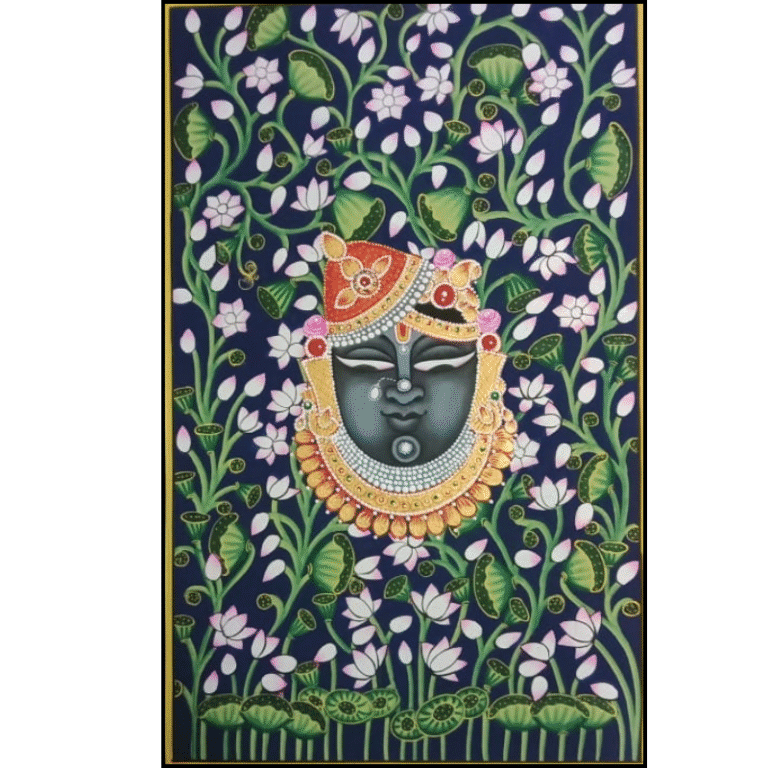
For over four hundred years, Pichwai paintings have whispered the divine tales of Lord Krishna through thread, pigment, and gold. Born not in an artist’s studio, but in the hallowed silence of the Shrinathji Temple in Nathdwara, these were more than art—they were acts of devotion. Today, that same spiritual elegance is finding a new home, moving from ancient temple walls to grace modern apartments in Mumbai, New York, and beyond. How did this intimate temple tradition become a global design statement? Let’s trace its remarkable journey.
Roots in Devotion: The Heart of Nathdwara
For over four hundred years, Pichwai paintings have whispered the divine tales of Lord Krishna through thread, pigment, and gold. Born not in an artist’s studio, but in the hallowed silence of the Shrinathji Temple in Nathdwara, these were more than art—they were acts of devotion. Today, that same spiritual elegance is finding a new home, moving from ancient temple walls to grace modern apartments in Mumbai, New York, and beyond. How did this intimate temple tradition become a global design statement? Let’s trace its remarkable journey.
A 17th-Century Beginning
The story starts in the 1600s in Rajasthan. As the devotional sect of Pushtimarg flourished, artisans began creating elaborate cloth hangings, or ‘Pichwais’ (literally ‘that which hangs at the back’), to adorn the shrine of Shrinathji. Each piece was a visual hymn, changing with the seasons and festivals to reflect the mood of the deity.
More Than Decoration
In the temple, a Pichwai was never just a backdrop. It was a sacred tool for storytelling, designed to draw devotees deeper into Krishna’s leelas—his celestial dances, his mischievous childhood, his loving reign in Vrindavan. The art was, and for many still is, a portal to the divine.
The Artist’s Language: Symbols & Strokes
A Familiar Visual Poetry
Recognize a Pichwai by its enchanting vocabulary. There’s often Shrinathji himself, depicted as a seven-year-old child lifting Govardhan Hill. Around him unfolds a world of symbols: the loyal cow for purity, the blooming lotus for spiritual awakening, and the dancing peacock for joyous celebration. Every element is intentional, a piece of a larger spiritual narrative.
A Labor of Love and Natural Hues
The traditional process is meditative. Artists grind minerals, stones, and plants to create a vibrant, natural palette. Intricate brushwork builds layers of detail, often punctuated with delicate gold leaf work that catches the light like a blessing. This isn’t fast art; it’s a patient offering of skill and time.
Crossing the Threshold: From Sacred to Global
The Move to Modern Spaces
The shift began when art connoisseurs looked beyond the religious context and saw unparalleled artistic mastery. The intricate craftsmanship, the harmony of color, and the sheer narrative depth made Pichwais irresistible. They began appearing in art galleries, luxury hotels, and the homes of collectors who valued storytelling in art.
Inspiring Contemporary Creations
Modern artists and designers haven’t just hung Pichwais; they’ve conversed with them. We now see Pichwai-inspired motifs on textiles, its color palettes influencing interiors, and its themes reimagined in abstract forms. This dialogue doesn’t dilute the tradition; it introduces its beauty to new audiences in fresh, relevant ways.
The New Spiritual Decor: Pichwais in Today’s Home
A Global Showcase
From the Victoria & Albert Museum in London to specialized exhibitions in Singapore and New York, Pichwai art has claimed its spot on the world stage. This international acclaim celebrates Indian heritage while proving that true beauty transcends cultural boundaries.
The Soul of a Room
Why does a modern minimalist or a bohemian chic interior embrace a Pichwai? Because it adds soul. In a living room, it becomes a profound focal point. In a meditation nook, it sets a serene tone. It’s a conversation starter that speaks of history, artistry, and a search for meaning—something mass-produced art often lacks.
Keeping the Tradition Alive: The Path Ahead
Guardians of the Craft
The future of Pichwai rests in the hands of its master artisans and the organizations that support them. Through workshops, cooperatives, and direct patronage, they are ensuring that young artists find both purpose and livelihood in this demanding craft.
The Challenge of Authenticity
The real threat isn’t obscurity, but dilution. Machine-made prints and rushed imitations flood the market. The challenge lies in helping the world value the slow, hand-painted authenticity of a true Pichwai over a cheap replica. The growing desire for sustainable, meaningful art is a hopeful sign.
Conclusion: An Enduring Legacy
The evolution of Pichwai paintings is a testament to art’s power to adapt without losing its essence. It has traveled from the flickering lamps of a Rajasthani temple to the spotlight of a global gallery, all while holding onto its devotional core. When you bring a Pichwai into your home today, you’re not just acquiring decor. You’re preserving a lineage, hosting a piece of silent poetry, and keeping a centuries-old prayer alive—one beautiful brushstroke at a time.