
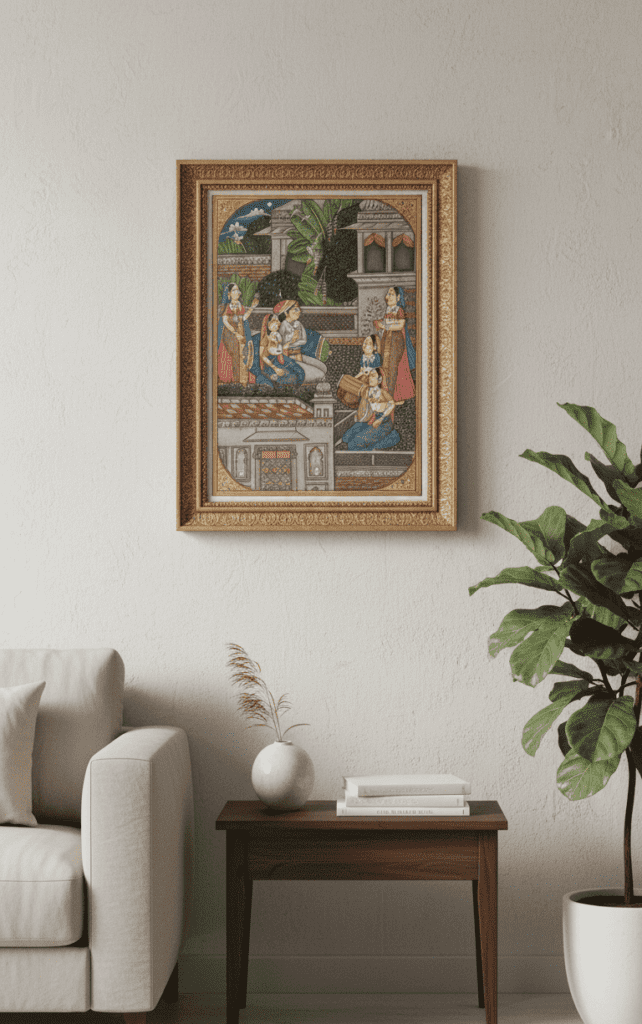
Mughal Painting: A Glorious Legacy of the Mughal Empire Period
Mughal painting stands as one of the most magnificent and enduring glorious legacies of the Mughal Empire period. This exquisite art form, flourishing from the 16th to the 19th centuries, represents a perfect fusion of Persian elegance and Indian vibrancy under imperial patronage. More than just beautiful miniatures, these artworks are vivid historical documents, capturing the empire’s soul—from royal grandeur and epic battles to intimate portraits and scientific nature studies. This guide delves into the rich journey of Mughal painting, exploring its history, characteristics, and the timeless legacy it left on the world of art.
Table of Contents
1. Origins: The Imperial Foundation of an Art Form
The glorious legacy of Mughal painting began with the empire itself. Its roots lie in Persian miniature traditions, but it was under the visionary Emperor Akbar (r. 1556–1605) that a distinct, imperial style was born. Akbar established formal workshops (kitabkhana) and fostered a unique collaboration between Persian masters like Mir Sayyid Ali and Indian artists. This synthesis created a dynamic new art form that became a hallmark of Mughal cultural identity, setting the stage for a centuries-long artistic legacy.
2. Evolution: A Glorious Legacy Forged by Mughal Emperors
The development of this art is inextricably linked to the tastes and patronage of the Mughal rulers, each adding a new chapter to its legacy.
Akbar’s Era: The Founding Vision
Akbar’s reign transformed painting into a major state activity. Monumental projects like the Hamzanama (a 14-volume epic) involved hundreds of artists. The style was energetic, narrative-driven, and celebrated movement and color, laying the robust foundation of the Mughal Empire’s artistic legacy.
Jahangir’s Era: The Zenith of Realism
A true connoisseur, Jahangir led Mughal painting to its peak of refinement. His passion for realism resulted in breathtakingly accurate portraits and unparalleled studies of flora and fauna (by artists like Ustad Mansur). This period represents the most glorious technical and naturalistic achievement of the Mughal painting legacy.
Shah Jahan’s Era: Opulence Perfected
Reflecting his architectural marvels, the art under Shah Jahan became synonymous with opulence. Paintings featured formal grandeur, perfect symmetry, lavish gold detail, and intricate architectural backgrounds, showcasing the empire’s wealth and aesthetic ideal.
Aurangzeb & Beyond: Diffusion of a Legacy
While imperial patronage declined under Aurangzeb, the glorious legacy did not vanish. Artists migrated to regional courts in Lucknow, Hyderabad, and Rajputana. This diffusion enriched local styles and led to new hybrids like Company Paintings, proving the adaptability and enduring influence of the Mughal art form.
3. Defining Characteristics of Mughal Empire Art
Miniature Scale, Maximal Detail: Small, intimate works showcasing incredible precision.
Realistic Portraiture: Lifelike depictions that capture the personality of the subject.
Cultural Synthesis: A seamless blend of Persian linework and composition with Indian color palettes and themes.
Diverse Imperial Themes: Court life, hunts, battles, mythology, and nature studies.
Vivid Pigments & Technique: Use of hand-ground natural colors and fine brushwork.
4. Master Artists: The Creators of the Legacy
This legacy was built by extraordinary talents:
Mir Sayyid Ali & Abd al-Samad: Persian founders of the atelier.
Basawan: Master of composition and expression.
Ustad Mansur: Jahangir’s “Wonder Painter” of natural history.
Bichitr: Known for allegorical portraiture incorporating European elements.
5. Interactions: Mughal Art in the Indian Tapestry
The Mughal painting legacy actively interacted with other schools:
Rajput Painting: Influenced Rajput art’s secular court scenes, while absorbing its vibrant symbolism.
Deccan Painting: Created intense, mystical hybrids after Mughal expansion southwards.
6. Decline and the Persistence of a Glorious Legacy
The weakening empire slowed production, but the legacy was secured. Its influence is etched into the DNA of subsequent Indian art. Today, original works are treasured holdings in global institutions like the Victoria & Albert Museum and the National Museum, Delhi, preserving this glorious legacy of the Mughal Empire period for scholars and the public.
7. The Modern Revival: Carrying the Legacy Forward
In cities like Jaipur and Udaipur, master artists keep the tradition alive. Using ancient techniques—handmade paper (wasli), mineral pigments, squirrel-hair brushes—they create contemporary miniatures. This revival allows collectors to own a piece of this continuing glorious legacy, ensuring the art form remains a living tradition, not just a historical relic.
8. Conclusion: An Enduring Testament to the Mughal Empire
Mughal painting is, without doubt, a glorious legacy of the Mughal Empire period. It transcends its role as art to become a historical narrative, a testament to cultural synthesis, and a benchmark for artistic excellence. From Akbar’s dynamic workshops to the delicate naturalism of Jahangir’s court, this legacy offers a timeless window into an empire’s soul. It remains one of India’s most significant contributions to global heritage, a legacy that continues to inspire awe and admiration centuries later.
References & Further Reading:
The Metropolitan Museum of Art – Mughal Painting
Victoria & Albert Museum – Mughal Miniature Paintings
Khan Academy – Mughal Miniature Painting
Encyclopaedia Britannica – Mughal Painting
Explore the Legacy: Discover our collection of contemporary handmade miniature paintings that continue this centuries-old tradition.