If you've been searching for a lotus pichwai painting to bring home, you've probably noticed two things: every listing looks slightly different, and prices swing wildly from a few thousand rupees to well over a lakh. This guide walks through what a lotus pichwai painting actually is, what the lotus (and the cows that often appear beside it) symbolize, which size suits your wall, what you should expect to pay, and how to spot a genuinely handmade piece — like the ones handpainted by our artisan Jagdish in the Nathdwara tradition.
What Is a Lotus Pichwai Painting?
Pichwai is a devotional art form that originated over 400 years ago in Nathdwara, Rajasthan, as a backdrop hung behind the idol of Shrinathji — a child form of Lord Krishna — in his temple. The word itself comes from "pich" (back) and "wai" (hanging). Traditional pichwai paintings depicted Krishna's leelas in the lush groves of Vrindavan, and over time, a few motifs became central to the art form: cows, gopis, peacocks, and — most enduringly — the lotus.
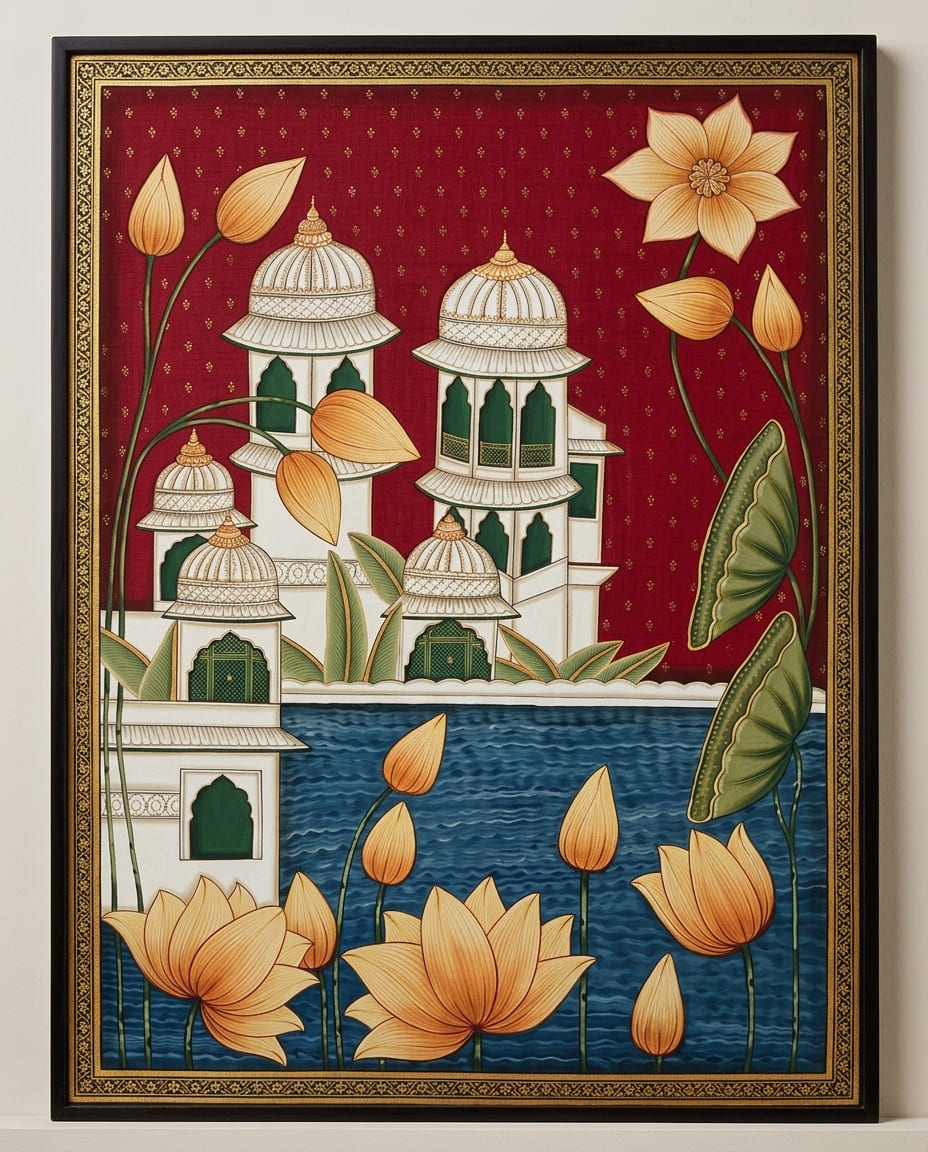
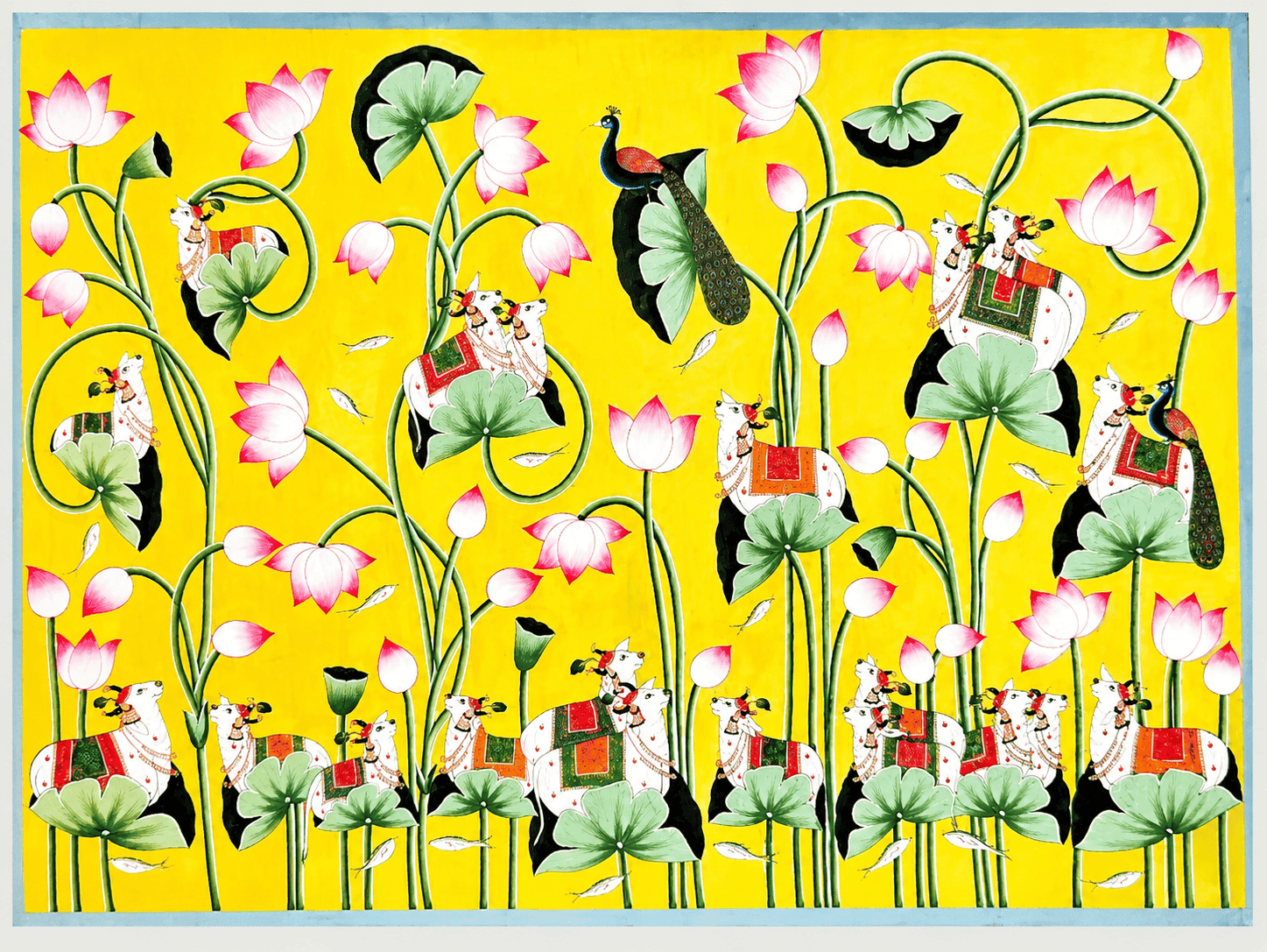
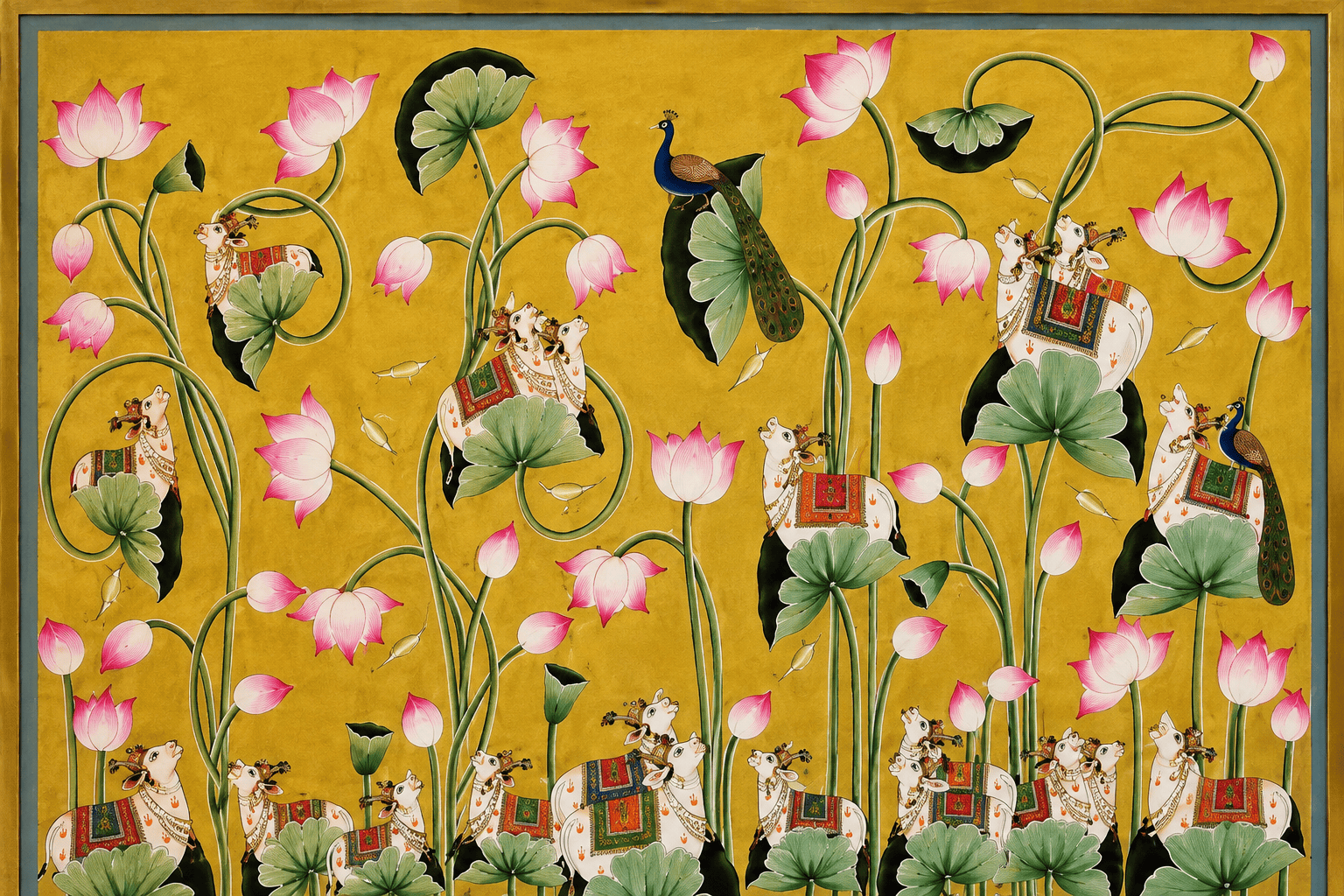
A lotus pichwai painting is a piece where the lotus takes center stage, often shown in full bloom across a pond or garden, sometimes framing sacred cows or a peacock, and painted on cotton cloth with natural or mineral colours in the same style once reserved for temple interiors.
The Symbolism of Lotus and Cow in Pichwai Art
The lotus isn't decorative filler — it carries specific meaning in Indian art traditions. Rising clean and untouched out of muddy water, it's long stood for purity, spiritual awakening, and renewal. In pichwai compositions, artists use it to frame the divine, creating a sense of sanctity around the central figure.
When cows appear alongside the lotus — as in a lotus painting with cow — the symbolism deepens. Cows represent Krishna's beloved companions in Vrindavan and are tied to gau seva (cow devotion), abundance, and prosperity. Vastu tradition also considers cow motifs auspicious for the north wall of a home, since cows are associated with Lakshmi and wealth. A peacock, when included, adds a note of grace and joy — it's said to have danced in celebration of Krishna's flute.
Together, a lotus, cow, and peacock composition isn't just visually rich — it's a deliberate blend of purity, devotion, and prosperity in a single frame.
Lotus Pichwai Painting Sizes: Which One Fits Your Wall?
Pichwai paintings are traditionally sold unframed and by size, and the right size depends entirely on where you're hanging it:
Size (W x H) Best for Notes
36" x 24" Entryways, dining walls, medium living room walls, above a console or sideboard A versatile in-between size — enough presence to be a focal point without needing an oversized wall
48" x 36" Feature walls, above a sofa, large living rooms A true statement piece; works best on walls spanning 8 feet or more, positioned so the centre sits around eye level
A useful placement note: since a lotus pichwai painting (without deity figures) is primarily decorative, it can go on virtually any wall in the house — living room, hallway, or bedroom. If cows are part of the composition, many people specifically choose the north wall, in keeping with the Vastu association between cows and prosperity.
How Much Does a Lotus Pichwai Painting Cost?
Pichwai pricing varies enormously depending on size, material, and how the piece was made — and this is where a lot of buyers get confused. Broadly, the market splits into a few tiers:
• Entry-level (paper or small prints): roughly ₹3,000–₹10,000. These are often printed or use paper rather than cloth, and are typically small (under 20x24 inches).
• Mid-range handmade (cotton cloth, natural colours): roughly ₹10,000–₹50,000, depending on size and detail. This is where most genuinely handmade small-to-medium lotus pichwai paintings sit.
• Premium/statement pieces (larger format, intricate detailing, mineral colours or linen): ₹50,000–₹1,50,000+. Large feature-wall pieces, especially those with multiple motifs (lotus, cows, peacock, Shrinathji) fall in this range.
• Museum-quality or commissioned works: can run into several lakhs, particularly for antique-style or gold-leaf pieces by recognised master artists.
The biggest price driver isn't just size — it's material. A painting on paper will always cost less than one on cotton cloth, and cotton cloth costs less than mineral-pigment work on linen. When you're comparing prices across sellers, always check what the painting is actually made on before comparing the number.
Meet the Artisan Behind Rupasya's Lotus Pichwai Paintings
Every lotus pichwai painting at Rupasya is handpainted by Jagdish, a traditional artisan working in the centuries-old Nathdwara style — the same style once reserved for the walls behind Shrinathji's idol. Each piece is done entirely by hand using cotton cloth and natural colours, with no printing or mass production involved, which is part of why no two paintings are ever identical.
Caring for a Handmade Lotus Pichwai Painting
Since these are hand-painted on cloth rather than printed, a little care goes a long way:
• Keep the painting away from direct sunlight to preserve the natural colours
• Wipe gently with a soft, dry cloth — never a wet one
• Frame it if it will hang in a high-traffic area, to protect the edges
• Avoid hanging in bathrooms, kitchens, or anywhere with high humidity
Where to Buy an Authentic Lotus Pichwai Painting
If you're looking for a handmade lotus pichwai painting with sacred cows and a peacock, Rupasya's piece — handpainted by Jagdish on cotton cloth — is available in two sizes: 36" x 24" for medium walls and entryways, and 48" x 36" for larger feature walls. Both can also be custom-recreated to your exact dimensions on request.
Frequently Asked Questions
What does the lotus mean in pichwai paintings? The lotus symbolizes purity and spiritual awakening — rising clean out of muddy water, it represents rising above worldly attachment.
What size pichwai painting is best for a living room? For most living rooms, a 36x24 inch piece works well above a console or side wall, while a 48x36 inch piece suits a larger feature wall or space above a sofa.
How much does a genuine handmade lotus pichwai painting cost? Expect to pay roughly ₹10,000–₹50,000 for a mid-size handmade piece on cotton cloth, and ₹50,000 upward for large statement pieces with intricate detailing.
Is a lotus pichwai painting good for vastu? Yes — since it doesn't include deity figures, a lotus pichwai painting is considered suitable for any wall in the home. If cows are included, the north wall is traditionally preferred.