Pichwai Paintings of Nathdwara: Sacred Art, Divine History & Cultural Legacy
Pichwai-Paintings |
April 27, 2026
In the sacred temple town of Nathdwara in Rajasthan's Aravalli hills, a devotional art form emerged over 400 years ago that would become one of India's most intricate and spiritually significant artistic traditions. Pichwai paintings of Nathdwara are far more than decorative art—they are visual prayers, textile narratives of divine love, and living testaments to centuries of unwavering devotion to Lord Krishna in his child form as Shrinathji.
What is Pichwai Painting? Etymology and Sacred Purpose
The word "Pichwai" (also spelled Pichhwai, Pichhvai, or Pichvai) derives from the Sanskrit words "pich" meaning "back" and "wai" meaning "hanging" or "textile." Together, they literally translate to "that which hangs at the back"—a direct reference to these paintings' original sacred function.
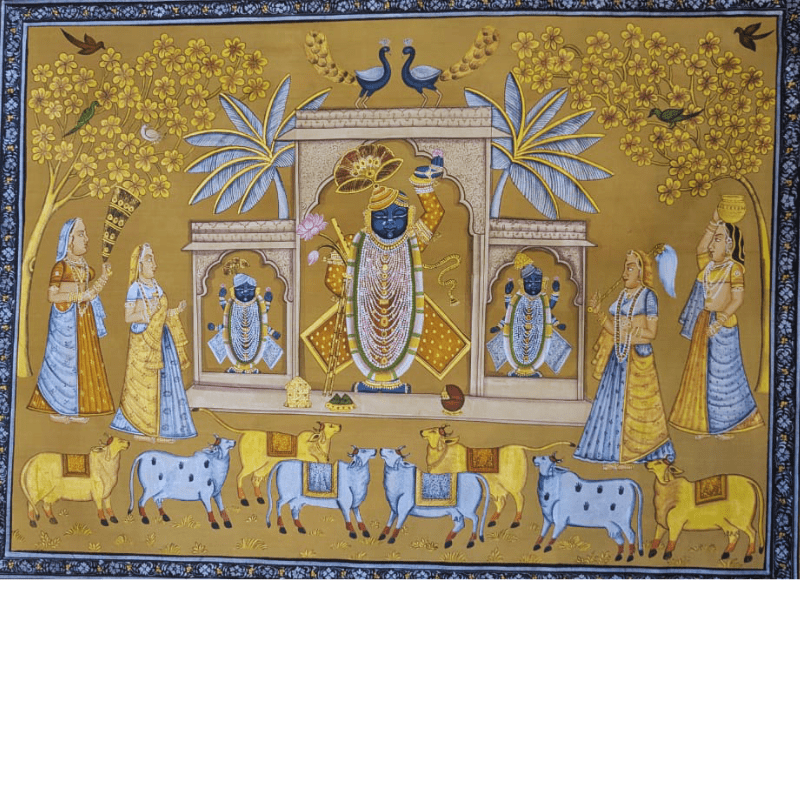
Pichwai paintings were created exclusively as large devotional backdrops hung behind the murti (idol) of Shrinathji in the renowned Nathdwara temple. These weren't merely decorative backgrounds; they were integral to temple worship, changed throughout the year to reflect different seasons, festivals, and times of day.
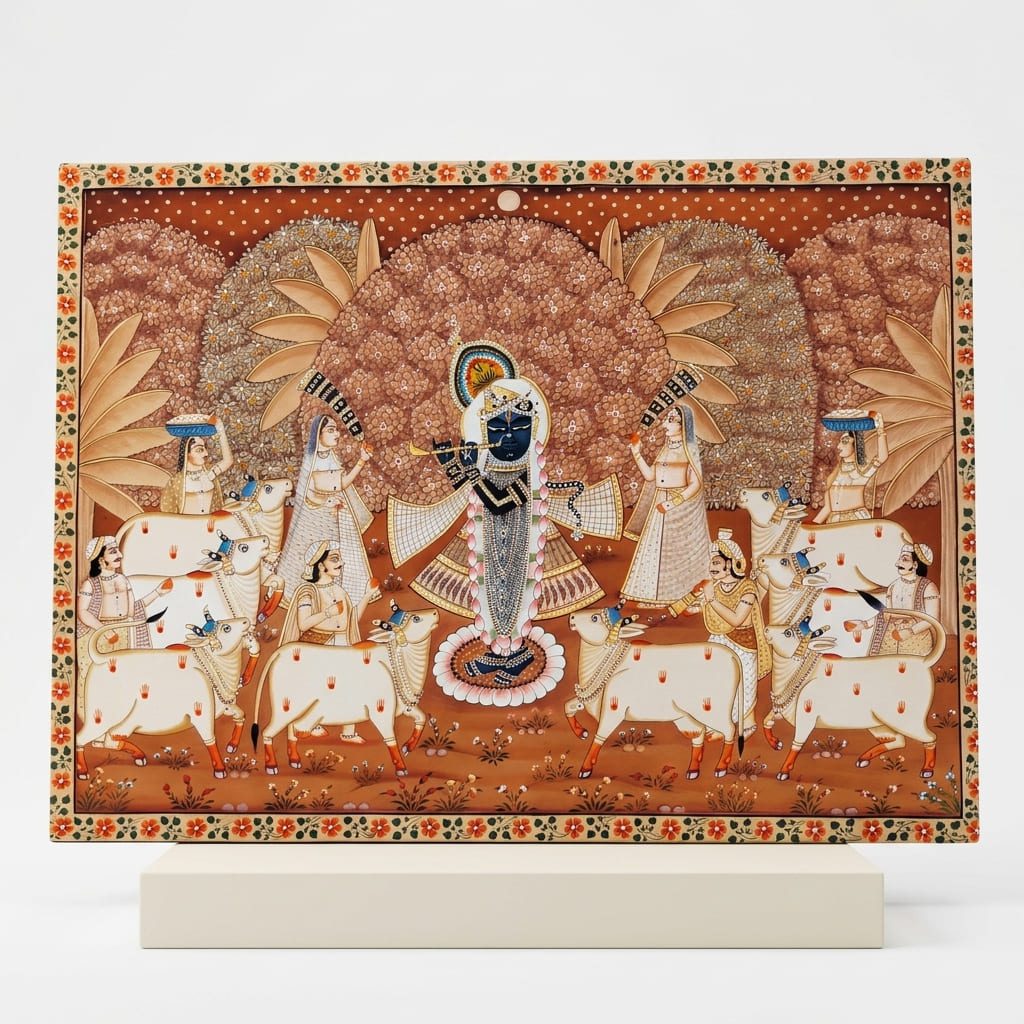
Each Pichwai served as a visual setting for Shrinathji's divine presence—depicting the lush forests of Vrindavan, the sacred Govardhan hill, lotus-filled ponds, celebratory festivals, or peaceful pastoral scenes with cows and gopis. The paintings helped devotees visualize the deity's cosmic pastimes and deepen their spiritual connection.
The Divine History: How Pichwai Art Began
The story of Pichwai paintings is inseparable from the history of the Pushtimarg (Path of Grace) devotional sect and the miraculous journey of Shrinathji's idol to Nathdwara.
The Journey from Mathura (17th Century):
In 1669, during Mughal emperor Aurangzeb's reign of religious intolerance, the sacred idol of Shrinathji was being transported from Mathura to protect it from destruction. The bullock cart carrying the deity became stuck in the mud at a small village called Sinhad (now Nathdwara) near Udaipur.
Devotees interpreted this as Shrinathji's divine will—the child deity wished to remain here. Local Maharana Raj Singh of Mewar welcomed the deity, and thus the magnificent Shrinathji temple was established in 1672, transforming the village into Nathdwara—"Gateway to the Lord."
Birth of Pichwai Tradition:
As the temple's worship practices developed under the Pushtimarg tradition (founded by Shri Vallabhacharya in the 16th century), devotional art became central to daily rituals. The temple priests and devotees began commissioning elaborate cloth paintings to serve as backdrops for different seasons and celebrations.
Artists who had previously created miniature paintings for royal courts were invited to Nathdwara. They brought their technical mastery but adapted it to devotional themes and large-scale format, thus giving birth to the distinct Pichwai style—combining miniature painting's intricate detailing with textile art's grand scale.
Traditional Pichwai Painting Techniques: A Sacred Craft
Creating an authentic Pichwai painting of Nathdwara is an extraordinarily labor-intensive process requiring specialized skills passed down through artisan families for generations.
Step 1: Preparing the Canvas (Cloth Selection & Treatment)
Traditional Pichwai artists begin with handspun cotton cloth or fine silk. The fabric is first washed multiple times to remove natural oils and impurities. It's then treated with a mixture of natural starch (from rice or wheat flour) and water, creating a slightly stiffened surface that accepts pigments without bleeding.
Some artists use chalk powder (khadi mitti) mixed into the starch to create an even smoother, bright white base. The cloth is then stretched and pegged tautly to a wooden frame, ensuring it remains flat during the months-long painting process.
Step 2: Creating the Preliminary Sketch (Rekha)
Using charcoal sticks or diluted natural black pigment with extremely fine brushes, the master artist draws the initial outline. This stage requires profound knowledge of traditional iconography—the exact postures of Shrinathji, proportions of cows, symbolic placement of lotus blooms, and architectural elements.
For complex narrative scenes, multiple artists may work together under a master's guidance, with each specialist responsible for particular elements (figures, landscapes, architectural details, borders).
Step 3: Preparing Natural Pigments (Rang Taiyari)
This is perhaps the most time-consuming and skillful aspect. Authentic Pichwai paintings never use synthetic paints—colors come from grinding stones, minerals, and natural materials:
Natural Blues:
- Indigo (deep, earthy blue from indigo plant)
- Lapis lazuli (brilliant azure from crushed semi-precious stone)
- Prussian blue (later addition, still considered traditional)
Lush Greens:
- Malachite (brilliant green from copper ore)
- Emerald green (copper-based mineral)
- Terra verte (natural earth green)
Golden Yellows:
- Yellow ochre (iron oxide earth)
- Orpiment (arsenic sulfide mineral—toxic but vivid)
- Turmeric and saffron (plant-based yellows)
Whites and Blacks:
- Zinc white (mineral-based pure white)
- Lead white (traditional, now less common)
- Carbon black (from lamp soot or charcoal)
Each pigment must be individually ground to extremely fine powder using mortar and pestle, then mixed with natural binding agents like gum arabic, animal glue, or egg tempera. The consistency must be perfect—too thin and colors lack depth; too thick and they crack or flake.
Step 4: Base Color Application (Bhumi Rang)
Artists first apply broad background colors—the rich reds, deep blues, or earthy greens that form Pichwai paintings' signature vibrant backdrops. This step requires 3-4 layers, with each coat drying completely before the next application. The layering creates depth and luminosity impossible in printed reproductions.
Step 5: Detailed Painting (Chitrakam)
Using brushes made from squirrel tail hair, goat hair, or even single strands of camel hair for the finest details, artists painstakingly render every element:
- The intricate jewelry on Shrinathji and cows (each chain, pendant, bell, and pearl painted individually)
- The facial expressions conveying divine bhav (spiritual mood)
- The delicate veins and shading in lotus petals
- The fine embroidery patterns on clothing
- The architectural details of temple structures
- The playful or devotional postures of gopis
This stage can take weeks or months depending on the painting's size and complexity. A 4-foot by 5-foot traditional Pichwai might require 4-6 months of continuous work by a team of 2-3 artists.
Step 6: Gold and Silver Foil Work (Sona-Chandi Ka Kaam)
One of Pichwai art's most distinctive features is the liberal use of genuine 22K or 24K gold leaf and silver foil. This isn't merely decorative—in devotional tradition, only the purest metals are worthy to adorn representations of the divine.
The gold leafing process involves:
1. Applying a thin layer of special adhesive (traditionally made from egg white or natural gum)
2. Carefully placing delicate gold leaf sheets (thinner than tissue paper)
3. Gently pressing them down with soft brushes or cotton
4. Burnishing to create a polished sheen
5. Sometimes embossing patterns into the gold for three-dimensional effects
Gold is used for:
- All deity jewelry (necklaces, crowns, armlets, anklets)
- Temple architectural details
- Decorative borders and floral motifs
- Cow ornaments and bells
- Background embellishments
Silver foil creates white/light elements like moon and stars, or undercoat for gold to increase brilliance.
Step 7: Final Detailing and Border Work
Artists add the finest finishing touches—highlights in eyes, shadows creating depth, tiny decorative elements, and intricate border patterns that frame the central composition. Traditional Pichwai paintings often feature ornate borders with repeating geometric or floral patterns.
Step 8: Antique Finish (Optional)
Some artists apply special treatments to create an aged appearance, making new Pichwai paintings look like centuries-old temple treasures. This involves careful application of tea wash, subtle staining, or gentle distressing techniques that don't damage the artwork but give it an antique patina.
Every element in traditional Pichwai paintings carries deep spiritual meaning rooted in Krishna devotion:
Shrinathji (The Child Krishna):
Depicted as a seven-year-old boy holding up Mount Govardhan with his left hand, protecting villagers from Indra's wrath. His right hand is raised in blessing (abhaya mudra). He always faces forward, directly engaging devotees in darshan (sacred viewing).
Sacred Cows (Gau Mata & Kamdhenu):
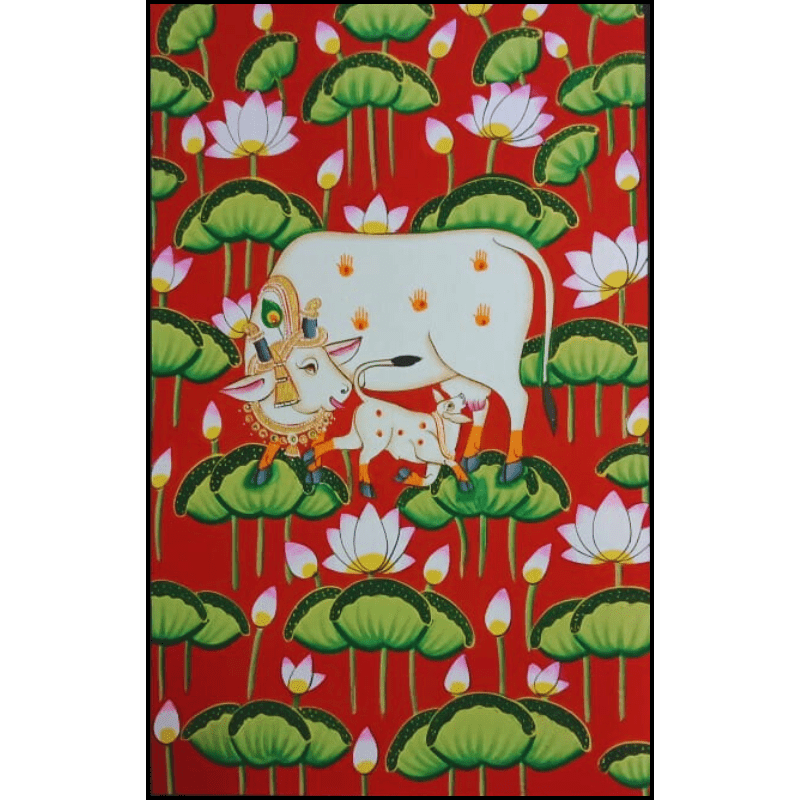
Cows are central to Krishna's identity as a cowherd (Gopala). They represent selfless nourishment, abundance, and motherly devotion. Kamdhenu, the divine wish-fulfilling cow, symbolizes prosperity and spiritual plenty. Cows in Pichwai paintings are always adorned with elaborate jewelry, flowers, and decorative cloths, showing their sacred status.
Lotus Flowers (Kamal):
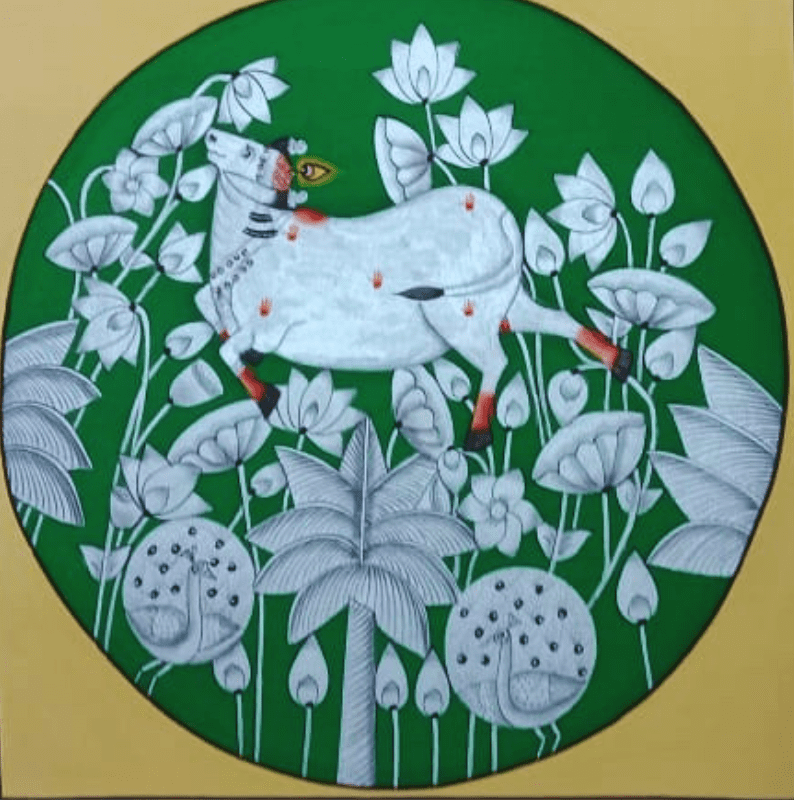
Pink, white, and sometimes golden lotuses bloom throughout Pichwai scenes. The lotus represents purity rising from muddy waters—spiritual enlightenment emerging from material existence. Lotus ponds (Kamal Talai) depict the sacred lakes of Vrindavan where Krishna played.
Peacocks (Mor):
Krishna's favorite birds, peacocks symbolize beauty, grace, and monsoon's arrival (associated with Krishna's playful rainy season pastimes). Their distinctive tail feathers appear in Shrinathji's crown (Mor Pankh mukut).
Gopis (Cowherd Maidens):
Devotees in female form, representing unconditional love for the divine. They're shown in worship postures, dancing in Raas Leela, or serving Shrinathji with offerings.
Kadamba Trees:
The sacred tree under which Krishna often sat and played his flute. Its dense foliage appears in many Pichwai compositions, creating forest settings.
Architectural Elements:
Temple structures, ornate arches (toranas), pavilions (chhatris), and decorative drapery situate scenes within palace or temple contexts, reflecting Shrinathji's royal treatment in Nathdwara temple rituals.
Seasonal and Festival Markers:
- Monsoon: Dark clouds, rain, dense greenery, peacocks
- Spring: Blooming flowers, vibrant colors, Holi celebrations
- Autumn: Sharad Purnima full moon, harvest abundance
- Winter: Warm tones, indoor palace scenes
Festival Themes in Pichwai Art
Traditional Pichwai paintings of Nathdwara were changed in the temple according to a ritual calendar, with specific paintings for each celebration:
Janmashtami:
Krishna's birth celebration showing baby Krishna, matki (butter pot) breaking scenes, or child Krishna being cradled.
Annakut (Govardhan Puja):
Mountains of food offerings (56 dishes) presented to Shrinathji, depicting the Annakut festival celebrating Krishna lifting Govardhan mountain. These are among the most elaborate Pichwai paintings with hundreds of detailed food items.
Raas Leela:
The divine circular dance of Krishna with the gopis under full moon, symbolizing the soul's union with the divine. These paintings overflow with movement, music, and devotional ecstasy.
Sharad Purnima:
Autumn full moon celebration, often showing Shrinathji with lotus blooms and moonlight scenes.
Gopashtami:
Cow worship festival, featuring elaborate depictions of decorated cows with Shrinathji in pastoral settings.
Holi:
Spring color festival scenes with Krishna and gopis playfully throwing colored powder and water.
Pavitra Ekadashi:
Sacred thread ceremony, showing Shrinathji adorned with special decorations.
Nand Mahotsav:
Celebrating Krishna's foster father Nand Maharaj, often showing celebratory processions and festivities.
Pichwai's Evolution: From Temple Walls to Contemporary Homes
While Pichwai paintings originated as sacred temple backdrops, their exquisite beauty has made them sought-after art pieces for homes, galleries, and museums worldwide.
19th-20th Century Transition:
As Nathdwara temple acquired multiple Pichwai paintings for rotation, older pieces removed from temple service began finding their way into private collections. Devotees and art connoisseurs recognized these weren't merely religious artifacts but exceptional artistic masterpieces.
Pichwai artists, traditionally temple-dependent, began creating paintings specifically for collectors while maintaining traditional techniques and iconography. The sacred subject matter remained, but sizes became more varied to fit residential spaces.
Contemporary Pichwai Art:
Today's Pichwai artists balance tradition with contemporary aesthetics:
Traditional Formats:
Large-scale temple-style paintings preserving every classical element, materials, and technique. These museum-quality pieces are sought by serious collectors and cultural institutions.
Modern Adaptations:
- Smaller formats (12"x12" to 24"x36") perfect for apartments and contemporary homes
- Simplified compositions focusing on single elements (one cow, lotus cluster, Shrinathji face)
- Canvas-based works alongside traditional cloth
- Modern color palettes while maintaining natural pigments
- Minimalist Pichwai borrowing motifs in contemporary artistic language
Commercial Evolution:
Unfortunately, Pichwai's popularity has led to mass-produced printed reproductions flooding the market. These lack hand-painting's soul, texture, and spiritual energy. Authentic Pichwai painting from Nathdwara artisans remains handmade, using traditional materials and methods passed through generations.
Pichwai painting is typically a hereditary art form, with knowledge passing from father to son (and increasingly to daughters) within artisan families based in Nathdwara, Udaipur, and surrounding villages.
Notable Pichwai Artist Lineages:
Many contemporary master artists are third, fourth, or even fifth-generation Pichwai painters whose grandfathers and great-grandfathers created temple paintings in the 19th and early 20th centuries. Some notable aspects:
Family Workshops:
Pichwai creation is often collaborative, with multiple family members working together—the master artist designing and painting key elements (especially Shrinathji's face and form), while assistants handle backgrounds, borders, and repetitive motifs.
Apprenticeship System:
Young artists spend 5-10 years learning under master painters, progressing from grinding pigments to painting borders, then simpler elements, and finally being trusted with figures and faces.
National Recognition:
Several Pichwai masters have received National Awards, State Awards, and Shilp Guru (Master Craftsperson) titles from the Indian government, recognizing their role in preserving cultural heritage.
Challenges:
Many talented young people leave the art form for more lucrative careers, threatening this tradition's continuity. Supporting authentic Pichwai artists through fair-price purchases helps sustain these hereditary artistic lineages.
Why Pichwai Paintings of Nathdwara Matter Today
In an age of mass production and digital art, authentic Pichwai paintings represent irreplaceable cultural treasures:
Spiritual Significance:
For devotees, these paintings create sacred spaces, serving as meditation focal points and visual embodiments of divine presence.
Cultural Preservation:
Each authentic purchase supports artisan families keeping this 400-year tradition alive against economic pressures favoring faster, cheaper production methods.
Artistic Excellence:
The technical mastery required—natural pigment preparation, miniature detailing, gold leaf application—represents one of world art's most demanding skill sets.
Living Heritage:
Unlike museum artifacts, Pichwai art remains a living tradition with active practitioners creating new works using unchanged ancient techniques.
Investment Value:
Works by recognized masters appreciate significantly over time as handmade traditional art becomes increasingly rare.
Experiencing Pichwai: Visiting Nathdwara
For true appreciation of Pichwai paintings of Nathdwara, visiting the art form's birthplace offers unparalleled insight:
Shrinathji Temple:
While temple interiors have photography restrictions, witnessing Pichwai paintings in their original sacred context—as backdrops for Shrinathji during daily aartis—is profoundly moving.
Artist Workshops:
Many Nathdwara and Udaipur-based Pichwai artists welcome visitors to their workshops (advance arrangement recommended). Watching masters at work, grinding pigments, applying gold foil, or painting intricate details, provides deep appreciation for the art's complexity.
Art Galleries:
Nathdwara has several galleries showcasing both antique and contemporary Pichwai paintings, allowing comparison of different styles, periods, and artist approaches.
Bringing Pichwai Heritage to Your Home
Whether you choose a cow Pichwai painting for its Vastu-approved prosperity symbolism, a Shrinathji darshan for spiritual presence, or a lotus pond for serene beauty, authentic Pichwai art transforms living spaces into sanctuaries of cultural richness.
At Rupasya, we source directly from hereditary Pichwai artist families in Nathdwara and Udaipur, ensuring every piece carries the authentic tradition's full weight. Our collection features:
- 100% handmade Pichwai paintings using natural stone pigments
- Real 22K and 24K gold and silver foil work
- Pieces created by multi-generational master artists
- Sizes ranging from 12"x12" to 72"x60" traditional formats
- Documentation of artist lineage and creation process
- Certificates of authenticity with each purchase
Explore the divine artistry of Nathdwara. Browse Rupasya's curated Pichwai collection featuring traditional temple art, sacred cow paintings, festival scenes, and lotus motifs—each piece a window into 400 years of devotional excellence.