Indian Miniature Paintings: Rajasthani & Mughal Miniature Art Guide (and Buying Tips)
miniature-painting |
April 20, 2026
Indian Miniature Paintings — A Complete Guide to Rajasthani & Mughal Art
Introduction
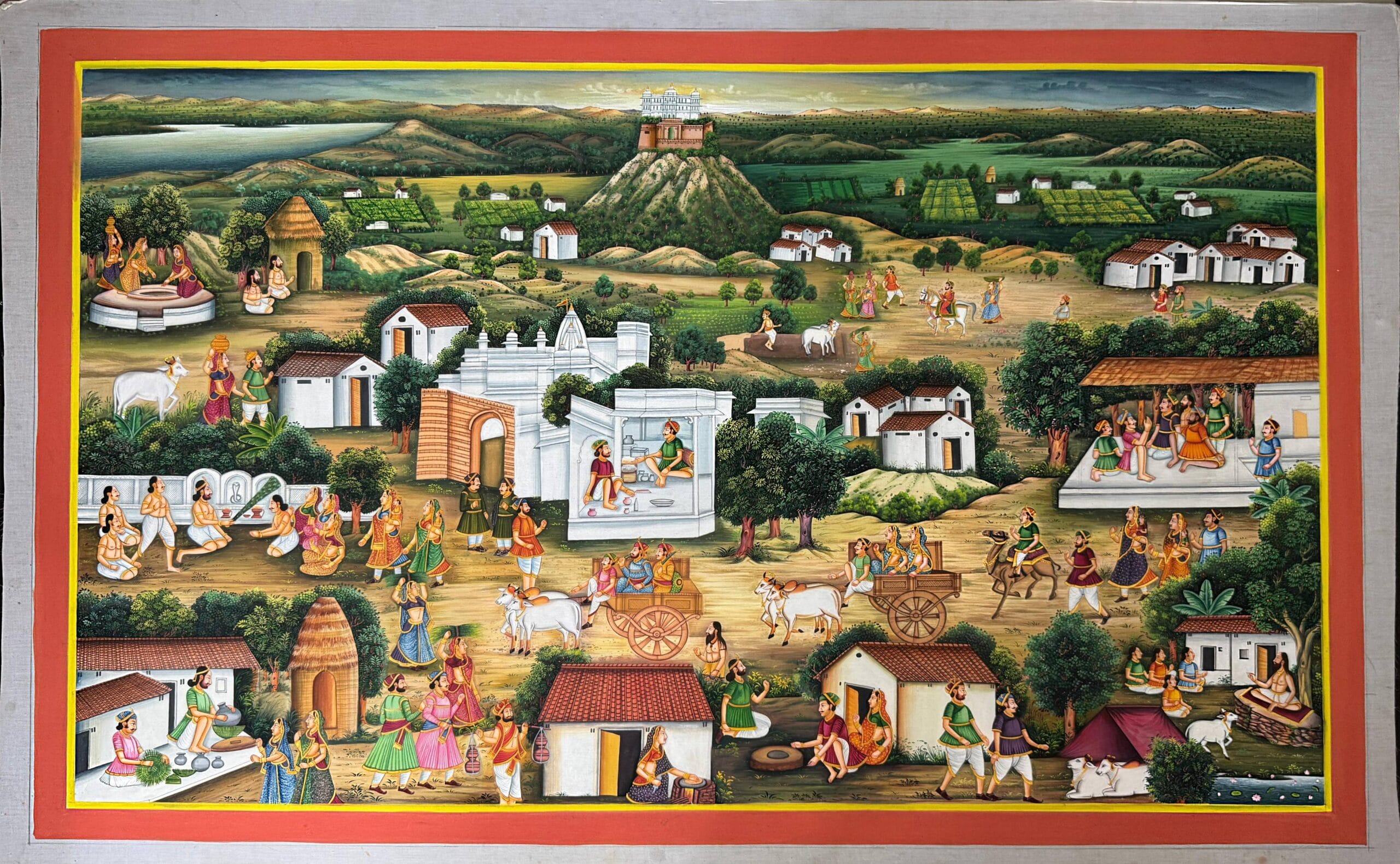
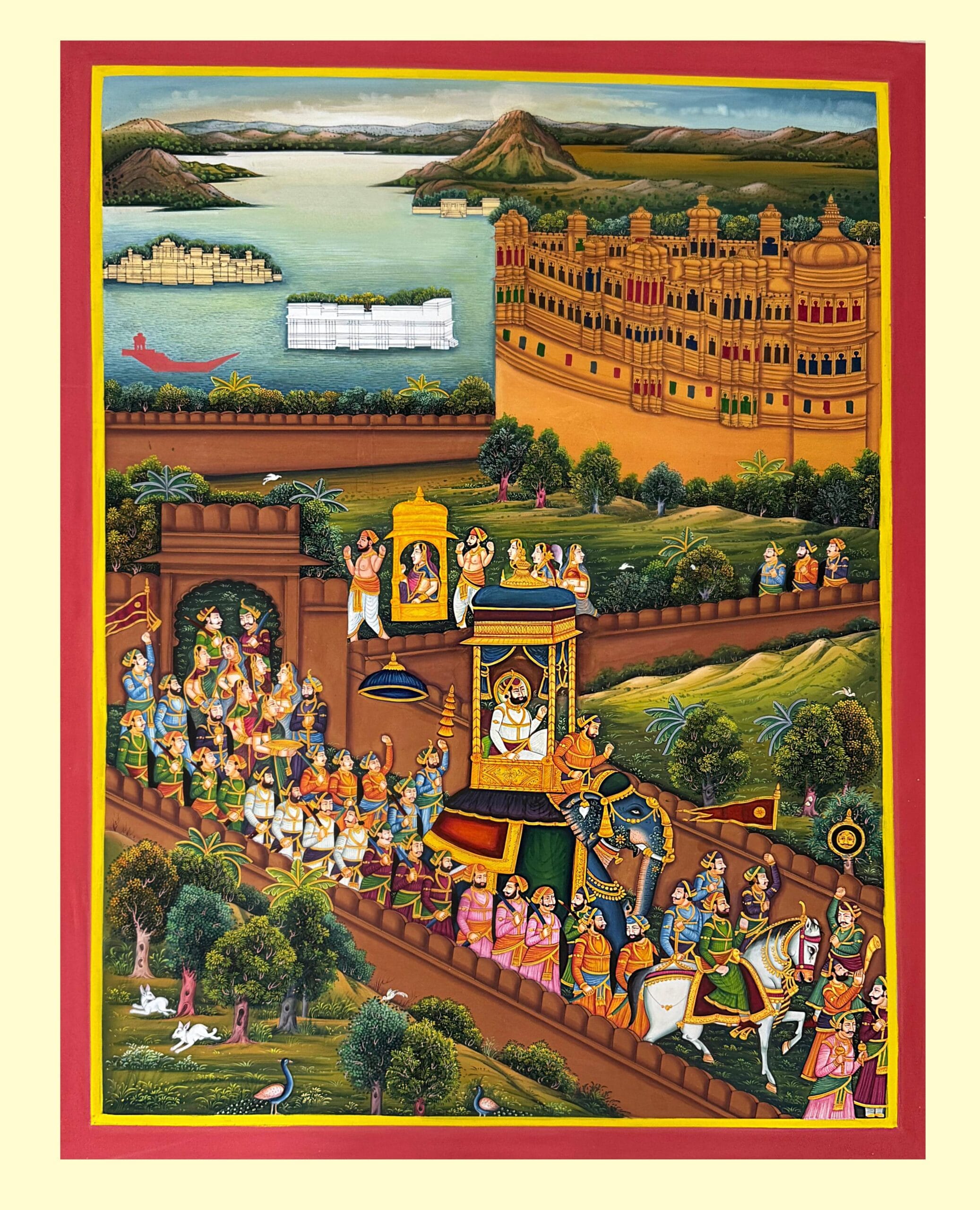
Indian miniature paintings are tiny works of incredible craftsmanship. Two major styles—Rajasthani miniature art and Mughal miniature paintings—have shaped the legacy of Indian court art. This guide covers their history, characteristics, how to identify originals, and how to buy authentic handmade pieces. Links and examples from Rupasya’s own collection are included for your convenience.
Indian miniature paintings are also known for their unique materials such as wasli paper, natural stone pigments, gold leaf detailing, and ultra-fine squirrel hair brushes.
Different schools like Kishangarh, Mewar, Bundi, Jaipur, and the Mughal ateliers contributed detailed portraits, court scenes, and devotional illustrations.
These styles form the core of terms like “Rajasthani miniature painting”, “Mughal miniature art”,
“traditional handmade miniature”, and “old-paper miniature painting” that collectors often search for.
History & Origins of Indian Miniature Paintings
Indian miniature paintings originated in medieval India, evolving from early Buddhist and Jain manuscript art through the Rajput and Mughal courts Wikipedia+1.
Under the Mughals (16th–19th centuries), palace ateliers combined Persian and Indian styles, producing highly detailed royal portraits and illustrated manuscripts such as the Hamzanama Humanities LibreTexts+2Google Arts & Culture+2
Early miniatures were painted on palm-leaf manuscripts until artists later adopted hand-made wasli paper for smoother detailing.
The layering method used in wasli paper is a signature element of authentic miniature art and still preferred by traditional painters.
Rajasthani Miniature Art (Rajput Style)
Flourishing in the princely courts of Rajasthan, Rajasthani painting (or Rajput painting) developed from the 16th century onward across schools like Mewar, Bundi, Bikaner, Jaipur, and Kishangarh Encyclopedia Britannica+2Wikipedia+2.
Known for bold, bright colour, simplified forms, and devotional themes—especially scenes of Krishna-Radha, epics, court festivals and hunting scenes Encyclopedia Britannica+1.
Popular Rajasthani schools include:
• Mewar (devotional scenes of Krishna)
• Bundi – romantic scenes and lush landscapes
• Kishangarh – elongated figures, especially Radha-Krishna
• Bikaner – fine Mughal influence
Each school has distinct visual cues that help identify original Rajput-style miniatures.
Mughal Miniature Painting
Emerging under emperors like Akbar, Jahangir and Shah Jahan, the Mughal school combined Persian finesse, European shading techniques, and Indian motifs. Royal life, flora, fauna, and manuscripts were common subjects Humanities LibreTexts+2NCERT+2.
Figures are rendered with realism, spatial perspective, and fine detail—different from the flat, stylized look of Rajasthani miniatures Humanities LibreTexts+1
Mughal artists used multiple shading layers, European chiaroscuro, and fine portrait accuracy to give a realistic effect.
The atelier under Jahangir was known for botanical illustrations and nature studies with unmatched fineness.
How Handmade Miniature Paintings Are Made
Materials & technique: Artists work on wasli paper—hand-made, layered, burnished paper (acid-free) to achieve a smooth surface Wikipedia. Natural mineral and plant pigments, gold and silver highlights, and squirrel-hair brushes are used for fine detailing Granthaalayah Publication+1.
Mention Rupasya’s handmade collection featuring Rajasthani miniature art and Mughal miniature paintings:
Rajasthani: https://rupasya.com/miniature-art-paintings/
Mughal: https://rupasya.com/mughal-miniature-paintings/
The painting process includes:
• Preparing wasli paper (4–5 layers glued and burnished)
• Sketching outlines using charcoal or red ochre (geru)
• Laying flat base tones
• Building micro layers for depth
• Adding ultra-fine details with 000 size brush
• Applying gold/silver leaf work
• Final burnishing for long life
Why Buy Handmade Rajasthani & Mughal Miniatures?
Originality & Authenticity: Handmade means real texture, pigment layering, gold leaf—not flat prints.
Artistic Value: These pieces reflect centuries-old heritage and craftsmanship.
Decor & Gifting: Ideal for collectors, home décor, corporate gifts.
How to Spot Authentic Miniature Paintings
Genuine wasli layered paper or silk backing—image should show slight thickness and texture.
Presence of hand-applied gold leaf and slight irregularities in brushwork.
Ask seller for provenance—school (e.g. Kishangarh, Mewar), artist name if available.
Look for known painters like Sahibdin (Mewar school) or those attributed to Ragamala series Wikipedia+2Wikipedia+2.