How to Identify Authentic Pichwai Paintings
Pichwai paintings represent one of India's most sacred and intricate art forms, with a 400-year legacy rooted in the temple town of Nathdwara, Rajasthan. If you're looking to invest in an original Pichwai painting, understanding authenticity, craftsmanship, and value is essential. This comprehensive guide will help you navigate the world of authentic Pichwai art and make an informed purchase.
What Makes a Pichwai Painting "Original"?
An original handmade Pichwai painting is far more than decorative wall art—it's a devotional masterpiece created using centuries-old techniques passed down through generations of Nathdwara artisans. Unlike mass-produced prints or digital reproductions, genuine Pichwai paintings are:
100% Hand-Painted: Every stroke is applied by skilled artists using fine squirrel or goat hair brushes, with some details requiring single-hair precision. The process can take anywhere from 2 weeks for smaller pieces to 4-6 months for large-scale traditional works.
Natural Stone Pigments: Authentic Pichwai paintings use colors derived from grinding precious minerals and stones—lapis lazuli for deep blues, malachite for vibrant greens, and saffron for golden yellows. These natural pigments create depth and luminosity that synthetic paints cannot replicate.
Real Gold and Silver Foil: Traditional Pichwai artworks feature 22K or 24K gold leaf work and silver detailing, particularly in depicting deity jewelry, ornaments, and decorative borders. The gold is meticulously applied using traditional adhesives and embossed for a three-dimensional effect.
Cotton or Silk Base: Genuine pieces are painted on handspun starched cotton cloth or silk, prepared using traditional methods. The fabric is treated with natural starch to create the perfect surface for pigment absorption.
Understanding Pichwai Painting Prices: What Should You Pay?
The Pichwai painting price range varies significantly based on size, complexity, artist reputation, and materials used. Here's what you can expect in 2026:
Small Format (12" x 12" to 20" x 24"): ₹6,000 - ₹15,000
These are perfect for apartments, pooja rooms, or bedroom accent walls. They typically feature single motifs like lotus blooms, a sacred cow, or Shrinathji's face.
Medium Format (24" x 36" to 36" x 48"): ₹30,000 - ₹75,000
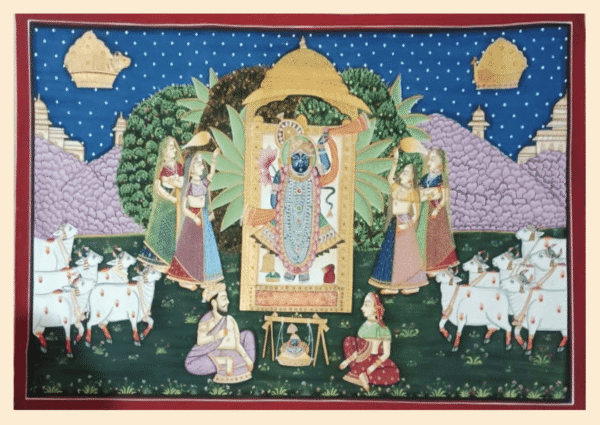
Ideal for living room focal points, these paintings showcase more elaborate scenes with multiple elements—Shrinathji with gopis, cow seva depictions, or festival celebrations with extensive gold work.
Large Traditional Format (48" x 60" and above): ₹1,00,000 - ₹5,00,000+
Museum-quality temple backdrops featuring complete narrative scenes with intricate miniature work, extensive gold foiling, and months of labor by master artists and their teams.
Investment-Grade Masterpieces: Above ₹5,00,000
Exceptional works by National Award-winning artists, antique-finish pieces, or large murals featuring multiple festivals, 24 swaroops of Shrinathji, or complete Raas Leela scenes.
The 7 Hallmarks of Authentic Handmade Pichwai Paintings
When shopping for original Pichwai paintings online, look for these unmistakable signs of authenticity:
1. Visible Brushstroke Texture
Tilt the painting under light. Authentic pieces show irregular brush strokes and slight variations in paint thickness. Hand-painted works have a subtle raised texture where pigment layers built up during creation. Prints appear completely flat and uniform.
2. Natural Color Variations
Stone-ground pigments create subtle tonal shifts within single color areas—the green of lotus leaves will show depth and variation. Printed reproductions display overly bright, synthetic-looking colors with no organic variation.
3. Intricate Miniature Detailing
Examine close-up areas: the folds in clothing, jewelry patterns, facial expressions, and the fine veins in lotus petals. Genuine Pichwai paintings reveal extraordinary precision that becomes more impressive under magnification. Prints blur or pixelate when examined closely.
4. Cotton Cloth Base with Visible Weave
Turn the painting to see the edges. Authentic pieces are on handspun cotton with visible natural fiber texture. The back side should show pigment absorption into the fabric. Prints are usually on synthetic canvas or paper with a plasticky feel.
5. Real Gold Leaf Application
Gold foil in genuine pieces has a warm, organic sheen with slight irregularities and embossed depth. It catches light at different angles with a living quality. Printed gold appears flat, metallic, and uniform—it looks painted rather than applied.
6. Traditional Iconography and Symbolism
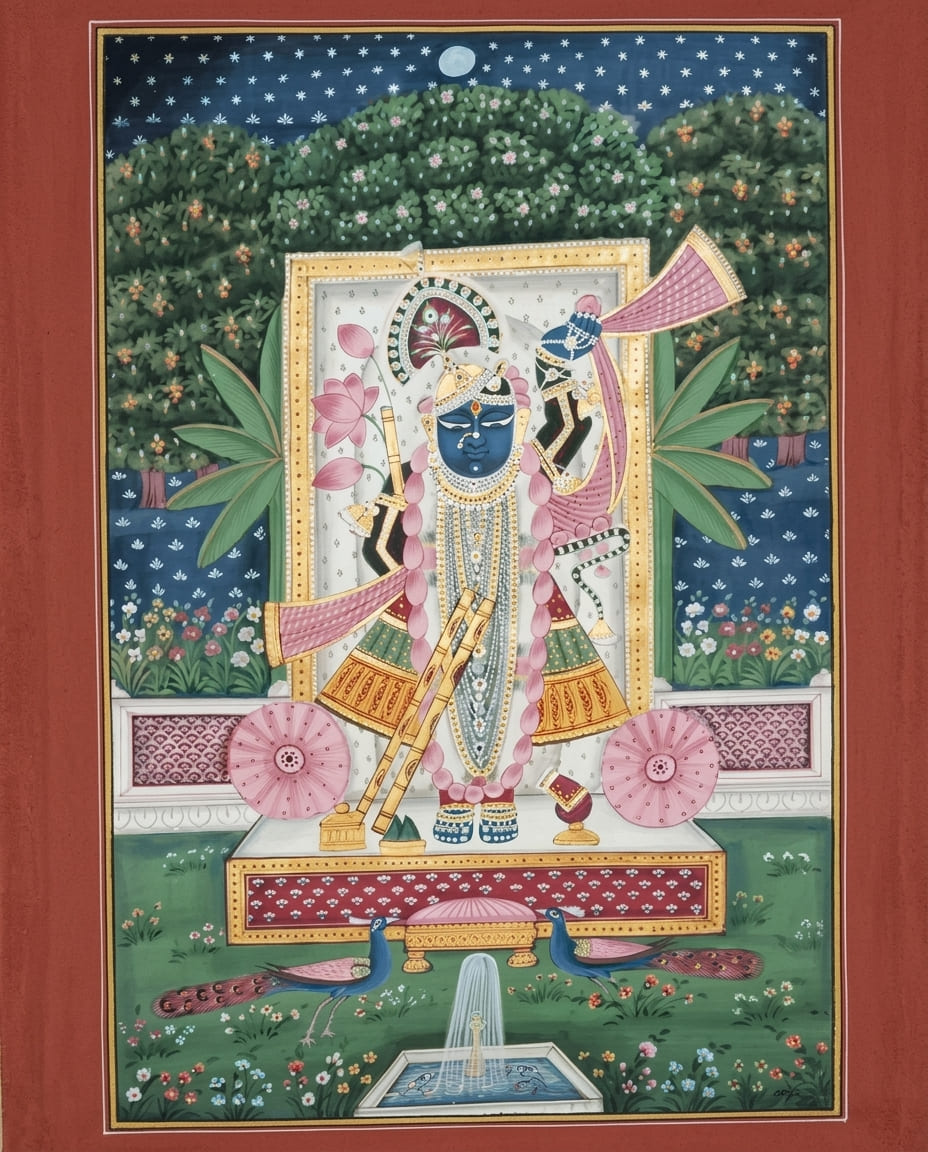
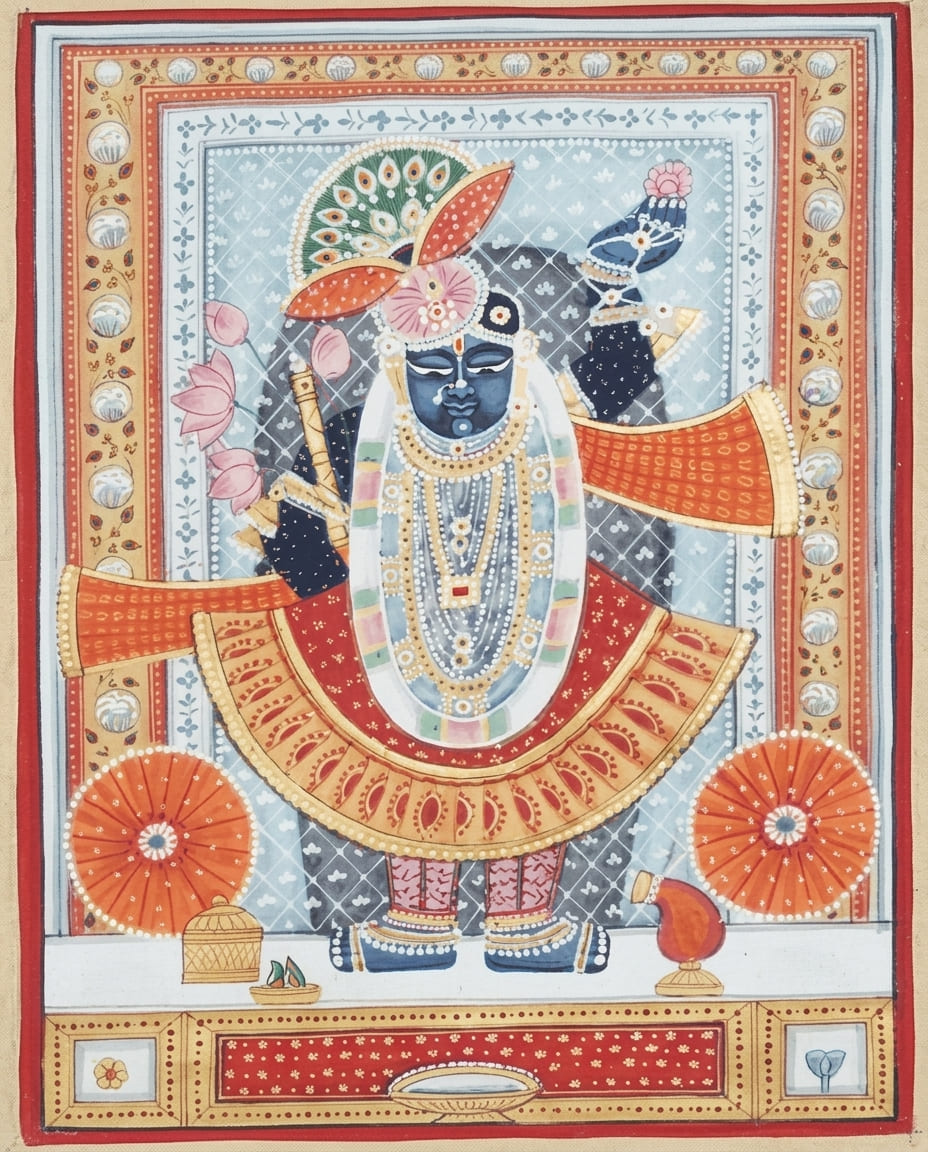
Authentic Pichwai follows traditional temple art conventions: Shrinathji's specific postures, cow adornments, lotus bloom patterns, and peacock placement all follow devotional rules. Master artists know these sacred principles intimately.
7. Artist Signature and Documentation
While historically Pichwai artists didn't sign their work (as it was sacred art dedicated to god), contemporary master artists now sign and date their pieces. Reputable sellers provide certificates of authenticity detailing the artist, materials used, and creation timeline.
Where to Buy Authentic Pichwai Paintings: Trusted Sources
The best place to buy Pichwai paintings depends on what you value most—direct artist access, curation, convenience, or price range:
Directly from Nathdwara/Udaipur Artisans:
Galleries like Rupasya source directly from hereditary Pichwai families in Rajasthan's art heritage centers. This ensures authenticity and fair pricing while supporting traditional artisan communities.
Benefits:
- Guaranteed authenticity with artist documentation
- Transparent pricing without multiple markups
- Direct lineage to 400-year tradition
- Custom size and theme options available
- Personal artist stories and creation insights
Established Online Art Platforms:
Reputable platforms curate authenticated works but typically add 30-50% markup for curation services. Useful for comparing multiple artists and styles in one place.
Gallery Visits in Art Districts:
Physical galleries in Delhi, Mumbai, Bangalore, or Jaipur allow you to examine pieces in person. However, limited inventory and high overhead costs often mean premium pricing.
What to Avoid:
- E-commerce marketplaces with suspiciously low prices (likely prints)
- Sellers who can't provide artist names or creation location
- Listings claiming "Pichwai-inspired" or "Pichwai-style" (code for reproductions)
- Pieces without material specifications (synthetic colors, no gold foil details)
Pichwai Painting Themes: Choosing the Right Subject
Pichwai paintings of Nathdwara follow specific iconographic traditions, each with deep spiritual significance:
Shrinathji Darshan:
The child form of Lord Krishna holding up Mount Govardhan. Perfect for pooja rooms and meditation spaces, symbolizing divine protection and strength.
Cow Pichwai Paintings (Gau Seva):
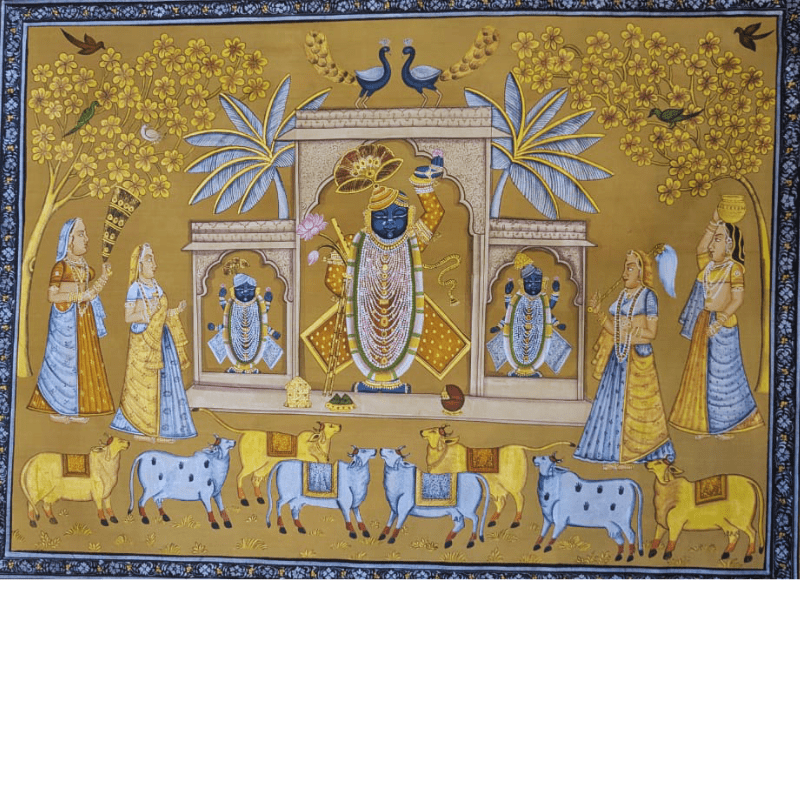
Sacred cows and Kamdhenu Pichwai paintings represent abundance, purity, and nourishment. Ideal for entrance areas and living rooms, bringing prosperity and positive energy according to Vastu principles.
Lotus Pond (Kamal Talai):
Blooming pink and white lotuses symbolize purity, spiritual awakening, and divine beauty. These make serene additions to bedrooms and wellness spaces.
Raas Leela:
Krishna dancing with the gopis under moonlight, celebrating divine love and devotion. Magnificent large-format pieces for formal living areas and cultural spaces.
Festival Scenes:
Annakoot (food offerings), Janmashtami (birth celebration), Sharad Purnima (full moon festivities), Holi, and Gopashtami. These vibrant works bring festive energy year-round.
Tree of Life:
Ancient motif representing cosmic connection and eternal growth. Modern interpretations work beautifully in contemporary interiors while maintaining traditional symbolism.
Caring for Your Original Pichwai Painting Investment
Proper care ensures your handmade Pichwai painting remains vibrant for generations:
Display Location:
- Avoid direct sunlight which can fade natural pigments over decades
- Keep away from moisture-prone areas (bathrooms, kitchens)
- Maintain stable indoor temperature and humidity
- Ideal placement: living room, pooja room, bedroom, study, or office
Maintenance:
- Dust gently every 2-3 months with a soft, dry brush or microfiber cloth
- Never use water, chemicals, or glass cleaners on the painting surface
- If framing behind glass, ensure it doesn't touch the painted surface
- Use UV-protective glass for added pigment preservation
Framing Recommendations:
- Most sellers ship unframed in protective tubes to prevent transit damage
- Local framing allows you to choose styles matching your interior
- Deep set frames prevent glass contact with painted surface
- Museum-quality matting and backing for investment pieces
Professional Conservation:
For valuable pieces showing age-related wear, consult art conservation specialists familiar with textile-based traditional Indian paintings.
Custom Pichwai Paintings: Commissioning Your Vision
Many reputable sellers, including Rupasya, offer custom Pichwai painting services:
Customization Options:
- Specific size to fit your wall dimensions
- Preferred color palette (while maintaining traditional authenticity)
- Choice of Shrinathji form or Krishna avatar
- Background color preferences
- Specific festival or seasonal theme
- With or without gold foil work
- Single motif or complex narrative scene
Why Invest in Original Pichwai Paintings?
Beyond their aesthetic beauty, authentic Pichwai art offers several compelling values:
Cultural Preservation:
Each purchase directly supports hereditary artisan families keeping this 400-year tradition alive. Many Pichwai artists are third or fourth-generation practitioners whose livelihoods depend on collectors valuing authentic craftsmanship.
Appreciating Asset:
Works by recognized master artists and National Award winners historically appreciate 8-15% annually as handmade traditional art becomes rarer.
Spiritual Significance:
For devotees, Pichwai paintings create a sacred atmosphere, serving as meditation focal points and visual manifestations of devotion.
Heirloom Quality:
Natural pigments and gold foil ensure these paintings last centuries when properly cared for. Your purchase becomes a family heirloom passed through generations.
Conversation Masterpiece:
The intricate craftsmanship and cultural depth make Pichwai paintings fascinating conversation starters, elevating any interior with timeless sophistication.
Questions to Ask Before Buying
Ensure authenticity and value by asking sellers these critical questions:
1. Who is the artist, and what is their lineage?
Genuine sellers proudly share artist names, locations, and familial art traditions.
2. What materials are used—natural pigments or synthetic?
Specific mention of stone-ground minerals indicates authenticity.
3. Is real gold/silver foil used? What karat?
22K or 24K gold leaf is standard; avoid vague "metallic accents."
4. How long did this piece take to create?
Complex works require weeks or months; instant availability suggests prints.
5. Can you provide artist certification and material documentation?
Legitimate galleries offer authentication certificates.
6. What is your return/exchange policy?
Reputable sellers stand behind authenticity with fair return terms.
7. Do you offer any authentication guarantees?
Look for written guarantees of handmade origin and natural materials.
Conclusion: Making Your Pichwai Painting Purchase
Investing in an original Pichwai painting connects you to centuries of devotional art tradition while supporting living master artisans. Whether you choose a cow Pichwai painting for prosperity, a Shrinathji darshan for spiritual presence, or a vibrant Raas Leela scene for cultural grandeur, authentic Pichwai art transforms any space into a sanctuary of beauty and meaning.
At Rupasya, every painting is sourced directly from hereditary Pichwai families in Nathdwara and Udaipur, ensuring you receive museum-quality artworks at fair prices with complete transparency. Browse our curated collection of 100% handmade Pichwai paintings, each piece documented with artist information and authenticity certification.
Ready to bring home a piece of 400-year-old sacred artistry? Explore Rupasya's complete Pichwai collection, featuring traditional temple art, sacred cow paintings, lotus motifs, and festival scenes—all created using time-honored techniques with natural pigments and real gold foil.