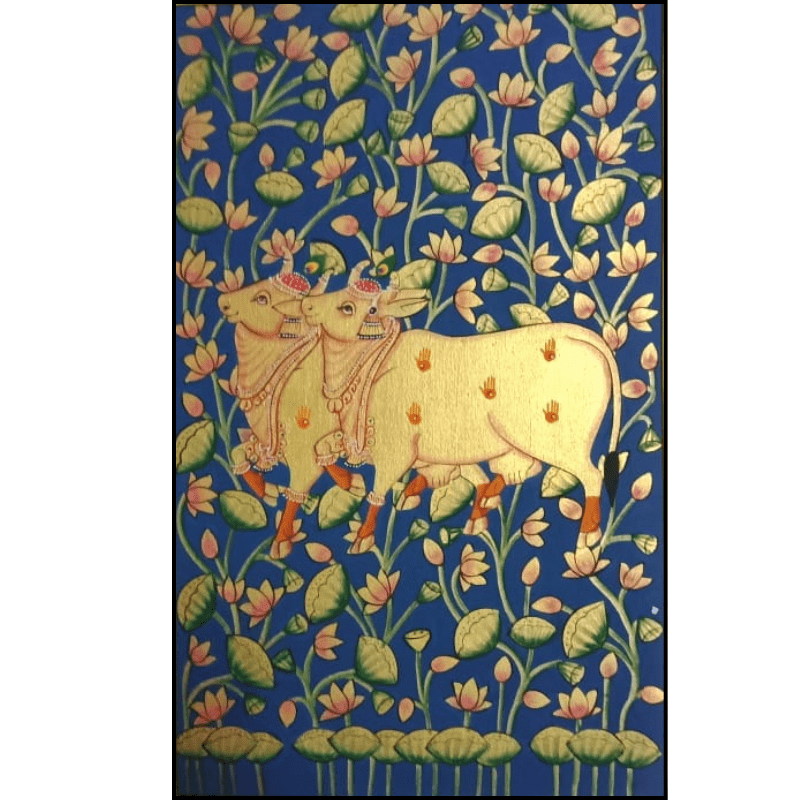
Cow Pichwai Paintings | Kamdhenu Art for Prosperity & Peace
Pichwai-Paintings |
April 30, 2026
In the devotional landscape of Pichwai paintings, few motifs carry the profound spiritual significance and auspicious power of the sacred cow. Cow Pichwai paintings and specifically Kamdhenu Pichwai paintings—depicting the divine wish-fulfilling cow—represent some of the most sought-after pieces for both their artistic beauty and their role as symbols of abundance, prosperity, and divine blessings.
The Sacred Cow in Hindu Tradition and Pichwai Art
The veneration of cows in Hinduism extends far beyond cultural practice—it's rooted in deep spiritual philosophy where the cow (Gau Mata) embodies the principle of selfless giving, nurturing, and abundance. In the context of Pichwai art from Nathdwara, cows hold special significance due to their intimate connection with Lord Krishna, who is celebrated as Gopala (protector of cows) and Govinda (one who gives pleasure to the cows).
Krishna as the Divine Cowherd:
Krishna's childhood and youth were spent among cows and cowherds in Vrindavan. He tended cattle, played his flute to enchant them, and protected them from demons and natural disasters. This pastoral connection makes cows central characters in Krishna's divine story—and therefore central to Pichwai paintings depicting his life.
In traditional Nathdwara temple worship, cows are shown in Pichwai backdrops to:
- Illustrate Krishna's Vrindavan pastimes
- Symbolize the souls of devotees under divine protection
- Represent material and spiritual abundance
- Create the sacred pastoral atmosphere of Krishna's realm
Kamdhenu: The Divine Wish-Fulfilling Cow
While all cows are sacred in Pichwai art, Kamdhenu (also called Surabhi or Kamadhenu) holds supreme status as the celestial mother of all cows—a divine being capable of granting any wish and fulfilling every desire.
Mythological Origins:
According to Hindu scriptures, Kamdhenu emerged during the Samudra Manthan (churning of the cosmic ocean) by gods and demons seeking the nectar of immortality. She appeared along with other divine treasures and was claimed by the gods, particularly residing in the care of the sage Vashishta.
Kamdhenu's Divine Form:
In traditional iconography and Kamdhenu Pichwai paintings, the divine cow is depicted with extraordinary features blending various celestial elements:
- Body of a pristine white cow: Representing purity and nurturing sustenance
- Woman's head or face: Symbolizing intelligence, consciousness, and maternal compassion
- Peacock tail feathers: Denoting beauty, grace, and divine splendor
- Bird wings: Signifying freedom, transcendence, and celestial nature
- Elaborate jewelry and adornments: Gold ornaments, pearl necklaces, flower garlands, and rich textile coverings showing her divine status
However, in many Pichwai cow paintings, Kamdhenu is represented simply as an exquisitely adorned white or golden cow, with her divine status indicated through:
- Sacred tilak markings on her forehead
- Ornate jewelry (bells, necklaces, anklets)
- Handprints on her body (representing Krishna's divine touch)
- Presence of lotus blooms and sacred symbols
- Serene, noble expression radiating benevolence
Symbolism of Kamdhenu in Pichwai Art:
Unlimited Abundance: Kamdhenu provides everything—milk (nourishment), ghee (purity for rituals), dung (fuel and fertility), urine (medicinal properties), and divine blessings. She represents the principle that the divine provides for all needs.
Wish Fulfillment: As Kamadhenu—"the cow of desires"—she grants sincere wishes, making her paintings particularly popular among those seeking prosperity, business success, fertility, or spiritual advancement.
Motherly Protection: Like an ideal mother, Kamdhenu nurtures, protects, and blesses unconditionally. Her presence in homes creates an atmosphere of safety and care.
Spiritual Merit (Punya): In Hindu philosophy, protecting and honoring cows generates immense spiritual merit. Having a Kamdhenu painting is considered auspicious and merit-generating.
Types of Cow Pichwai Paintings: Themes and Compositions
Cow Pichwai paintings encompass various traditional themes, each with specific spiritual significance:
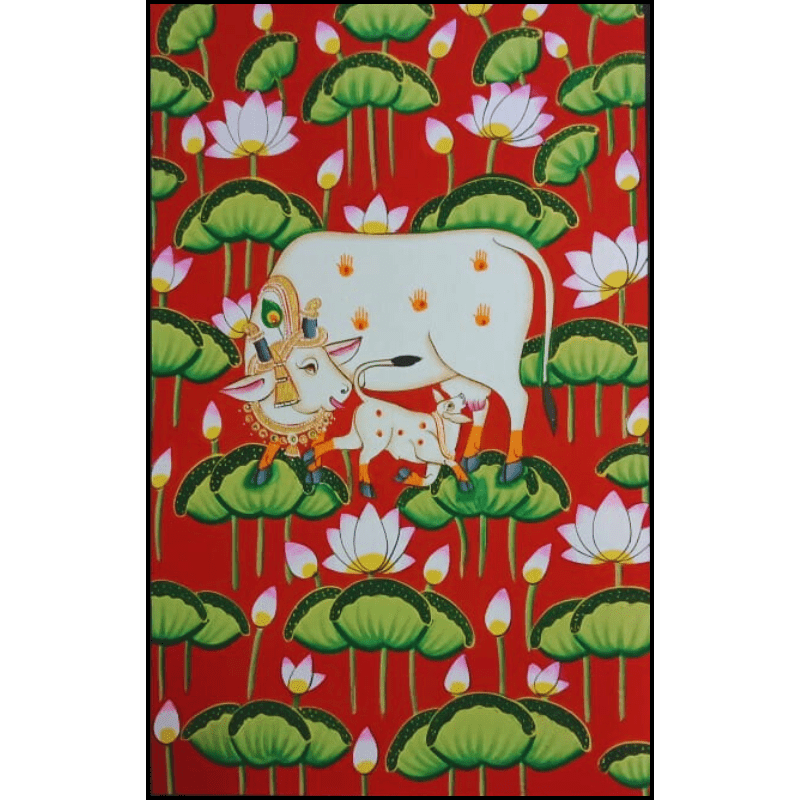
1. Kamdhenu with Calf (Vatsalya)
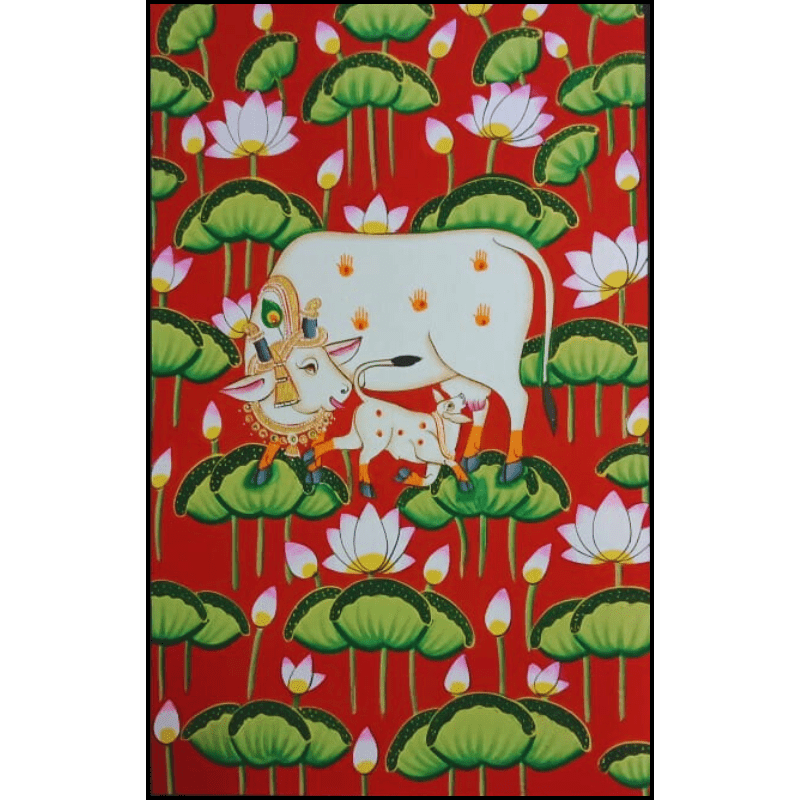
Depicting the sacred mother cow with her nursing calf, these paintings emphasize maternal love, family bonds, and nurturing abundance. The calf nestled close to Kamdhenu symbolizes:
- Protection of the young and vulnerable
- Continuity and generational blessing
- Unconditional love and care
- Innocence and purity
These are particularly popular for:
- Nurseries and children's rooms
- Family spaces celebrating parent-child bonds
- Homes of expectant parents seeking blessings
- Anyone wishing to invoke nurturing energy
Artistic Details: Artists render the tender interaction between cow and calf with extraordinary sensitivity—the gentle nuzzling, the calf's trusting posture, the mother's protective stance. Background lotuses and pastoral settings create serene, life-affirming compositions.
2. Kamdhenu in Lotus Pond (Kamal Talai)
The sacred cow standing or resting in a blooming lotus pond combines two of Hinduism's most auspicious symbols:
- Cow = Material abundance and divine sustenance
- Lotus = Spiritual purity and enlightenment
This pairing creates a complete blessing—both worldly prosperity and spiritual advancement.
Visual Characteristics:
- Pristine white or golden cow surrounded by pink and white lotus blooms
- Lush green lotus leaves creating a verdant base
- Sometimes peacocks, swans, or other sacred birds included
- Rich blue, green, or red backgrounds
- Ornate borders framing the sacred scene
Ideal Placement: Living rooms, meditation spaces, entrance halls, or wealth corners (as per Vastu—North or Northeast)
3. Multiple Cows with Shrinathji (Gau Seva)
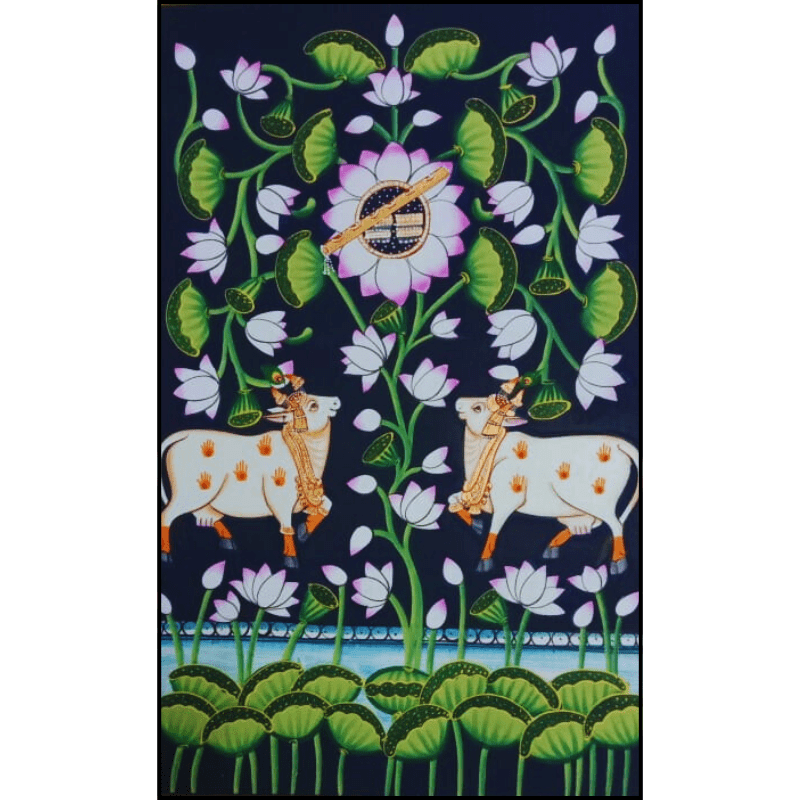
Traditional Gau Seva Pichwai paintings show Lord Krishna (Shrinathji) surrounded by adoring cows, depicting his role as divine cowherd and protector. These elaborate compositions might include:
- Multiple cows in different postures (grazing, resting, walking)
- Each cow individually detailed with unique adornments
- Shrinathji in central position, often playing flute or blessing the cows
- Pastoral landscape with Kadamba trees, peacocks, and flowers
- Gopis (cowherd maidens) serving or worshipping
These are the most traditional Pichwai formats, directly echoing temple backdrop paintings. They're ideal for:
- Pooja rooms and prayer spaces
- Large living room statement walls
- Cultural centers and spiritual organizations
- Collectors of classical Pichwai art
4. Single Cow Portrait (Ekala Gau)
Contemporary Pichwai artists also create focused portraits of single cows—whether Kamdhenu or beautifully adorned Gau Mata—against richly colored backgrounds. These simplified compositions:
- Highlight the cow's serene facial expression
- Showcase intricate jewelry and decoration details
- Work well in modern, minimalist interiors
- Available in smaller formats (12"x12" to 20"x24")
- More affordable while maintaining traditional authenticity
Popular color combinations:
- White cow on deep blue background (classic, calming)
- Golden cow on red background (prosperity, energy)
- White cow on green background (growth, harmony)
- Cow on yellow/golden background (wealth, positivity)
5. Cow with Peacocks and Nature Motifs
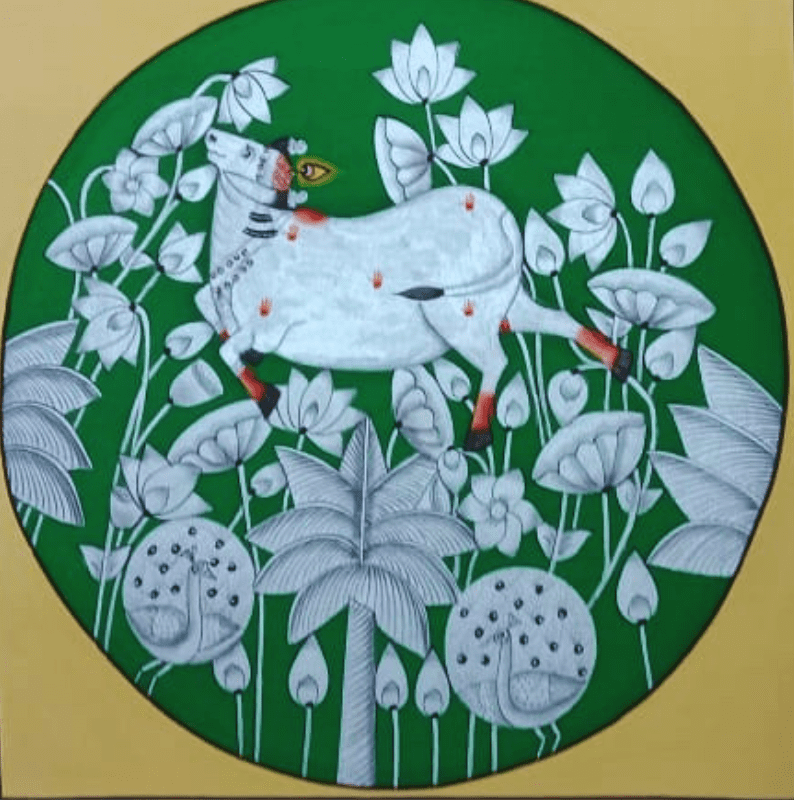
These paintings surround the sacred cow with peacocks (Krishna's favorite birds), parrots, blooming flowers, and lush vegetation, creating a celebration of divine nature and abundance. The peacock's presence adds:
- Beauty and aesthetic refinement
- Monsoon/fertility symbolism
- Connection to Krishna iconography
Symbolism: Understanding Elements in Cow Pichwai Paintings
To fully appreciate cow Pichwai paintings, understanding the symbolic language is essential:
Cow's Color:
White Cows: Purity, peace, spiritual clarity, divine grace
Golden/Yellow Cows: Wealth, prosperity, material abundance, divine radiance
Black Cows: Protection from negative energies, grounding, stability
Multi-colored/Decorative: Celebration, festivity, divine playfulness
Adornments and Jewelry:
Necklaces and Bells: The tinkling bells announce the divine presence and auspicious movements
Forehead Tilak: Sacred markings showing the cow's blessed status
Flower Garlands: Offerings of love and devotion
Silk Cloths: Royal treatment befitting divine status
Anklets (Payal): Delicate beauty and grace
Nose Ring (Nath): Traditional adornment indicating value
Handprints on Cow's Body:
A distinctive feature in many Kamdhenu Pichwai paintings is colored handprints (usually orange, red, or yellow) covering the cow's body. These represent:
- Krishna's divine touch
- Shrinathji's playful interaction with cows
- Devotees' loving worship
- The mark of divine blessing and protection
Background Colors:
Red: Energy, prosperity, celebration, traditional temple art
Blue: Calm, divine presence, Krishna's association, spiritual depth
Green: Growth, fertility, nature, harmony, healing
Yellow/Gold: Wealth, knowledge, auspiciousness, solar energy
Deep backgrounds (navy, maroon): Highlight the cow's luminous presence
Lotus Elements:
Lotus blooms and leaves surrounding cows symbolize:
- Spiritual purity rising from material world
- Unfolding consciousness and enlightenment
- Beauty, grace, and divine perfection
- The sacred ponds of Vrindavan
Vastu Benefits: Why Cow Pichwai Paintings Bring Prosperity
According to Vastu Shastra—the ancient Indian science of architecture and spatial harmony—cow Pichwai paintings are particularly auspicious for homes and workplaces:
Attracting Wealth and Abundance:
Kamdhenu, as the wish-fulfilling cow, is considered one of the most powerful symbols for material prosperity. Placing a Kamdhenu Pichwai painting in your:
North Direction (Kuber's Direction): The North is ruled by Kubera, the god of wealth. A Kamdhenu painting here activates financial abundance, business success, and material growth.
Northeast Direction (Ishanya Corner): The most sacred direction, associated with water element and divine blessings. Kamdhenu here brings spiritual merit alongside material prosperity.
Living Room (West or Northwest Wall): Visible to guests and family, creating an atmosphere of abundance and auspicious energy in the home's social heart.
Positive Energy and Protection:
The sacred cow's presence is believed to:
- Purify the home's energy field
- Ward off negative influences and ill-will
- Create a protective shield for family members
- Promote peace and harmony among residents
Business and Career Growth:
Many business owners place cow Pichwai paintings in:
- Office reception areas (welcoming prosperity)
- Behind desks or in cabins (for success and abundance)
- Conference rooms (for favorable negotiations)
- Shops and showrooms (attracting customers and sales)
Fertility and Family Blessings:
The Kamdhenu with calf theme is particularly popular among:
- Couples seeking conception blessings
- New parents wishing protection for children
- Families desiring harmony and nurturing energy
- Those wanting to strengthen family bonds
Placement Recommendations:
✓ Best Placements:
- Facing East or North walls (auspicious directions)
- Living room, entrance hall, or pooja room
- Office cabin, reception area, or conference room
- Clean, respected location with proper lighting
✗ Avoid Placing:
- Bathrooms or storage closets
- Directly above bed (in bedroom)
- Facing South (considered inauspicious for Gau Mata)
- Dark corners or disrespected spaces
- Near shoes, trash, or cleaning supplies
Choosing Your Cow Pichwai Painting: Style and Format Guide
When selecting a cow Pichwai painting for your space, consider:
Size and Scale:
Small (12"x12" to 18"x24"):
Perfect for apartments, bedrooms, personal altars, or office cabins. Focus on single cow portraits or Kamdhenu with calf in intimate compositions.
Medium (24"x36" to 36"x48"):
Ideal for living room feature walls, above console tables, or spacious pooja rooms. Can accommodate lotus pond scenes or Gau Seva with Shrinathji.
Large (48"x60" and above):
Statement pieces for palatial homes, luxury apartments, or institutional spaces. Traditional temple-style compositions with multiple cows, elaborate landscapes.
Artistic Style:
Traditional/Classical:
- Rich, deep background colors
- Extensive gold foil work
- Intricate jewelry and ornamentation
- Multiple decorative elements
- Temple-authentic iconography
Contemporary/Minimalist:
- Cleaner compositions
- Simplified backgrounds
- Focused on single subjects
- Modern color palettes (pastels, monochromes)
- Less gold work, more painterly technique
Mixed/Fusion:
- Traditional motifs with modern aesthetics
- Unusual color combinations
- Contemporary framing and presentation
- Artistic interpretations while maintaining sacred symbolism
Material and Finish:
Cotton Cloth (Traditional):
Most authentic format, exactly as created for temple use. Natural texture, superior pigment absorption, heirloom quality.
Silk Cloth:
Luxurious sheen, rich colors, premium feel. More expensive but visually striking.
Canvas (Contemporary):
Easier framing, modern presentation, durable. Good compromise between tradition and practicality.
Antique Finish:
Specially treated to look aged, like centuries-old temple paintings. Adds vintage charm and historical gravitas.
Caring for Your Sacred Cow Pichwai Painting
Given the spiritual significance of Kamdhenu Pichwai paintings, proper respect and care is both practical and devotional:
Daily/Weekly Care:
- Light dusting with soft, dry cloth
- Avoid touching painted surface with hands
- Keep incense smoke at a safe distance (can stain over time)
- Ensure adequate ventilation around the painting
Seasonal Maintenance:
- During monsoons, check for moisture/mildew
- In dry seasons, avoid excessive direct heat
- Professional cleaning every 2-3 years if needed
- Check hanging hardware for stability
Spiritual Care (For Devotees):
- Some devotees offer fresh flowers near the painting
- Light oil lamps or candles at safe distance during prayers
- Treat the painting as you would a sacred image
- Maintain cleanliness in the painting's area
Storage and Relocation:
If you need to store or move your painting:
- Roll (painted side out) in acid-free tissue paper
- Store in breathable fabric or archival tubes
- Never fold or crease
- Keep in cool, dry, dark location
- Mothballs or camphor prevent insect damage
The Investment Value of Authentic Cow Pichwai Paintings
Market Appreciation:
Well-documented pieces by recognized Pichwai master artists appreciate 8-15% annually as traditional handmade art becomes rarer.
Heirloom Status:
Natural pigments and gold foil ensure these paintings can last centuries with proper care, becoming family treasures passed through generations.
Cultural Significance:
As Pichwai's UNESCO Intangible Cultural Heritage recognition grows (currently under consideration), authenticated pieces gain historical importance.
Limited Availability:
Each authentic piece takes weeks or months to create; master artists produce only 10-20 major works annually. This scarcity drives value among collectors.
Provenance Documentation:
Paintings with clear artist attribution, creation documentation, and authenticity certificates command premium prices in secondary markets.
Why Choose Rupasya for Cow Pichwai Paintings?
At Rupasya, our cow Pichwai painting collection represents the finest examples of Nathdwara's sacred art tradition:
Direct from Artisan Families:
We source exclusively from hereditary Pichwai painters in Nathdwara and Udaipur—third, fourth, and fifth-generation masters whose families have created temple art for centuries.
100% Handmade Guarantee:
Every cow, every lotus petal, every gold leaf detail is hand-applied. We never sell prints or digital reproductions—only authentic hand-painted masterpieces.
Natural Materials:
Traditional stone-ground pigments, 22K/24K gold and silver foil, handspun cotton or silk cloth. These aren't merely aesthetic choices—they're devotional commitments to artistic purity.
Size and Theme Variety:
From intimate 12"x12" Kamdhenu portraits for personal altars to magnificent 72"x60" Gau Seva temple scenes, we offer formats for every space and budget.
Custom Commissions:
Want a specific color background? Particular cow posture? Certain size? Our artists create custom cow Pichwai paintings tailored to your vision while maintaining traditional authenticity.
Vastu Consultation:
Need guidance on placement? Our team provides complimentary Vastu recommendations for optimal prosperity and positive energy flow.
Authentication & Documentation:
Every painting includes:
- Certificate of Authenticity
- Artist name and lineage information
- Materials specification
- Creation timeline
- Care instructions
- Photographed documentation of the piece
Fair Pricing:
By sourcing directly from artists, we eliminate multiple markups, offering museum-quality Pichwai paintings at genuinely fair prices that support artisan families appropriately.
Conclusion: Inviting Divine Abundance Through Sacred Cow Art
A Kamdhenu Pichwai painting or cow Pichwai painting is far more than decorative art—it's an invitation to divine abundance, a visual prayer for prosperity, and a daily reminder of the sacred in everyday life. Whether you're drawn to the spiritual significance, the exquisite artistry, the Vastu benefits, or simply the serene beauty of these divine creatures, authentic Pichwai cow paintings transform living spaces into sanctuaries of blessing and grace.
Explore Rupasya's sacred cow Pichwai collection featuring Kamdhenu with lotus, Gau Seva with Shrinathji, cow and calf compositions, and single cow portraits—all handmade by Nathdwara masters using traditional techniques, natural pigments, and genuine gold foil.
Bring home the divine wish-fulfilling cow. Let Kamdhenu's benevolent presence bless your space with prosperity, protection, and peace.