
7 Horses Oil Painting vs. Other Mediums: Why It Still Reigns Supreme
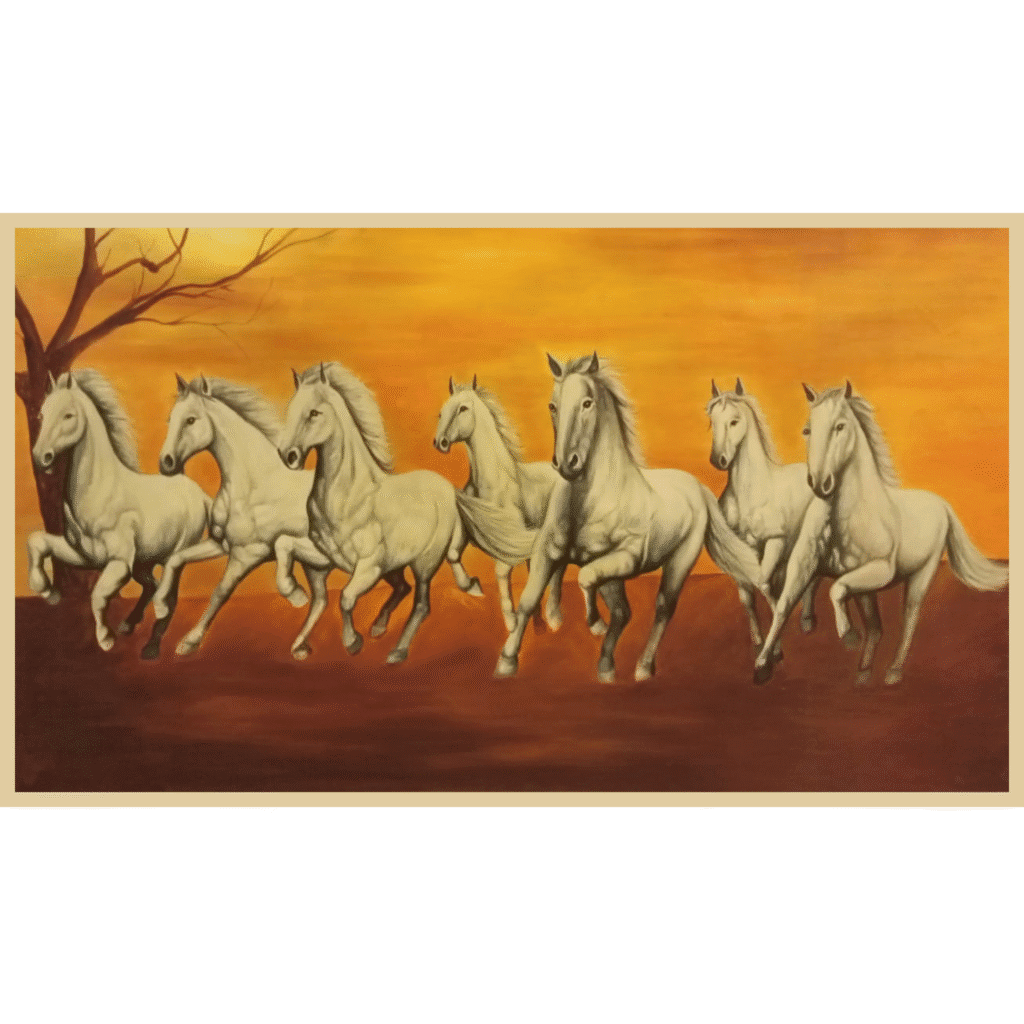
Picture this: You walk into a room and your eyes are immediately drawn to a stunning artwork on the wall. Seven majestic horses, full of energy and life, seem to burst forth from the canvas. The depth of the browns, the glossiness of their manes, and the texture of their muscles make them look almost real. That, art lover, is the unmatched magic of a 7 Horses oil painting!
While this powerful imagery can be attempted with acrylics, watercolors, or digital art, nothing captures the spirit and energy of the “Seven Horses” quite like traditional oil paint. But why is oil the preferred choice for such a symbolic masterpiece? Let’s explore the unique characteristics of oil painting and see why it remains the undisputed king, especially for subjects as dynamic as the seven horses.
The Symbolism and History of the 7 Horses Painting
Before we dive into the paint itself, it is important to understand why this subject is so popular. The 7 horses painting, often referred to as “Sapta Ashwa” in ancient texts, is deeply rooted in Vedic culture and mythology. It symbolizes strength, success, and the continuous flow of energy. Traditionally, it depicts the seven horses of the Sun God, representing the seven colors of the rainbow or the seven days of the week.
In the modern art world, this theme gained massive popularity in the early 20th century, particularly through the works of the renowned Indian artist M. F. Hussain. His depictions of running horses brought this folk element into contemporary Indian homes. Today, owning a 7 horses oil painting is considered a Vastu symbol for positive energy and forward movement.
The Unique Characteristics of Oil Paint in 7 Horse Artworks
- Richness and Depth of Color
A 7 horses painting needs to convey power and vigor. Oil paints, with their high pigment concentration, deliver deep, rich browns, blacks, and whites that seem to glow from within. This luminosity ensures that the horses look vibrant and full of life, not flat or dull—a quality difficult to achieve with other mediums. - Versatility in Techniques
To paint seven horses in motion, an artist needs versatility. Oil paint offers exactly that:
- Glazing:Artists use thin, transparent layers to build up the subtle muscles and skin tones of the horses.
- Impasto:To highlight the flowing manes and tails, thick, textured strokes of paint are applied, making them literally stand out from the canvas.
- Blending:The slow drying time allows for seamless blending, which is crucial for showing the soft transition from light to shadow on a horse’s muscular body.
Comparison: Can Other Mediums Capture the 7 Horses?
Let’s see how the majestic 7 horses theme holds up when painted with other popular mediums.
Acrylic Paints: Fast but Flat?
- Drying Time:Acrylics dry extremely fast. While this is good for quick work, it makes blending the muscles of seven different horses in motion very difficult. You often get harsh lines instead of smooth transitions.
- Color Shift:Acrylics tend to dry darker. Imagine mixing the perfect chestnut brown for a horse, only to see it turn into a muddy shade seconds later. This color shift can ruin the energy of the painting.
- Finish:Acrylics dry to a plastic-like matte finish, lacking the glossy, wet look that makes oil paintings of horses look so alive.
Watercolor Paints: Too Delicate for Power?
- Transparency:Watercolors are airy and delicate, which is great for flowers but often too weak for the raw power of seven stallions. The paint is transparent, so it’s hard to build the opacity needed for solid, powerful horse figures.
- Control:Watercolors are unforgiving. In an oil painting, you can paint over a horse’s leg if the angle is wrong. In watercolor, mistakes are there to stay, making complex compositions risky.
Pastels: Great Texture, High Maintenance
- Texture:Pastels can create beautiful textures, but they are essentially chalk. They smudge easily and the vibrancy fades if not kept behind glass.
- Preservation:Unlike the durable surface of a 7 horses oil painting, a pastel is fragile. One accidental brush against it, and you might erase a tail!
Why the 7 Horses Theme Demands Oil Paint
1. Durability and Longevity A 7 horses painting is often an investment and a centerpiece for homes or offices, intended to last for generations. Oil paintings are famously durable. The same chemistry that allowed Renaissance paintings to survive for centuries ensures that your 7 horses artwork remains a family heirloom.
2. Superior Blending for Dynamic Motion The beauty of the seven horses lies in their flowing motion. To paint a horse galloping, you need soft, blurred edges on the legs and smooth gradients on the body. The slow drying time of oil paint is the only way to achieve this “buttery” blend, making the horses look like they are truly running across the canvas.
3. Textural Possibilities (The Manes and Tails) This is where oil paint truly wins. The manes and tails of the horses in an oil painting are often painted using the Impasto technique. By applying thick paint with a palette knife, the hair looks wild, free, and three-dimensional. You can actually feel the texture of the mane if you touch the painting.
1. Durability and Longevity
A 7 horses painting is often an investment and a centerpiece for homes or offices, intended to last for generations. Oil paintings are famously durable. The same chemistry that allowed Renaissance paintings to survive for centuries ensures that your 7 horses artwork remains a family heirloom.
2. Superior Blending for Dynamic Motion
The beauty of the seven horses lies in their flowing motion. To paint a horse galloping, you need soft, blurred edges on the legs and smooth gradients on the body. The slow drying time of oil paint is the only way to achieve this “buttery” blend, making the horses look like they are truly running across the canvas.
3. Textural Possibilities (The Manes and Tails)
This is where oil paint truly wins. The manes and tails of the horses in an oil painting are often painted using the Impasto technique. By applying thick paint with a palette knife, the hair looks wild, free, and three-dimensional. You can actually feel the texture of the mane if you touch the painting.
Addressing Common Concerns for Aspiring Collectors
If you are thinking of buying or painting your own 7 horses oil painting, here are a few things to keep in mind:
Health and Safety
While oil paints are safe, traditional solvents used for thinning can have fumes. However, most modern artists now use water-mixable oil paints or odorless solvents, making the process safer for home studios.
Drying Time Management
If you are the artist, don’t let the drying time scare you. While it allows for blending, you can also speed it up by:
- Using a painting knife to apply thick textures (impasto) which dry faster from the inside out.
- Painting on an absorbent surface.
- Using modern quick-drying mediums.
Cost vs. Value
Yes, oil paints are generally more expensive than acrylics. But when you invest in a 7 horses oil painting, you are paying for depth, longevity, and a texture that cannot be printed or faked. The cost is justified by the “wow factor” it brings to your wall.
Conclusion
While acrylics, watercolors, and pastels all have their place in the art world, they cannot compete with the majestic presence of a 7 horses oil painting. The unmatched richness, the ability to blend dynamic motion, and the three-dimensional texture of the horses’ manes make oil the only choice for this powerful subject.
Whether you are looking to invite positive Vastu energy into your home or simply want to own a piece of timeless art, remember that nothing captures the spirit of seven galloping horses quite like oil on canvas.
So, go ahead—bring home that energy, that texture, and that timeless beauty