History & Origins of Gold Leaf Pichwai Art: A Divine Tradition
Pichwai-Paintings |
April 19, 2026
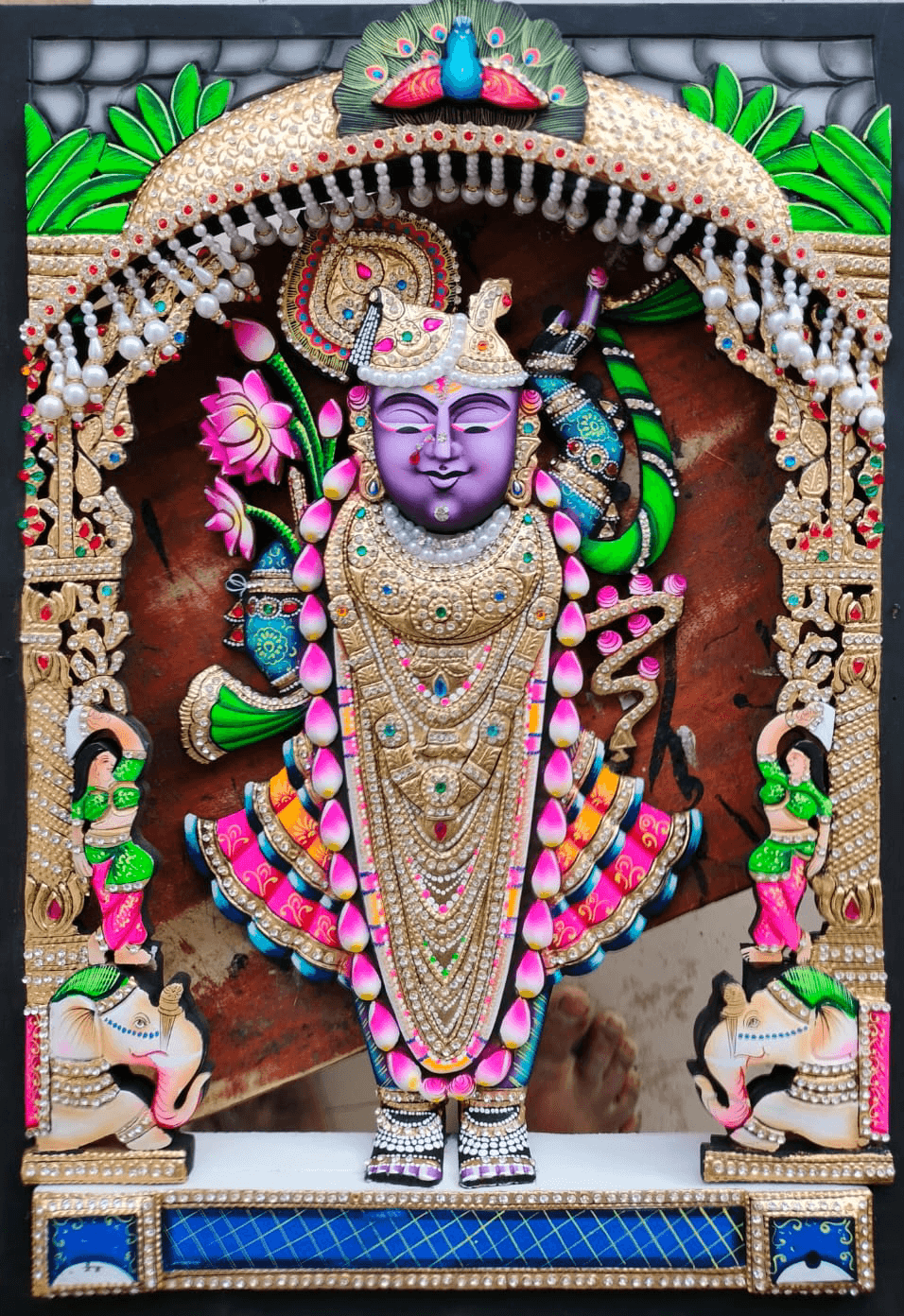
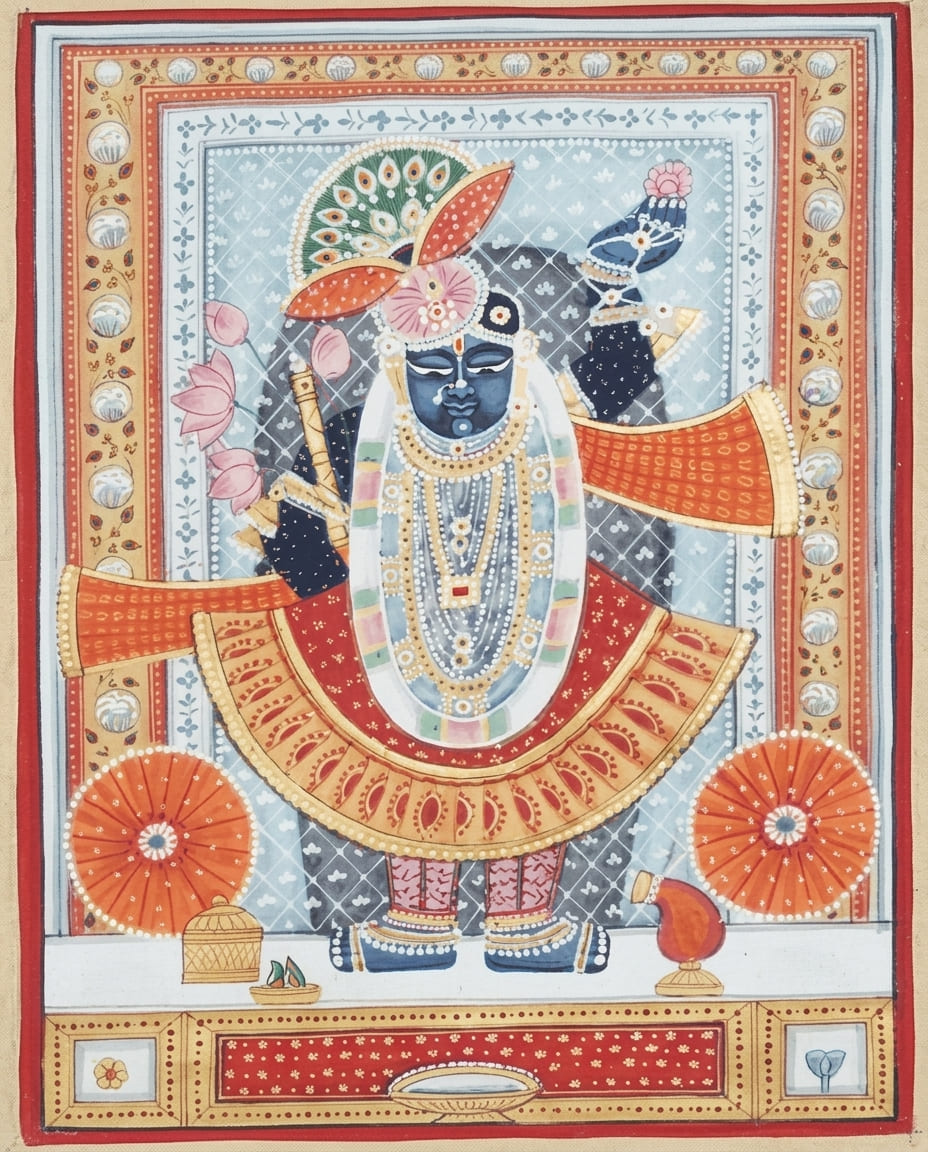
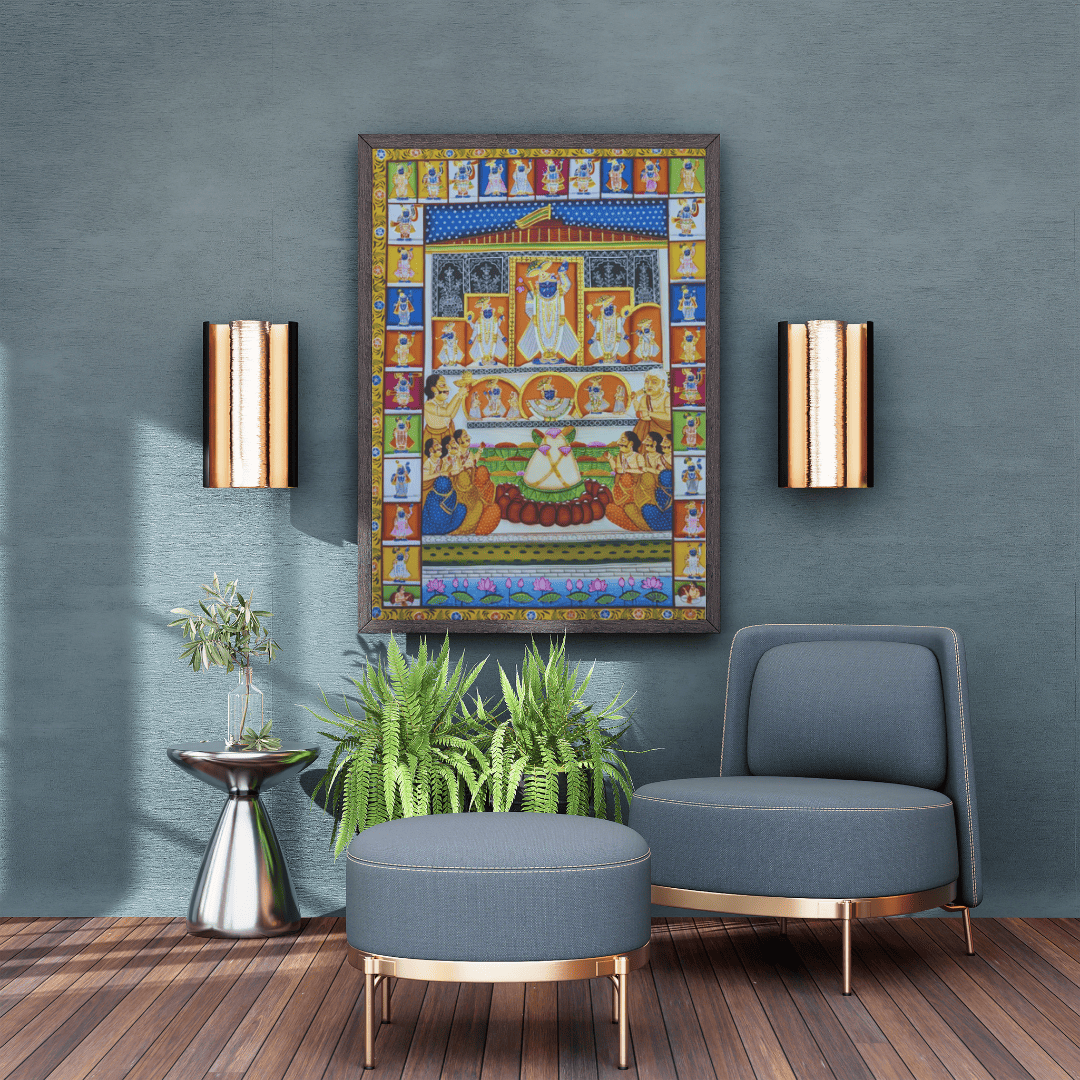
Gold Leaf Pichwai painting depicting Lord Shrinathji with intricate detailing
Pichwai art is one of the most celebrated traditional art forms of India, originating from Nathdwara in Rajasthan. Known for its intricate details, vibrant colors, and deep spiritual connection, Pichwai paintings often depict the life of Lord Krishna, particularly in the form of Shrinathji. Among the many styles within this tradition, Gold Leaf Pichwai art holds a special place because of its richness, grandeur, and cultural heritage.
In This Article:
What is Pichwai Art?
Origins in Nathdwara
Introduction of Gold Leaf
Themes & Symbolism
Creation Process
Cultural Significance
Global Recognition
Related Artworks
What is Pichwai Art?
Pichwai paintings are devotional artworks traditionally created on cloth or paper. The word "Pichwai" comes from two Sanskrit words – Pichh meaning "back" and wai meaning "hanging." These artworks were originally made as backdrop hangings behind the idol of Lord Shrinathji in temples.
Over time, the paintings became more detailed and began to represent stories, festivals, and rituals associated with Krishna. Pichwai art is not just visual beauty; it is a storytelling medium. Every stroke, motif, and design has a spiritual meaning.
Origins of Pichwai Art in Nathdwara
The origins of Pichwai art date back to the 17th century when Shrinathji, a form of Lord Krishna, was brought to Nathdwara from Govardhan (near Mathura) to protect the idol from Mughal invasions.
Nathdwara soon became a major spiritual and cultural hub, and artists began creating paintings that reflected the rituals and celebrations in the temple. Artists used natural colors, handmade cloth, and traditional brushes to create these masterpieces.
The Nathdwara Temple in Rajasthan, where Pichwai art originated
Introduction of Gold Leaf in Pichwai Art
While traditional Pichwai art used natural dyes and mineral pigments, the introduction of gold leaf brought a new dimension of luxury.
Gold leaf refers to thin sheets of gold applied carefully on paintings to highlight ornaments, attire, divine symbols, and backgrounds. This technique became popular during the Mughal and Rajput periods when royal courts supported artists.
Gold Leaf Pichwai paintings became a symbol of both devotion and luxury.
Themes and Symbolism in Gold Leaf Pichwai
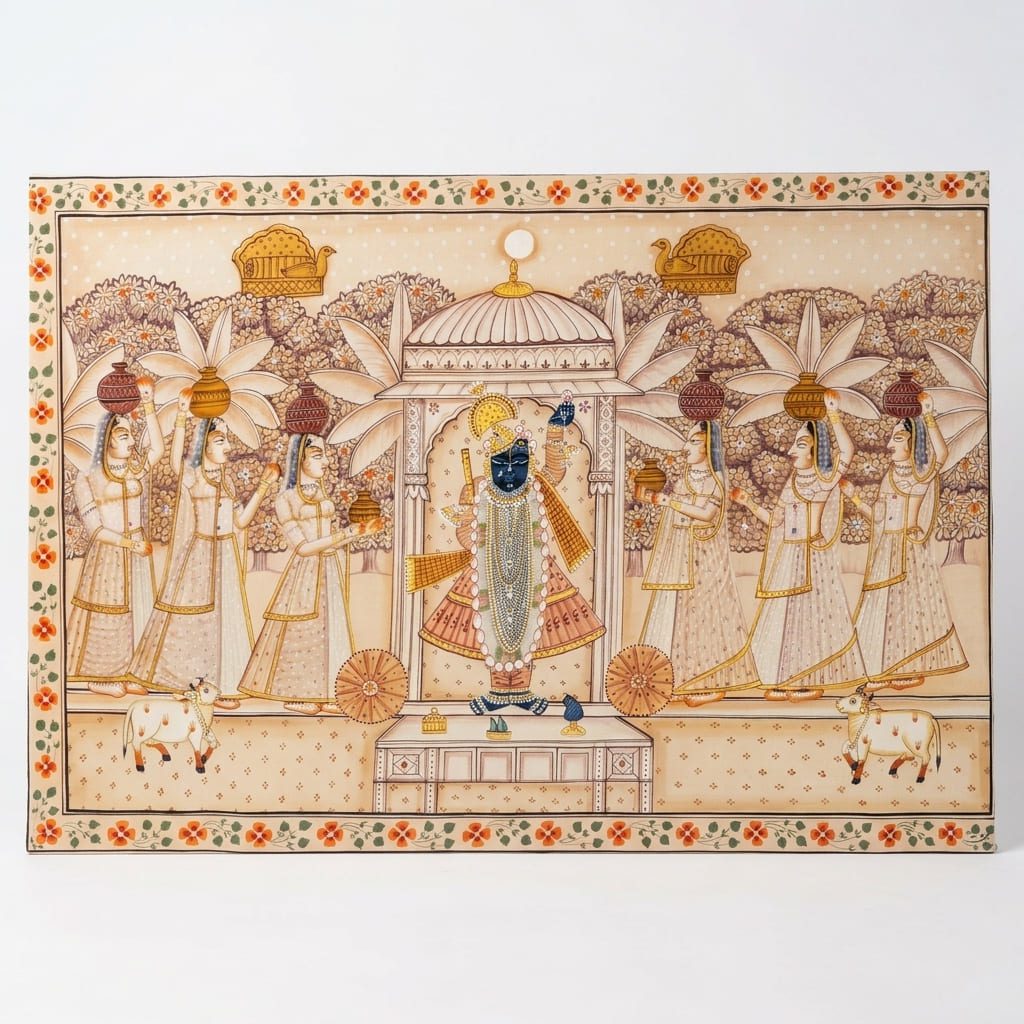
Gold Leaf Pichwai paintings usually depict Lord Krishna as Shrinathji in different moods and seasons.
Common themes include:
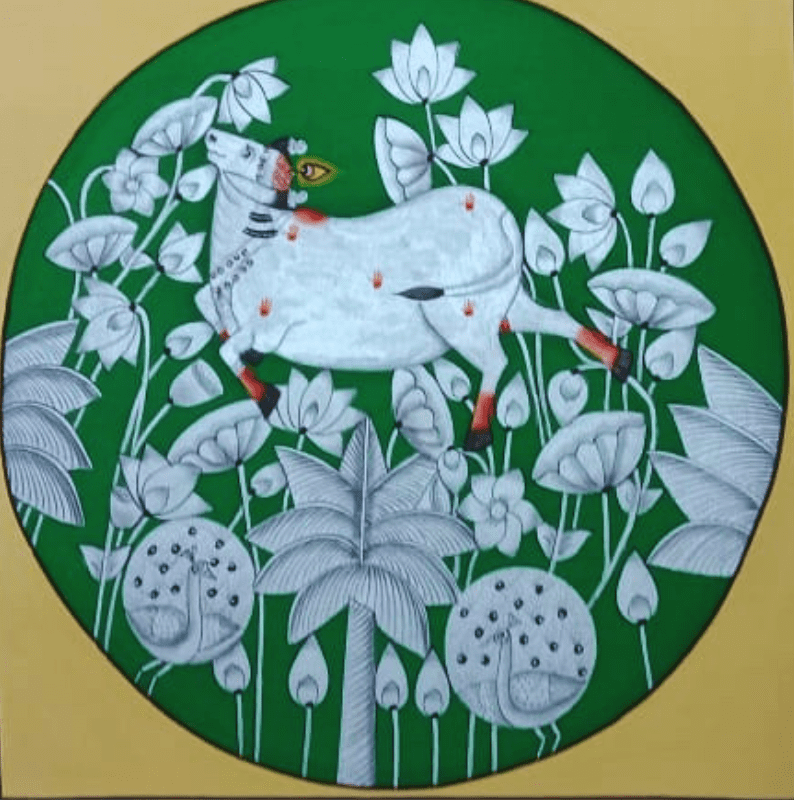
Shrinathji with Cows – Krishna as a divine cowherd
Festival Celebrations – Janmashtami, Annakut rituals
Seasonal Depictions – Monsoon, summer, winter themes
Lotus Motifs – Symbol of purity and divine energy
Gold leaf highlights ornaments and crowns, making the divine figure glow with radiance.
The Craftsmanship Behind Gold Leaf Pichwai
Creating a Gold Leaf Pichwai requires exceptional skill and patience.
Process:
Preparing the base with cloth and natural coating
Sketching detailed outlines
Applying natural colors
Adding gold leaf carefully
Final detailing and finishing
This process can take weeks or even months depending on the complexity.
Skilled artisan applying gold leaf to a Pichwai painting
Cultural and Spiritual Importance
Gold Leaf Pichwai art is deeply connected to devotion and spirituality. These paintings are not just decorative but are considered sacred.
The glowing gold represents divine energy and the presence of Lord Krishna. Even today, Nathdwara remains the center of this art form, where generations of artists continue this tradition.
Global Recognition of Gold Leaf Pichwai
Gold Leaf Pichwai art is now admired worldwide. Art collectors, museums, and enthusiasts appreciate its intricate craftsmanship and cultural depth.
These paintings are showcased in exhibitions and art fairs globally, highlighting India's rich artistic heritage.